Artwork
Pieter Brueghel de Oude. Nederlandse spreekwoorden Detail: Vijf spreekwoorden
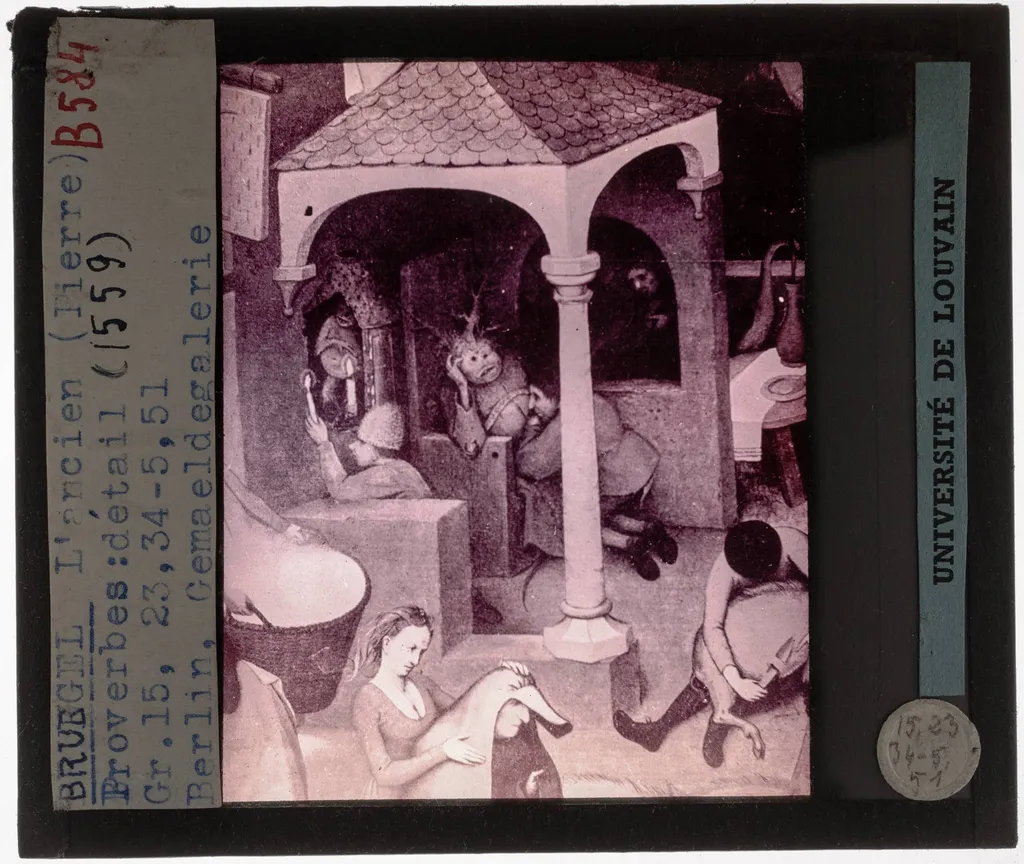
Pieter Brueghel de Oude. Nederlandse spreekwoorden Detail: Vijf spreekwoorden is an unspecified painting by the Northern Renaissance artist Pieter Brueghel the Elder. It dates from 1559 and is held in the collection of the Catholic University of Leuven. Created in 1559, this oil-on-panel work by Pieter Bruegel the Elder belongs to the Northern Renaissance.
About this work
Overview
Created in 1559, this oil-on-panel work by Pieter Bruegel the Elder belongs to the Northern Renaissance. It presents a bustling village tableau in which numerous figures enact a series of Dutch sayings. The composition is densely populated, each vignette illustrating a proverb through the actions of the participants, offering a visual compendium of contemporary folk wisdom.
Subject & Meaning
The painting functions as an allegorical catalogue of five proverbs, each rendered as a literal scene. By translating idiomatic expressions into everyday activity, Bruegel invites viewers to contemplate the moral or humorous implications of the sayings, reflecting the social attitudes and collective knowledge of 16th‑century Dutch culture.
Technique & Style
Executed in oil on wood, the work displays Bruegel’s characteristic attention to detail and his use of chiaroscuro to model figures within a complex, multi‑layered space. The palette is muted, with earthy tones that enhance the narrative clarity of each proverb while maintaining a cohesive visual rhythm across the crowded composition.
History & Provenance
Originally part of a series of proverb paintings, the piece entered the collection of the Staatliche Museen zu Berlin, where it remains on display. Its early documentation appears in the KU Leuven glass‑slide archives, dating from the 19th to early 20th centuries, though the photographer of those slides is unknown.
Context
Bruegel’s interest in popular sayings aligns with a broader Northern Renaissance fascination with everyday life and moral instruction. The work reflects contemporary trends of embedding didactic content within genre scenes, a practice that appealed to both elite patrons and a growing literate public.
Legacy
The painting continues to serve as a reference point for scholars studying visual representations of language and folklore. Its detailed portrayal of proverbs has influenced later artists who explore the intersection of text and image, and it remains a key example of Bruegel’s narrative ingenuity.
Artist & collection
Artist
Pieter Bruegel (also Brueghel or Breughel) the Elder ( BROY-gəl, US also BROO-gəl; Dutch: ; c.
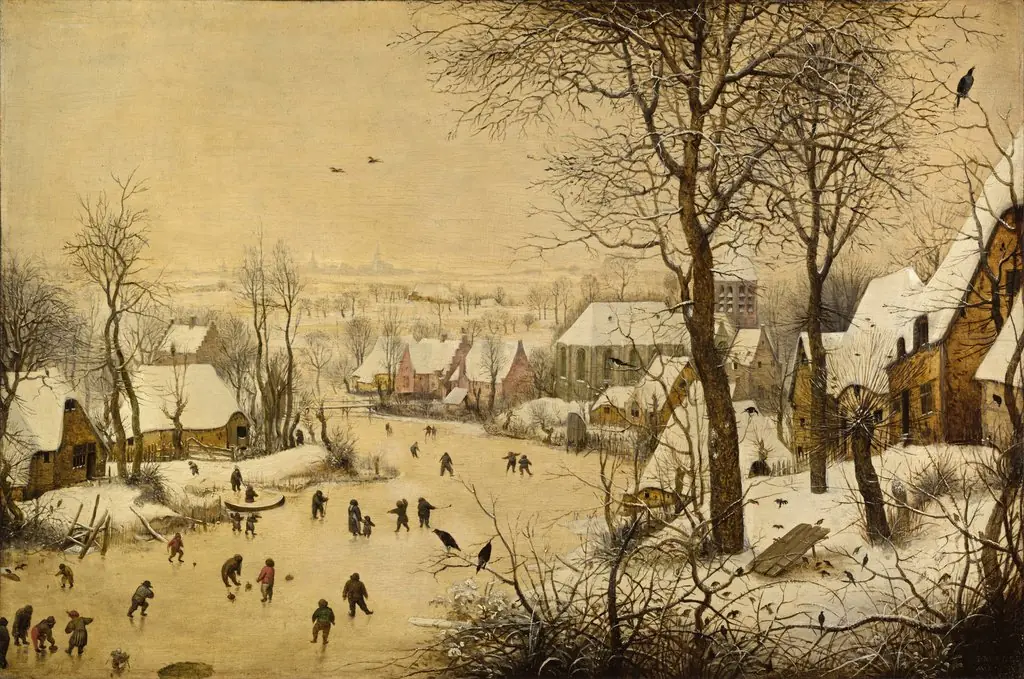
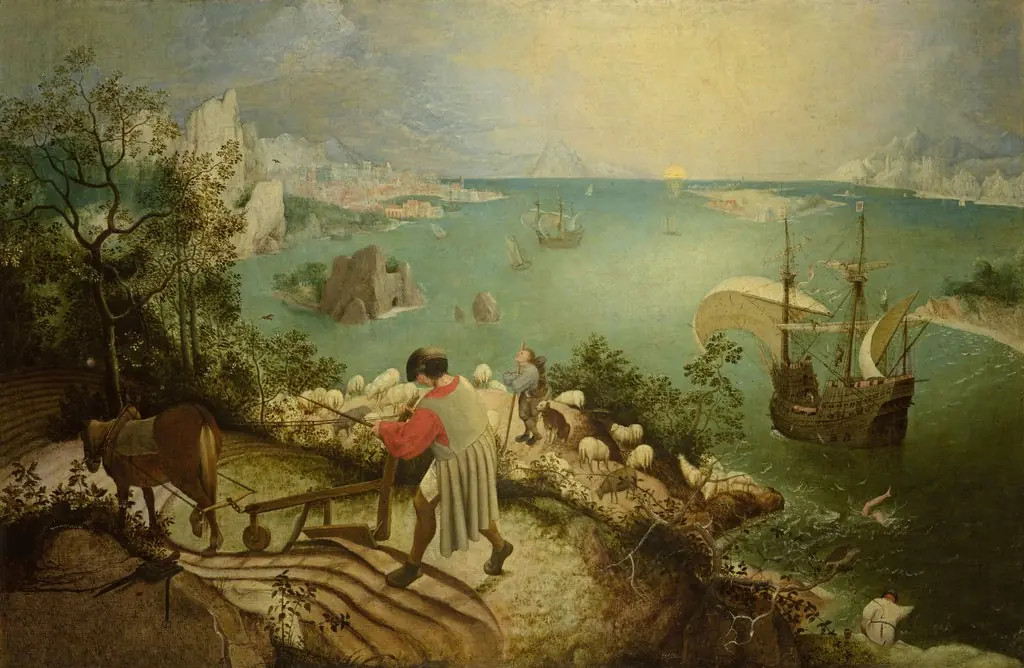
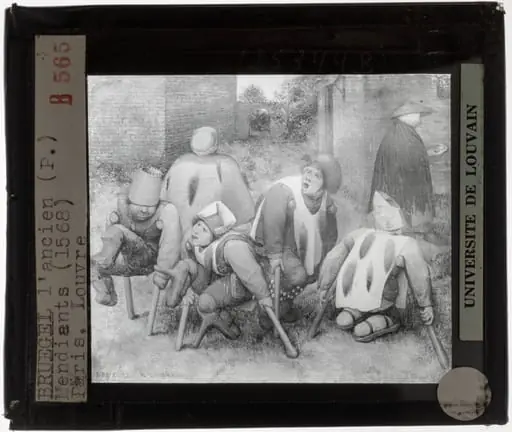 Pieter Brueghel de Oude. De Kreupelen
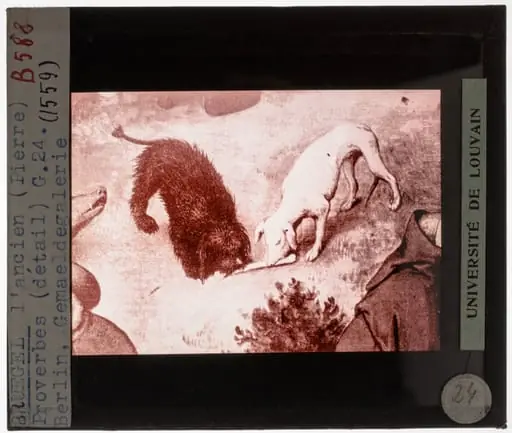 Pieter Brueghel de Oude. Nederlandse spreekwoorden Detail: Twee honden aan een been, komen zelden overeen
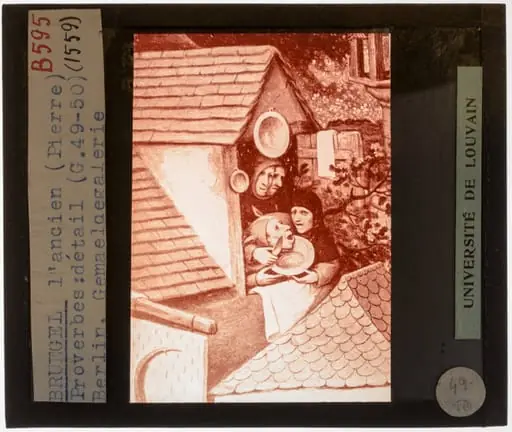 Pieter Brueghel the Elder. Dutch proverbs Detail: Two proverbs
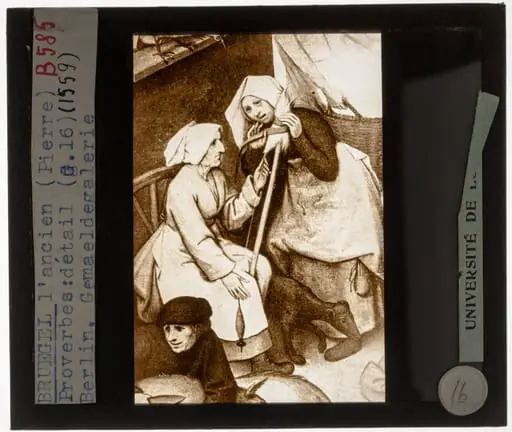 Pieter Brueghel de Oude. Nederlandse spreekwoorden Detail: De ene rokkent wat de andere spint
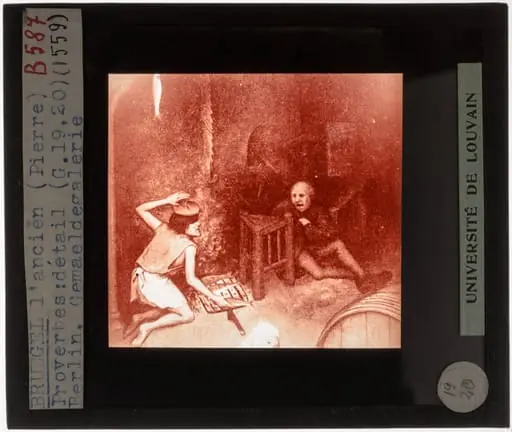 Pieter Brueghel de Oude. Nederlandse spreekwoorden Detail: Twee spreekwoorden
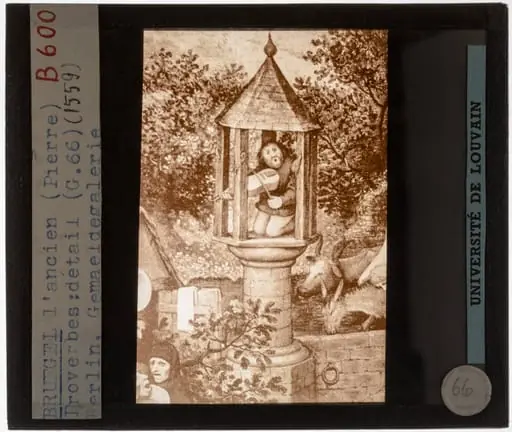 Pieter Brueghel de Oude. Nederlandse spreekwoorden Detail: Hij speelt op die kake
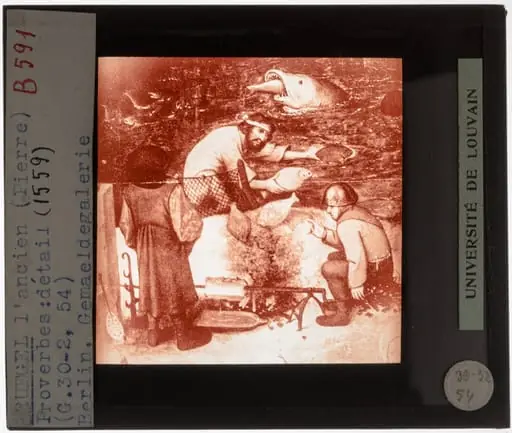 Pieter Brueghel the Elder. Dutch proverbs Detail: Five proverbs
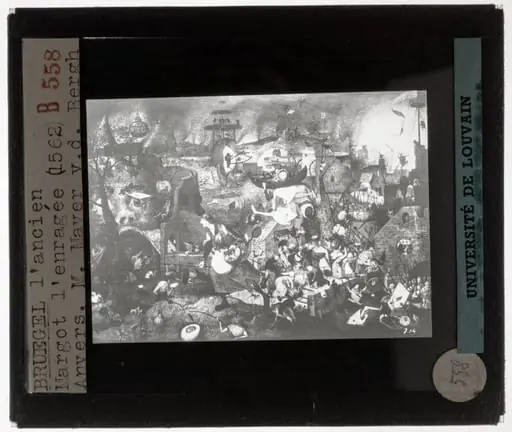 Pieter Brueghel de Oude. Dulle Griet
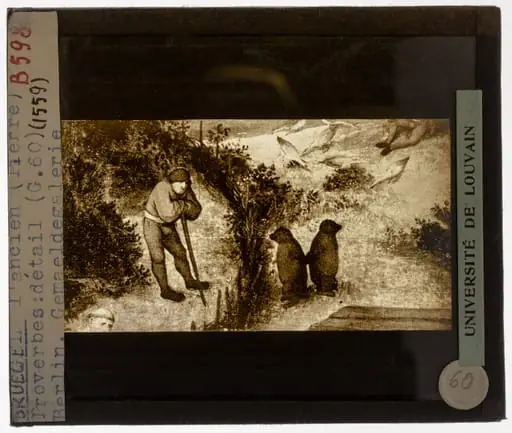 Pieter Brueghel de Oude. Nederlandse spreekwoorden Detail: Wilde beeren, die zijn bij den ander gheeren
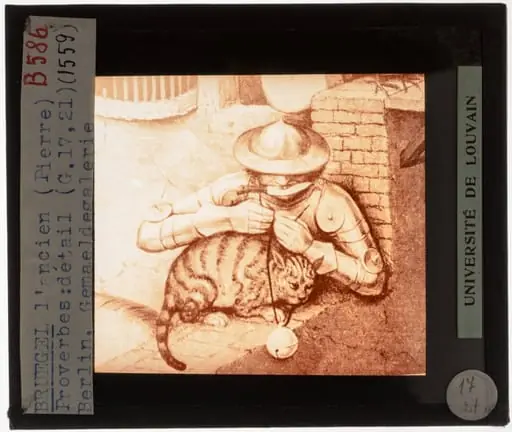 Pieter Brueghel de Oude. Nederlandse spreekwoorden Detail: De kat de bel aanbinden
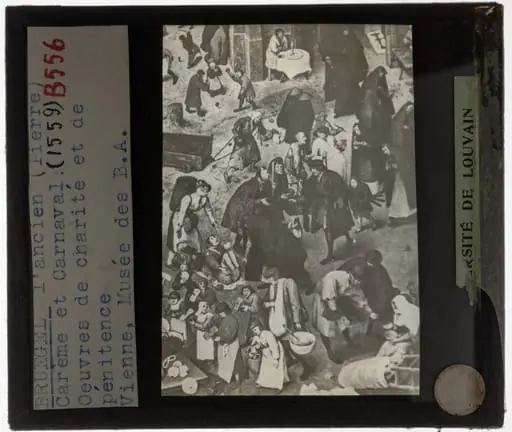 Pieter Brueghel de Oude. Strijd tussen Carnaval en Vasten Detail: Allegorie van Liefdadigheid en Boete