Artwork
Apostolul Simion
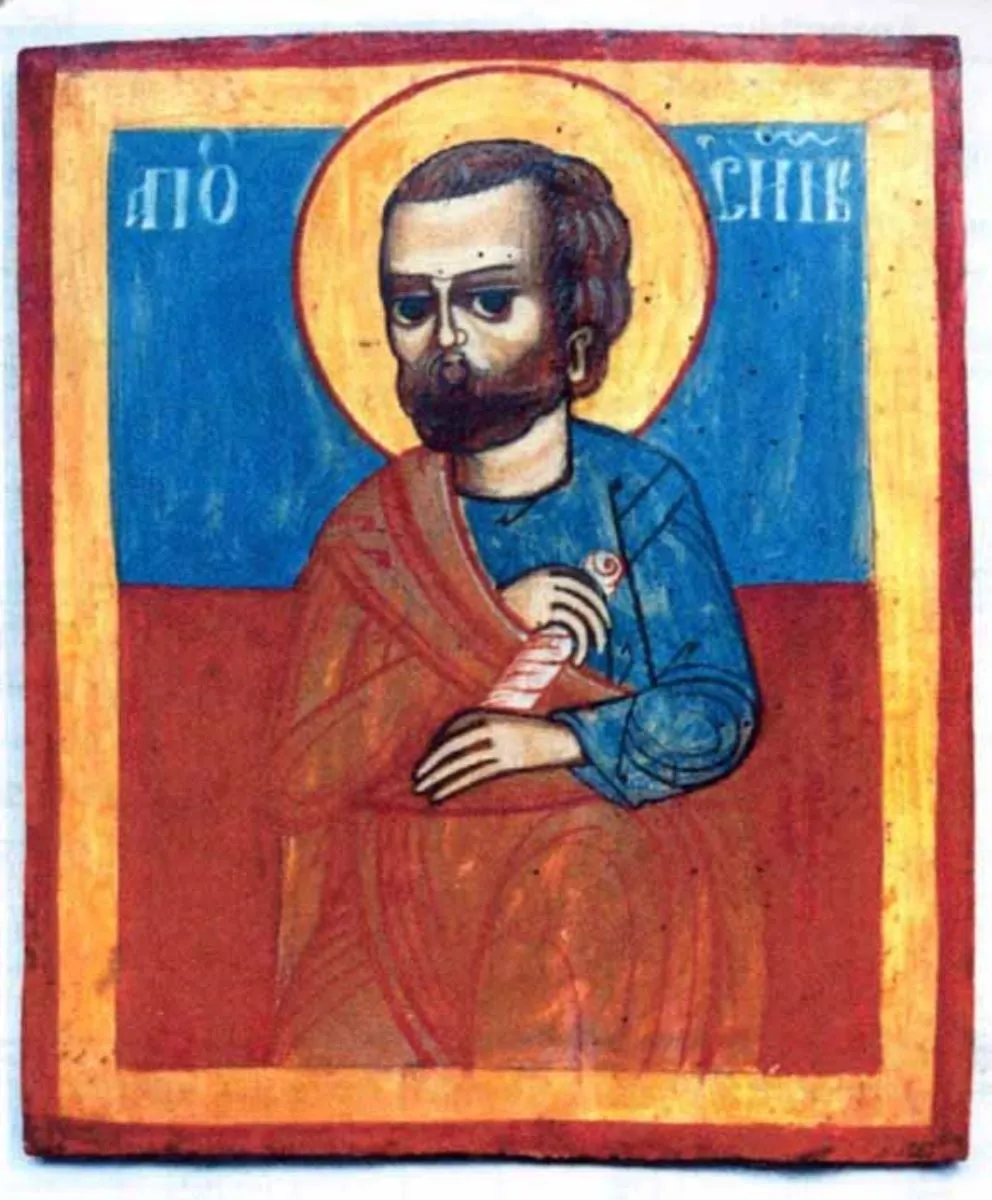
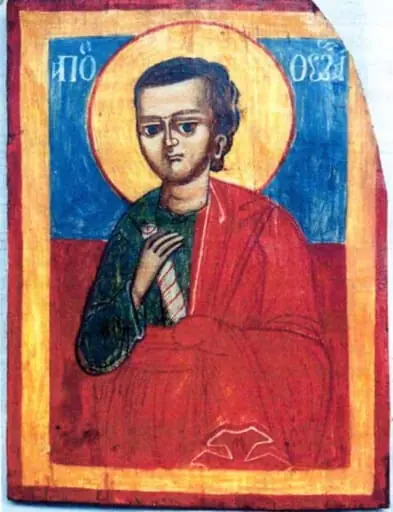
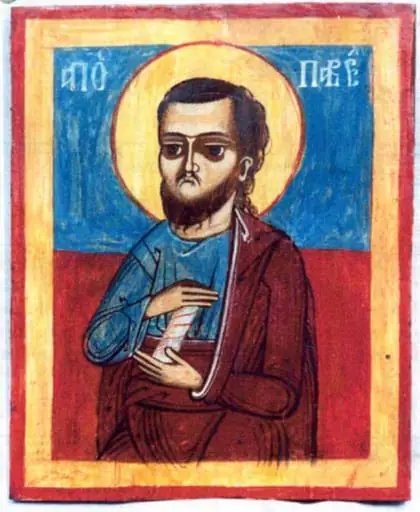
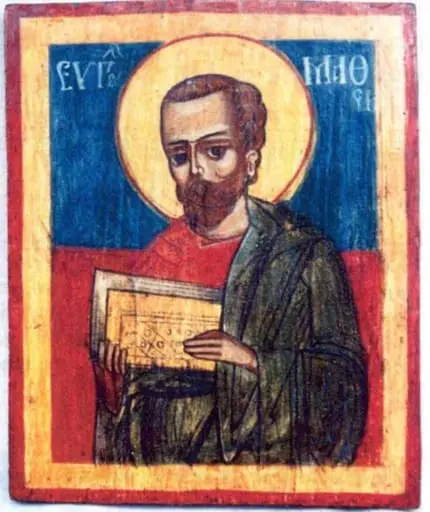
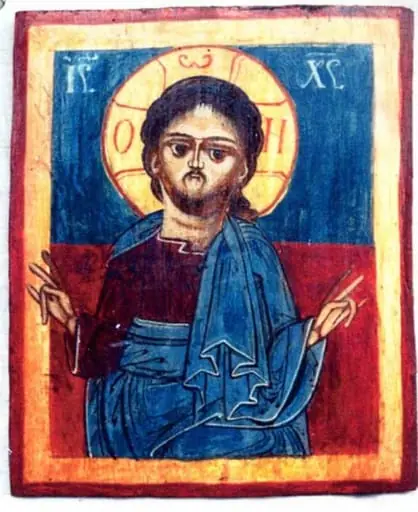
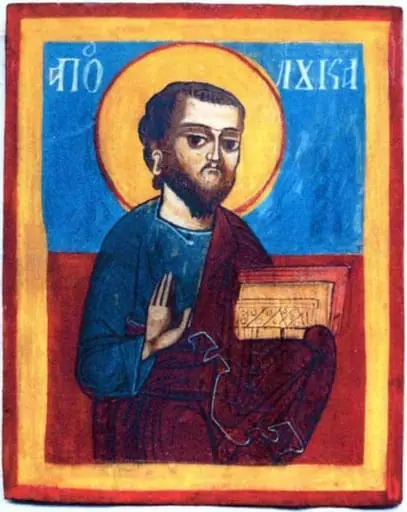
Apostolul Simion is a drawing by the Romanticist artist Unknown. It dates from 1773 and is held in the collection of the "Dimitrie Gusti" National Village Museum. This painting portrays Saint Simon, one of the twelve apostles, rendered in a stylized, symbolic manner.
About this work
Overview
The figure is centrally positioned against a divided background of blue and red, with a golden halo encircling his head.
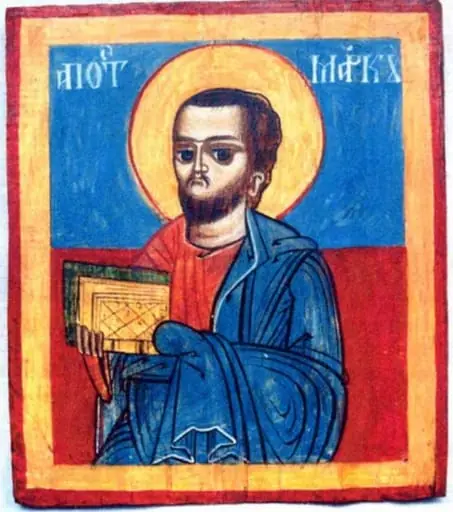
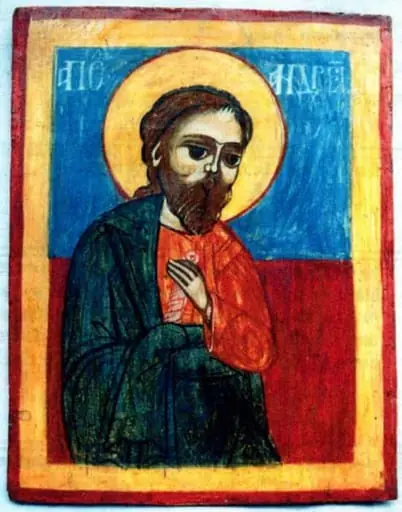
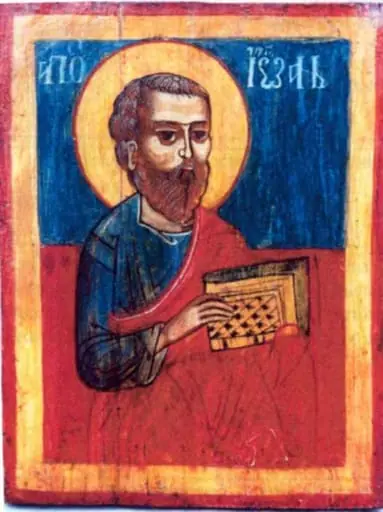
This painting portrays Saint Simon, one of the twelve apostles, rendered in a stylized, symbolic manner. The figure is centrally positioned against a divided background of blue and red, with a golden halo encircling his head. White inscriptions flank the halo, identifying the subject. His attire—blue tunic and red cloak—follows traditional iconographic conventions, while his downward gaze and solemn expression convey introspection and spiritual gravity.
Subject & Meaning
The figure is identified as Saint Simon, an apostle traditionally associated with martyrdom and quiet devotion. The red and white object he holds may represent a saw or a lance, symbols linked to his death. The inscriptions beside his halo likely bear his name in liturgical script, reinforcing his sacred identity. His downcast eyes and still posture suggest contemplation, aligning with devotional imagery meant to inspire reverence rather than narrative action.
Technique & Style
The composition employs flat, unmodulated planes of color—blue, red, and gold—with minimal shading or perspective. The figure is outlined clearly against the background, emphasizing symbolic presence over naturalism. The halo, rendered as a perfect yellow circle, and the stark division of the background reflect liturgical art traditions. Facial features are simplified, prioritizing spiritual expression over individualized portraiture.
History & Provenance
The work appears to derive from a religious iconographic tradition, possibly Eastern Orthodox or Byzantine-influenced, though its specific origin and date are not documented. Its stylistic simplicity and symbolic palette suggest it was created for private or communal worship rather than public display. No record of its commission, artist, or early ownership is available, placing it within a broader category of anonymous devotional imagery.
Context
While the Romanticism movement emphasized emotion and nature, this image belongs to a longer tradition of sacred iconography rooted in medieval and early modern religious practice. Its formal rigidity and symbolic language contrast with Romantic ideals of individualism and dramatic expression. Instead, it reflects a continuity of visual theology, where form serves liturgical function and spiritual instruction over personal interpretation.
Legacy
This image contributes to a centuries-old visual language used to represent apostles in religious settings. Though not attributed to a known artist or school, its adherence to symbolic conventions ensures its place within the continuum of devotional art. It remains a quiet example of how spiritual figures were rendered to evoke reverence, not to celebrate artistic innovation, preserving a mode of representation that endures in liturgical contexts today.
Artist & collection
Museum
"Dimitrie Gusti" National Village Museum
Continue through works from the same source collection.
 Domestic Scene
 Giacomo and Cardinal Marco, investing Andrea, Abbot of San Zeno, with his Benefice
 The Nymph of Fontainebleau
 Portrait of a Woman
 Madonna and Child with Saints in the Enclosed Garden
 Venus and Minerva
 Family Group of Four on Sofa
 Wall painting from Room H of the Villa of P. Fannius Synistor at Boscoreale