Artwork
Apostolul Marcu
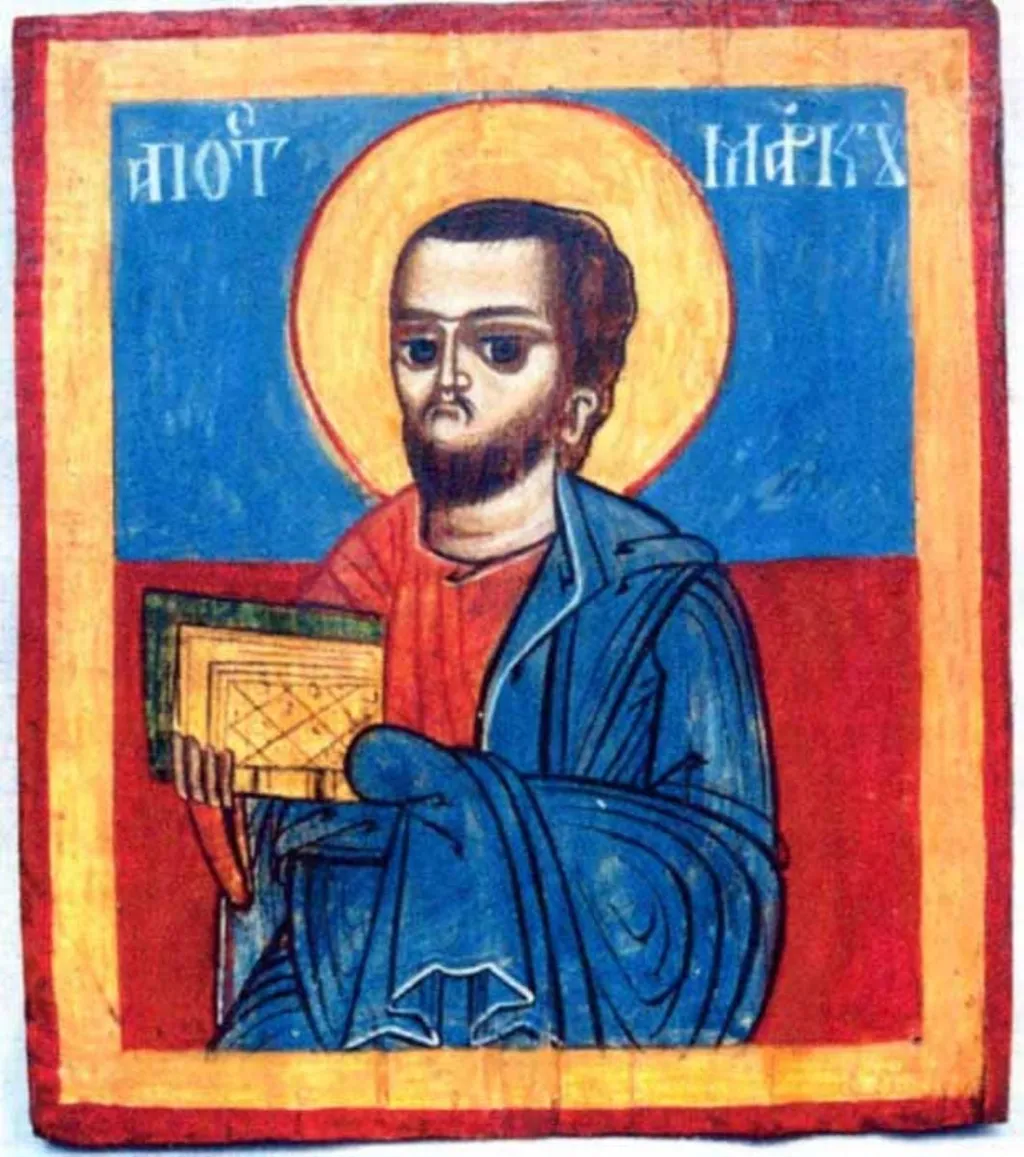
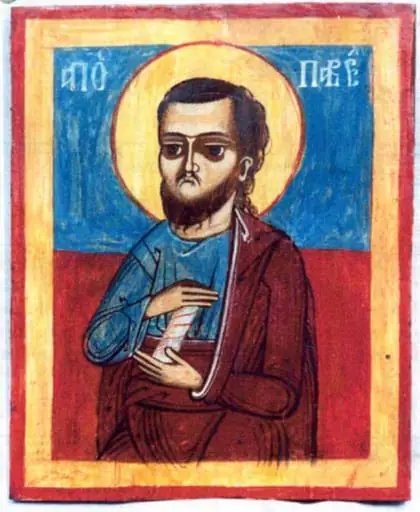
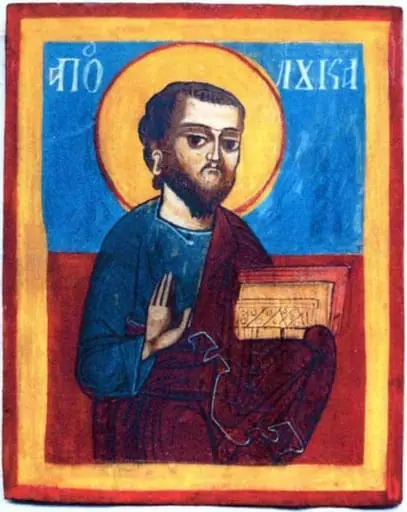
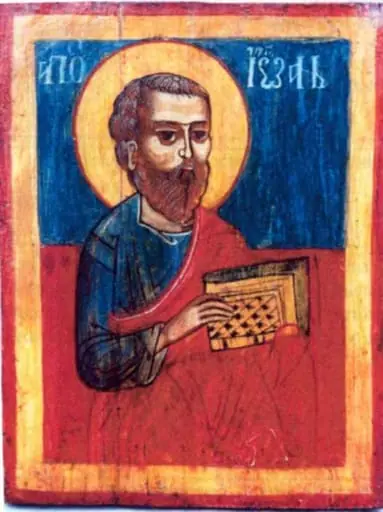
Apostolul Marcu is a drawing by the Romanticist artist Unknown. It dates from 1773 and is held in the collection of the "Dimitrie Gusti" National Village Museum. The work depicts a bearded, solemn figure dressed in a blue mantle over a red shirt.
About this work
Overview
The work depicts a bearded, solemn figure dressed in a blue mantle over a red shirt. He clasps a small, ornamented book marked with a cross, and a golden halo encircles his head. The backdrop is a vivid blue field topped by gold lettering in Greek, creating a formal, devotional presentation typical of religious portraiture.
Subject & Meaning
The individual is portrayed as a saintly or apostolic figure, suggested by the halo and the liturgical book he holds, which likely represents a gospel or other sacred text. The Greek inscription above reinforces the ecclesiastical context, indicating the painting’s function as an iconographic representation intended for veneration or instruction within a Christian setting.
Technique & Style
Executed in a flat, stylized manner, the image relies on bold color contrasts—blue, red, and gold—to delineate garment and background. The gold halo and lettering are rendered with a decorative precision that emphasizes the figure’s sanctity. The overall composition follows conventional iconographic conventions rather than naturalistic representation, focusing on symbolic clarity.
Context
Such depictions were common in Eastern Orthodox and Byzantine-influenced art, where saints and apostles were rendered with standardized attributes for identification. The use of Greek text and the cross‑adorned book align the piece with liturgical manuscripts and church decorations, suggesting it may have served as a devotional aid or a visual complement to religious texts.
Legacy
Images of this type contributed to the visual language that defined the portrayal of holy persons across centuries, reinforcing iconographic norms that persisted in Eastern Christian art. By embodying established symbols—halo, book, Greek inscription—the work illustrates the continuity of religious visual culture and its role in shaping collective devotional practices.
Artist & collection
Museum
"Dimitrie Gusti" National Village Museum
Continue through works from the same source collection.
 Domestic Scene
 Giacomo and Cardinal Marco, investing Andrea, Abbot of San Zeno, with his Benefice
 The Nymph of Fontainebleau
 Portrait of a Woman
 Madonna and Child with Saints in the Enclosed Garden
 Venus and Minerva
 Family Group of Four on Sofa
 Wall painting from Room H of the Villa of P. Fannius Synistor at Boscoreale