Artwork
Apotheosis of the Virgin
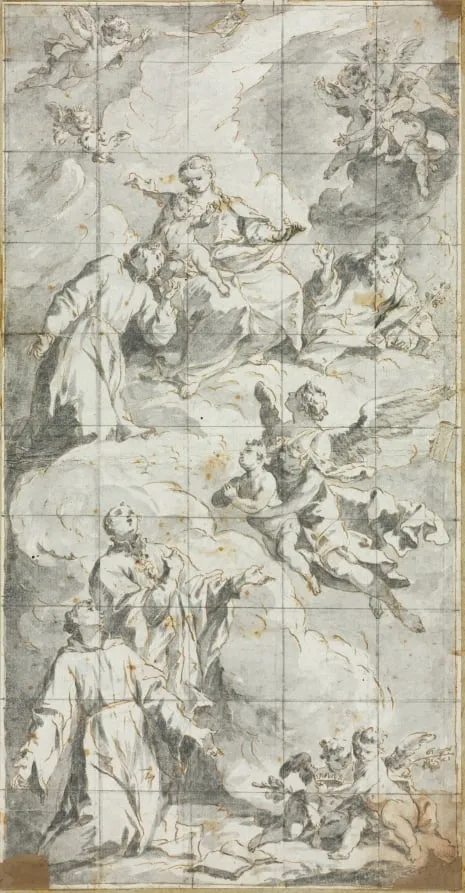
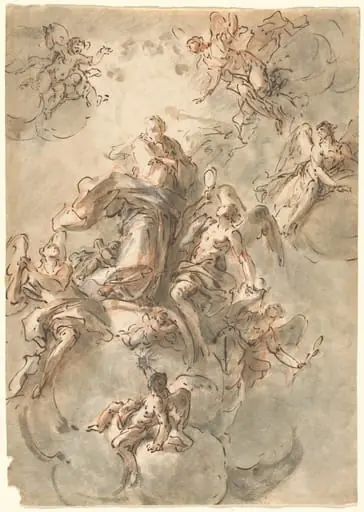
Apotheosis of the Virgin is a drawing by the Baroque artist Unknown. It dates from 1604 and is held in the collection of the Cleveland Museum of Art. This drawing depicts a celestial ascension scene centered on a female figure surrounded by ethereal light and drifting forms.
About this work
Overview
This drawing depicts a celestial ascension scene centered on a female figure surrounded by ethereal light and drifting forms.
This drawing depicts a celestial ascension scene centered on a female figure surrounded by ethereal light and drifting forms. Rendered in muted blues, whites, and gold, the composition emphasizes vertical movement and soft, flowing lines. The figures appear suspended in space, suggesting a spiritual elevation rather than a terrestrial setting. The work belongs to a tradition of religious imagery that visualizes divine ascent through layered, airborne groups.
Subject & Meaning
The central figure, identified as the Virgin Mary, is shown ascending into heaven with arms outstretched, a common iconographic gesture symbolizing intercession and divine reception. Surrounding her are angelic and human figures, some kneeling, others holding symbolic objects, representing the heavenly court and earthly devotees. The scene conveys theological concepts of glorification and the Virgin’s role as mediator between humanity and the divine.
Technique & Style
The drawing employs delicate linework and subtle tonal gradations to suggest volume and movement without heavy shading. Cloud forms are rendered as soft, billowing masses, creating a sense of weightlessness. The use of gold accents and pale hues reflects a preference for luminous, otherworldly effects. The composition’s upward thrust and swirling rhythms align with Baroque sensibilities, prioritizing emotional resonance over strict naturalism.
History & Provenance
The work’s origin is tied to devotional practices in early modern Catholic Europe, likely created as a preparatory study for a larger altarpiece or fresco. Its faded pigments suggest age and exposure, possibly from a church setting. While its exact creator remains unconfirmed, its style places it within the orbit of late 16th- or early 17th-century Italian or Flemish workshops devoted to Marian themes.
Context
Produced during a period of renewed emphasis on Marian devotion following the Council of Trent, such images served both liturgical and didactic functions. They reinforced Catholic teachings on the Virgin’s purity and heavenly intercession amid Protestant critiques. The dramatic, airborne composition mirrored broader artistic trends favoring theatricality and spiritual intensity in sacred art.
Legacy
This drawing exemplifies how religious subjects were translated into visual narratives that engaged viewers emotionally and spiritually. Its compositional strategies influenced later altarpieces and ceiling decorations in Baroque churches. Though modest in scale, it reflects a broader cultural investment in visualizing the divine realm, shaping devotional practices well into the 18th century.
Artist & collection

 Domestic Scene
 Giacomo and Cardinal Marco, investing Andrea, Abbot of San Zeno, with his Benefice
 The Nymph of Fontainebleau
 Portrait of a Woman
 Madonna and Child with Saints in the Enclosed Garden
 Venus and Minerva
 Family Group of Four on Sofa
 Wall painting from Room H of the Villa of P. Fannius Synistor at Boscoreale
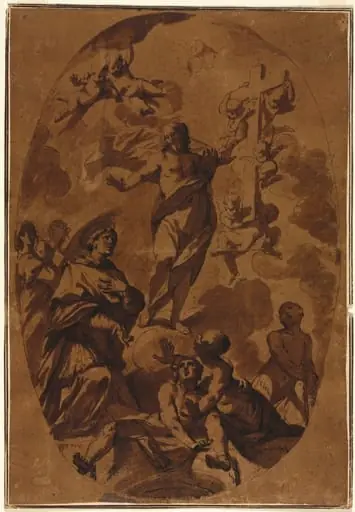 Christ Triumphant Appearing to an Interceding Saint
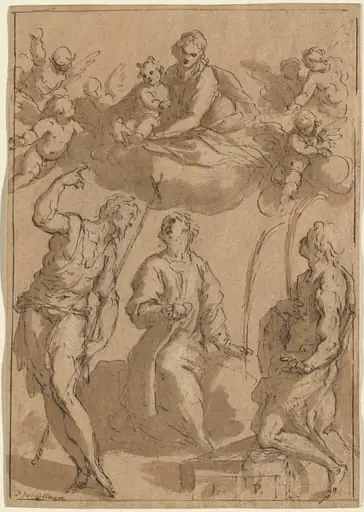 Madonna and Child in Glory with Saints John the Baptist, Stephen, and Lawrence
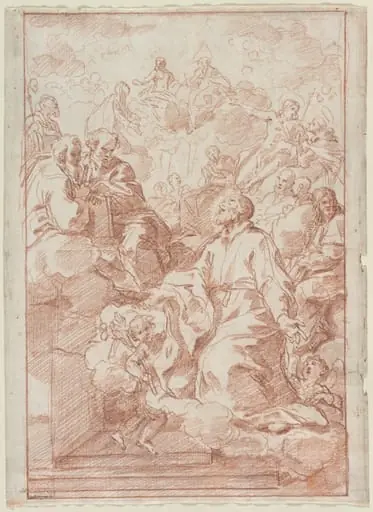 Vision of St. Philip Neri
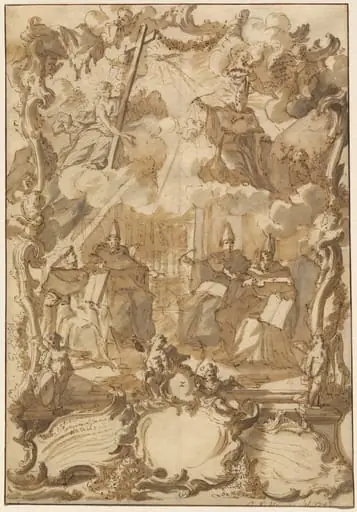 A Thesis Design with Doctors of the Church
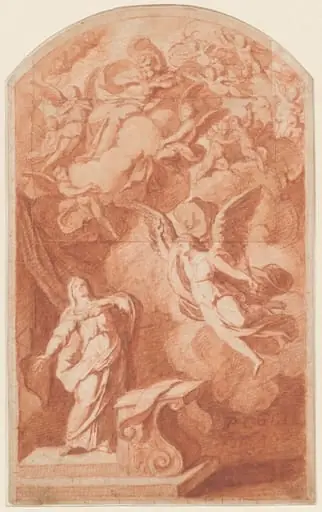 The Annunciation
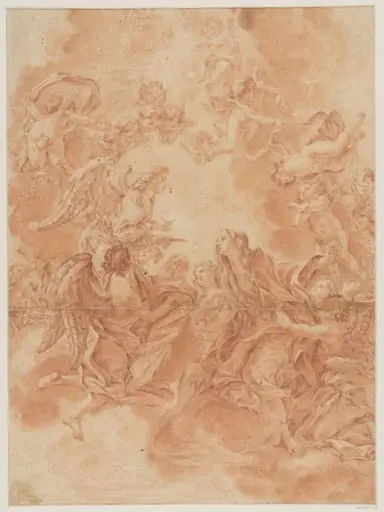 The Communion of St Mary Magdalene
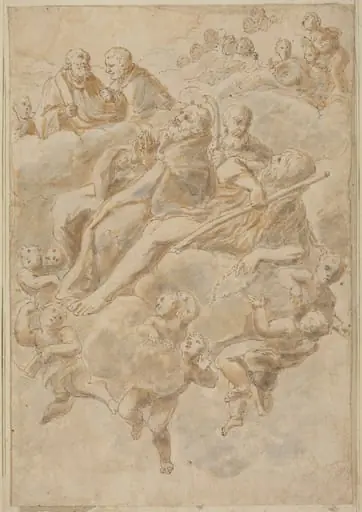 Ecstasy of a Saint
 The Madonna and Child in Glory Adored by Saints
 Anniversary of the Plague at Palermo
 Virgin of the Immaculate Conception