Artwork
Vision of St. Philip Neri
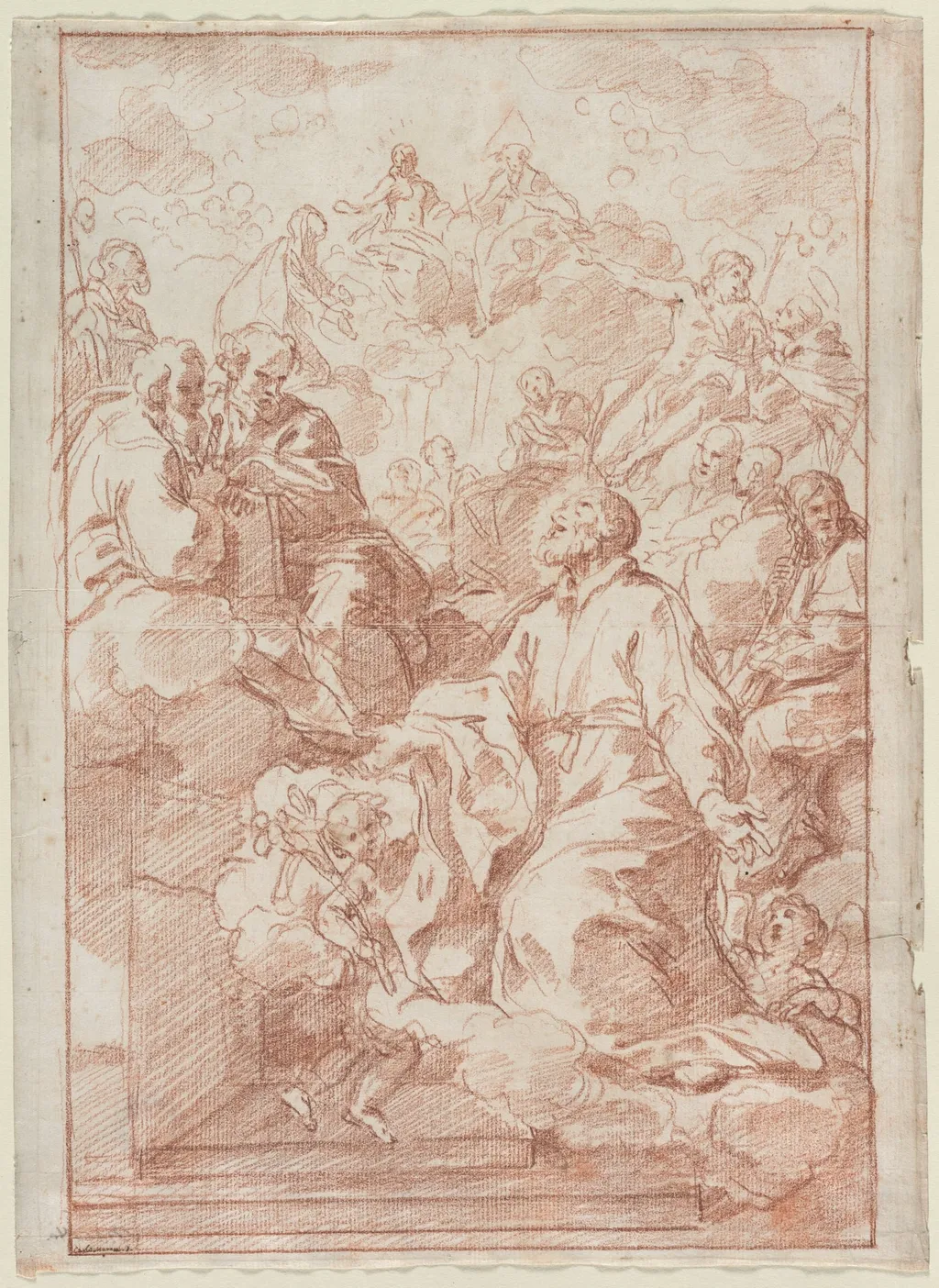
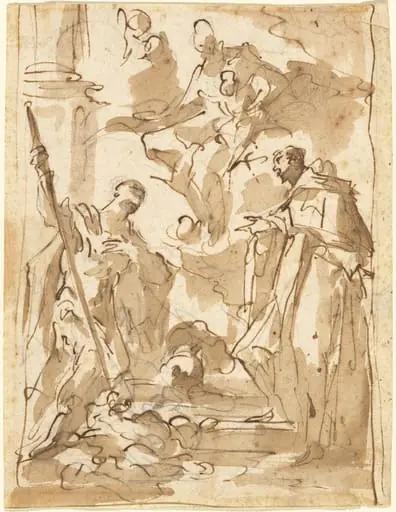
Vision of St. Philip Neri is a drawing by the Baroque artist Carlo Maratta. It dates from 1674 and is held in the collection of the Cleveland Museum of Art. Created around 1674 by Carlo Maratti, a prominent Italian Baroque painter, *Vision of St.
About this work
Overview
Created around 1674 by Carlo Maratti, a prominent Italian Baroque painter, *Vision of St. Philip Neri* is a religious drawing that exemplifies the artist's classicizing style, characterized by harmonious composition and nuanced light management.
Subject & Meaning
The drawing depicts the ecstatic vision of St. Philip Neri, a 16th-century saint, kneeling in prayer as he gazes up at celestial figures, likely saints or angels, amidst clouds, conveying a moment of spiritual intensity and devotion.
Technique & Style
Maratti's use of chiaroscuro creates a serene and contemplative atmosphere, with a strong light source illuminating the heavenly figures, contrasting with the more subdued lighting on the saint, underscoring the spiritual hierarchy.
History & Provenance
Originally created for an unidentified patron, possibly within Maratti's circle of high-profile Roman clients, the work is now part of the Cleveland Museum of Art's collection.
Context
Aligned with Maratti's religious commissions and the broader Baroque movement's emphasis on emotional and spiritual depth, the piece reflects the artistic and religious values of 17th-century Rome.
Legacy
While not individually renowned beyond its artist's oeuvre, *Vision of St. Philip Neri* contributes to the understanding of Maratti's religious works and the evolution of Baroque artistic practices in Rome.
Artist & collection
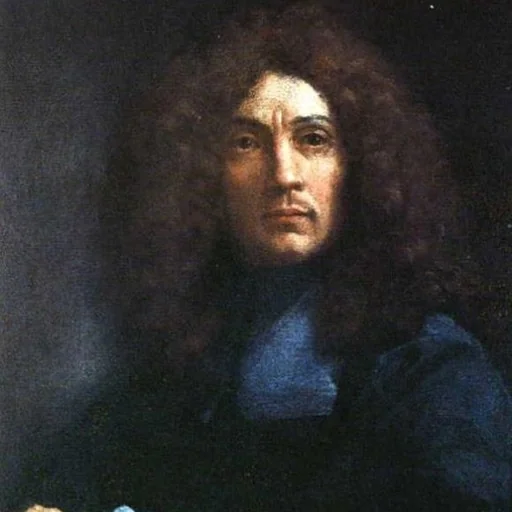
Artist
Carlo Maratta or Maratti (18 May 1625 – 15 December 1713) was an Italian Baroque painter and draughtsman, active principally in Rome where he was the leading painter in the second half of the 17th century.

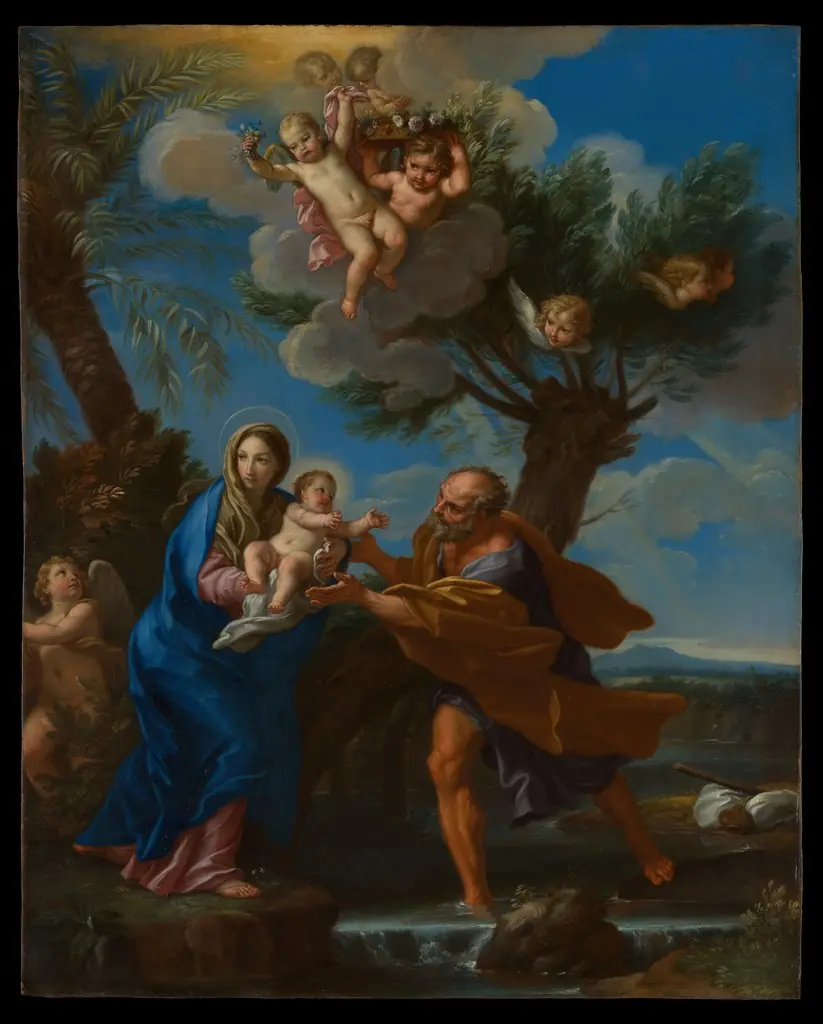
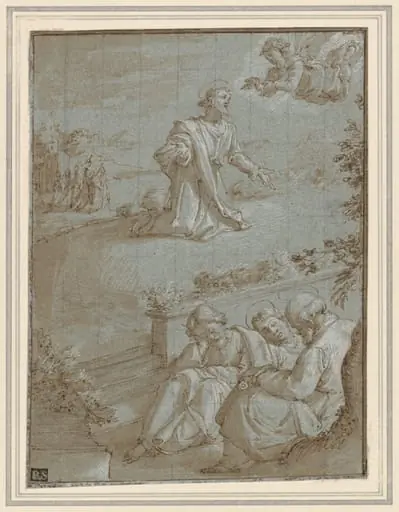 The Agony in the Garden
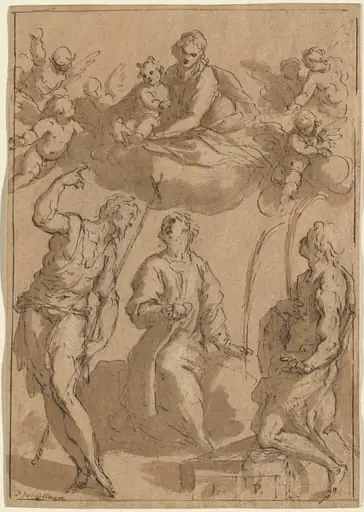 Madonna and Child in Glory with Saints John the Baptist, Stephen, and Lawrence
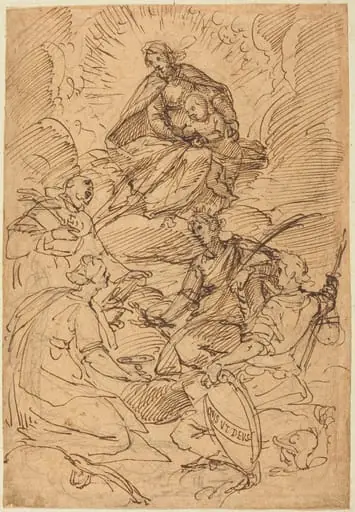 The Madonna and Child in Glory Adored by Saints
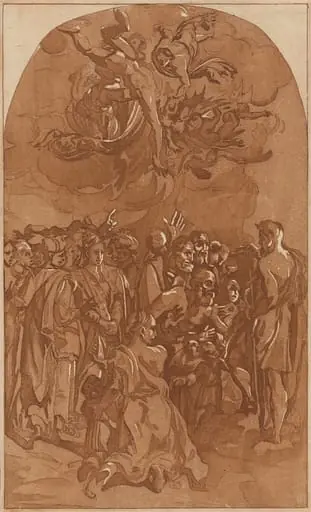 Saint John Preaching
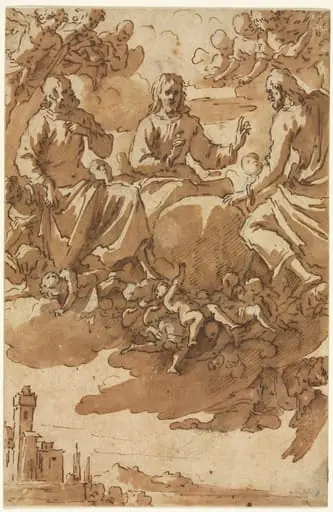 Christ in Glory with Two Saints
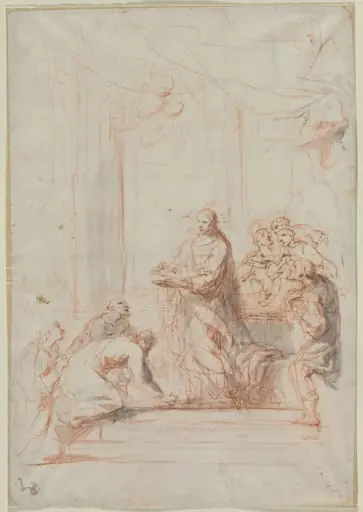 Christ Administering the Host
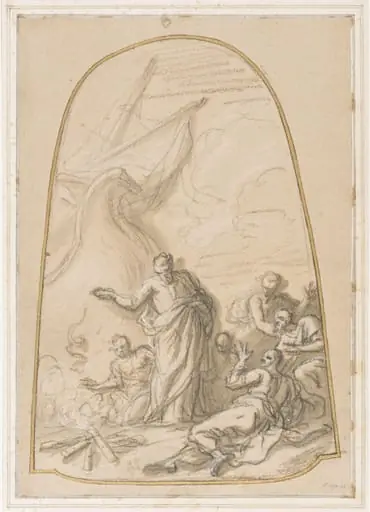 St Paul Shipwrecked on the Island of Malta
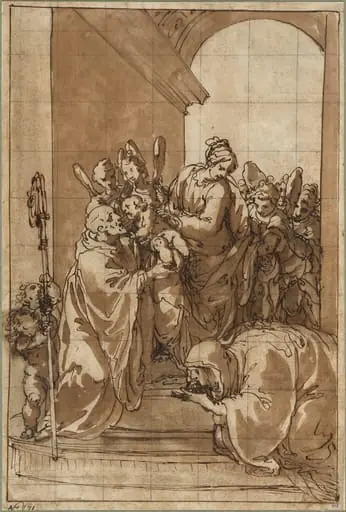 Madonna and Child with Angels, Saint Benedict, and Saint Scholastica
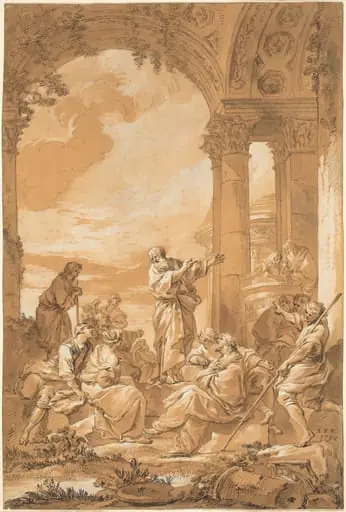 Saint Paul Preaching in Athens
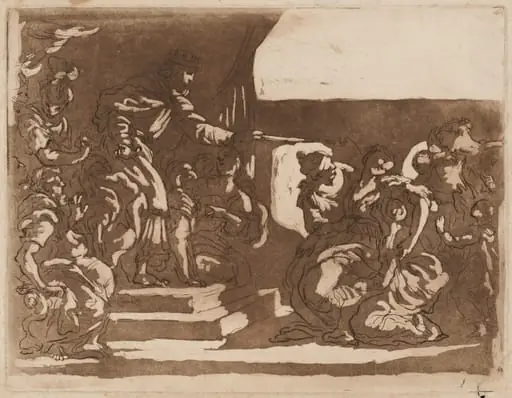 Esther before Ahasuerus
 The Madonna and Child in Glory with Saint Theodore and a Monastic Saint
![Study for the "Madonna della Scodella" [recto], by Correggio](https://artifactworldgallery.com/img/correggio--study-for-the-madonna-della-scodella-recto--cec1475fbb0f2ca2-w320.webp) Study for the "Madonna della Scodella" [recto]
Study for the "Madonna della Scodella" [recto]