Artwork
Architectural drawing of Tirumala Nayak at Madura,
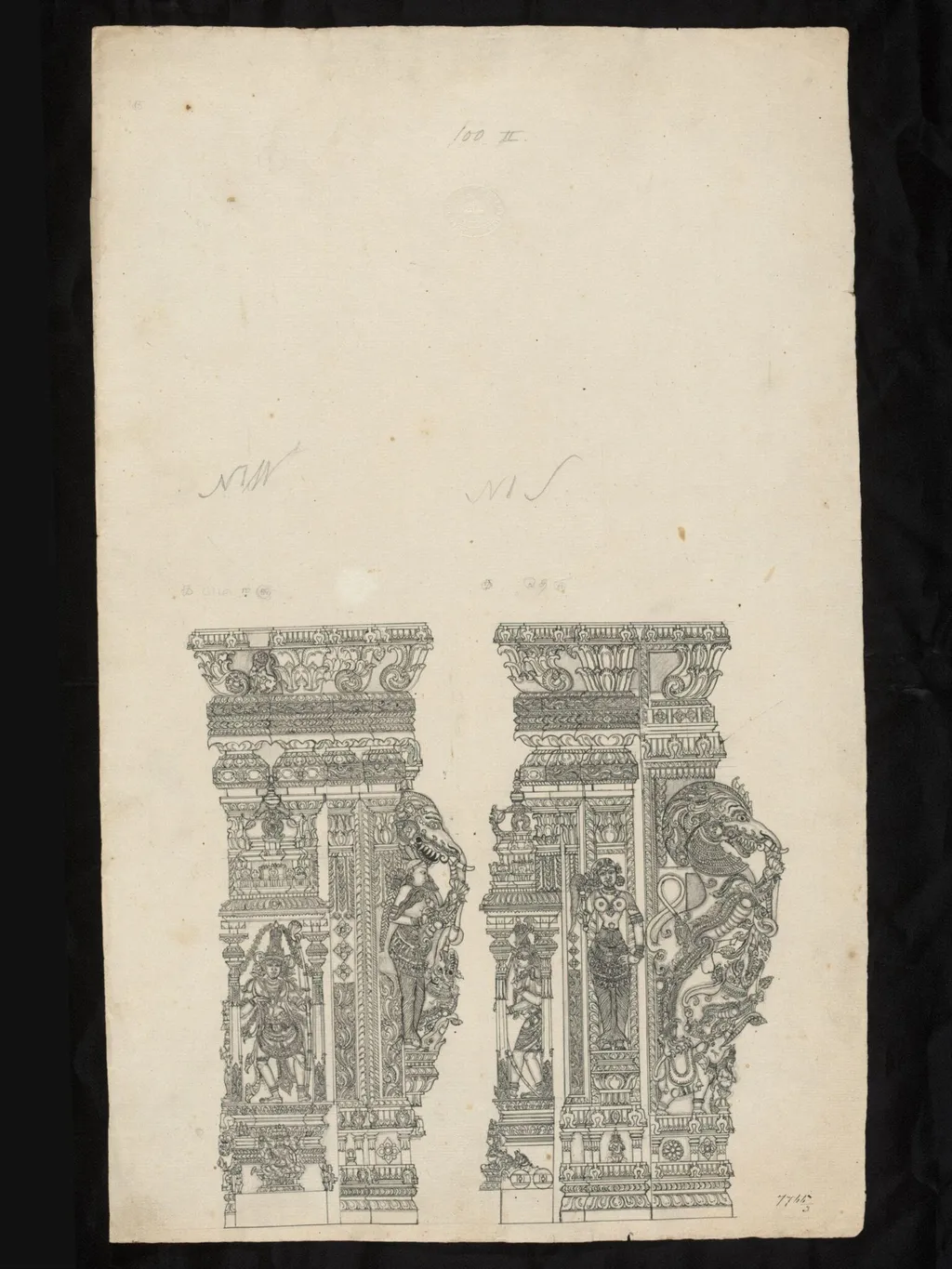
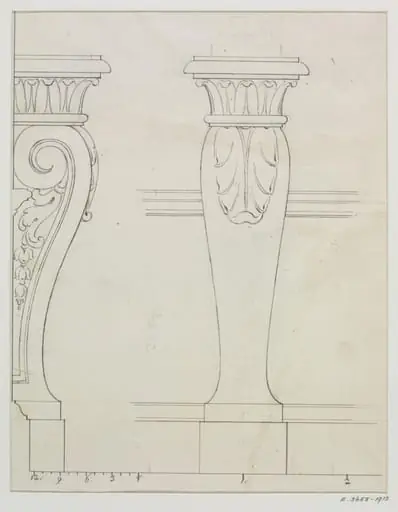
Architectural drawing of Tirumala Nayak at Madura, is a drawing by the Romanticist artist Unknown. It dates from 1780 and is held in the collection of the Victoria and Albert Museum.
About this work
Overview
This collection comprises 143 ink drawings that document the eastern pillared hall of the Great Temple at Madurai, commonly identified as Tirumala Nayak’s choultry. Executed by an artist familiar with Dravidian architectural conventions, the sheets render the hall’s massive stone columns in precise line work, employing hatching to suggest depth and shadow.
Subject & Meaning
The drawings focus on the hall’s array of richly carved pillars, illustrating multiple elevations and variations. By selecting examples from across the entire structure rather than a single segment, the series captures the principal decorative motifs and structural types that define the hall’s aesthetic and ritual significance within the temple complex.
Technique & Style
Rendered in fine ink on paper, the images employ disciplined line and cross‑hatching to convey three‑dimensional form. The artist’s adherence to established Dravidian architectural grammar is evident in the accurate proportions, columnar orders, and ornamental details, reflecting a systematic approach to architectural recording.
History & Provenance
The drawings are linked to the work of Adam Blackader, a British resident in Madurai during the 1780s. In a 1789 letter to Sir Joseph Banks, Blackader noted a three‑year effort producing both the drawings and eighteen bronze models that correspond in scale to the sheets. Comparable sets were later compiled under Colin Mackenzie and are held in the India Office Library.
Context
British fascination with Madurai’s temple architecture in the late eighteenth century spurred the creation of visual records for scholarly and diplomatic audiences. The drawings served as reference material for bronze replicas now housed in institutions such as the Victoria & Albert Museum and the Ashmolean Museum, illustrating the exchange of architectural knowledge between India and Europe.
Artist & collection

 Domestic Scene
 Giacomo and Cardinal Marco, investing Andrea, Abbot of San Zeno, with his Benefice
 The Nymph of Fontainebleau
 Portrait of a Woman
 Madonna and Child with Saints in the Enclosed Garden
 Venus and Minerva
 Family Group of Four on Sofa
 Wall painting from Room H of the Villa of P. Fannius Synistor at Boscoreale
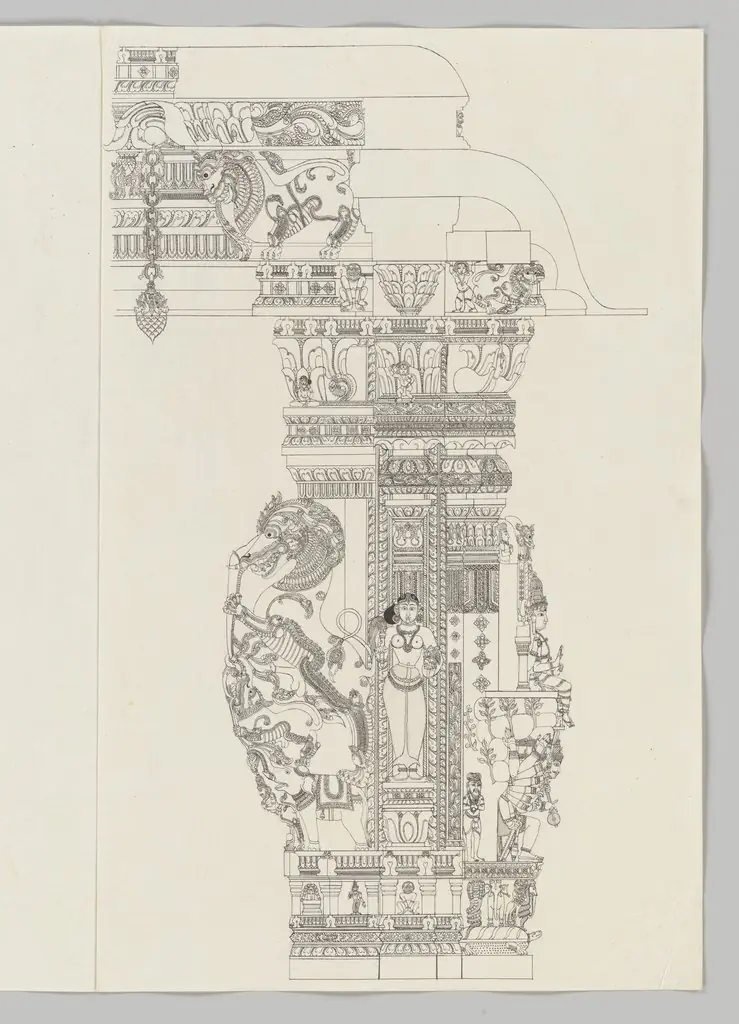 Shiva Ravananugrahamurti; woman holding a flywhisk; rearing yali
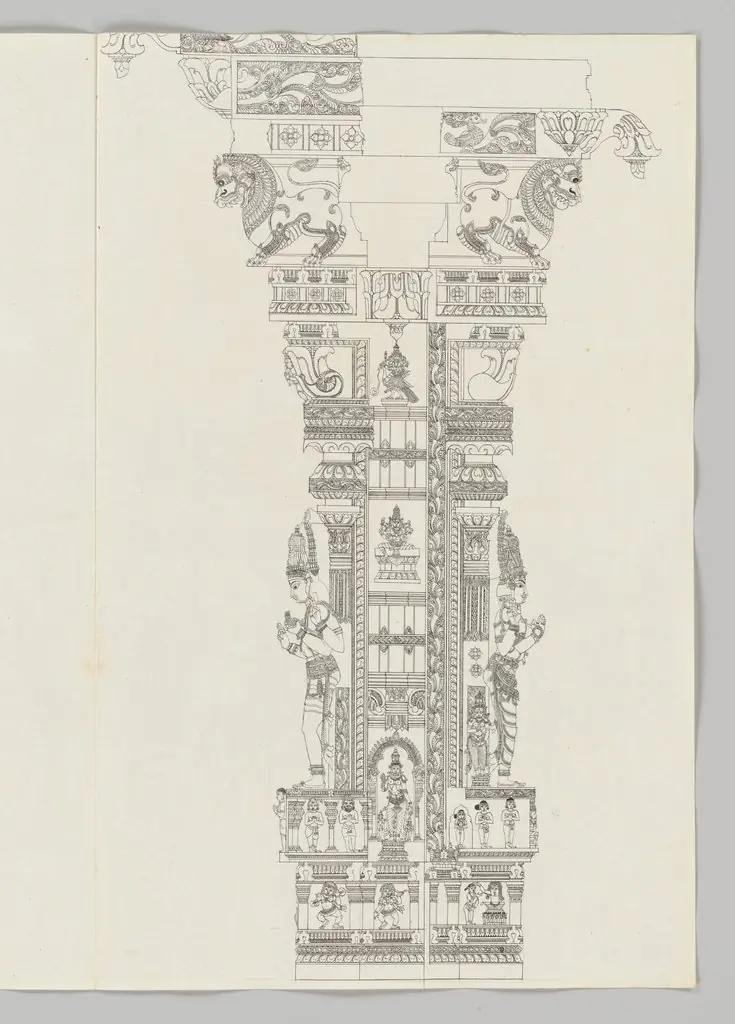 Sundareshvara teaching a bird a mantra; Nandishvara.
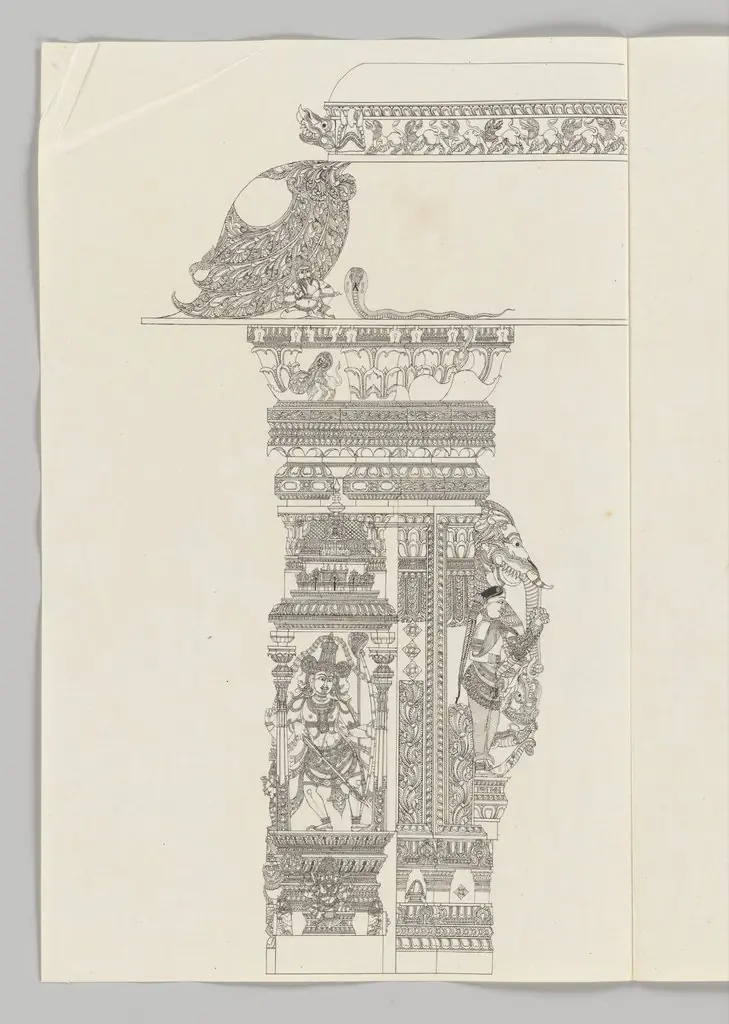 Shiva as Tripsurasamhara; woman holding a flywhisk; rearing yali
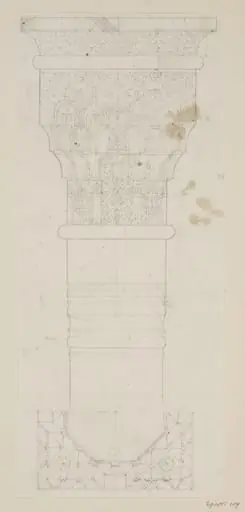 Drawing of capital
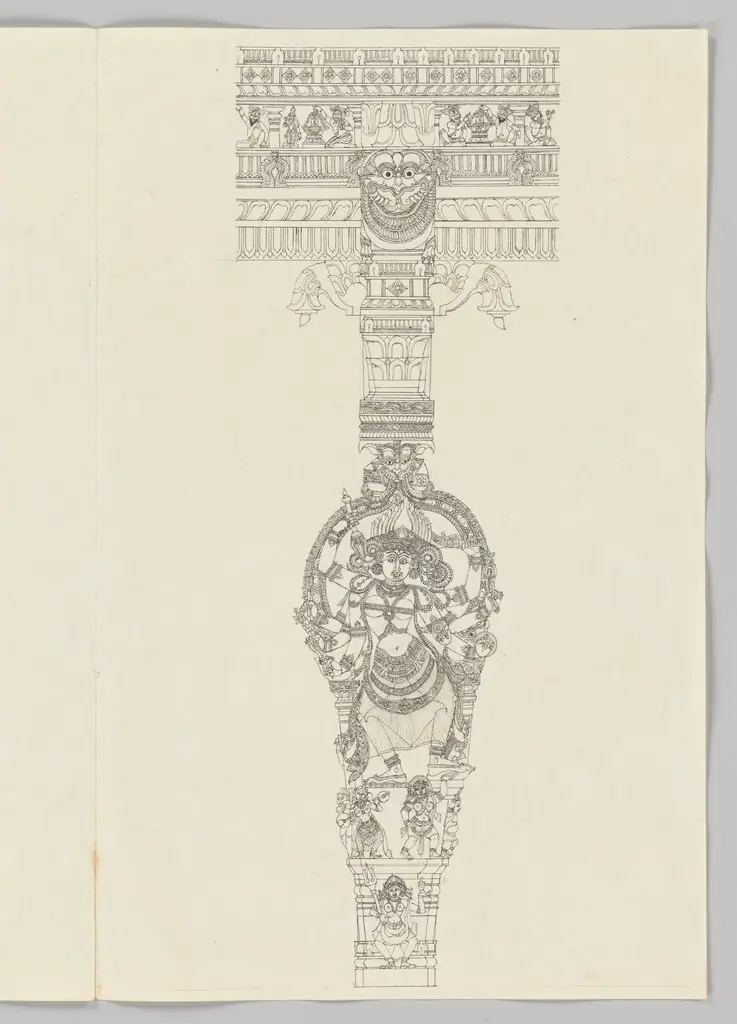 Kali
Kali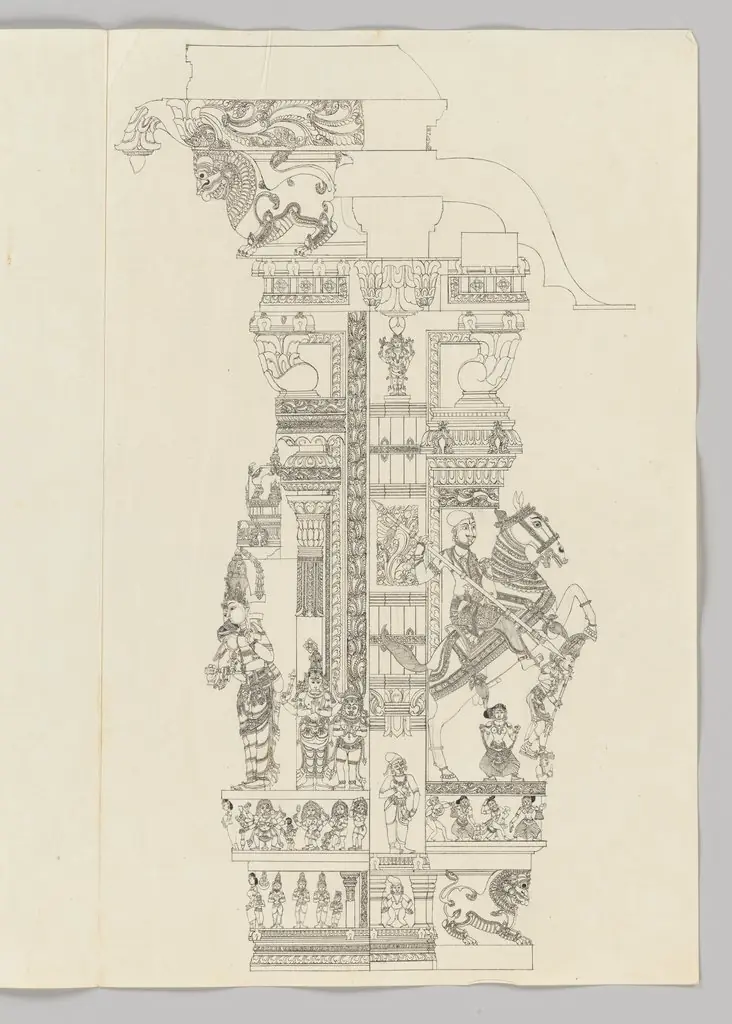 Marriage of Minakshi and Sundareshvara; equestrian warrior with spear
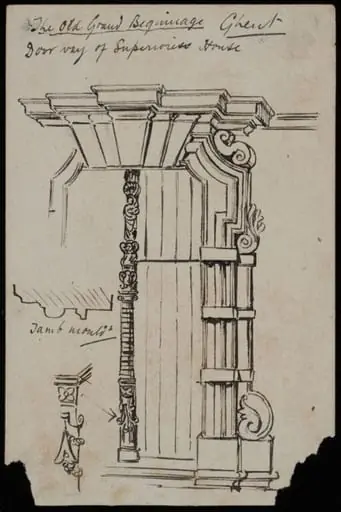 Doors and windows
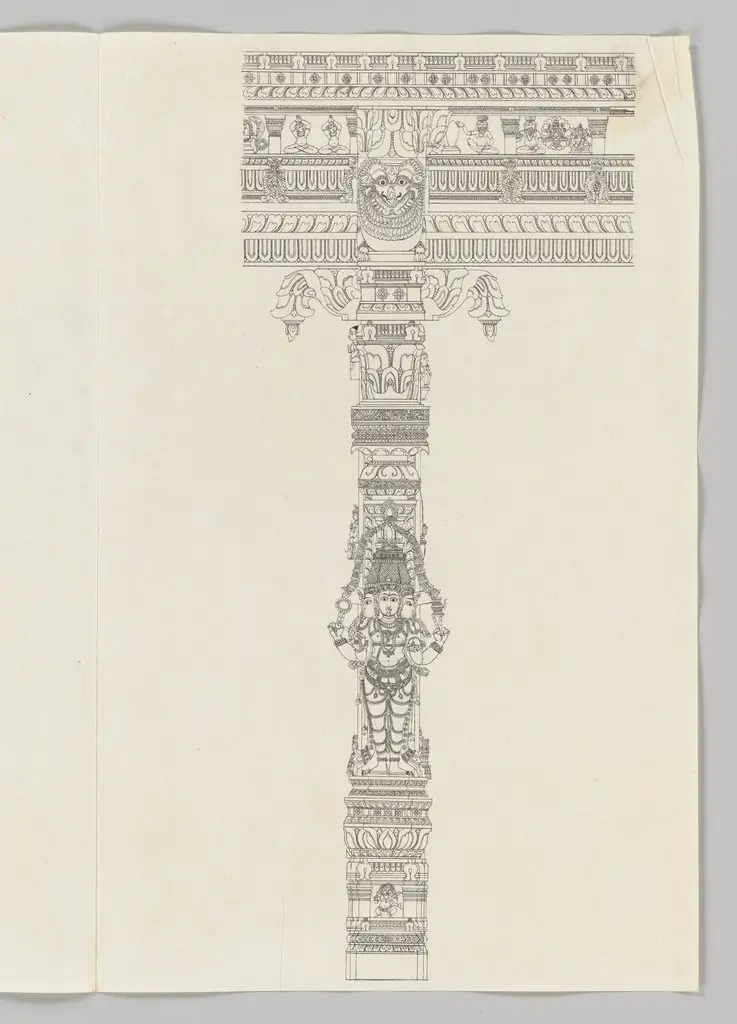 Brahma
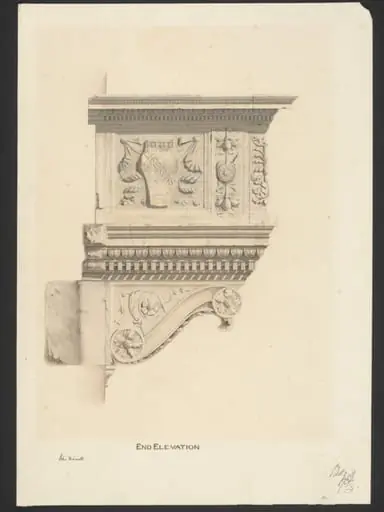 Drawing of the cantoria of Santa Maria Novella, Florence
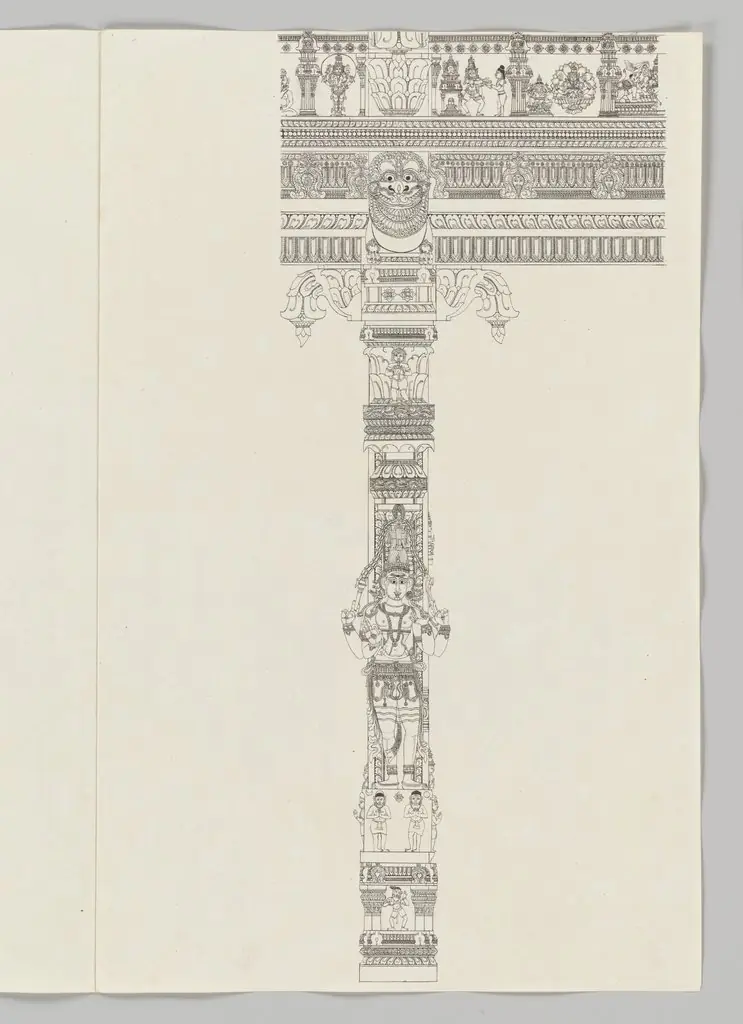 Sundareshvara teaching a bird a mantra
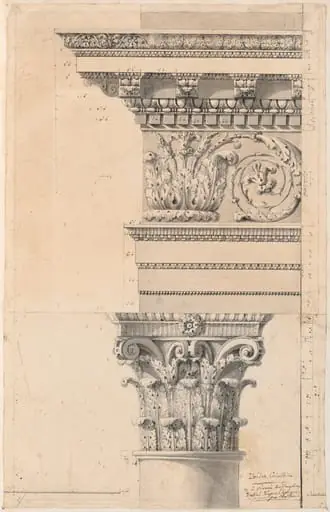 L'Ordre Corinthian
 Untitled