Artwork
L'Ordre Corinthian
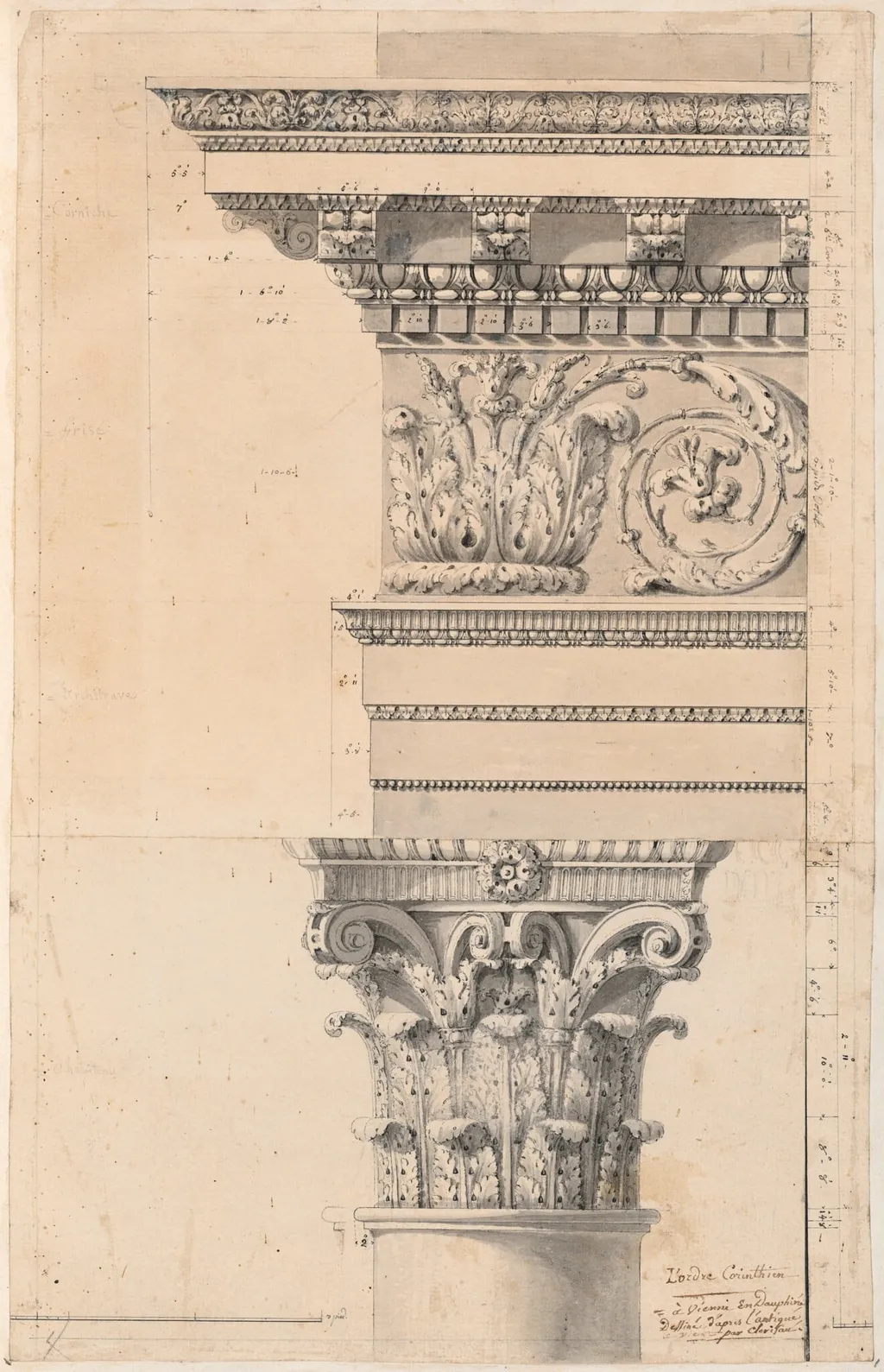
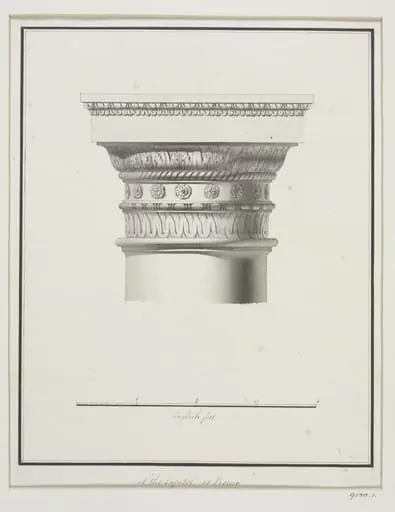
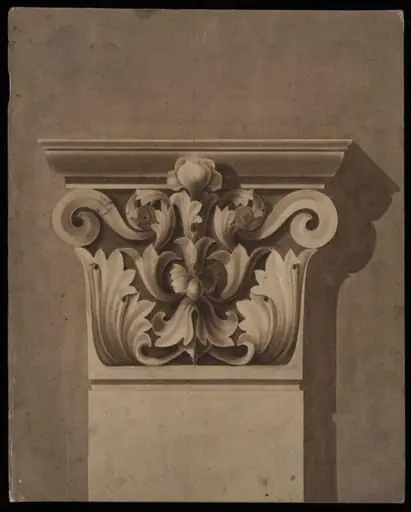
L'Ordre Corinthian is a graphite drawing by the Romanticist artist Charles Louis Clérisseau. It dates from 1768 and is held in the collection of the National Gallery of Art. Executed in 1768, this sheet is a meticulous study of the Corinthian order by Charles-Louis Clérisseau, a French architect and draftsman.
About this work
Overview
Executed in 1768, this sheet is a meticulous study of the Corinthian order by Charles-Louis Clérisseau, a French architect and draftsman. Rendered in pen and gray ink with wash over graphite on laid paper, the drawing exemplifies the period’s scholarly engagement with classical antiquity. Clérisseau’s precise linework and layered technique capture both structural logic and ornamental refinement.
Subject & Meaning
The drawing isolates the Corinthian capital, its acanthus leaves and volutes rendered with exacting detail. Rather than a finished composition, it functions as a visual notation—a record of proportional relationships and decorative motifs drawn from ancient Roman models. Such studies served as reference material for architects and designers seeking to revive classical forms.
Technique & Style
Clérisseau’s method combines preliminary graphite underdrawing with controlled ink lines and subtle washes to model form. The absence of smudging underscores his disciplined approach, while the layered application creates depth without sacrificing clarity. This technique aligns with the neoclassical emphasis on precision, reflecting both archaeological rigor and artistic skill.
History & Provenance
Created during Clérisseau’s extended study of Roman ruins, the drawing likely circulated among his patrons and collaborators. His reputation as a conduit of classical knowledge attracted commissions from figures like Catherine the Great and Thomas Jefferson. Such works were often kept in studio archives, consulted for architectural projects or instructional purposes.
Context
The late 18th century saw a revival of interest in ancient Roman architecture, driven by Grand Tour travelers and architects like Clérisseau. His drawings bridged archaeological discovery and design practice, disseminating classical motifs across Europe and America. This sheet exemplifies the era’s fusion of empirical observation and artistic idealization.
Legacy
Clérisseau’s studies contributed to the codification of neoclassical design principles, influencing generations of architects. His work underscores the role of drawing as both analytical tool and creative medium, preserving classical details for later application. Today, such sheets offer insight into the intellectual and technical foundations of neoclassicism.
Artist & collection
Artist
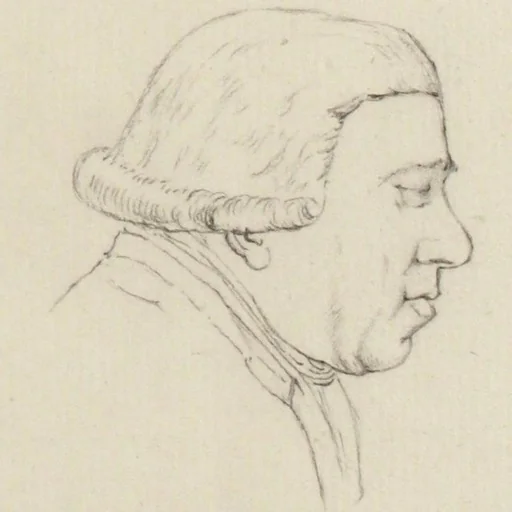
Charles-Louis Clérisseau (28 August 1721 – 9 January 1820) was a French architect, draughtsman, antiquary, and artist who became a leading authority on ancient Roman architecture and Roman ruins in Italy and France.

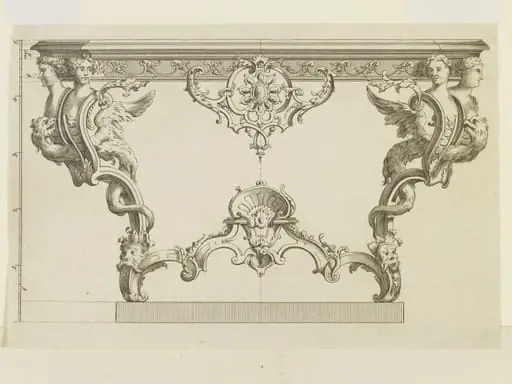 Nouveaux Desseins de Pieds de Tables et de Vases et Consoles de Sculpture
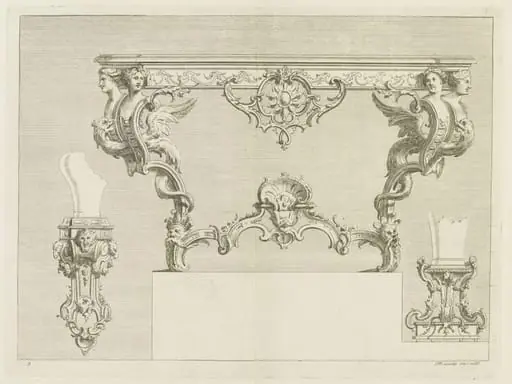 Nouveaux Desseins de Pieds de Tables et de Vases et Consoles de sculpture en bois Inventes par le sieur Pineau sculpteur
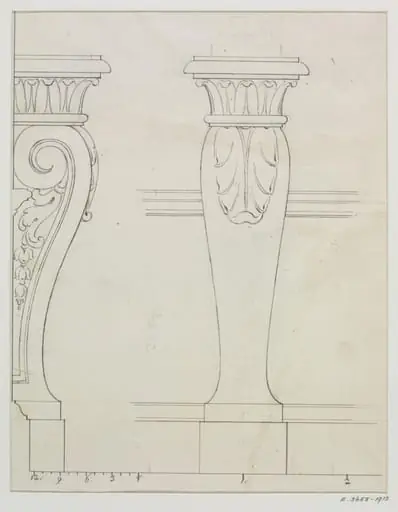 Untitled
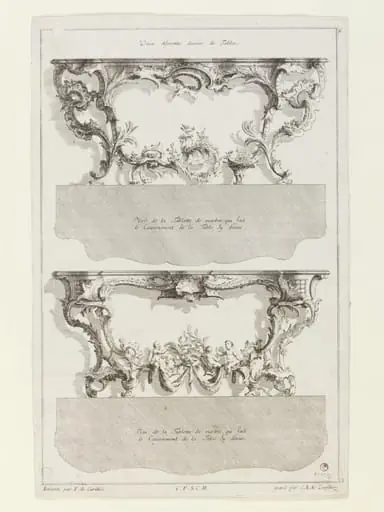 Ornament print showing a pair of console tables
 Untitled
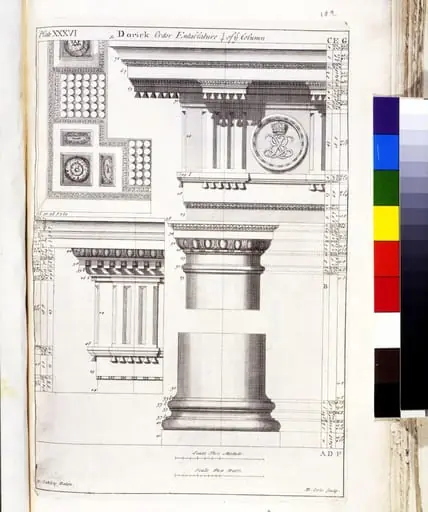 Untitled
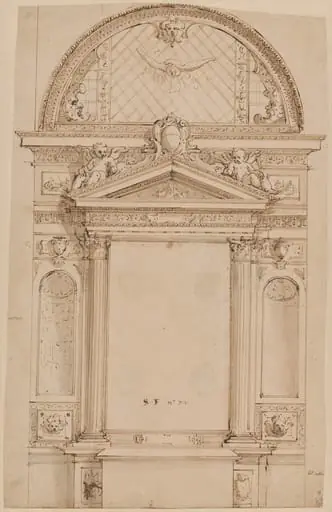 Design for an Altar
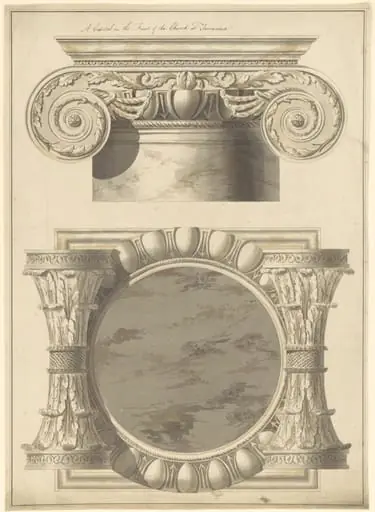 Plan and elevation of a capital in the front of the church at Terracina
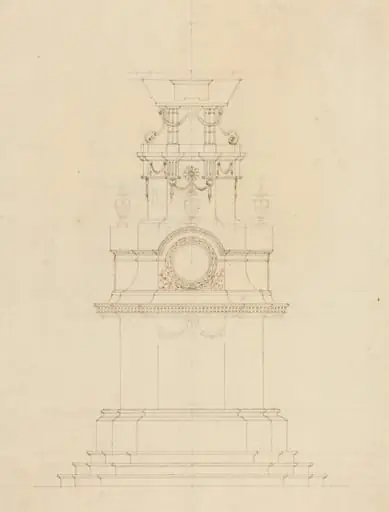 Design for a Catafalque
 Untitled
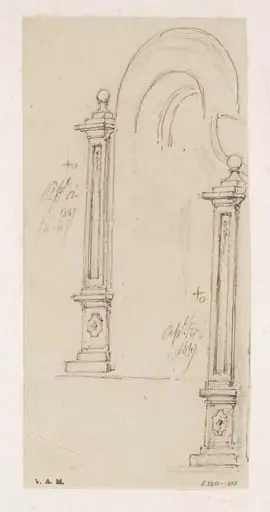 Drawings of a squared column and an arch
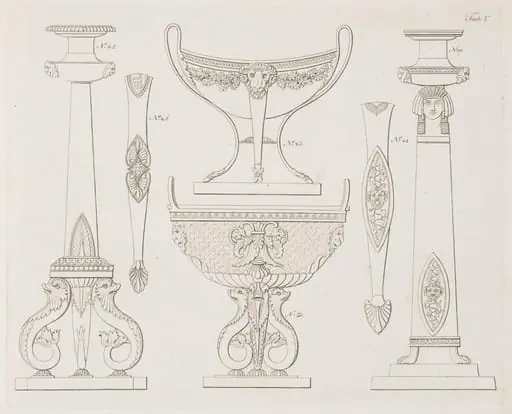 One of 7 engraved prints