Artwork
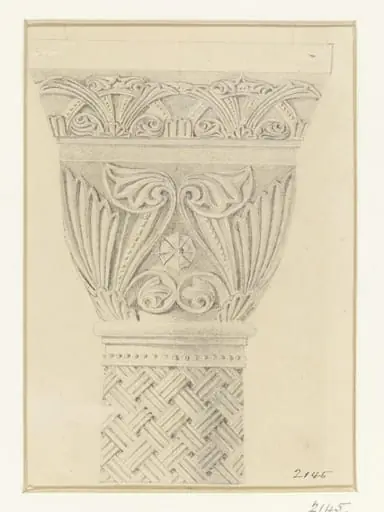
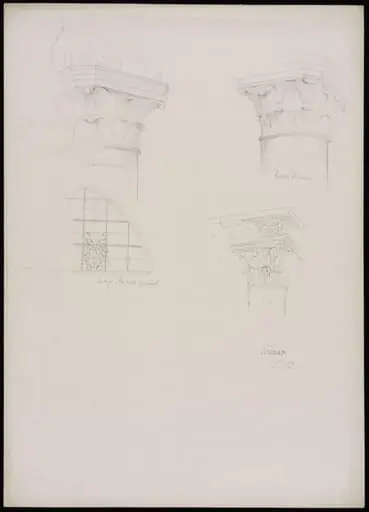
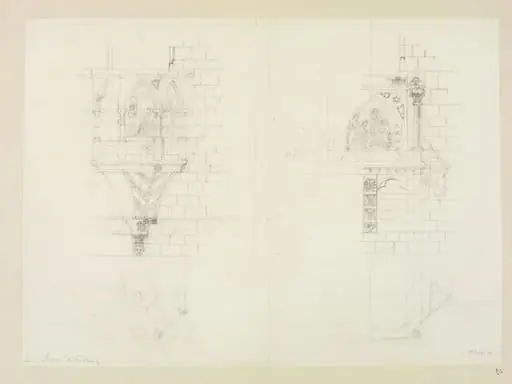
Drawing of capital
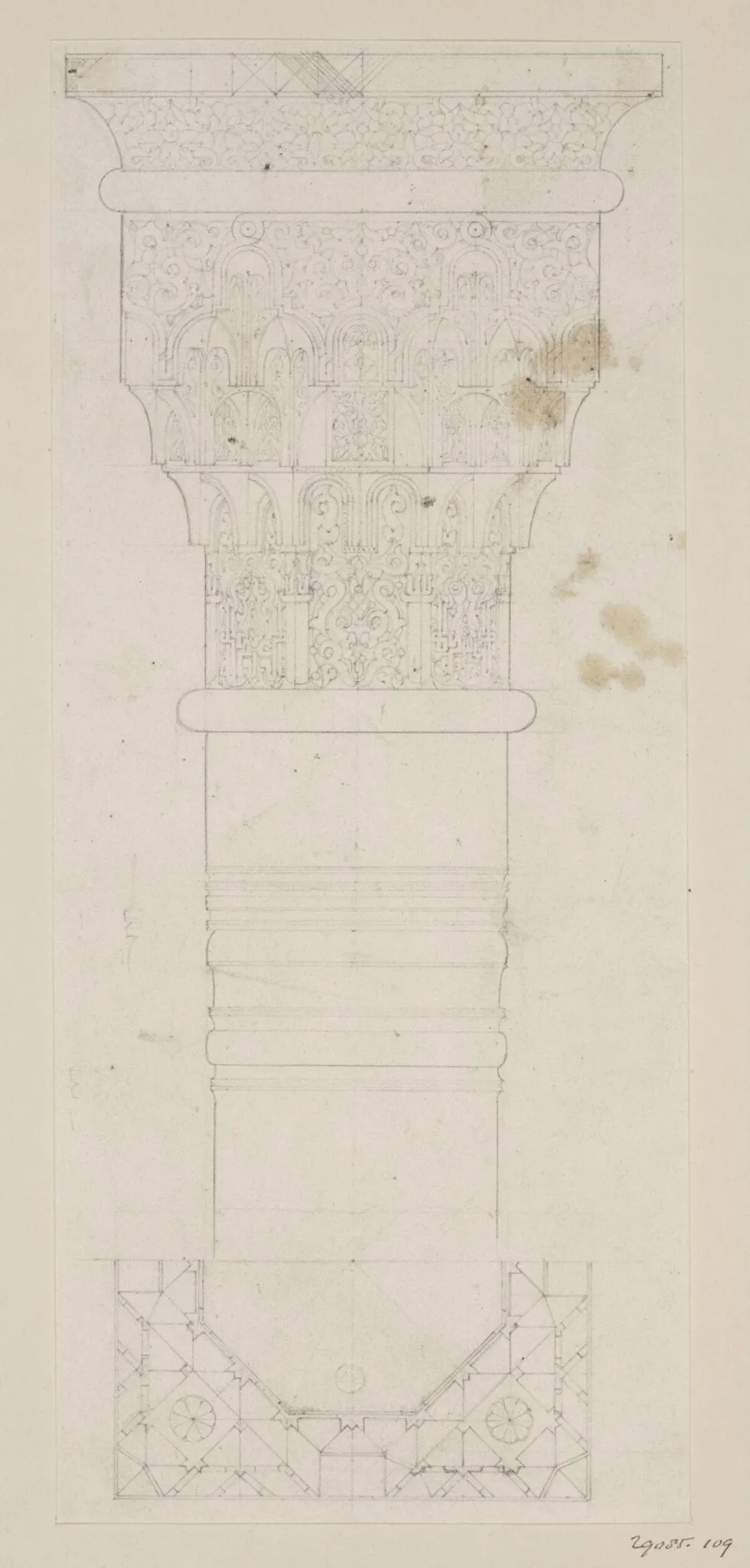
Drawing of capital is a drawing by the Romanticist artist Owen Jones. It dates from 1809 and is held in the collection of the Victoria and Albert Museum.
About this work
Overview
Owen Jones, an English architect and designer, produced a detailed architectural record of the Alhambra following a trip to Granada in 1834.
Owen Jones, an English architect and designer, produced a detailed architectural record of the Alhambra following a trip to Granada in 1834. His companion, Jules Goury, died during a cholera outbreak, prompting Jones to continue their collaborative work alone. He financed and published the findings as a two-volume set, featuring meticulously rendered plates that documented the palace’s structural and decorative elements with unprecedented precision.
Subject & Meaning
The drawing captures a capital from the Alhambra, a medieval Islamic palace complex in Spain. It reflects Jones’s interest in Islamic ornamentation as a system of geometric harmony and craftsmanship. Rather than treating it as exotic decoration, he presented it as a legitimate architectural language worthy of study, challenging prevailing European hierarchies of artistic value at the time.
Technique & Style
Jones employed chromolithography to reproduce the capital’s intricate patterns in color, a technically demanding process for the period. His drawings combined precise architectural drafting with careful observation of surface detail, preserving the subtleties of stucco carving and polychromy. The result was a hybrid of scientific documentation and aesthetic sensitivity, bridging architectural accuracy and artistic reproduction.
History & Provenance
Jones and Goury’s expedition was cut short by Goury’s death in 1834. Jones returned to England and spent years compiling the survey, self-funding its publication in 1842–1845. The work became a foundational reference for scholars and designers, with original prints now held in major institutional collections, including the Victoria and Albert Museum and the Royal Institute of British Architects.
Context
In the early 19th century, European interest in Islamic art was growing but often superficial. Jones’s work emerged during a period of rising archaeological and ethnographic documentation. His commitment to accurate color reproduction and structural analysis distinguished his approach from earlier romanticized depictions, aligning his project with emerging standards of scholarly visual record-keeping.
Legacy
Jones’s Alhambra publications influenced generations of designers, educators, and architects, particularly in the development of the Decorative Arts movement. His emphasis on pattern, proportion, and color theory informed later design education, including his role at the South Kensington Museum. The work remains a key reference for the study of Islamic architecture in the Western canon.
Artist & collection
Artist
English architect and designer Owen Jones spent the 1830s in Egypt and later sketched its temples in crisp watercolours.

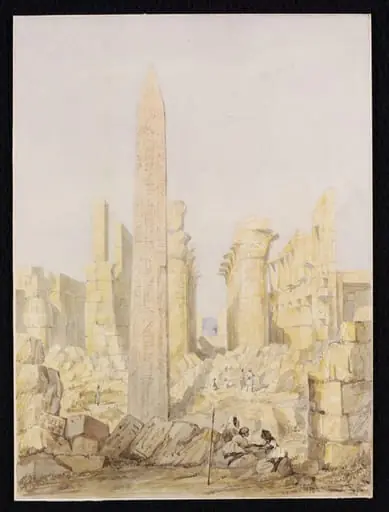 Great Temple. Karnac. Thebes
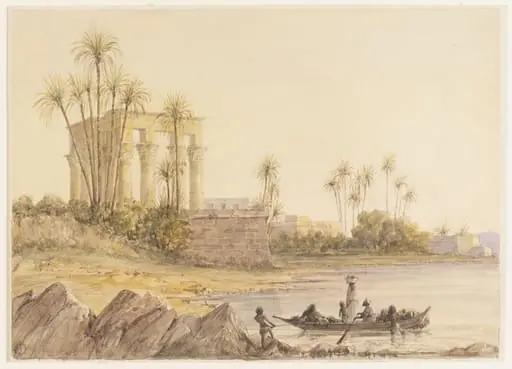 Landing Place. Philoe
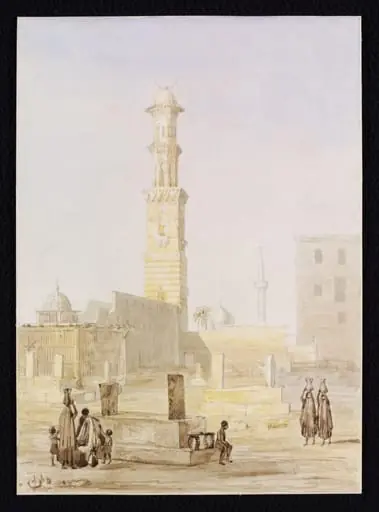 Tombs near Cairo
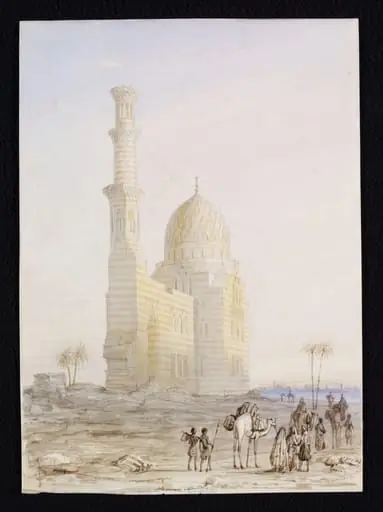 Tomb near Cairo
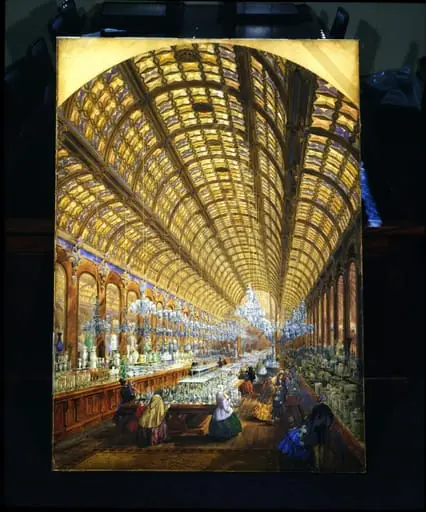 Osler's Gallery, Oxford Street, London
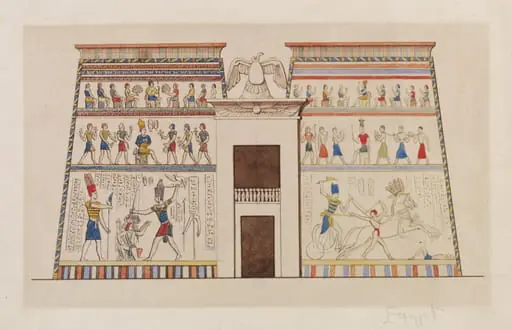 Architectural drawing of an entrance pylon to an Egyptian temple
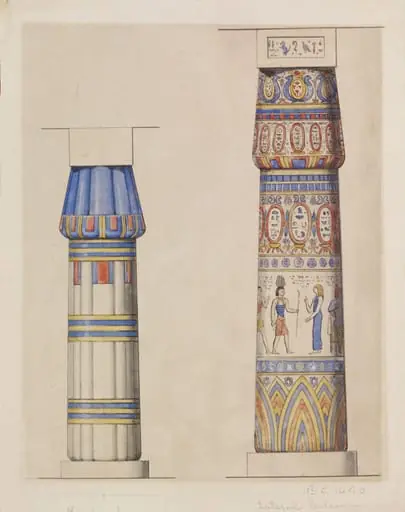 Temple of Luqsor B.C.1490 Lateral Column Temple of Karnak B.C.1490
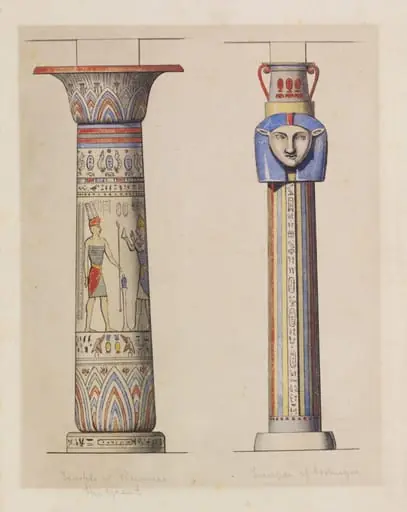 Temple of Ramses the Great B.C.1420. Temple of Sedingar B.C.1490
 Paradigmata Graphics Variorum Artificum
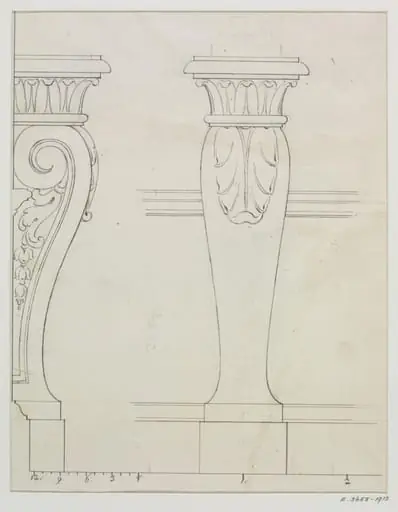 Untitled
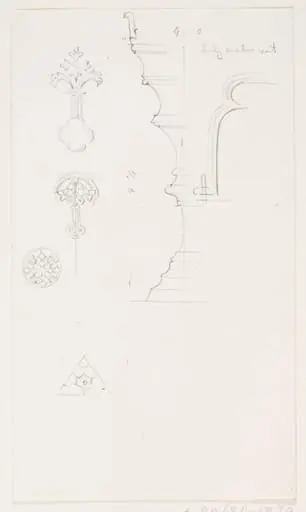 Topographical drawing
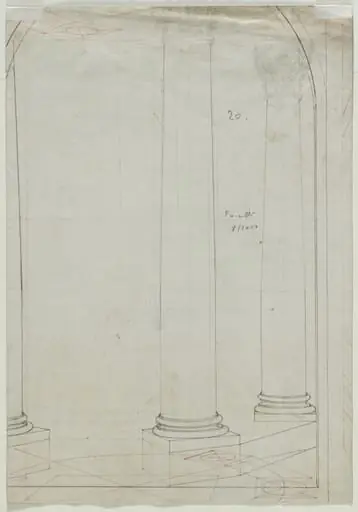 Architectural Drawing of Columns (verso)
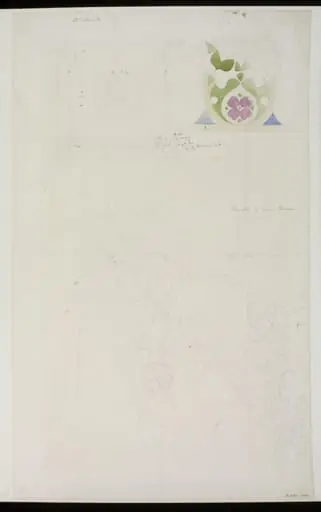 'Panells of Drawing room'
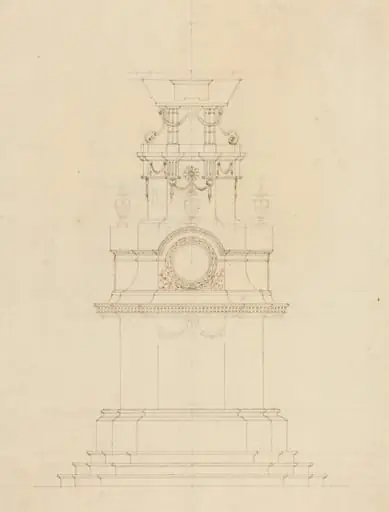 Design for a Catafalque
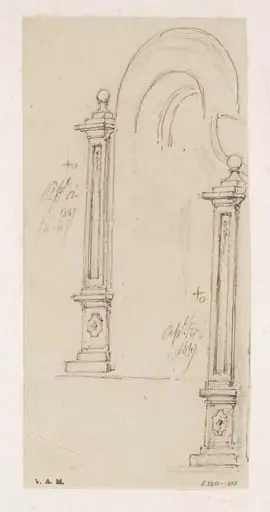 Drawings of a squared column and an arch
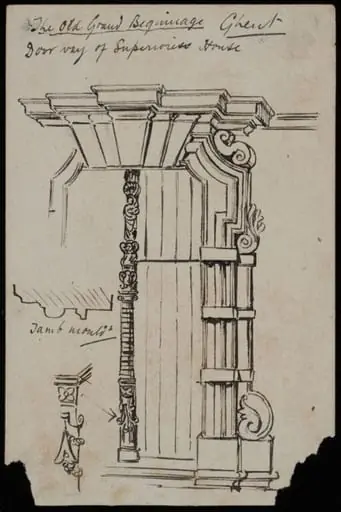 Doors and windows
 Untitled
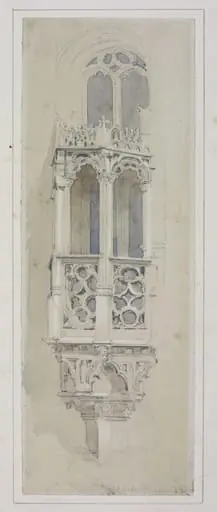 Sketch of a window and balcony, Hotel de Ville, Brussels
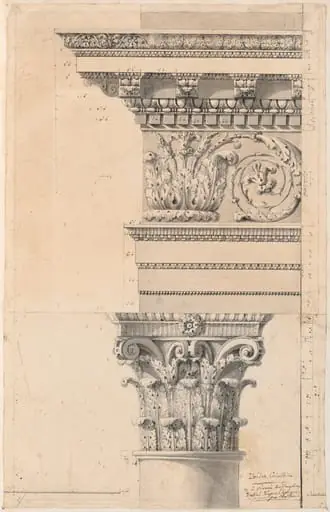 L'Ordre Corinthian
 Untitled