Artwork
Bab-i-Hümayün (Imperial Gate) to Topkapi Sarayi, with the Fountain of Sultan Ahmet III
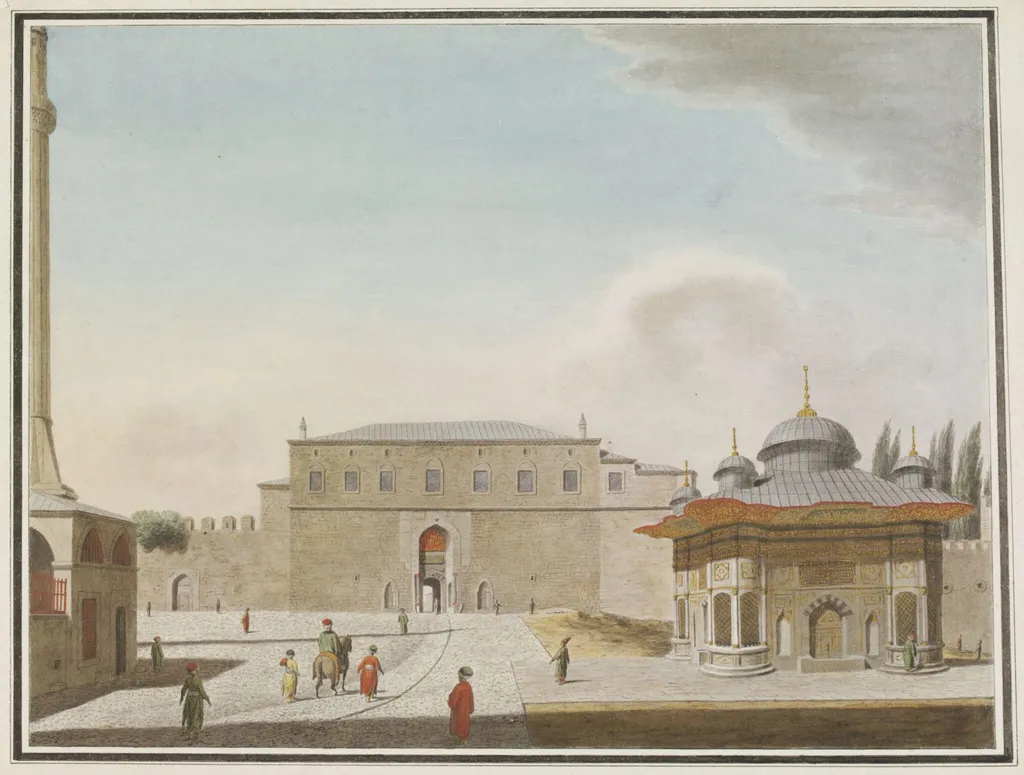
Bab-i-Hümayün (Imperial Gate) to Topkapi Sarayi, with the Fountain of Sultan Ahmet III is a watercolor work on paper by the Romanticist artist Unknown. It dates from 1810 and is held in the collection of the Victoria and Albert Museum.
About this work
Overview
The watercolor portrays the Imperial Gate (Bab-i-Hümayün), the principal entrance to Istanbul’s Topkapi Palace, and the nearby Fountain of Sultan Ahmet III. Rendered in a light, pastel palette, the composition captures a tranquil courtyard scene with stone arches, a domed fountain adorned in gold and red tiles, and figures in colorful attire moving about the space.
Subject & Meaning
The gate and fountain together symbolize the ceremonial threshold of the Ottoman court, marking the transition from public to private imperial realms. The inclusion of everyday figures and a horse suggests the mingling of official ceremony with daily life, emphasizing the accessibility of the palace’s outer precincts to visitors and courtiers alike.
Technique & Style
Executed in transparent watercolor, the artist employs delicate washes to convey the pale sky and luminous stone surfaces, while finer brushwork delineates architectural details such as arched windows and the fountain’s gilded dome. The overall effect aligns with early‑19th‑century Romantic sensibilities, where realistic depictions of historic sites serve to evoke atmosphere and sentiment.
History & Provenance
Created in 1810 by an unidentified hand, the work entered the modern art market through the collection of Rodney Searight. It was subsequently auctioned in January 1970, where Bt. WT Spencer acquired it for £20, marking its transition from private ownership to a broader collector base.
Context
The early nineteenth century saw European artists traveling to the Ottoman Empire, documenting its architecture with a blend of empirical observation and romantic imagination. Watercolors like this one provided visual records of iconic sites such as Topkapi’s gate, while also catering to a growing Western fascination with exotic Eastern locales.
Artist & collection

 Domestic Scene
 Giacomo and Cardinal Marco, investing Andrea, Abbot of San Zeno, with his Benefice
 The Nymph of Fontainebleau
 Portrait of a Woman
 Madonna and Child with Saints in the Enclosed Garden
 Venus and Minerva
 Family Group of Four on Sofa
 Wall painting from Room H of the Villa of P. Fannius Synistor at Boscoreale
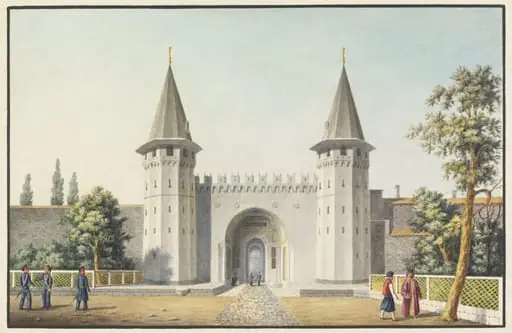 Orta Kapi or the Middle Gate of Topkapi Sarayi
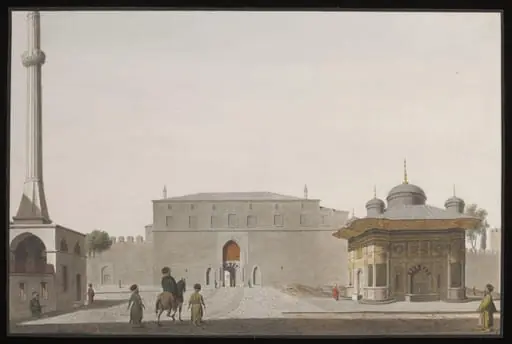 Bab-i-Hümayün (Imperial Gate) to Topkapi Sarayi, with the Fountain of Sultan Ahmet III
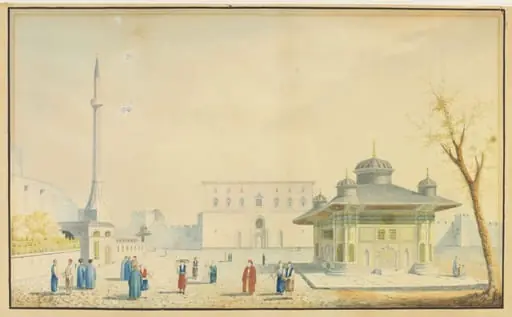 The Bab-i Hümayün or Imperial Gate of Topkapi Sarayi, with the Fountain of Sultan Ahmet III
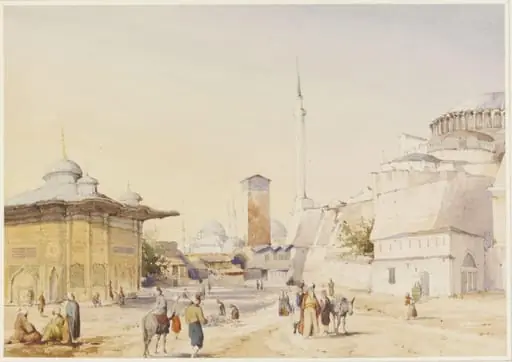 Fountain & part of Mosque of St. Sophia, Stamboul
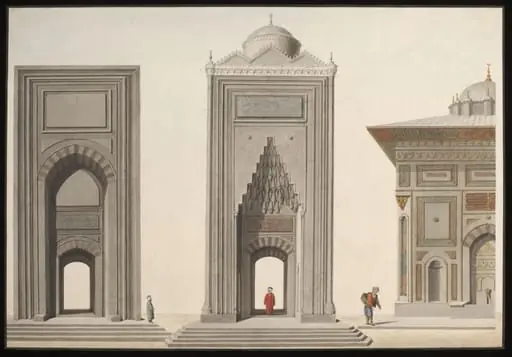 Elevations of two mosque portals, and part of the Hekimoglu Ali Pasha Fountain at Kabatas
![Topçular Barracks on the outskirts of Pera[?], by Anonymous Greek artist](https://artifactworldgallery.com/img/anonymous-greek-artist--topcular-barracks-on-the-outskirts-of-pera--81cd3e7e912c2328-w320.webp) Topçular Barracks on the outskirts of Pera[?]
Topçular Barracks on the outskirts of Pera[?]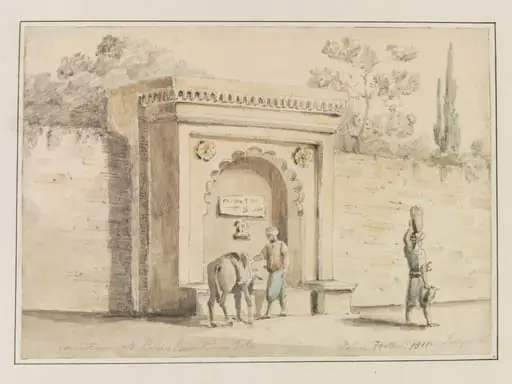 Fountain At Constantinople