Artwork
Bala Krishna
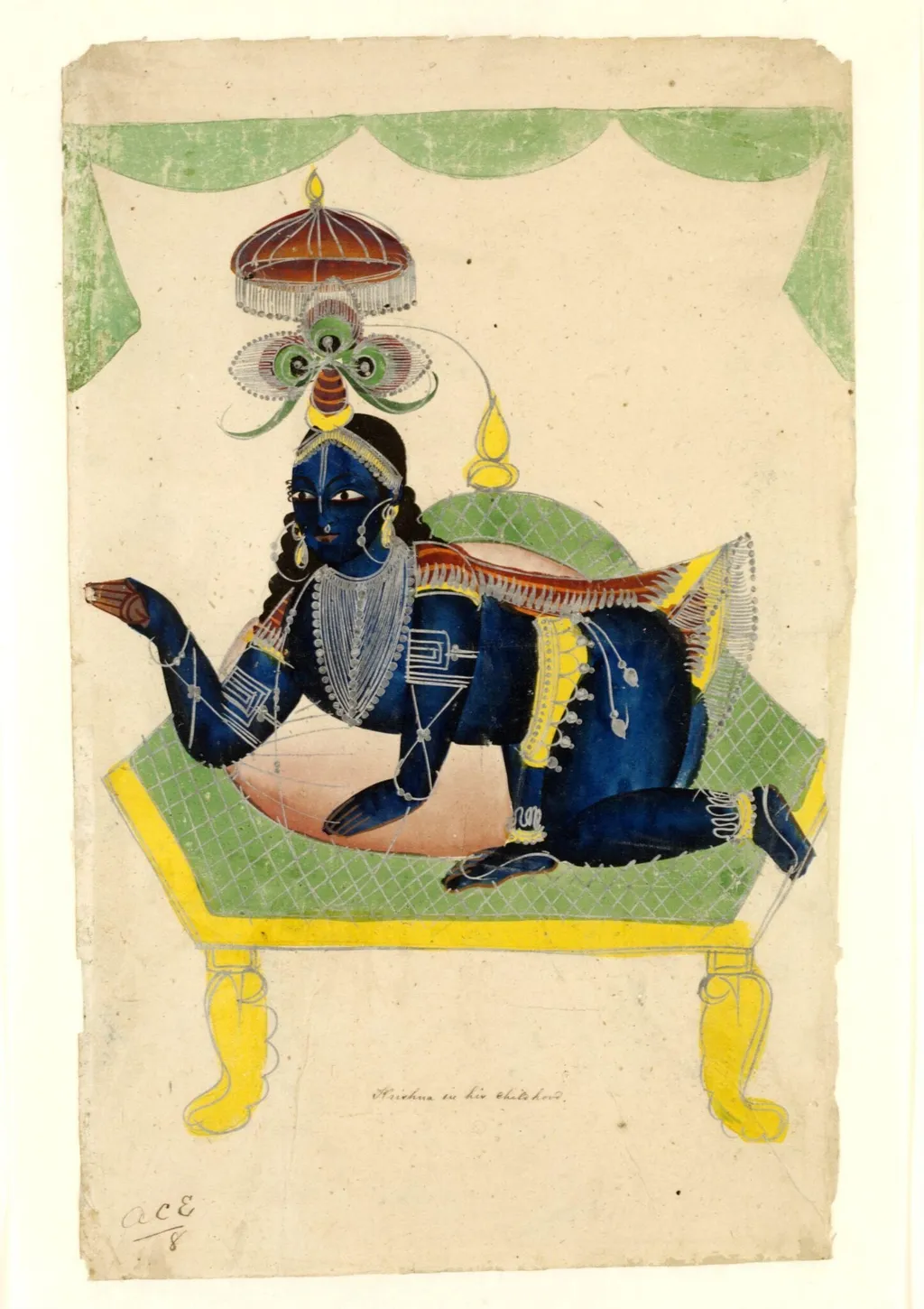
Bala Krishna is a paint painting by the Impressionist artist Unknown. It dates from 1850 and is held in the collection of the Victoria and Albert Museum.
About this work
Overview
Executed with vibrant pigments and subtle tin-alloy highlights, the work captures the deity in a moment of playful stillness.
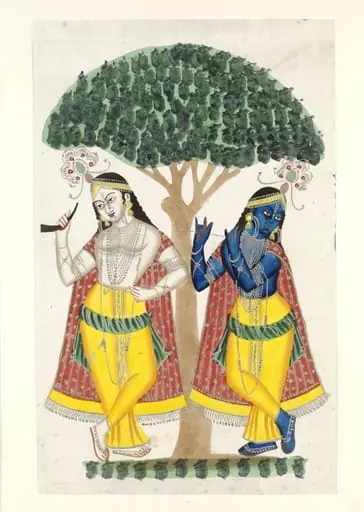
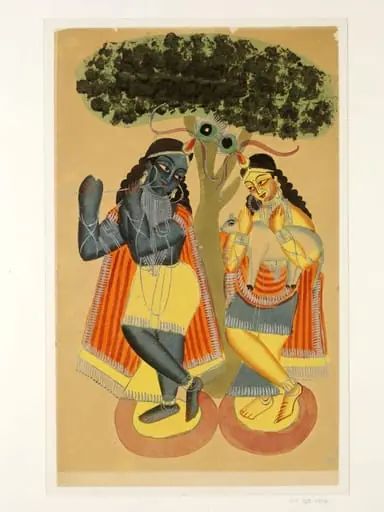
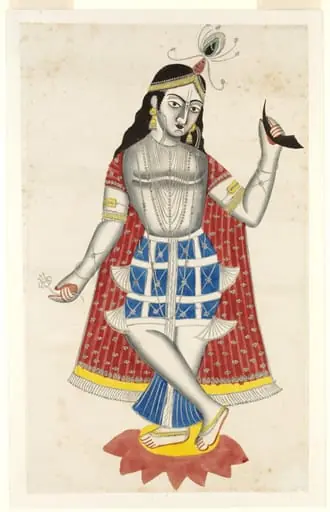
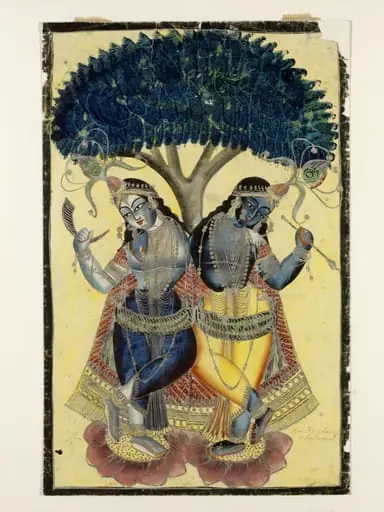
This watercolor painting on paper portrays the child form of Krishna, known as Bala Krishna, in the Kalighat tradition. Executed with vibrant pigments and subtle tin-alloy highlights, the work captures the deity in a moment of playful stillness. The composition is framed by a green textile border, set against a pale green ground, emphasizing the figure’s dynamic presence within a simplified, decorative space.
Subject & Meaning
Bala Krishna is depicted as a mischievous yet divine child, embodying both innocence and cosmic power. The golden pot beside him alludes to his legendary butter-stealing exploits, while the peacock feather crown and ornate jewelry signify his divine status. The inscription at the base confirms his identity as the youthful incarnation of Vishnu, reinforcing the devotional intent of the image.
Technique & Style
The painting employs bold, flat areas of color typical of Kalighat art, with minimal modeling and strong outlines. Tin-alloy highlights add luminosity to jewelry and crowns, while the use of gold accents on the blue garment enhances texture without realism. The background is deliberately sparse, directing focus to the figure and his symbolic attributes through stylized simplicity.
History & Provenance
Created in 19th-century Bengal, this work likely originated from a Kalighat artist’s studio near the Kalighat temple in Kolkata. Such paintings were mass-produced for pilgrims and domestic devotion, often sold as affordable religious souvenirs. The style evolved in response to urban patronage and the influence of European watercolor techniques, blending folk aesthetics with emerging commercial demands.
Context
Kalighat paintings emerged alongside the growth of Calcutta as a colonial city, serving both religious and secular audiences. Artists adapted traditional iconography to appeal to new patrons, using bright colors and clear narratives. This piece reflects a moment when devotional imagery became accessible beyond temple walls, entering domestic spaces as both art and object of worship.
Legacy
The Kalighat style influenced later Indian popular art and modernist reinterpretations of mythological themes. Though initially dismissed as folk craft, such works are now recognized for their expressive economy and cultural resonance. This painting contributes to a broader understanding of how religious imagery was reimagined in changing social landscapes during colonial India.
Artist & collection

 Domestic Scene
 Giacomo and Cardinal Marco, investing Andrea, Abbot of San Zeno, with his Benefice
 The Nymph of Fontainebleau
 Portrait of a Woman
 Madonna and Child with Saints in the Enclosed Garden
 Venus and Minerva
 Family Group of Four on Sofa
 Wall painting from Room H of the Villa of P. Fannius Synistor at Boscoreale