Artwork
Balarama
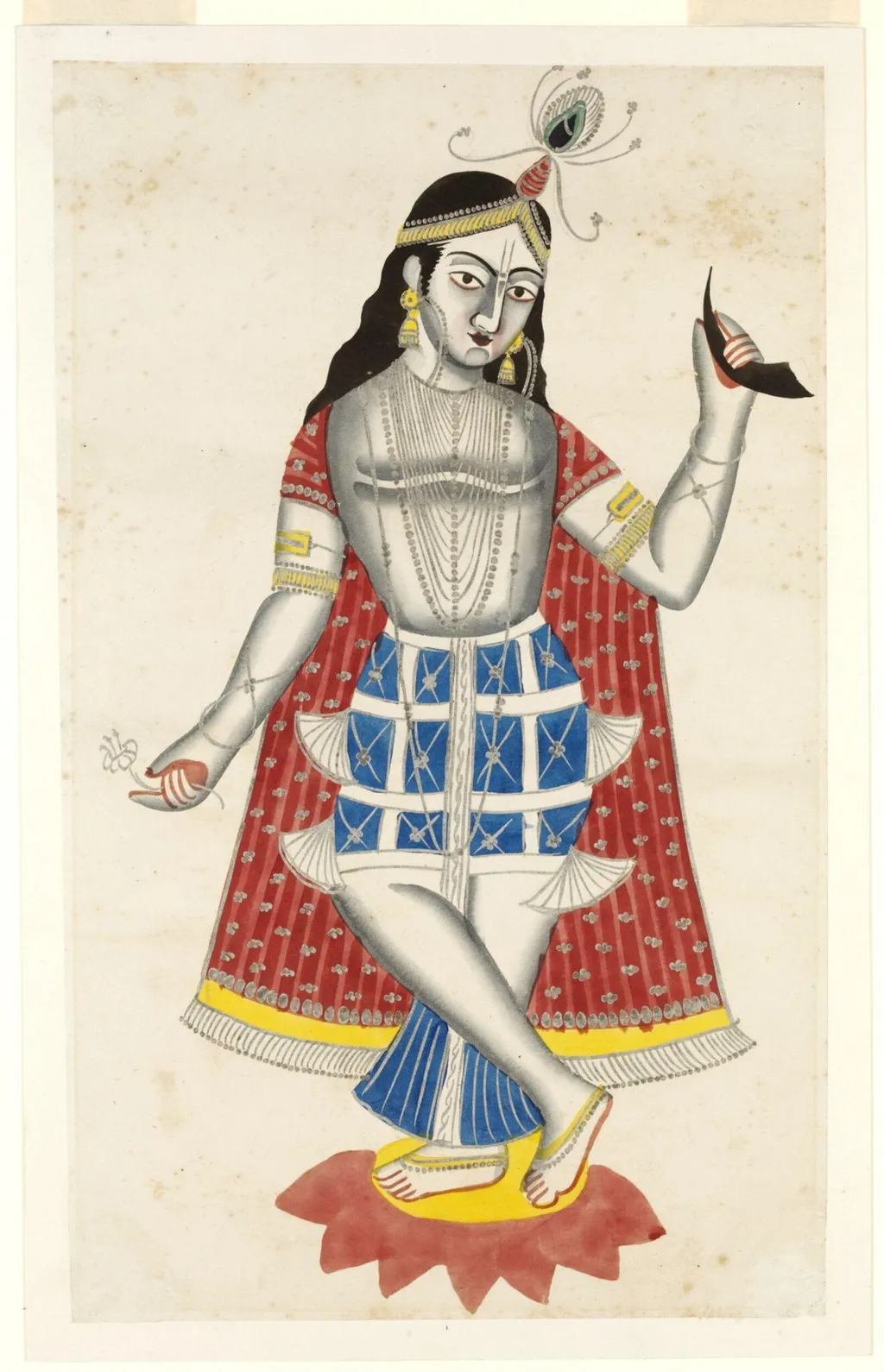
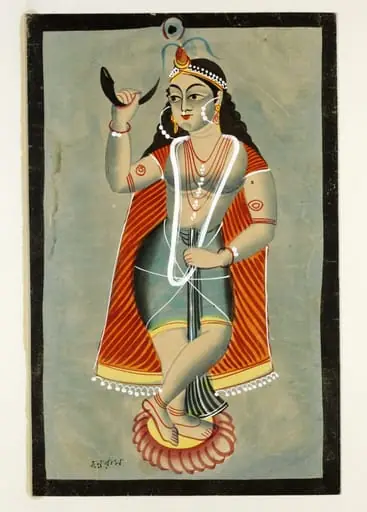
Balarama is a paint painting by the Romanticist artist Unknown. It dates from 1830 and is held in the collection of the Victoria and Albert Museum.
About this work
Overview
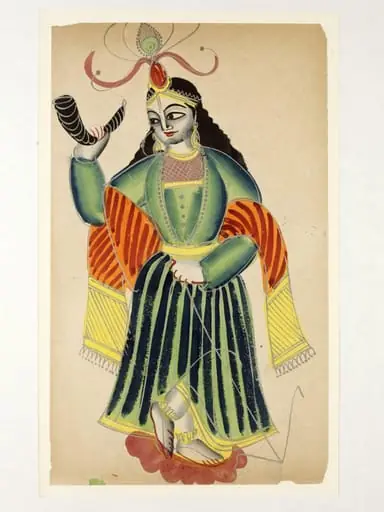
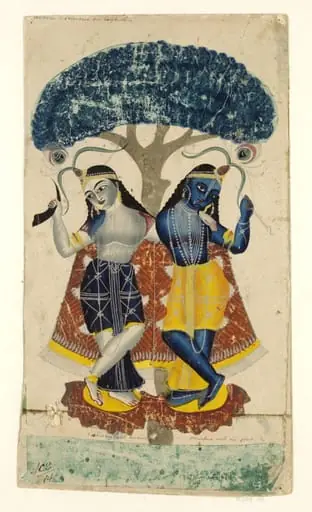
Created circa 1830, this work presents the Hindu deity Balarama rendered in opaque watercolor on paper, with metallic tin alloy applied for decorative elements. The figure stands upon a red lotus, assuming a dancer’s stance with the right foot crossed over the left, and holds a horn in the left hand and a flower in the right.
Subject & Meaning
Balarama, traditionally associated with strength and agriculture, is depicted in a hybrid pose that blends martial bearing with divine grace. The lotus base signifies purity, while the horn and flower serve as symbolic attributes of his mythic role as protector and cultivator.
Technique & Style
The artist employed opaque watercolors to achieve vivid reds, blues, yellows, whites, and greys, creating a striking contrast against a plain background. Metallic tin alloy was used to model the deity’s jewellery, chest plate, and ornamental details, giving the surface a reflective quality.
History & Provenance
The painting originates from the early nineteenth‑century Indian subcontinent, a period when devotional images were often produced for private worship or courtly patronage. Its later acquisition by the Victoria and Albert Museum places it within a broader collection of South Asian religious art.
Context
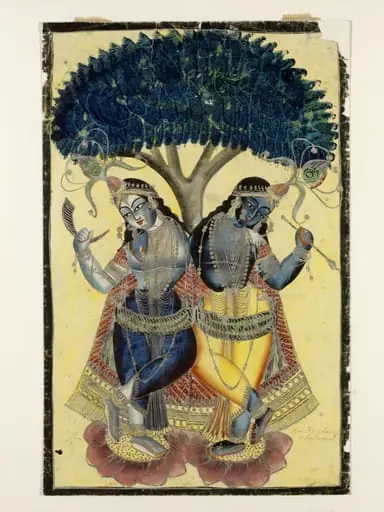
The composition reflects a visual language common in South Asian iconography, where deities are shown in dynamic, dancer‑like poses that convey both spiritual vitality and heroic vigor. The use of bright pigments and metallic accents aligns with contemporary aesthetic preferences for vivid, ceremonial imagery.
Artist & collection

 Domestic Scene
 Giacomo and Cardinal Marco, investing Andrea, Abbot of San Zeno, with his Benefice
 The Nymph of Fontainebleau
 Portrait of a Woman
 Madonna and Child with Saints in the Enclosed Garden
 Venus and Minerva
 Family Group of Four on Sofa
 Wall painting from Room H of the Villa of P. Fannius Synistor at Boscoreale