Artwork
Bhima and Kichaka
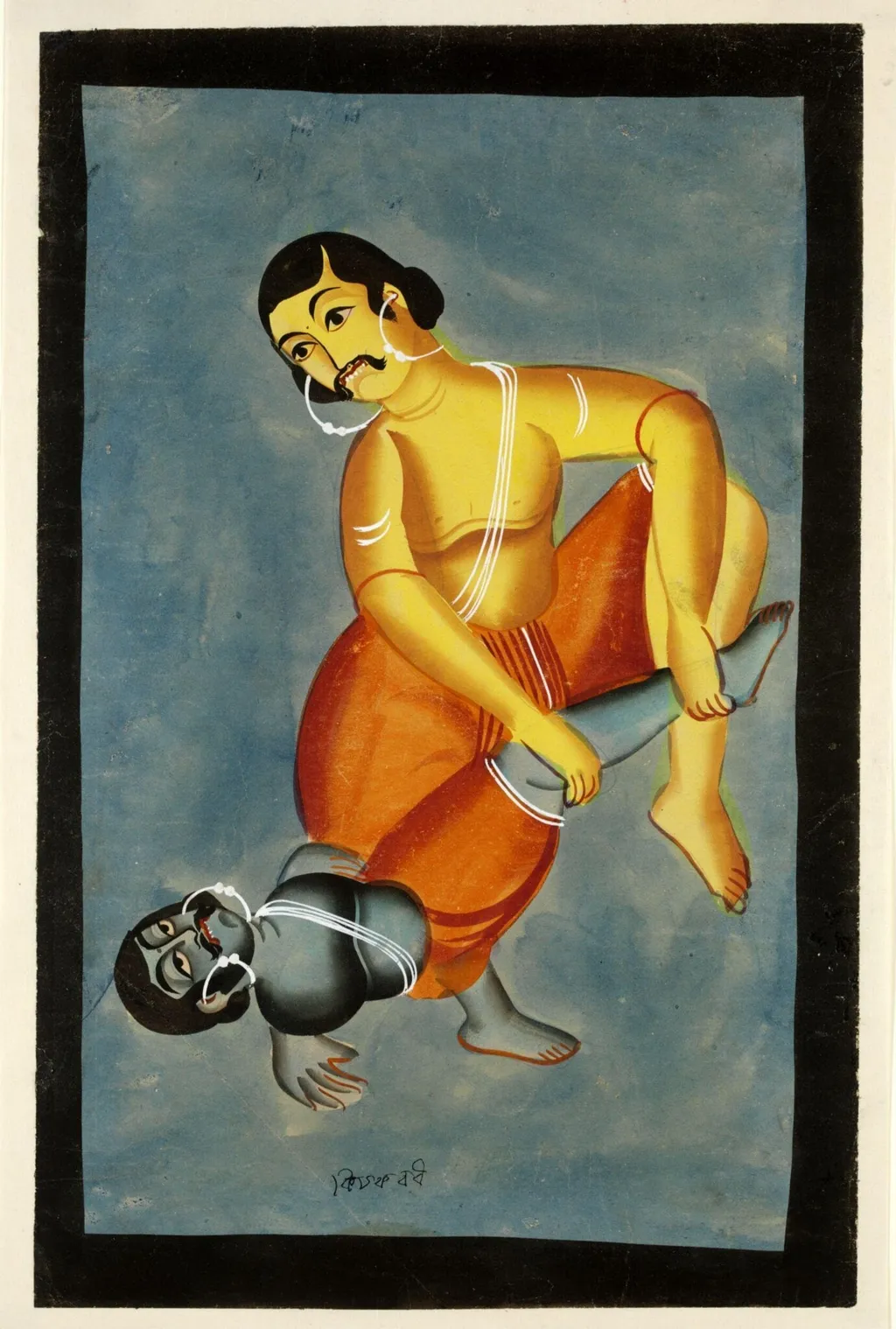
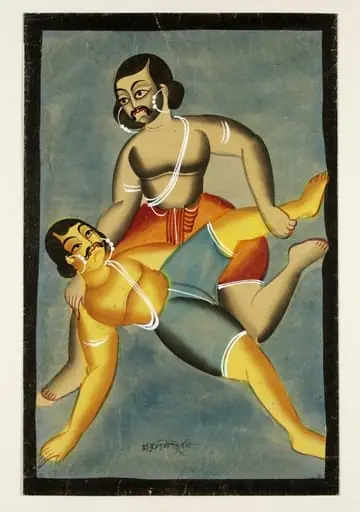
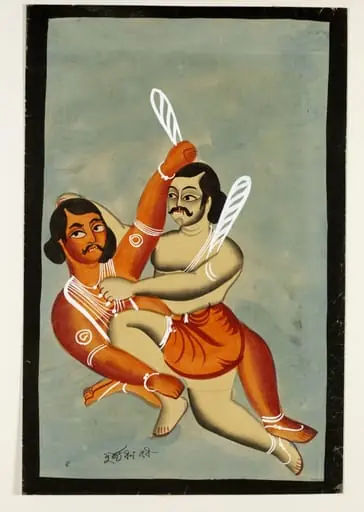
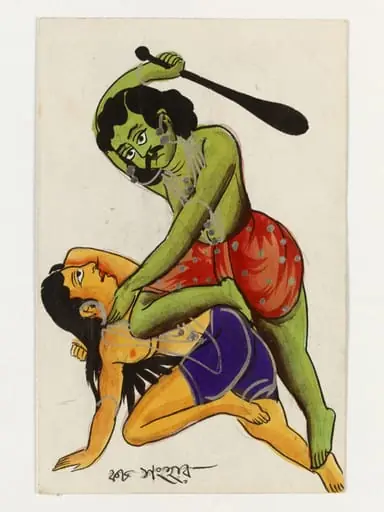
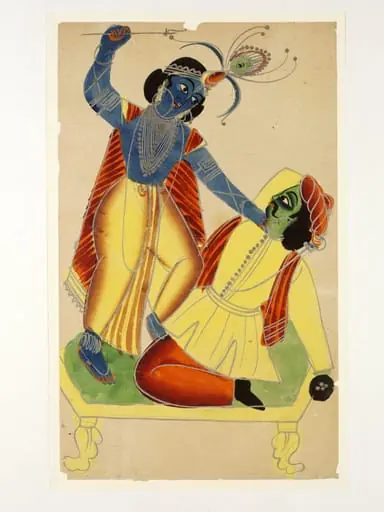
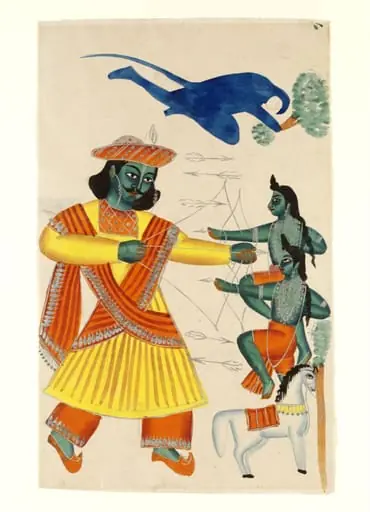
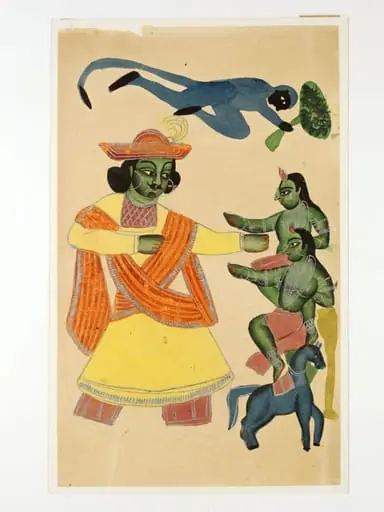
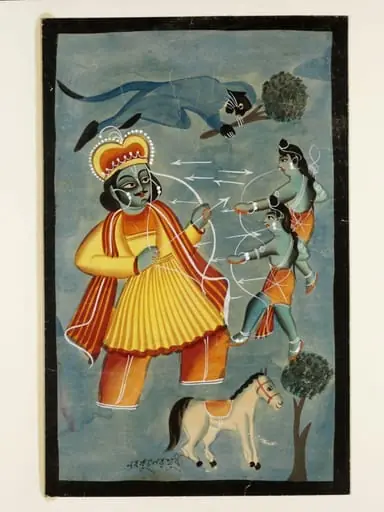
Bhima and Kichaka is a paint painting by the Impressionist artist Unknown. It dates from 1885 and is held in the collection of the Victoria and Albert Museum. This Kalighat-style painting depicts a pivotal moment from Hindu mythology: Bhima's killing of Kichaka.
About this work
Overview
This Kalighat-style painting depicts a pivotal moment from Hindu mythology: Bhima's killing of Kichaka. Executed in opaque watercolour on paper, it showcases the characteristic vivid colours and simplified forms of the 19th-century Calcutta-based tradition.
Subject & Meaning
The scene illustrates Bhima, a Pandava warrior, overpowering Kichaka, who had harassed Draupadi, the Pandavas' shared wife. This narrative reflects local mythological themes and possibly comments on social dynamics under British India's influence.
Technique & Style
The work features bold, opaque watercolours on paper, with rapid brushwork, flat backgrounds (here, blue-gray), and dark framing. The figures exhibit simplified, expressive forms, characteristic of Kalighat art, with notable attention to detail in facial expressions and attire (e.g., Bhima's mustache and orange-yellow clothing).
History & Provenance
Originating from 19th-century Calcutta, the painting was later acquired from a collection inherited by Miss M Steele, tracing its journey from local artistic production to collector ownership.
Context
Created during the British colonial period in India, the painting's style and theme suggest an intersection of traditional mythological subjects with the artistic innovations of the Kalighat tradition, influenced by Calcutta's cultural melting pot.
Legacy
As part of the Kalighat tradition, this work contributes to the understanding of 19th-century Indian art's adaptation to colonial influences and its distinctive visual language, characterized by dramatic simplicity and vivid expression.
Artist & collection

 Domestic Scene
 Giacomo and Cardinal Marco, investing Andrea, Abbot of San Zeno, with his Benefice
 The Nymph of Fontainebleau
 Portrait of a Woman
 Madonna and Child with Saints in the Enclosed Garden
 Venus and Minerva
 Family Group of Four on Sofa
 Wall painting from Room H of the Villa of P. Fannius Synistor at Boscoreale