Artwork
Kacha
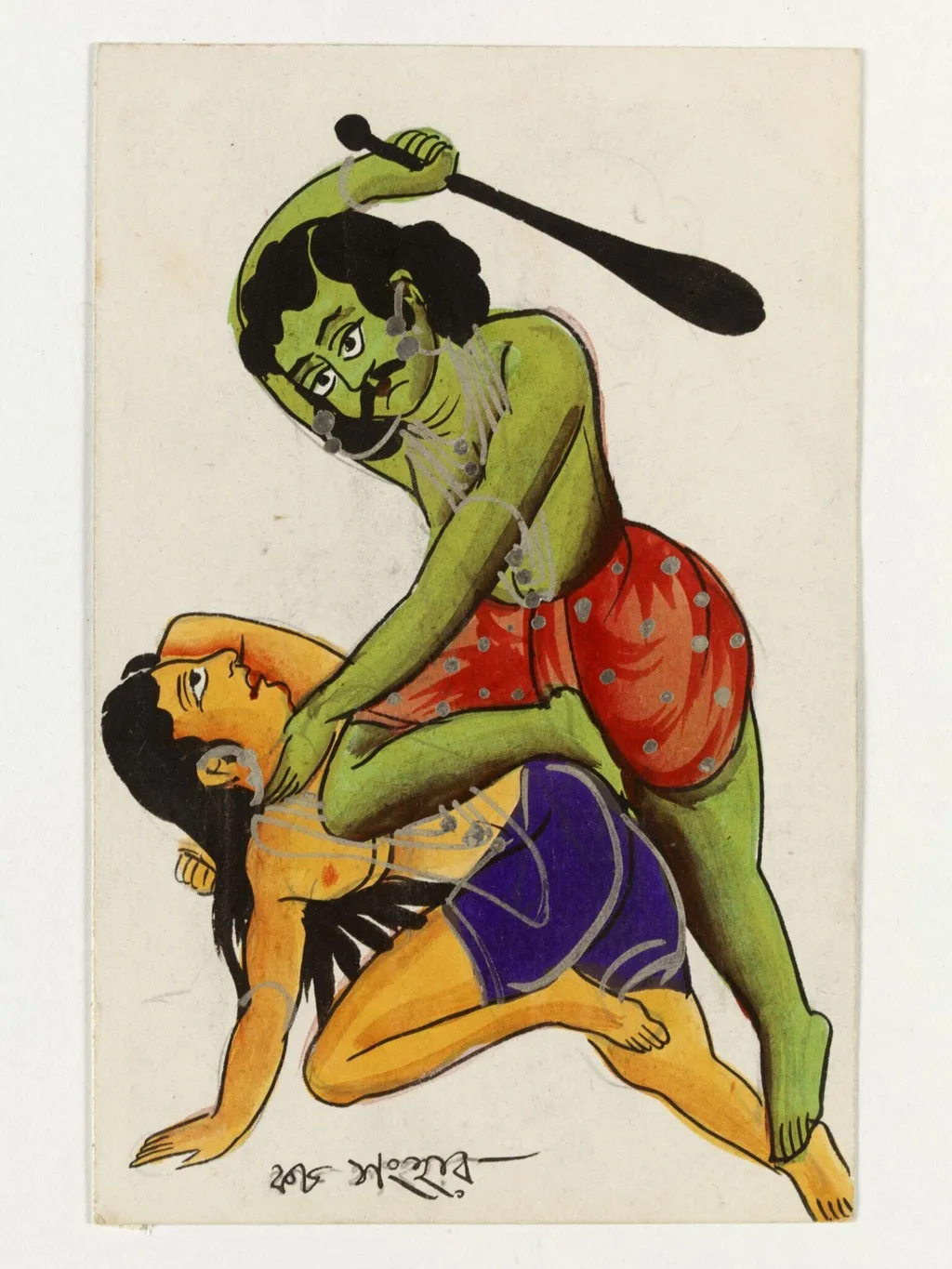
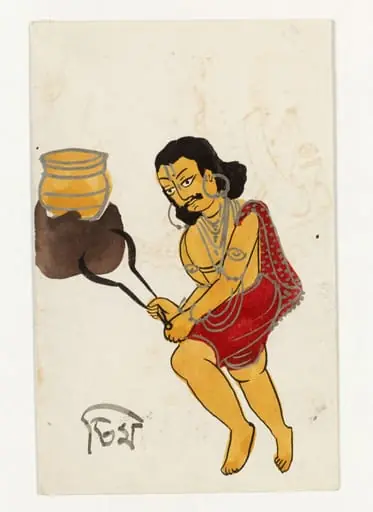
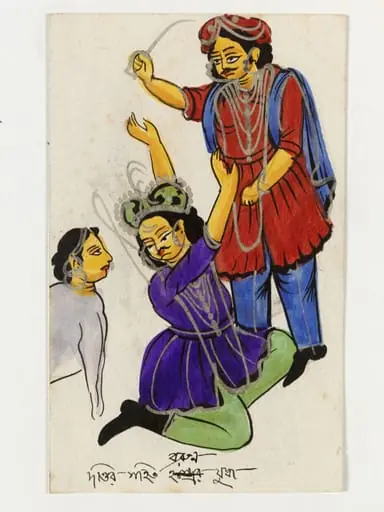
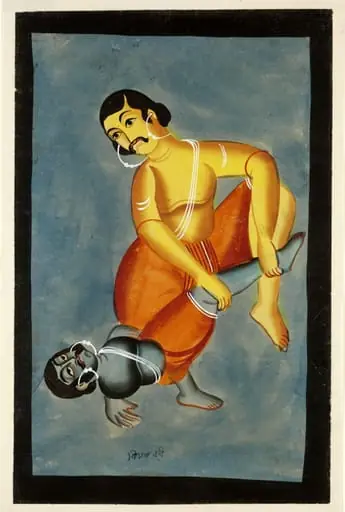
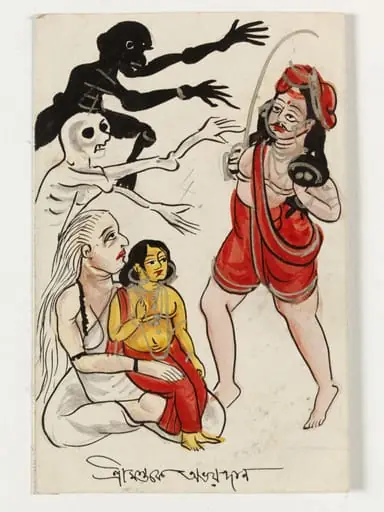
Kacha is a paint painting by the Impressionist artist Unknown. It dates from 1890 and is held in the collection of the Victoria and Albert Museum.
About this work
Overview
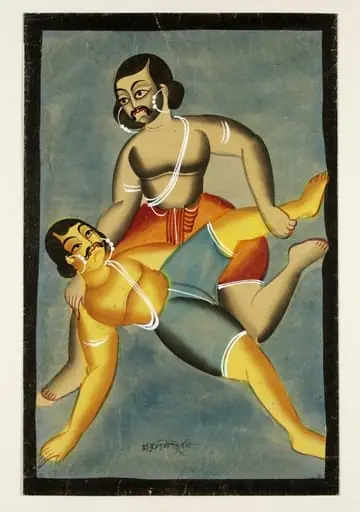
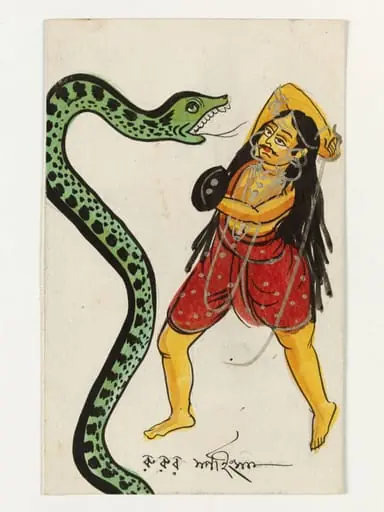
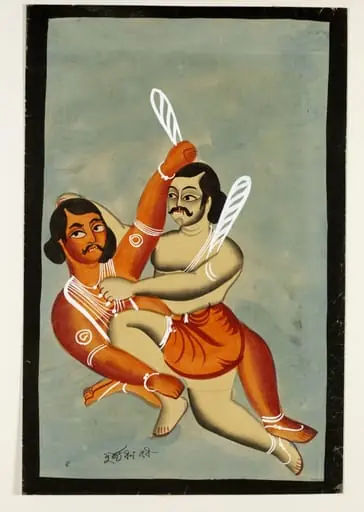
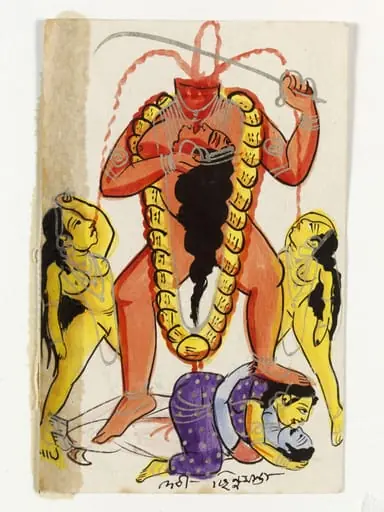
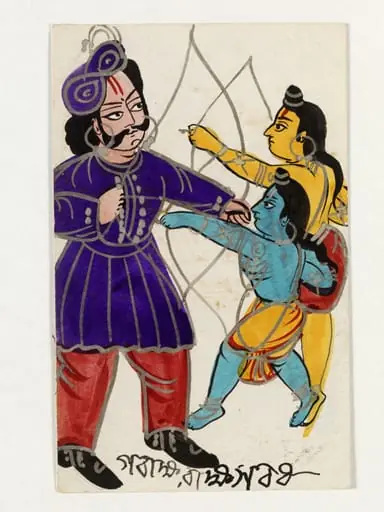
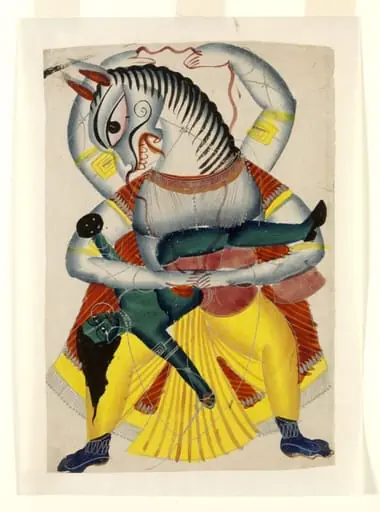
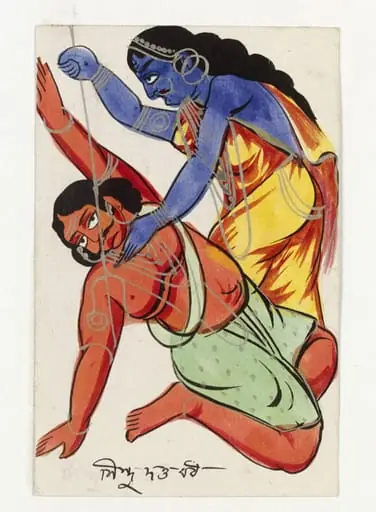
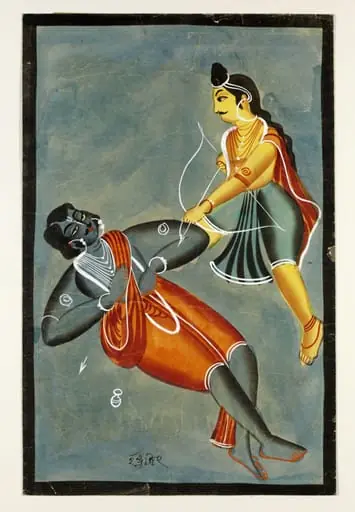
This watercolor and tin alloy painting on cardboard portrays the mythological death of the sage Kacha, a figure from Hindu tradition. Rendered with loose, expressive brushwork, the scene unfolds in a sunlit natural setting. The use of tin alloy adds subtle reflective qualities to the surface, distinguishing it from conventional watercolor works of its time.
Subject & Meaning
Kacha, a disciple of the god-physician Shukracharya, was killed multiple times by the Asuras out of jealousy. His resurrection by his teacher symbolizes spiritual resilience. The painting captures his final moments amid a serene landscape, contrasting violent myth with tranquil nature, suggesting transcendence over earthly conflict.
Technique & Style
The artist employs delicate dabs of pigment to construct form and light, building texture through layered application. The inclusion of tin alloy creates localized shimmer, enhancing the sense of sunlight. While the brushwork is rapid and impressionistic, the composition remains balanced, with warm hues dominating and cool blues receding into the distance.
History & Provenance
It entered the Victoria and Albert Museum’s collection in the early 20th century as part of a broader effort to document Indian artistic innovation.
The work originates from late 19th-century India, likely produced in a regional atelier influenced by both traditional miniature practices and emerging colonial-era materials. Its use of cardboard and tin alloy reflects experimentation with accessible media. It entered the Victoria and Albert Museum’s collection in the early 20th century as part of a broader effort to document Indian artistic innovation.
Context
During the British Raj, Indian artists increasingly blended indigenous narratives with new materials and techniques. This painting exemplifies that shift—retaining mythological themes while adopting looser, more atmospheric methods influenced by Western watercolor traditions. Such works were often collected by British officials and institutions seeking to catalog regional art forms.
Legacy
The painting stands as an example of how Indian artists adapted traditional stories to evolving material possibilities. Its preservation in the Victoria and Albert Museum underscores its role in documenting the hybrid nature of colonial-era Indian art. It continues to inform scholarly discussions on the intersection of myth, medium, and modernity in South Asian visual culture.
Artist & collection

 Domestic Scene
 Giacomo and Cardinal Marco, investing Andrea, Abbot of San Zeno, with his Benefice
 The Nymph of Fontainebleau
 Portrait of a Woman
 Madonna and Child with Saints in the Enclosed Garden
 Venus and Minerva
 Family Group of Four on Sofa
 Wall painting from Room H of the Villa of P. Fannius Synistor at Boscoreale