Artwork
Fața de prapor din Biserica de lemn „Sf. Arhangheli” din Ociu, comuna Vața de Jos, județul Hunedoara (1982)
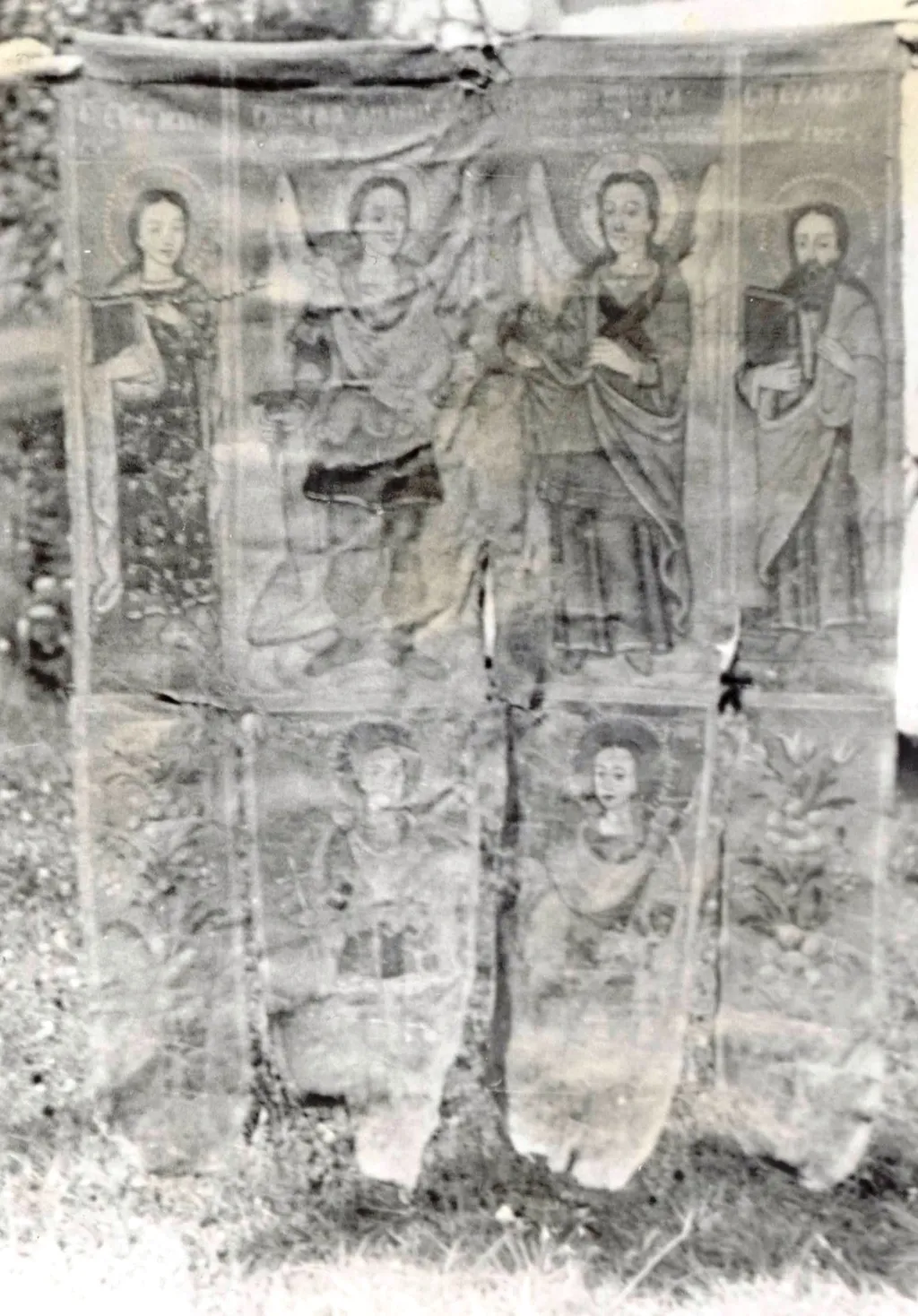
Fața de prapor din Biserica de lemn „Sf. Arhangheli” din Ociu, comuna Vața de Jos, județul Hunedoara (1982) is a photography by Catalina Marin. It dates from 1982 and is held in the collection of the "Dimitrie Gusti" National Village Museum. The black‑and‑white image records a red woven banner, edged with white thread and gold fringe, suspended inside the wooden St.
About this work
This black-and-white photo shows a red woven flag hanging in a wooden church. The flag has white threads and gold fringe. The room is simple, with wooden walls and benches.
The photo comes from a 1982 study of village weddings in Romania. It records traditional crafts before they faded. The flag likely dates to 1821, matching the church’s age.
See more at the Museum of Ethnography.
Overview
The black‑and‑white image records a red woven banner, edged with white thread and gold fringe, suspended inside the wooden St. Archangels Church in Ociu, Hunedoara County. The interior is modest, with plain timber walls and simple benches, reflecting the modest architecture of the eighteenth‑century parish.
Subject & Meaning
The banner, a traditional liturgical flag, is associated with the dedication of the church to the Holy Archangels Michael and Gabriel, celebrated on 8 November. Such textiles were integral to Romanian Orthodox rites, symbolising protection and sanctity during communal celebrations, especially weddings.
Technique & Style
Woven from red and white threads and finished with a gold fringe, the flag exemplifies folk textile craftsmanship of the early nineteenth century. The use of vivid colour against a monochrome photographic record highlights the intricate patterning typical of regional ceremonial fabrics.
History & Provenance
The church was erected in the mid‑1700s, with its interior painting dated to 1821. The flag likely originates from the same period, aligning with the church’s historic furnishings. The structure is listed as a historic monument (code LMI HD‑II‑m‑A‑03374).
Context
The photograph was taken during a 1982 field study by researchers Elena Alterescu and Cătălina Marin, documenting textile traditions and wedding customs in the Zarand region of Romania, before such practices began to wane.
Legacy
The image forms part of the Museum of Ethnography’s collection, preserving visual evidence of rural religious art and material culture that continues to inform studies of Romanian folk heritage.
Artist & collection
Artist
She spent weeks in the same wooden church, sleeping on a bench behind the altar, because the light inside only hit the frescoes right at 10 a.m.
Museum
"Dimitrie Gusti" National Village Museum
Continue through works from the same source collection.
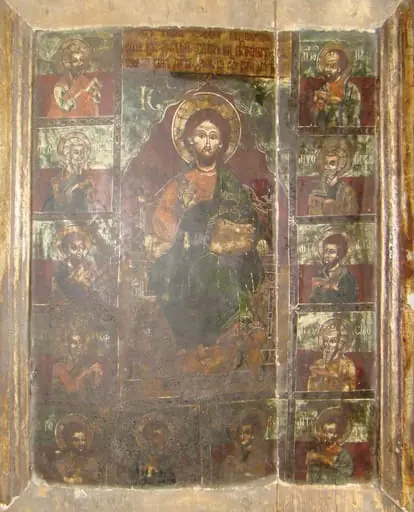 Iisus Hristos Pantocrator, înconjurat de apostoli
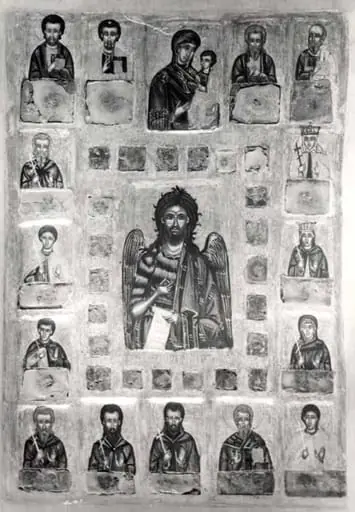 Sfântul Ioan Botezătorul înconjurat de Sfinți
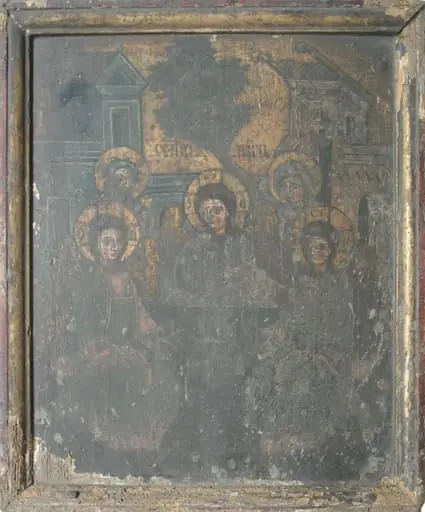 Cina de la Mamvri
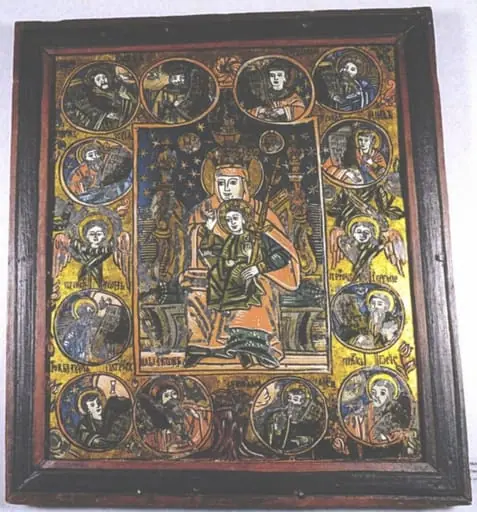 Maica Domnului Împărătiță cu Proorocii
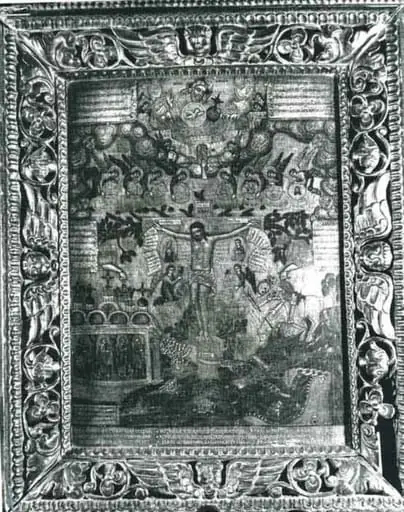 Iisus pe cruce
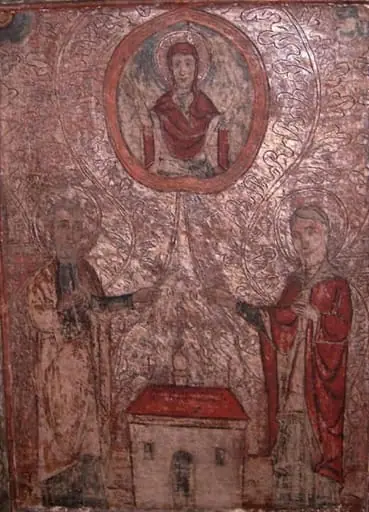 Zămislirea Fecioarei Maria
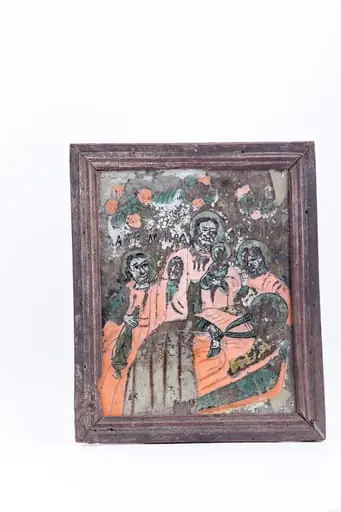 Icoana reprezintă Nașterea Maicii Domnului, 8 septembrie. Sfânta Maică Ana este redată întinsă pe un pat și lângă ea este Sfântul Părinte Ioachim, cu Pruncuța Maria în brațe. În stânga și în drepta lor, este câte o fecioară, martore și asistente ajutoare la naștere. În registrul superior, asemenea unei arcade-bolți de biserică este o ghirlandă de 3 ruje - trandafiri mari roșii cu frunze verzi. Cromatica este armonioasă: roșu vermillon, brun, verde, negru, alb. Icoana este de Nicula. Inscripția din româno-chirilică se traduce MP Maica Domnului.
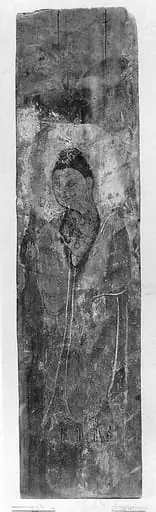 Untitled
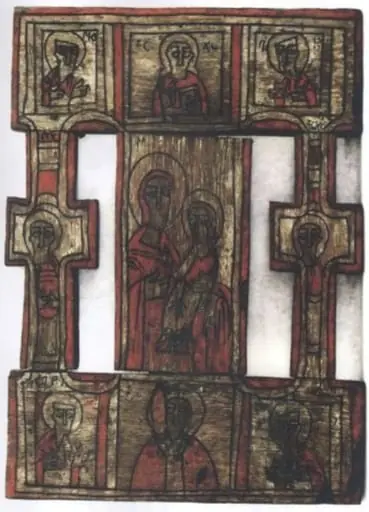 troiță
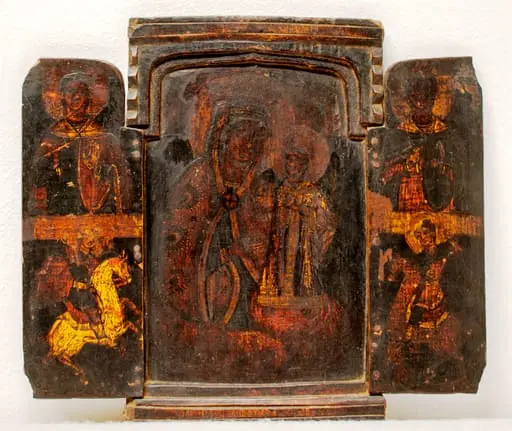 Pe panoul central este reprezentată Maica Domnului Hodighitria(Călăuzitoarea). Pruncul stă în picioare, amândoi fiind înveșmântați în straie împărătești. Maica ține Pruncul cu mâna stângă, cu dreapta arată către El. Voleul stâng, jumătatea inferioară - Sfântul Gheorghe călare pe cal alb. Înveșmântat în costum românesc de oștean medieval, mantie roșie. Calul cu picioarele din față ridicate, harnașament de culoare roșie. Deasupra e posibil să fie tot sfântul Gheorghe, în stânga ținând crucea, cu dreapta face gestul păcii, al liniștii.(prin analogie cu 34530). Simetric, pe latura dreaptă a tripticului se află jos, Sf. Dumitru, călare pe cal roșu, în poziție asemănătoare cu a SF. Gheorghe, iar sus probabil tot el, în altă ipostază iconografică(analogie) . Veșmintele au culorile inversate(tunica roșie -dreapta, albastru-stânga, mantie roșu -stânga, albastru - dreapta), la fel la sfinții războinici, probabil în legătură cu reprezentarea populară a timpului. Inițial, tripticul se închidea, dovadă inscripția care se continuă pe cele două uși. Ulterior a fost fixat cu cuie de fier, iar prinderea se făcea cu o sfoară legată de două cuie bătute pe cant.