Artwork
Black seat boat
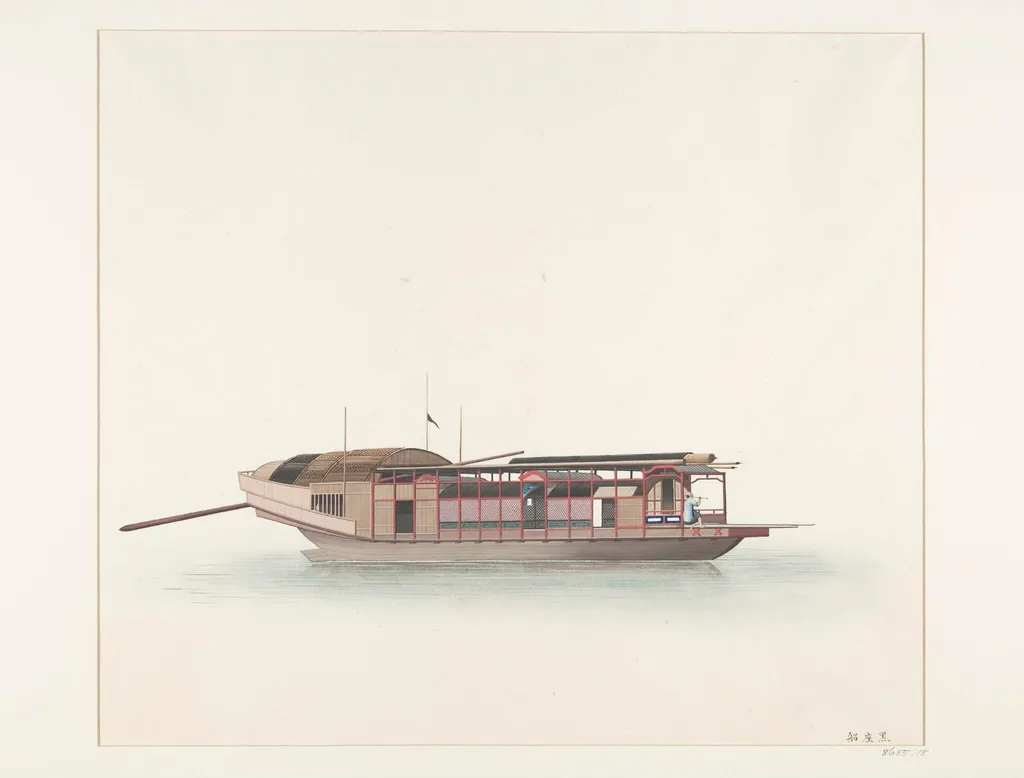
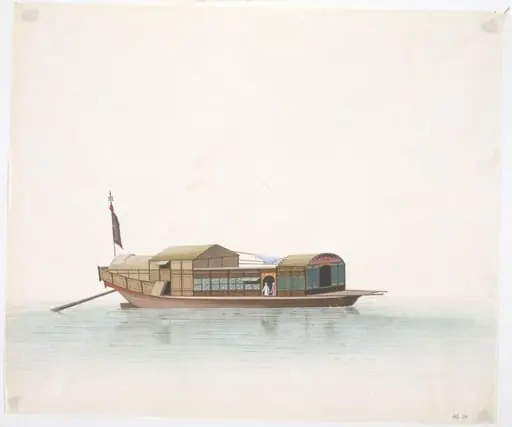
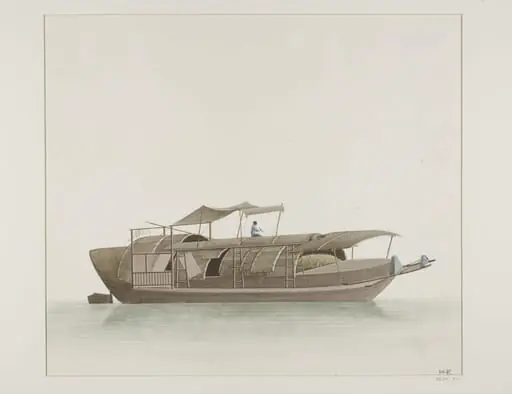
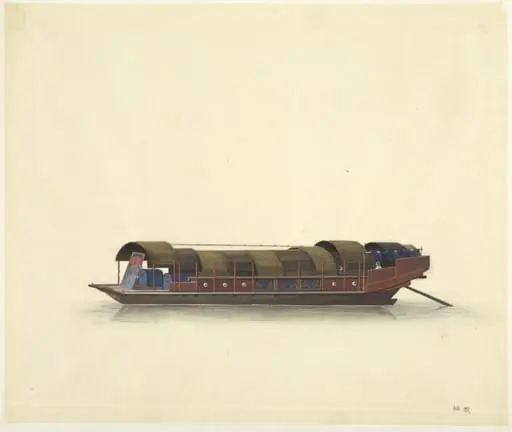
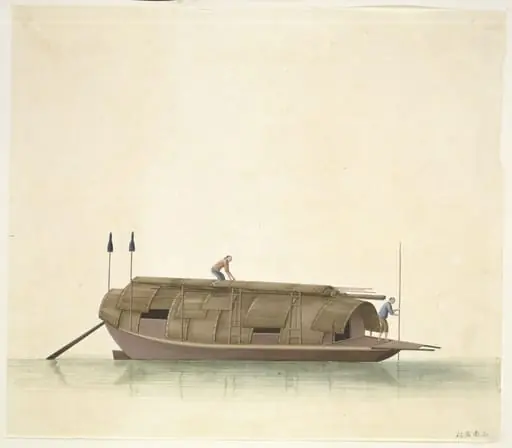
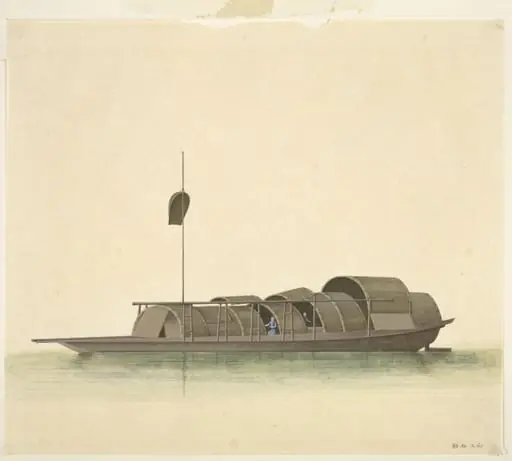
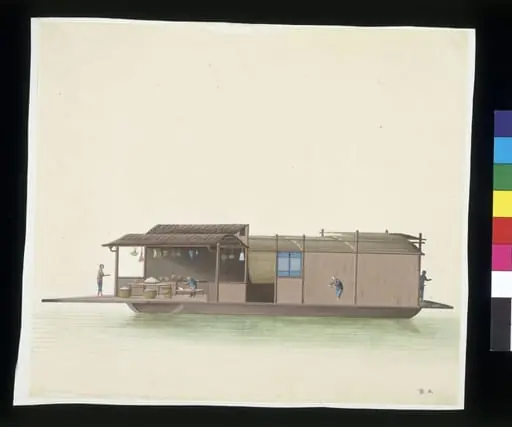
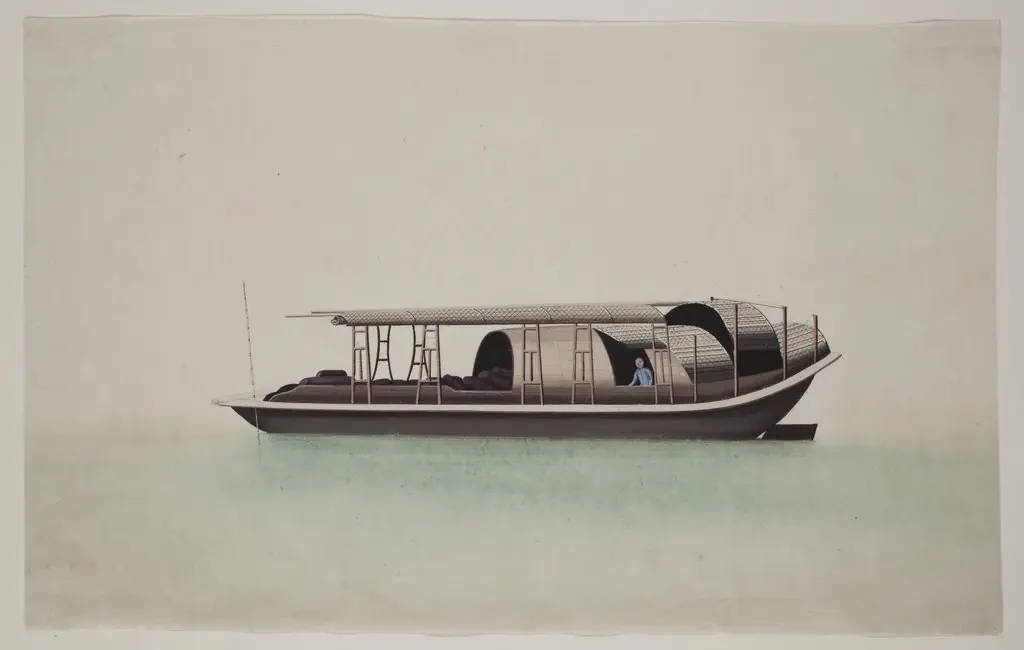
Black seat boat is a paint painting by the Romanticist artist Unknown. It dates from 1810 and is held in the collection of the Victoria and Albert Museum. This small painting, dated circa 1810, portrays a flat-bottomed ferry boat on the Pearl River near Canton.
About this work
Overview
Rendered in subdued hues, it captures the vessel’s simple architecture: a bamboo-thatched roof, red wooden railings, and an open-sided cabin.
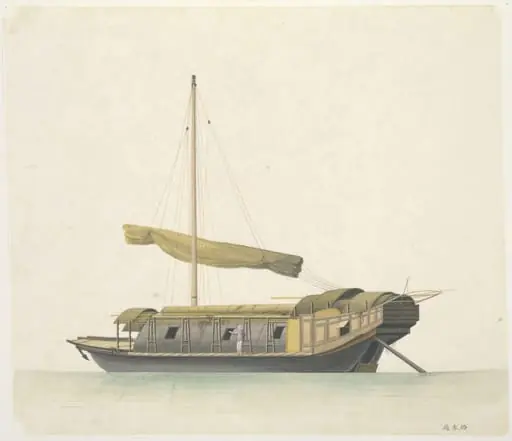
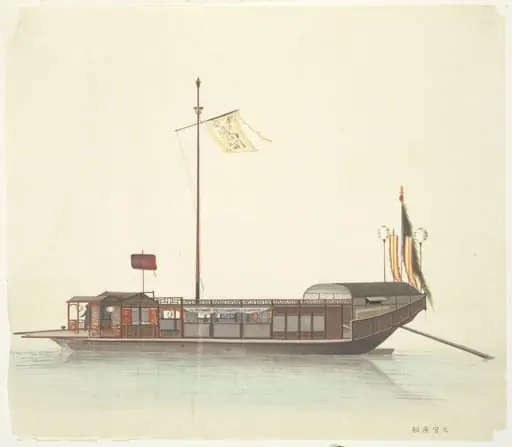
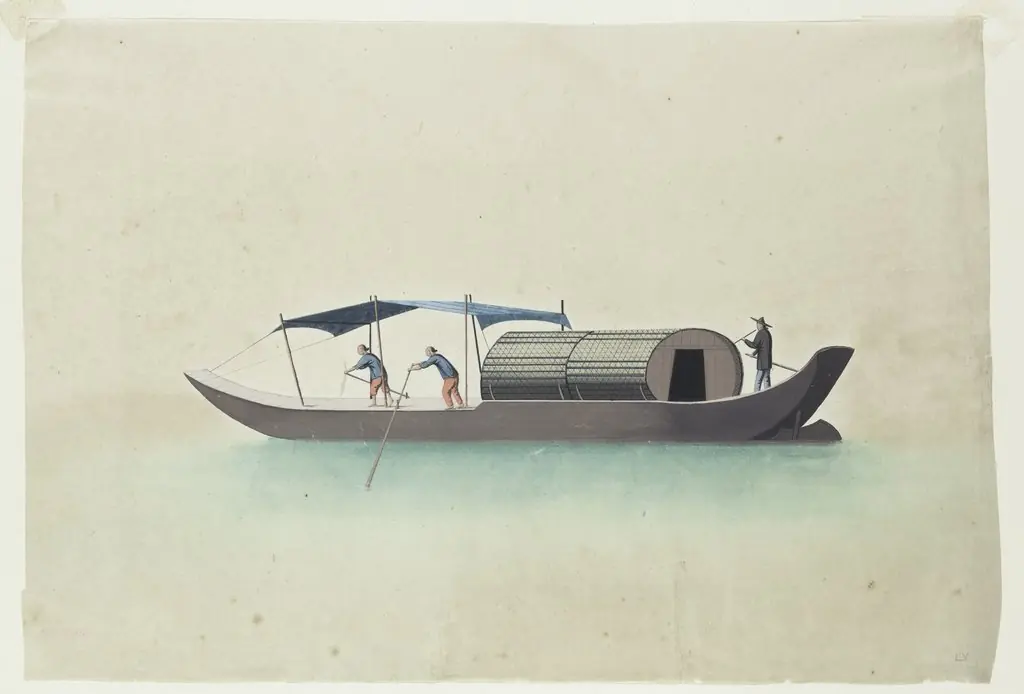
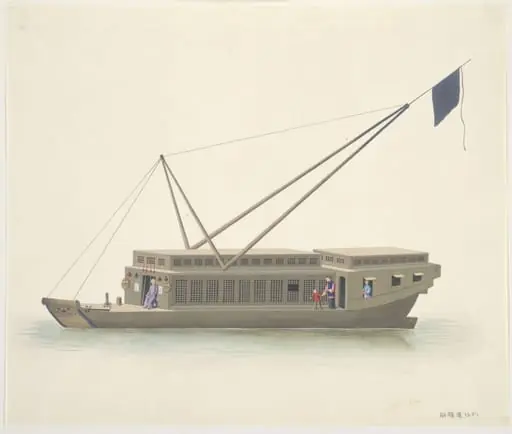
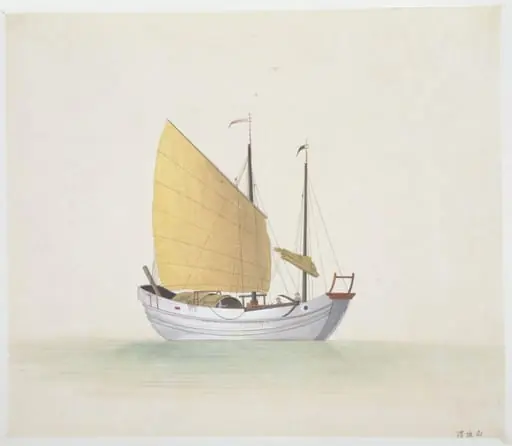
This small painting, dated circa 1810, portrays a flat-bottomed ferry boat on the Pearl River near Canton. Rendered in subdued hues, it captures the vessel’s simple architecture: a bamboo-thatched roof, red wooden railings, and an open-sided cabin. The scene is tranquil, with still water and minimal detail, suggesting a quiet moment in daily transit. It was once one of fifty sheets in a bound album, created for export as a visual record of riverine life.
Subject & Meaning
The painting depicts a working vessel used for local transport along the Pearl River, likely carrying passengers or goods. A single figure in blue at the bow hints at human activity without dramatizing it. The absence of dramatic lighting or narrative tension implies a documentary intent—recording the ordinary rhythms of riverine commerce rather than celebrating spectacle. The boat’s design reflects practical adaptation to regional waterways.
Technique & Style
The artist employed restrained color and clean, unembellished lines to emphasize form over ornament. Soft washes of gray, ochre, and indigo define the boat and water, while the red railings provide subtle contrast. Brushwork is deliberate but unobtrusive, avoiding texture or shadow to maintain clarity. The composition is balanced and frontal, prioritizing structural accuracy over atmospheric depth, consistent with commercial export art of the period.
History & Provenance
The painting belonged to a set of fifty folio sheets compiled around 1810, cataloged as V&A 8655:1–51. These were produced for Western collectors as souvenirs of Canton’s riverine culture. The final sheet in the album listed all entries, suggesting a systematic approach to documentation. Individual sheets were later separated and dispersed, with this example now held in a major museum collection.
Context
Created during the height of the Canton trade system, these paintings served as visual guides for foreign merchants and travelers unfamiliar with Chinese river transport. They reflect a growing demand in Europe for ethnographic imagery, produced by local artists under commercial constraints. The focus on functional vessels, rather than ceremonial or imperial subjects, underscores their role as records of everyday life in a regulated port economy.
Legacy
Though once considered ephemeral souvenirs, these folio sheets now offer valuable insight into 19th-century Chinese riverine infrastructure and cross-cultural exchange. Their quiet realism distinguishes them from more stylized export art, providing a grounded view of daily activity. Today, they are studied as historical documents, preserving details of boat design and river life that might otherwise have been lost.
Artist & collection

 Domestic Scene
 Giacomo and Cardinal Marco, investing Andrea, Abbot of San Zeno, with his Benefice
 The Nymph of Fontainebleau
 Portrait of a Woman
 Madonna and Child with Saints in the Enclosed Garden
 Venus and Minerva
 Family Group of Four on Sofa
 Wall painting from Room H of the Villa of P. Fannius Synistor at Boscoreale