Artwork
Chop Boat (Water Melon Boat)
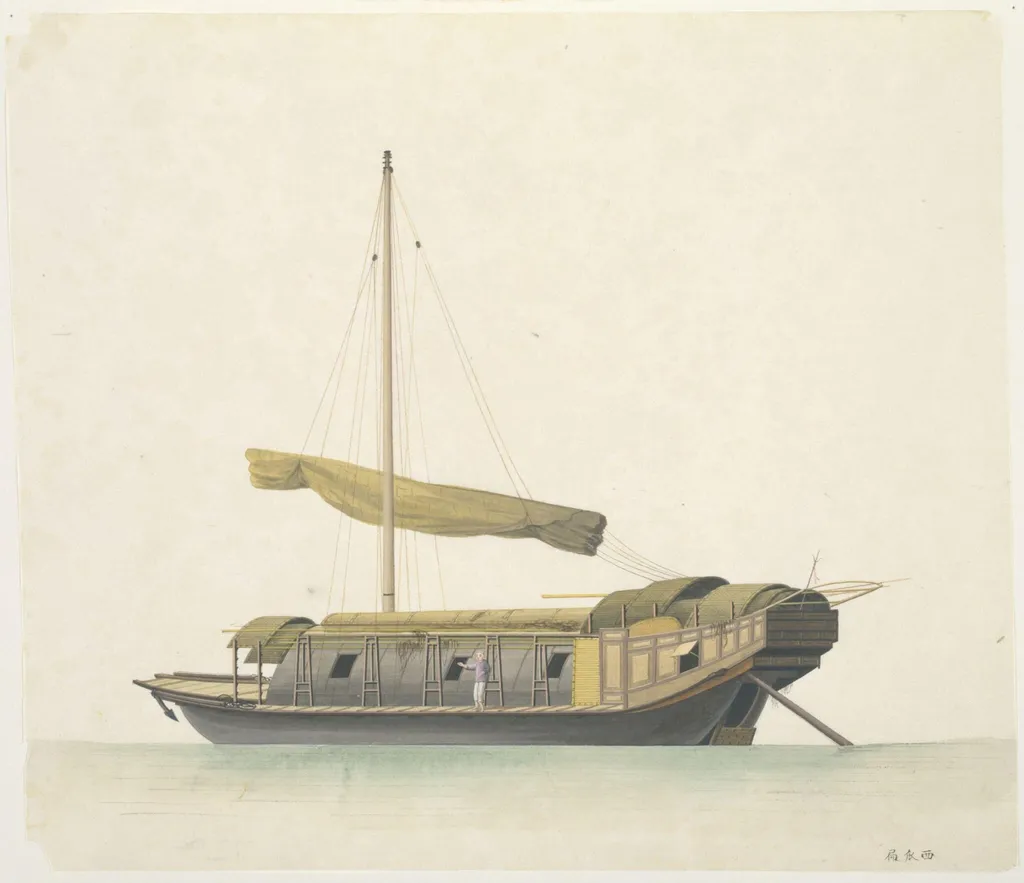
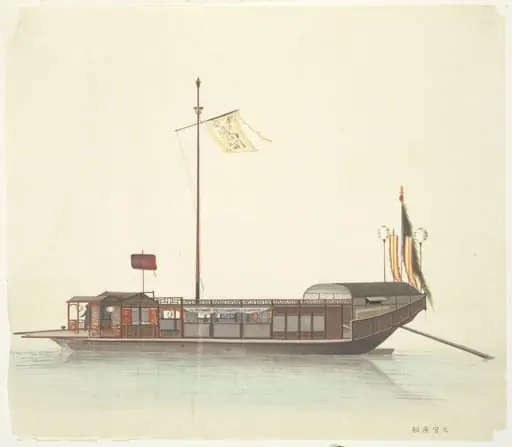
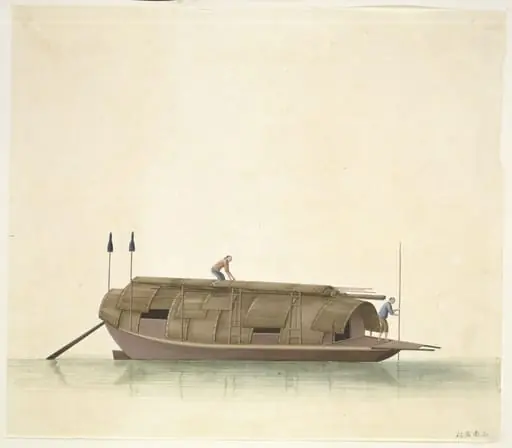
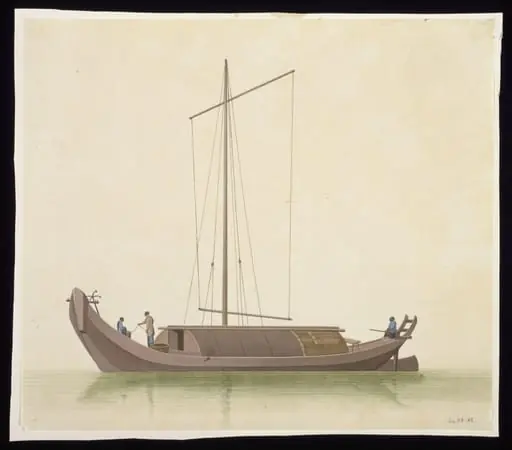
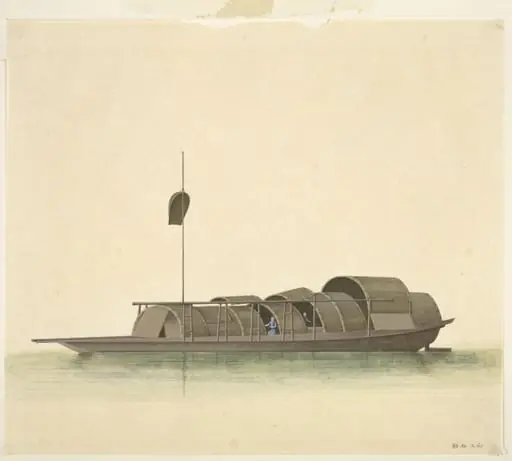
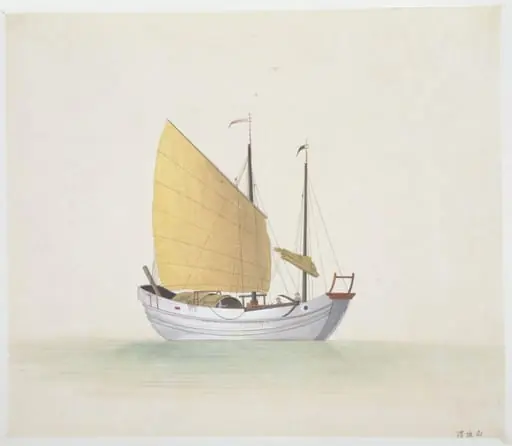
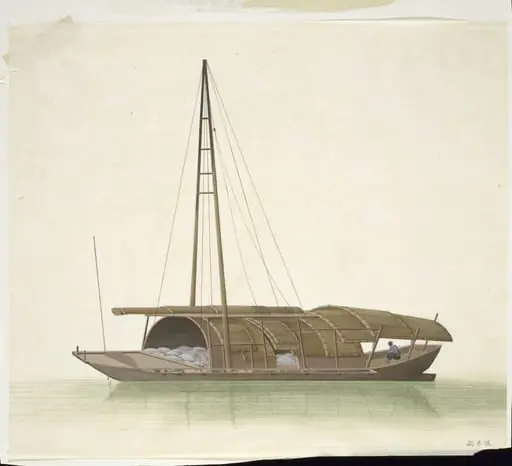
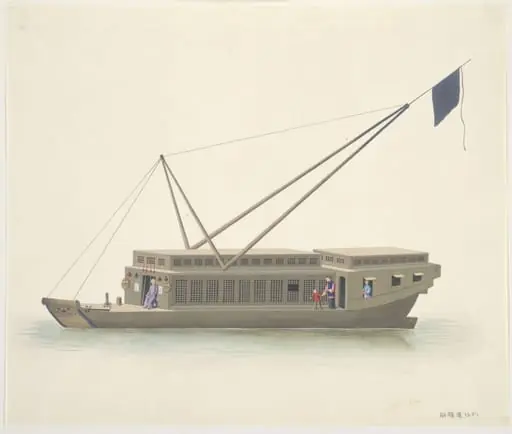
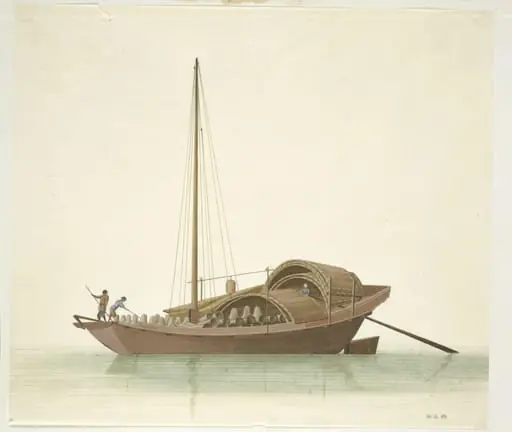
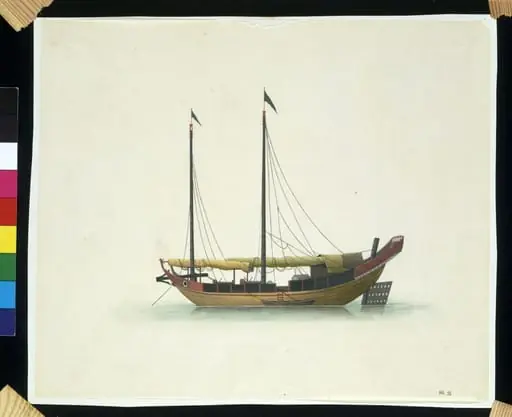
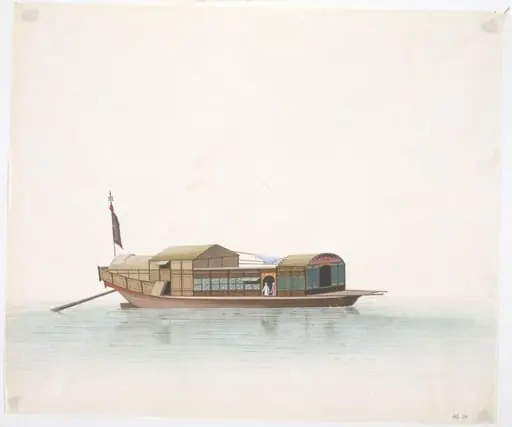
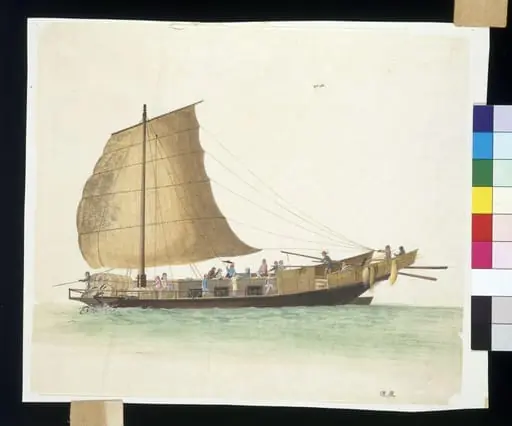
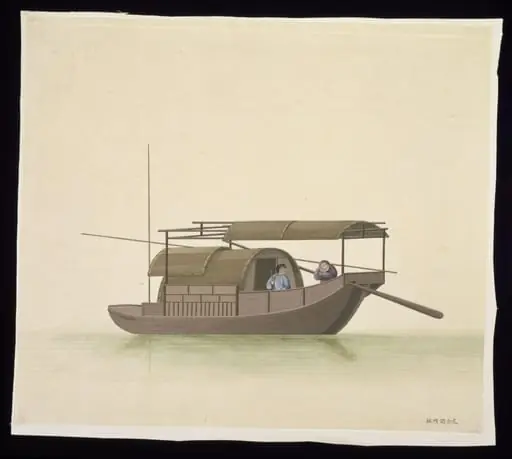
Chop Boat (Water Melon Boat) is a paint painting by the Realist artist Unknown. It dates from 1810 and is held in the collection of the Victoria and Albert Museum. This painting belongs to a series of fifty works documenting the diverse vessels on the Pearl River during the late 18th century.
About this work
Overview
This painting belongs to a series of fifty works documenting the diverse vessels on the Pearl River during the late 18th century. It depicts a small, rounded boat known locally as a 'water-melon boat' due to its melon-like shape. These images were produced for foreign traders and travelers as souvenirs, offering a visual record of daily river life in southern China.
Subject & Meaning
The boat illustrated is a 'chop' boat, named for the official customs stamp—'chop'—affixed to goods cleared for trade. Its compact, circular form housed crews and cargo, reflecting the dense, floating economy of the Pearl River. The term 'water-melon boat' emerged from its resemblance to the fruit, a descriptive label rooted in local observation rather than formal classification.
Technique & Style
Rendered with careful detail but without dramatic lighting or idealization, the painting favors clarity over artistic flourish. Lines are precise, colors muted, and forms rendered functionally. The style aligns with commercial art traditions of the time, prioritizing accurate representation for an audience seeking authentic glimpses of Chinese river life.
History & Provenance
The painting likely originated in Guangzhou during the Qing dynasty, produced for Western visitors such as Lord Macartney’s 1793 diplomatic mission. Macartney’s written account of the river’s crowded vessels corroborates the scene’s authenticity. The work entered Western collections through trade networks, becoming part of broader 18th-century ethnographic documentation.
Context
The Pearl River was a vital artery of international commerce, teeming with specialized vessels operated by local communities. These boats, including the water-melon type, supported the flow of tea, silk, and porcelain. Their proliferation reflected both the scale of trade and the adaptability of Chinese maritime culture to foreign demand and regulation.
Legacy
The series of fifty boat paintings remains a valuable ethnographic resource, capturing the material culture of a transient yet essential segment of Chinese society. Though not created as fine art, their survival offers insight into cross-cultural exchange and the visual documentation practices of global trade in the pre-modern era.
Artist & collection

 Domestic Scene
 Giacomo and Cardinal Marco, investing Andrea, Abbot of San Zeno, with his Benefice
 The Nymph of Fontainebleau
 Portrait of a Woman
 Madonna and Child with Saints in the Enclosed Garden
 Venus and Minerva
 Family Group of Four on Sofa
 Wall painting from Room H of the Villa of P. Fannius Synistor at Boscoreale