Artwork
West River Rice Boat
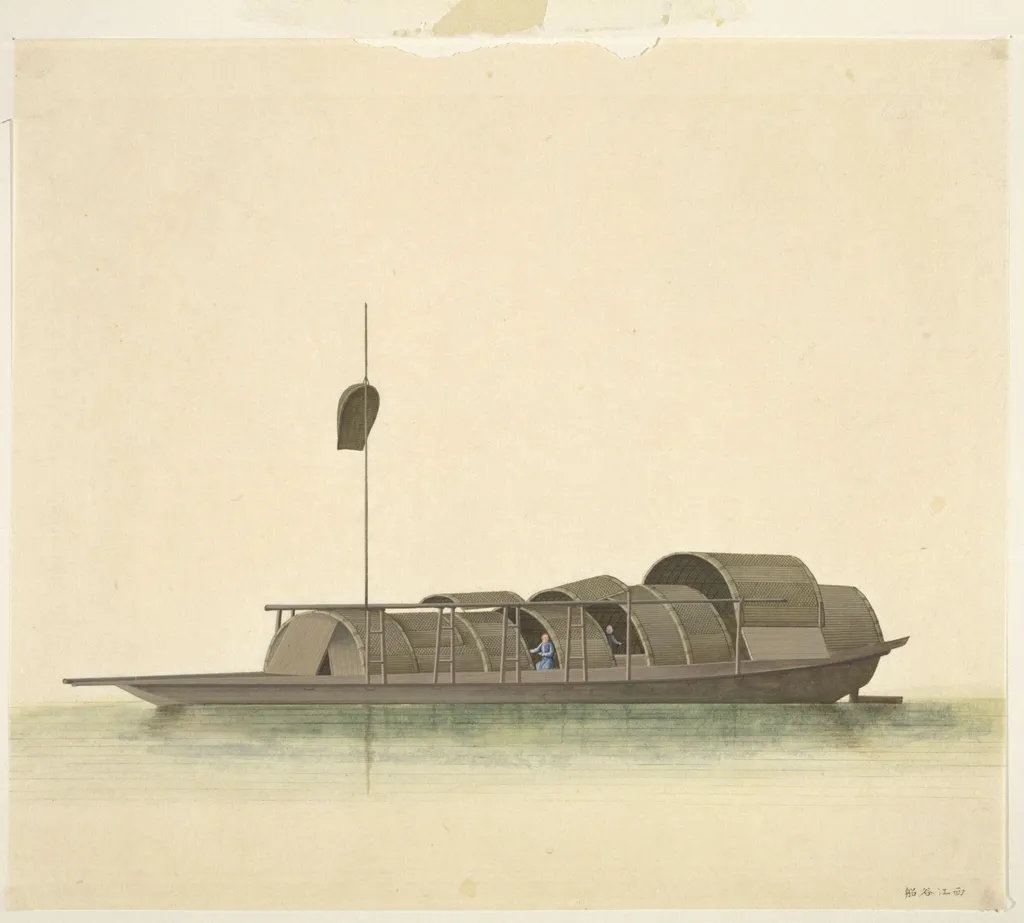
West River Rice Boat is a paint painting by the Romanticist artist Unknown. It dates from 1810 and is held in the collection of the Victoria and Albert Museum.
About this work
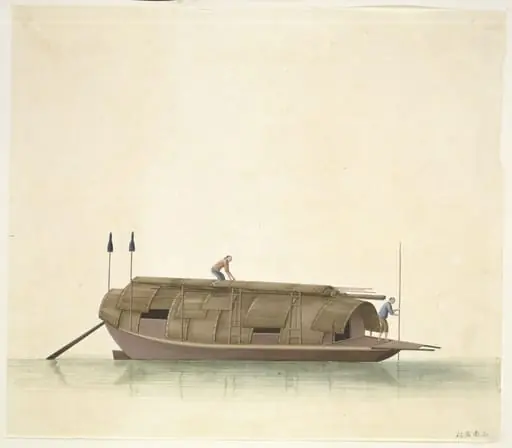
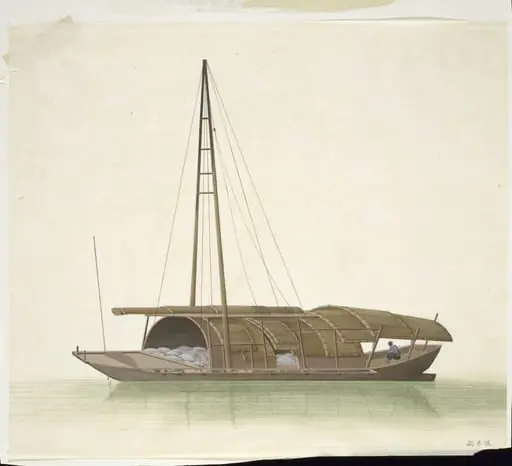
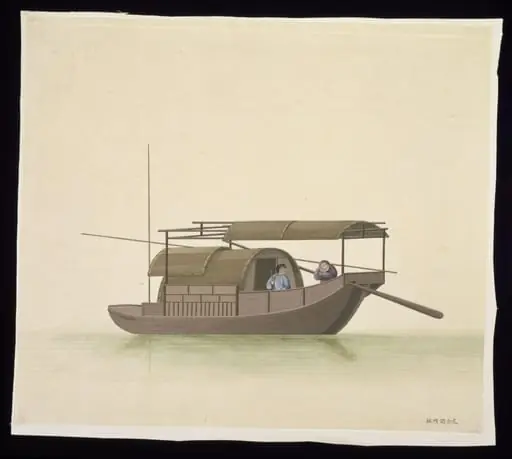
This painting shows a wooden rice boat on a wide river. The boat has a curved roof and long oars. Bamboo poles hold up a small shelter.
It’s one of 50 river scenes made for tourists. These paintings were cheap souvenirs back in 1800. The artist kept every detail exact, like the rice sacks stacked inside.
Want to see more? Look up the Victoria and Albert Museum.
Overview
Produced in quantity as affordable mementos, these works served both as visual records and commercial souvenirs for travelers, including European diplomats.
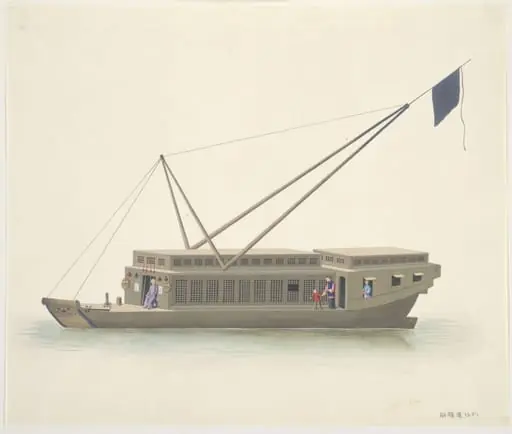
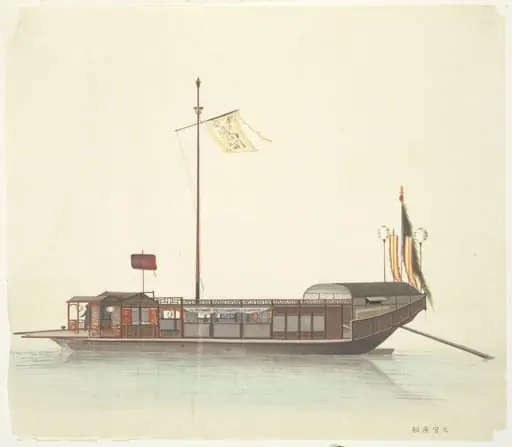
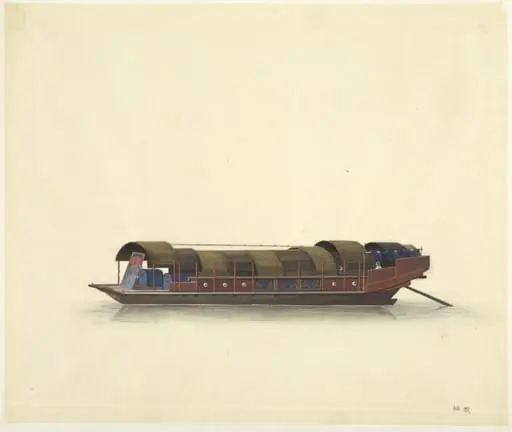
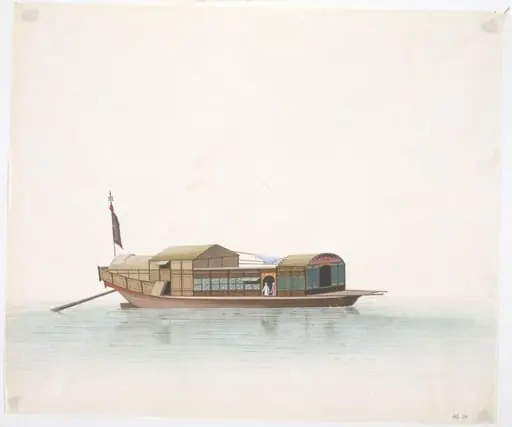
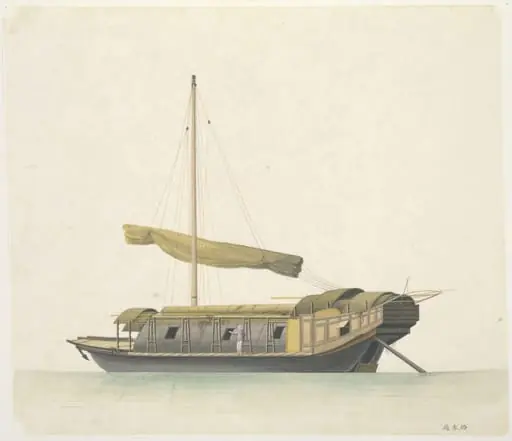
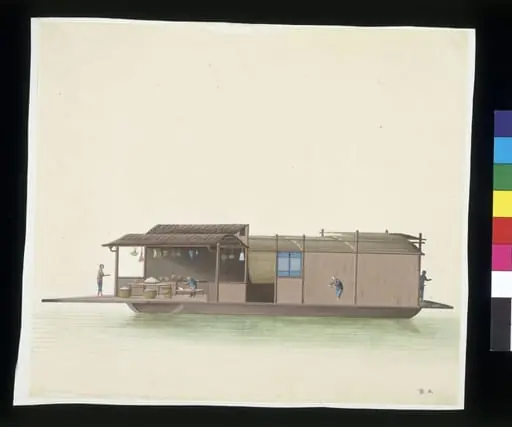
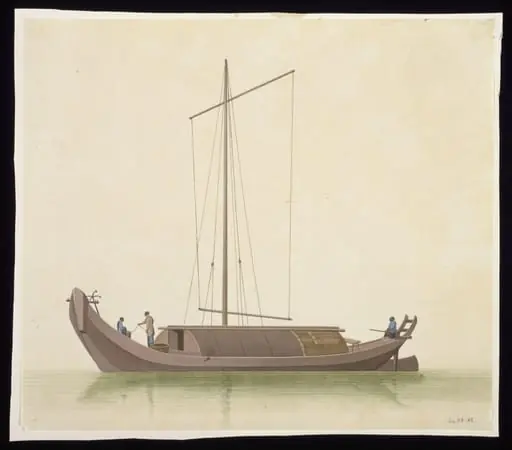
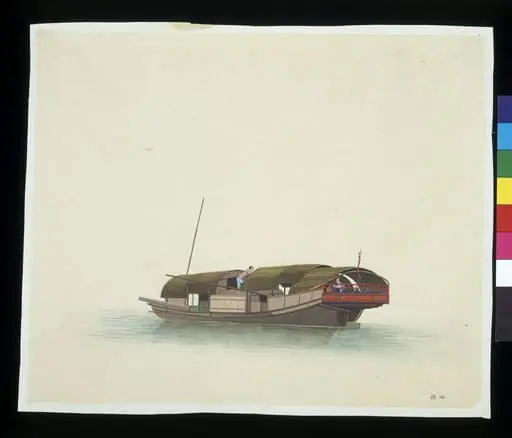
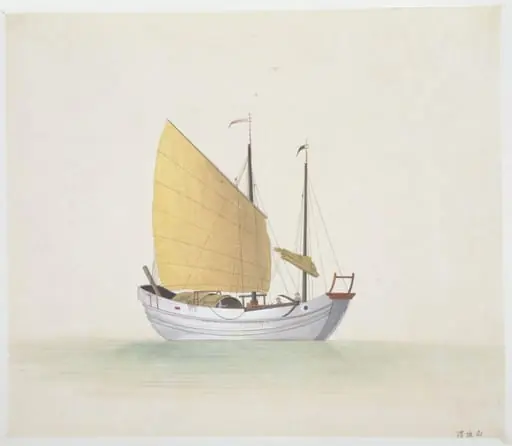
This painting is one of fifty in a series documenting river vessels along the Pearl River, created for foreign visitors in the late 18th and early 19th centuries. It depicts a wooden rice transport boat navigating the West River, carrying grain from Guangxi and Hunan to Guangdong. Produced in quantity as affordable mementos, these works served both as visual records and commercial souvenirs for travelers, including European diplomats.
Subject & Meaning
The boat shown is a functional vessel used in regional rice trade, designed for stability and capacity. Its curved roof and bamboo-supported shelter reflect practical adaptations to weather and cargo needs. The precise rendering of stacked rice sacks underscores the economic purpose of the vessel. These paintings document the dense riverine commerce that sustained southern China’s economy, capturing everyday labor rather than ceremonial or elite life.
Technique & Style
Executed in watercolor or ink on paper, the painting employs clear outlines and flat, unmodulated colors typical of export art. Details such as oars, rope lashings, and cargo arrangements are rendered with observational accuracy, prioritizing clarity over artistic embellishment. The composition is straightforward, focusing on the boat’s structure and its placement within a broad, empty river, minimizing background detail to emphasize the subject.
History & Provenance
The series was likely produced in Guangzhou for foreign buyers, including British envoys like Lord Macartney, who noted the river’s crowded vessel traffic in 1793. These works entered European collections through diplomatic and trade channels. The Victoria and Albert Museum holds several examples, suggesting institutional interest in their ethnographic value. Their survival reflects early Western fascination with Chinese material culture.
Context
During the Canton System era, foreign access to China was restricted, making river scenes among the few accessible glimpses of local life. The abundance of riverboats reflected Guangdong’s role as a commercial hub. These paintings catered to European curiosity about Chinese daily routines, offering a sanitized, orderly view of a complex economy that operated beyond imperial control.
Legacy
The series remains a key visual archive of pre-industrial Chinese river transport. While initially treated as decorative curiosities, they are now valued for their documentary precision. Scholars use them to reconstruct vessel design, trade routes, and labor practices. Their mass production highlights the early globalization of visual culture and the commodification of cultural observation.
Artist & collection

 Domestic Scene
 Giacomo and Cardinal Marco, investing Andrea, Abbot of San Zeno, with his Benefice
 The Nymph of Fontainebleau
 Portrait of a Woman
 Madonna and Child with Saints in the Enclosed Garden
 Venus and Minerva
 Family Group of Four on Sofa
 Wall painting from Room H of the Villa of P. Fannius Synistor at Boscoreale