Artwork
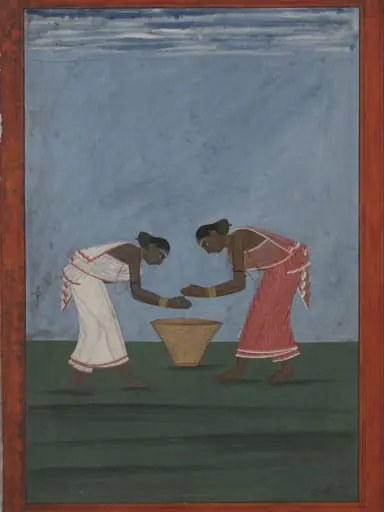
Two goldsmiths
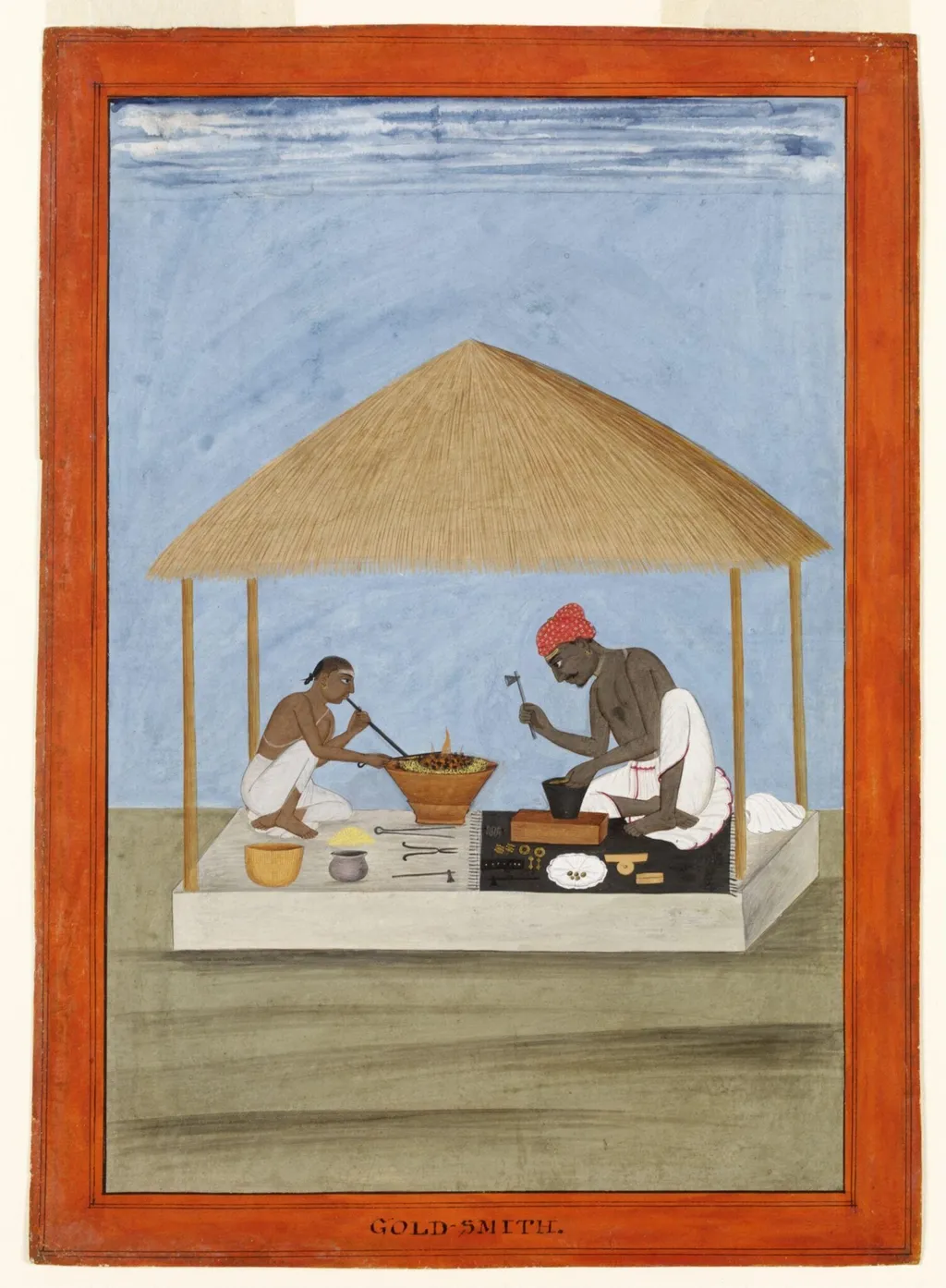
Two goldsmiths is a paint painting by the Rococo painting artist Unknown. It dates from 1770 and is held in the collection of the Victoria and Albert Museum. This painting is one of thirty-six in a series documenting occupational roles in South India, created around the late 18th century.
About this work
Overview
Each work in the series shares formal elements: a red border, stylized cloud strips at the top, heavy shadows beneath figures, and a dark green base.
This painting is one of thirty-six in a series documenting occupational roles in South India, created around the late 18th century. It depicts two goldsmiths—a man and a woman—engaged in their craft, surrounded by tools and finished pieces. Each work in the series shares formal elements: a red border, stylized cloud strips at the top, heavy shadows beneath figures, and a dark green base. The album was bound with a watermark bearing the name J. Ruse, 1799, and later owned by Joseph Whatley, whose bookplate bears the Latin motto 'Pelle Timorem.'
Subject & Meaning
The scene captures a domestic goldsmithing workshop, illustrating the collaborative nature of the trade between husband and wife. Their attire and posture reflect regional dress and gendered roles within artisanal labor. The inclusion of tools and finished jewelry emphasizes precision and skill, presenting the occupation not as mere labor but as a hereditary craft. Unlike idealized portraiture, the work offers a matter-of-fact record of daily work life, aligning with colonial-era ethnographic documentation efforts in India.
Technique & Style
The figures are rendered with varying degrees of detail, suggesting the involvement of multiple artists within the same project. One hand employs bold outlines against a yellow ground, another favors intricate modeling on deep blue, and a third uses softer forms on green and blue backgrounds. Shadows are rendered as thick, looped forms beneath the feet, creating a sense of weight rather than naturalistic depth. The use of chiaroscuro is minimal; instead, contrast arises from flat color fields and stylized contours, typical of regional studio practices of the period.
History & Provenance
The painting was part of a bound album compiled around 1799, likely commissioned by a British official or collector interested in Indian social structures. The watermark 'J. Ruse 1799' indicates the paper’s origin, while Joseph Whatley’s ownership stamp suggests later British possession. The album’s uniform structure—identical borders, top motifs, and ground colors—implies centralized production, possibly by a local atelier responding to colonial demand for ethnographic imagery. Its survival offers rare insight into how Indian artisans adapted their practice to foreign patronage.
Context
These paintings emerged during a period when British administrators sought to classify Indian society through visual records. Similar series were produced across South India, documenting caste-based occupations with systematic consistency. While framed as ethnographic studies, they often reflected colonial assumptions about social hierarchy. The goldsmiths’ depiction, like others in the series, avoids romanticism, instead presenting work as a fixed, inherited role. Their inclusion in an album underscores the colonial impulse to catalog and contain cultural diversity within a single, ordered volume.
Legacy
The album remains a significant resource for understanding 18th-century Indian artisan communities and the intersection of indigenous art with colonial documentation. Though not widely exhibited, its formal consistency and regional specificity have informed scholarly studies on Indian craft traditions and colonial visual culture. The variation in artistic hands reveals the collaborative nature of such projects, challenging assumptions of singular authorship. Today, the series is preserved as a historical archive, offering quiet testimony to the lives of unnamed craftsmen and women.
Artist & collection

 Domestic Scene
 Giacomo and Cardinal Marco, investing Andrea, Abbot of San Zeno, with his Benefice
 The Nymph of Fontainebleau
 Portrait of a Woman
 Madonna and Child with Saints in the Enclosed Garden
 Venus and Minerva
 Family Group of Four on Sofa
 Wall painting from Room H of the Villa of P. Fannius Synistor at Boscoreale
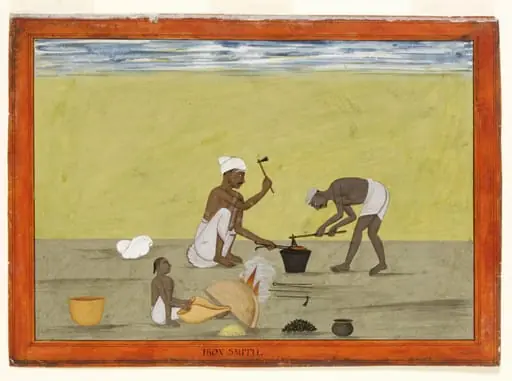 A blacksmith and his assistant
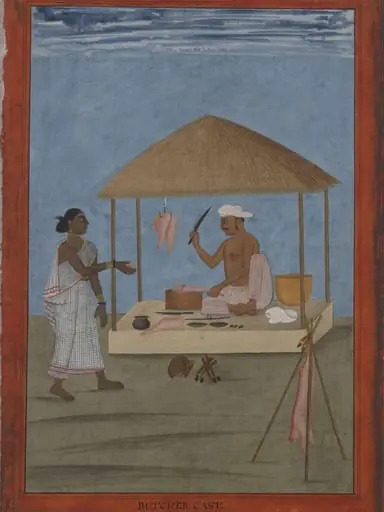 A butcher and his wife
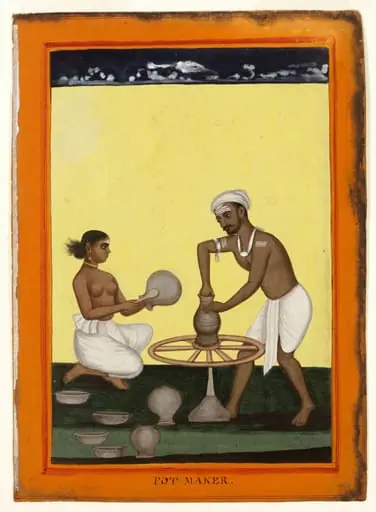 A potter and his wife
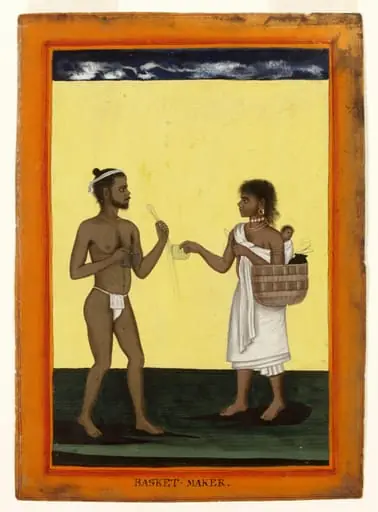 A basket-maker and his wife
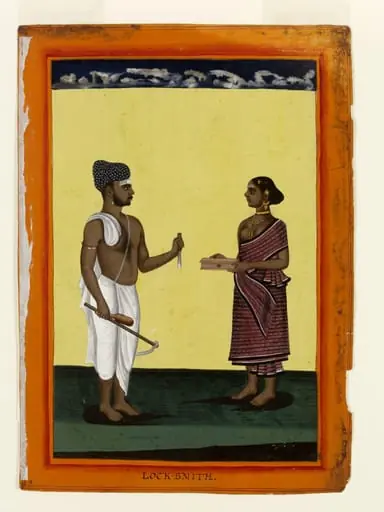 A locksmith and his wife
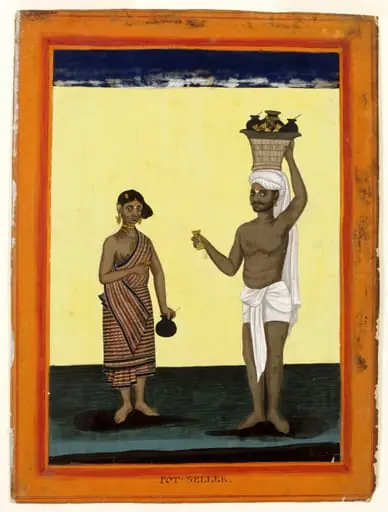 A pot-seller and his wife
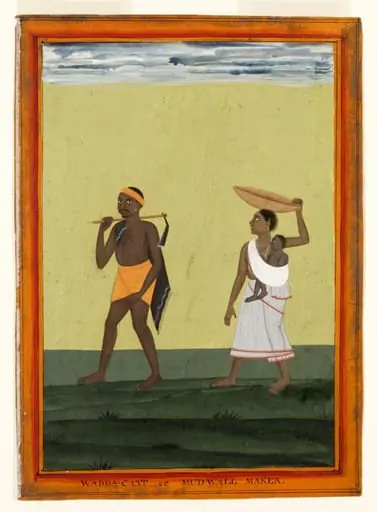 A mud-wall-maker and his wife
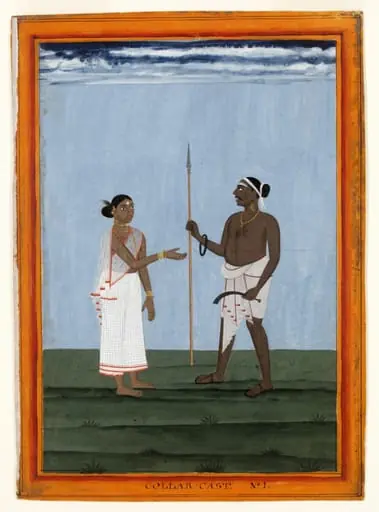 A tribal couple
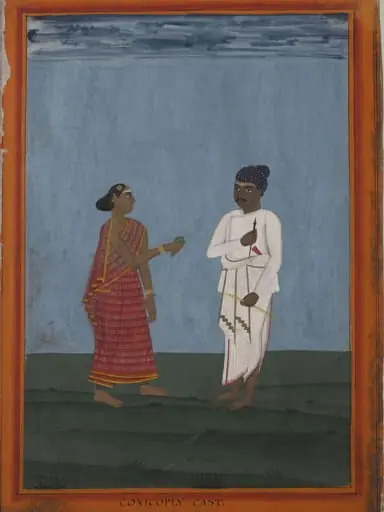 A clerk and his wife
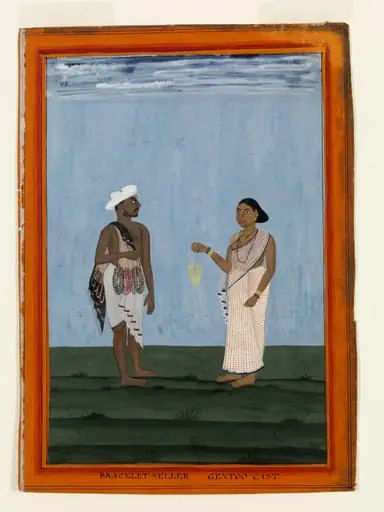 A bracelet-seller and his wife
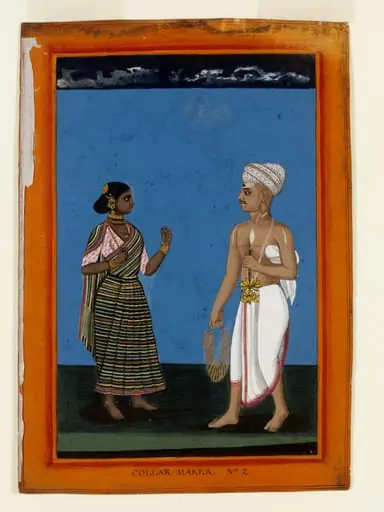 A necklace-seller and his wife
 Two women dancing and clapping