Artwork
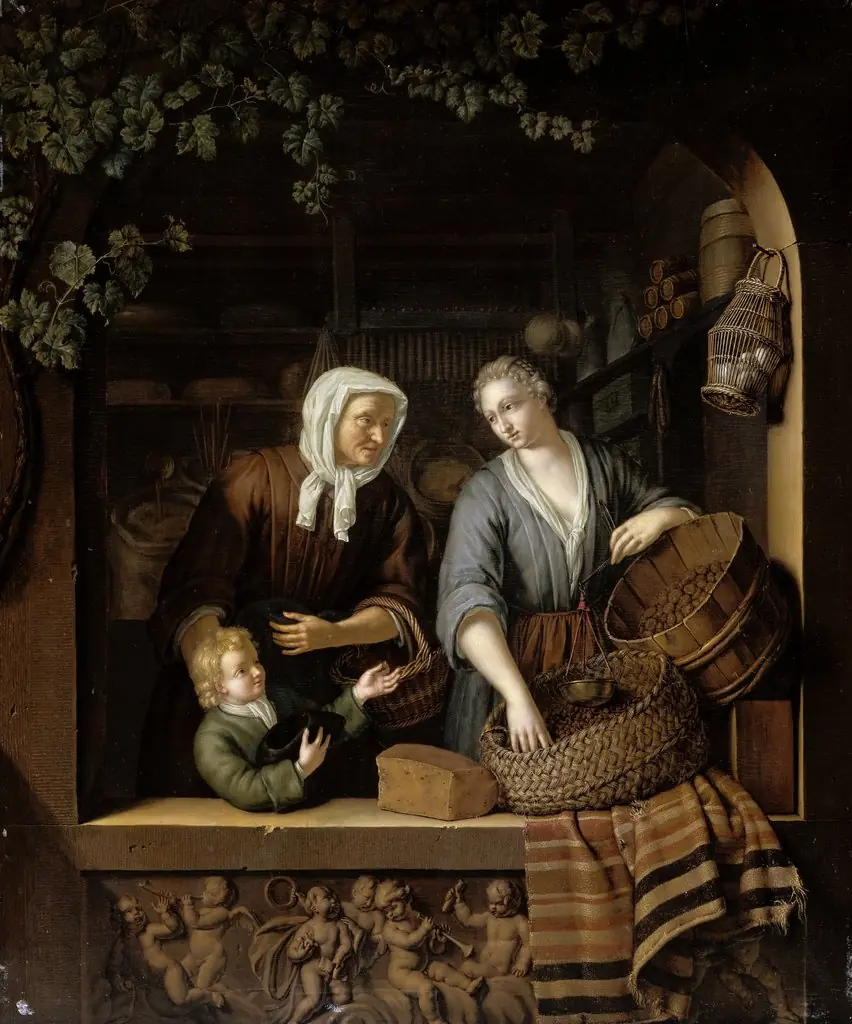
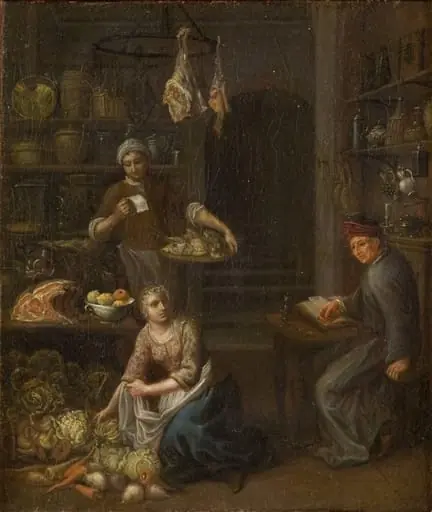
Blick in einen Laden
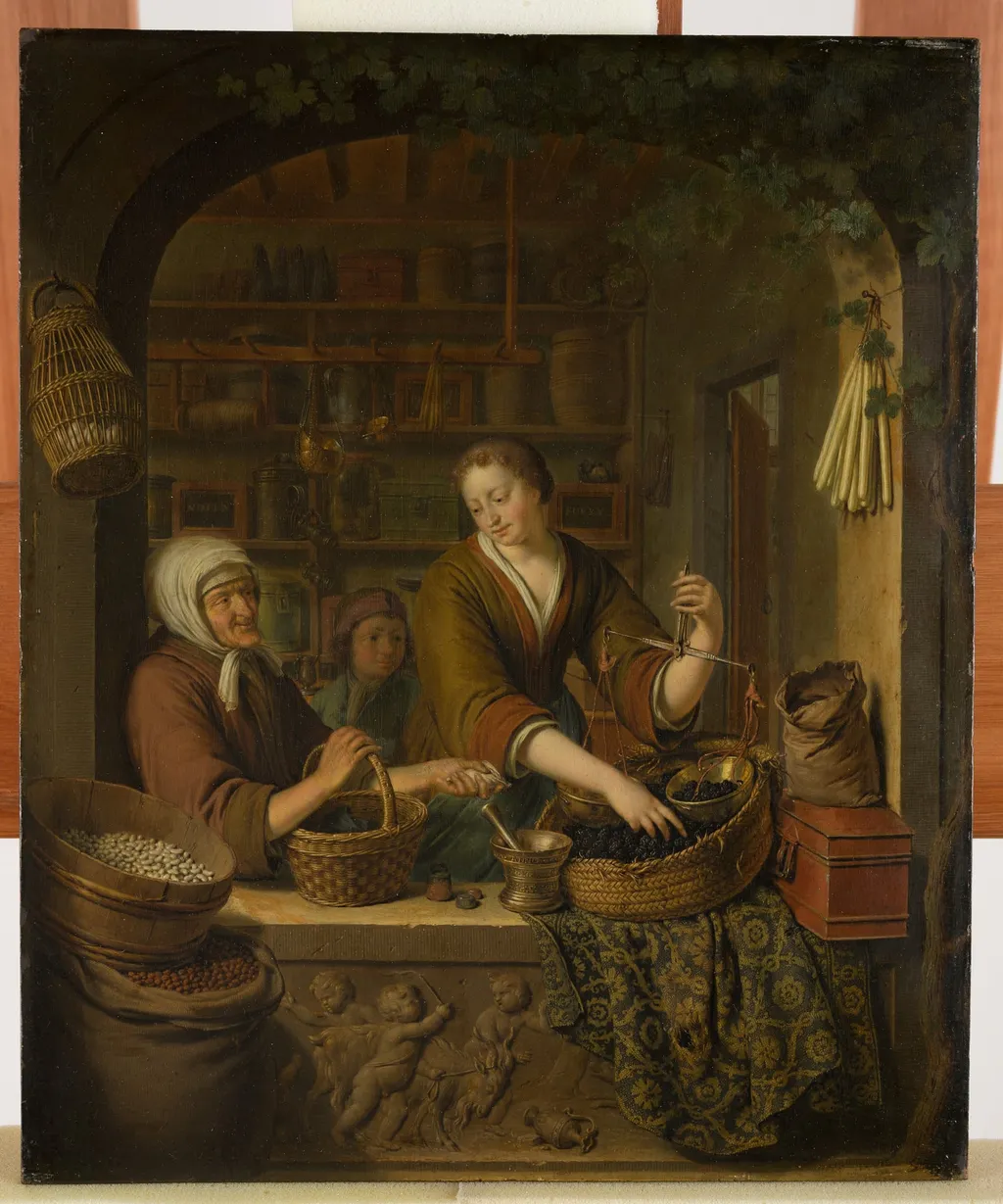
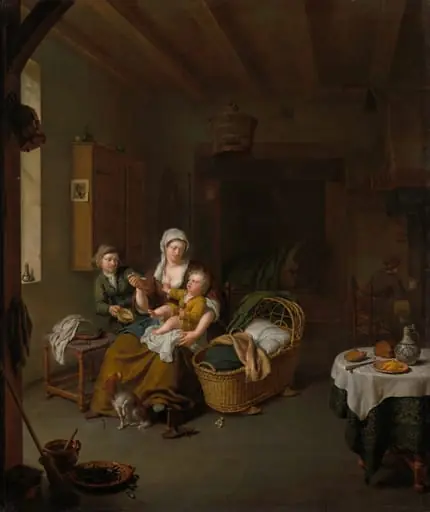
Blick in einen Laden is a drawing by Unknown. It dates from 1720 and is held in the collection of the Art Collection of the University Göttingen. This drawing captures a quiet moment inside a small shop, where a woman weighs goods on a scale while two others observe.
About this work
Overview
The space blends domestic and commercial elements—shelves hold jars and woven baskets, while wooden figures and cloth bags clutter the table.
This drawing captures a quiet moment inside a small shop, where a woman weighs goods on a scale while two others observe. The space blends domestic and commercial elements—shelves hold jars and woven baskets, while wooden figures and cloth bags clutter the table. Natural light enters from the right, casting soft shadows and highlighting varied textures. The scene feels intimate, grounded in daily routine rather than spectacle.
Subject & Meaning
The figures engage in an ordinary act of trade or household measurement, suggesting a local economy rooted in personal exchange. The presence of a child and an elder implies generational continuity in domestic labor. The objects—woven baskets, wooden carvings, fabric sacks—hint at handmade goods and self-sufficiency. No grand narrative is present; meaning emerges from the quiet dignity of routine work.
Technique & Style
The artist uses precise line work to distinguish textures: rough wood grain contrasts with smooth fabric folds and the metallic sheen of the scale. Cross-hatching builds depth in shadows without heavy ink, maintaining a light, observational tone. The composition is uncluttered yet dense with detail, guiding the eye through the scene with subtle directional lines and spatial layering.
History & Provenance
The drawing’s origin is undocumented in public records, but its style aligns with 19th-century European genre sketches, often made as studies or personal records. It lacks signatures or inscriptions, suggesting it may have been a private work, possibly part of a larger sketchbook. Its survival implies it was preserved by someone attuned to everyday visual culture.
Context
This scene reflects a pre-industrial mode of commerce, where shops often doubled as homes and goods were measured, weighed, and sold by hand. Similar settings appear in regional art from rural Germany and the Low Countries, where artisans and small traders operated within close-knit communities. The drawing captures a transitional moment before mass production reshaped such spaces.
Legacy
Though not widely exhibited, the drawing contributes to a broader tradition of observational drawing that valued quiet realism over dramatic narrative. Its focus on texture and light influenced later artists interested in documenting daily life with precision. It remains a quiet example of how ordinary spaces can hold visual richness when rendered with attention.
Artist & collection
Museum
Art Collection of the University Göttingen
Continue through works from the same source collection.
 Domestic Scene
 Giacomo and Cardinal Marco, investing Andrea, Abbot of San Zeno, with his Benefice
 The Nymph of Fontainebleau
 Portrait of a Woman
 Madonna and Child with Saints in the Enclosed Garden
 Venus and Minerva
 Family Group of Four on Sofa
 Wall painting from Room H of the Villa of P. Fannius Synistor at Boscoreale