Artwork
Blid de formă tronconică cu partea superioara usor rasfrântă, Decorul este pictat cu pensula cu un motiv central de tip floral; pe margini linii paralele și flori stilizate din puncte. Smălțuit. Cromatică: roșu; verde și maro în centru; motive laterale: alb pe fond brun inchis; fond general: alb-galbui.
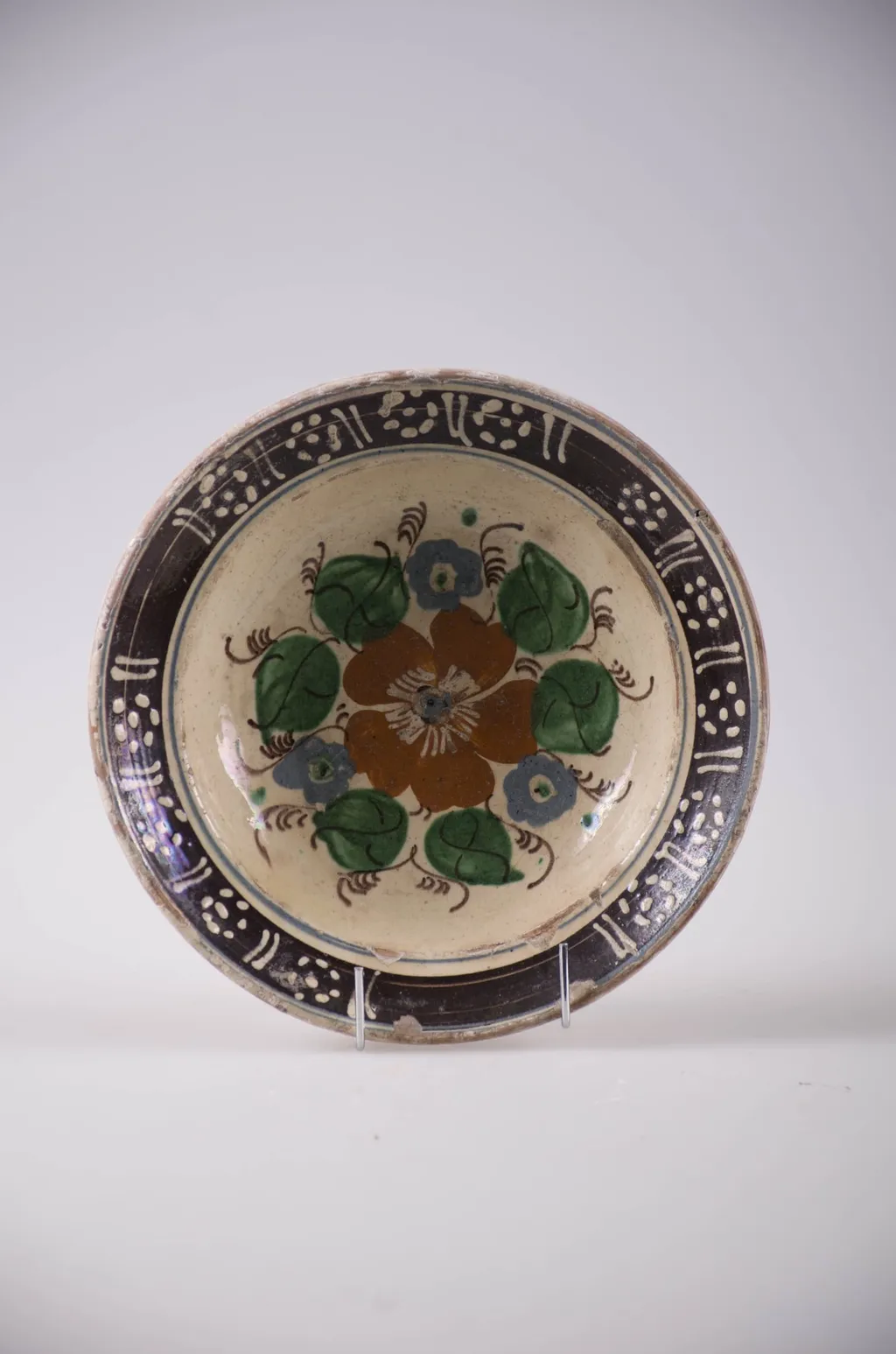
Blid de formă tronconică cu partea superioara usor rasfrântă, Decorul este pictat cu pensula cu un motiv central de tip floral; pe margini linii paralele și flori stilizate din puncte. Smălțuit. Cromatică: roșu; verde și maro în centru; motive laterale: alb pe fond brun inchis; fond general: alb-galbui. is a print by Unknown. It dates from 1850 and is held in the collection of the ASTRA National Museum Complex. A circular ceramic plate with a broad, slightly upturned rim, this object is glazed and features hand-painted decoration.
About this work
Overview
A circular ceramic plate with a broad, slightly upturned rim, this object is glazed and features hand-painted decoration.
A circular ceramic plate with a broad, slightly upturned rim, this object is glazed and features hand-painted decoration. Its surface shows signs of prolonged use, with a weathered, earthy texture. The central motif is a floral design, surrounded by parallel lines and stylized floral elements composed of dots. The overall form is simple yet deliberate, suggesting functional use alongside decorative intent.
Subject & Meaning
The central floral motif, rendered in brown, green, and muted red, appears abstracted rather than naturalistic. Surrounding it, white dots and swirling lines on a dark background form a border that may symbolize repetition or rhythm rather than representational flora. The lack of clear iconography suggests a focus on pattern and harmony, possibly reflecting local aesthetic traditions rather than narrative or religious symbolism.
Technique & Style
Paint was applied directly onto the clay surface with a brush, using thick, uneven strokes that retain the hand of the maker. Colors blend subtly in places, while others remain sharply defined. The use of white dots to form floral outlines against a dark ground indicates a deliberate contrast strategy. The glaze is even but shows wear, indicating the piece was both functional and handled over time.
History & Provenance
The object’s wear patterns and material composition suggest it was produced and used in a regional ceramic tradition, likely for domestic purposes. Its stylistic elements align with early to medieval pottery practices in the Balkans or Eastern Mediterranean, where similar geometric and floral motifs appear on utilitarian wares. No documented provenance exists, but its form and decoration are consistent with local workshop production.
Context
This plate belongs to a broader category of everyday ceramics from agrarian communities, where decoration served both aesthetic and cultural functions. The limited palette and repetitive motifs reflect constraints in pigment availability and the emphasis on durability over elaborate design. Similar pieces have been found in archaeological contexts from the 10th to 14th centuries, indicating a sustained regional style.
Legacy
Though not signed or attributed to a known artisan, the plate exemplifies the quiet continuity of vernacular ceramic traditions. Its survival offers insight into the visual language of non-elite households, where ornamentation was integrated into daily life without formal training or institutional patronage. Such objects inform modern understandings of pre-modern craft beyond monumental art.
Artist & collection

 Domestic Scene
 Giacomo and Cardinal Marco, investing Andrea, Abbot of San Zeno, with his Benefice
 The Nymph of Fontainebleau
 Portrait of a Woman
 Madonna and Child with Saints in the Enclosed Garden
 Venus and Minerva
 Family Group of Four on Sofa
 Wall painting from Room H of the Villa of P. Fannius Synistor at Boscoreale
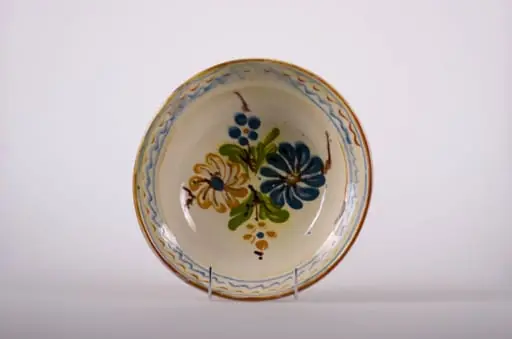 Blid de formă tronconică, adâncit; pe fund are găuri pentru agățare. Este smălțuit în interior și exterior (buza); este decorat cu motive geometrice: linie, linie ondulată; motive fitomorfe: frunze; motive florale. Cromatică: fond: alb; motive: albastru; maro; verde.
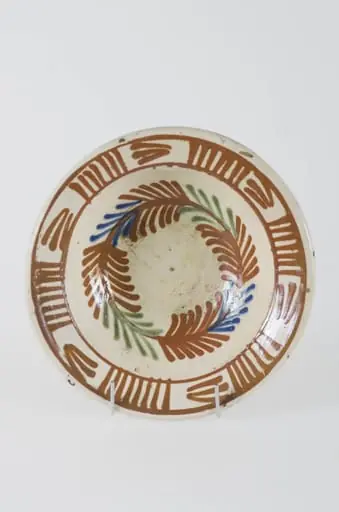 Blid de formă tronconică, lucrat la roată fiind smălțuit la interior cu smalț alb. Prezintă la exterior scurgeri de smalț și de vopsea. Buza este puternic profilată, îngroșată. Motivele decorative sunt vegetale, motivul brăduțului, pe fundul vasului, dispuse într-un registru circular, iar pe buza interioară se identifică un alt registru circular în interiorul căruia sunt pictate linii verticale paralele. Cromatică: fond: alb-gălbui; motive: cărămiziu; albastru; verde.
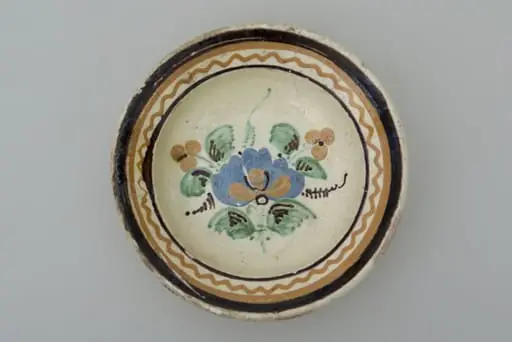 Blid de formă tronconică cu buza evazată. Smălțuit. Decorat cu motive florale: buchet, plasat pe fundul vasului și motive geoemtrice plasate pe gură: alternantă de cercuri și spirale ce se închid îm cerc. Cromatică: fond: alb; motive: maro; crem; verde; albastru.
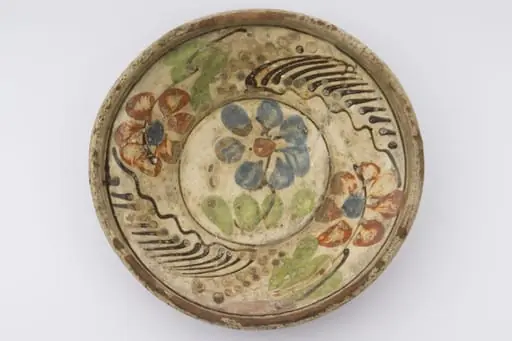 Obiect de uz casnic, realizat din lut, smălțuit la interior, de formă circulară cu profil tronconic și cu buza dreaptă. Decorat prin pictare cu pensula pe întreaga suprafață interioară a vasului cu motive vegetal-florale (flori mari cu frunze) și geometrice (linii circulare, puncte). Central, este pictată o floare albastră. Prezintă urme de uzură funcțională. Rol decorativ. Cromatică: fundal interior alb și exterior cărămiziu; motive: verde, albastru, negru, maro.
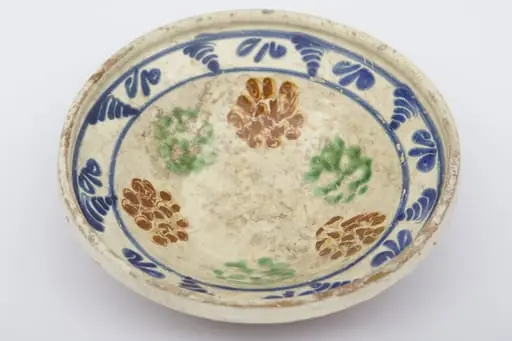 Vas ceramic de dimensiuni medii, smălțuit la interior, având formă tronconică. Blidul a fost decorat cu motive geometrizante și fitomorfe stilizate. Primul registru, dispus pe fundul piesei este format din șase flori verzi și maro, intercalate. Marginal, pe buza profilată a fost realizat cel de-al doilea registru, fiind trasate două linii circulare, care încadrează motive vegetale albastre, succesive. Blidul era folosit pentru servirea hranei. Prezintă uzură funcțională. Cromatică: fond: cărămiziu; crem; motive: albastru; maro; verde.
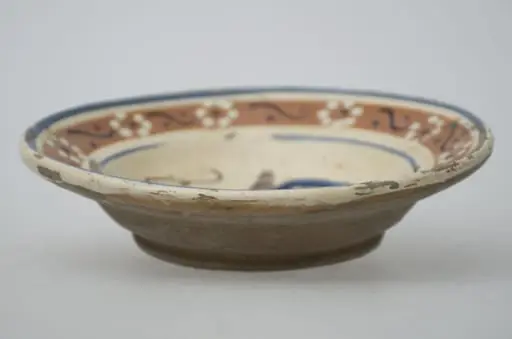 Farfurie de formă tronconică, de dimensiuni mai mici cu pereții ușor curbați și marginea evazată; Smălțuită în interior. Decorat cu motiv avimorf, central un cocoș, iar pe margine două cercuri încadrează un chenar floral. Cromatică: fond: alb; motive: verde; albastru; brun; negru.