Artwork
Blid mic
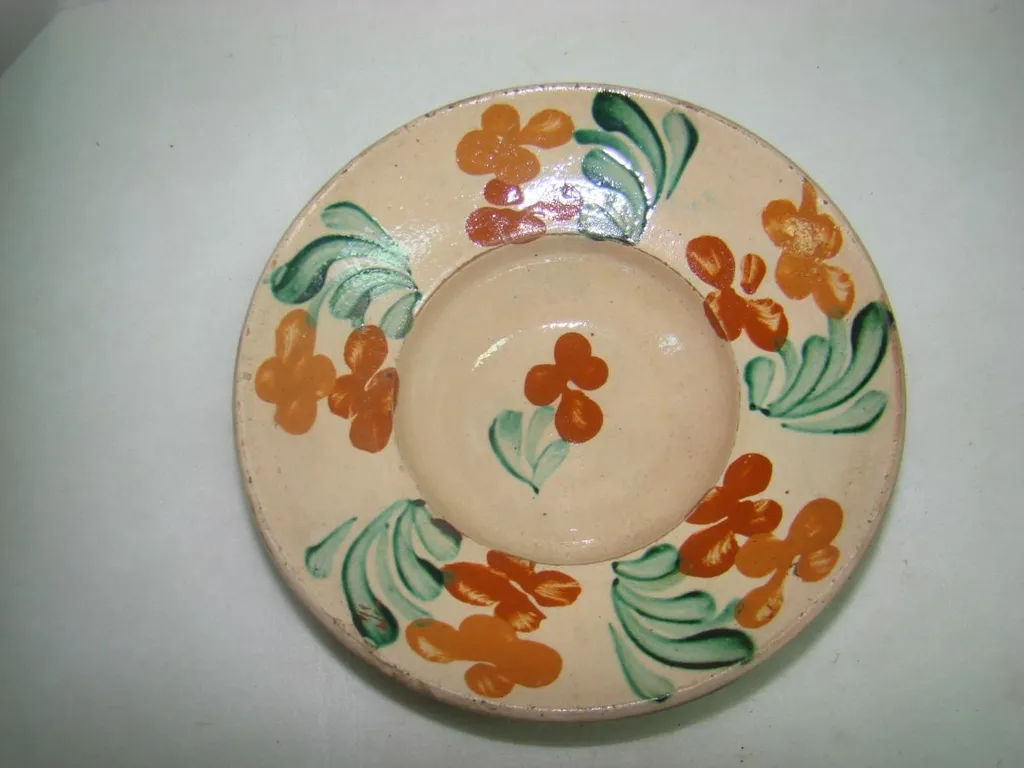
Blid mic is a print by Unknown. It dates from 1850 and is held in the collection of the "Dimitrie Gusti" National Village Museum. A circular ceramic plate with a shallow central depression, this piece features hand-painted floral decoration along its rim.
About this work
Overview
The surface exhibits visible brushwork and a slightly irregular finish, suggesting artisanal production rather than industrial replication.
A circular ceramic plate with a shallow central depression, this piece features hand-painted floral decoration along its rim. The surface exhibits visible brushwork and a slightly irregular finish, suggesting artisanal production rather than industrial replication. The palette is restrained, dominated by earthy tones and vivid orange and green pigments, creating a quiet contrast between naturalistic motifs and the plain background.
Subject & Meaning
The design centers on stylized flowers and leaves, rendered without fine detail or shading. These motifs draw from traditional ceramic ornamentation, likely referencing local flora rather than symbolic narratives. Their repetition and simplicity suggest a focus on seasonal beauty or domestic harmony, common in utilitarian pottery where decoration serves both aesthetic and cultural functions.
Technique & Style
The plate was painted by hand, with thick, unblended strokes defining the petals and foliage. Pigments appear unevenly applied, preserving the texture of the brush and the porous surface of the clay. The lack of intricate detail and the bold outlines reflect a folk or regional style, prioritizing clarity and rhythm over realism, typical of handmade wares in many traditional ceramic practices.
History & Provenance
Though specific origins are unrecorded, the form and decoration align with regional pottery traditions where floral patterns adorn everyday vessels. Its construction—hand-thrown, low-fired, and minimally glazed—suggests local production, possibly for household use. The absence of maker’s marks or documented collection history implies it was not created for elite or commercial markets.
Context
This plate belongs to a broader category of functional ceramics where decoration complements utility. Similar floral motifs appear in household pottery across multiple cultures, often tied to agricultural cycles or domestic rituals. Its modest scale and unglazed base indicate it was likely used for serving or storage, not display, placing it within the everyday material culture of its time and place.
Legacy
The plate exemplifies a quiet continuity in vernacular ceramics, where techniques and designs pass through generations without formal documentation. Its preservation offers insight into non-elite artistic practices, reminding viewers that aesthetic expression in historical material culture often resides in the ordinary, not the monumental.
Artist & collection
Museum
"Dimitrie Gusti" National Village Museum
Continue through works from the same source collection.
 Domestic Scene
 Giacomo and Cardinal Marco, investing Andrea, Abbot of San Zeno, with his Benefice
 The Nymph of Fontainebleau
 Portrait of a Woman
 Madonna and Child with Saints in the Enclosed Garden
 Venus and Minerva
 Family Group of Four on Sofa
 Wall painting from Room H of the Villa of P. Fannius Synistor at Boscoreale
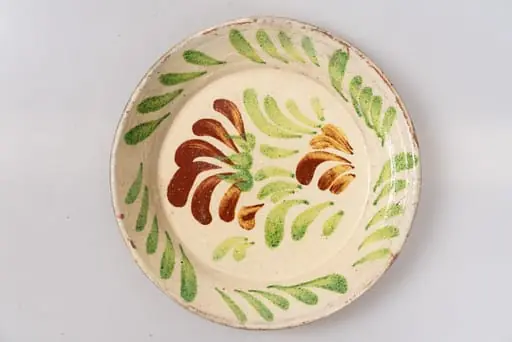 Farfurie semi-adâncă, cu fund întins, corp îngust și buză evazată; este angobată pe fața interioară cu un strat de humă albă și decorată prin pictare cu pensula cu motive florale și fitomorfe stilizate: central pe fundul farfuriei este reprezentată o floare cu petale alungite de culoare maro și frunze verzi și maro. Buza este ornamentată cu un șir de frunze verzi foarte stilizate. Cromatica: alb, verde, maro. Suprafața ornamentată a farfuriei este acoperită cu un strat de smalț transparent.
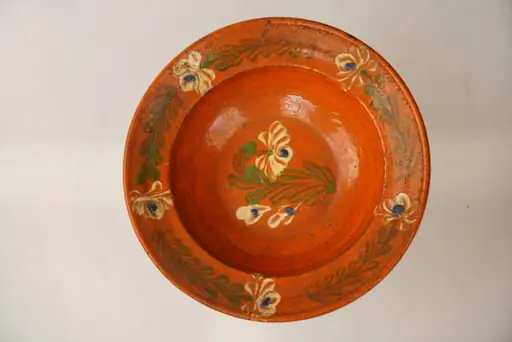 Farfurie adâncă, cu corp ușor rotunjit și buza dreaptă evazată; decorul este realizat prin pictare cu pensula pe fondul neangobat al lutului și se compune din motive florale și vegetale dispuse astfel: centrul farfuriei conține o tulpină cu o floare de culoare albă, cu petale alungite și mijloc albastru, cu doi boboci albi și frunze verzi. Buza farfuriei este decorată cu cinci flori cu petale albe și mijlocul marcat printr-un punct albastru, între care se găsesc cinci grupuri de frunze verzi. Suprafața ornamentată a farfuriei este acoperită cu un strat de smalț transparent. Cromatica: alb, verde, albastru, pe fondul roșu al lutului ars.
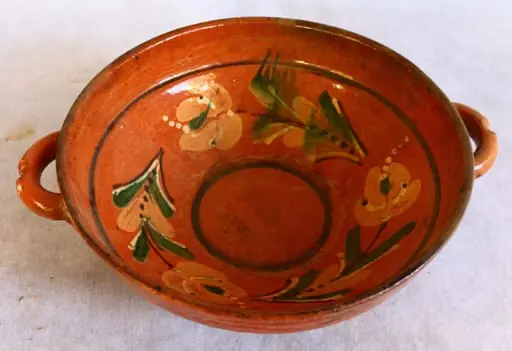 Vas de formă tronconică, cu două toarte laterale („cu urechi”) și una mică la spate. Decor geometric și floral stilizat: între două cercuri concentrice (unul pe fundul vasului, iar cel de-al doilea în partea superioară), trei flori cu frunze stilizate. Cromatică: roșu, negru, verde, alb, galben. Timp de lucru: circa două săptămâni.
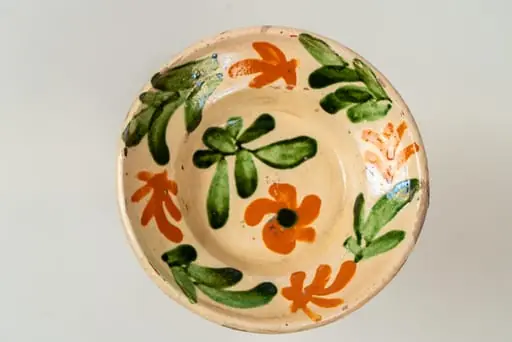 Farfurie mică, adâncă, cu buză răsfrântă. Piesa este modelată la roata olarului, angobată. Decorul este realizat prin pictare cu pensula și constă în motive decorative florale și vegetale (flori și frunze), dispuse central, pe fundul farfuriei și pe toată buza acesteia, sub formă de ghirlandă. Cromatica: alb, verde, siena naturală. Farfuria este smălțuită pe interior, cu smalț transparent.
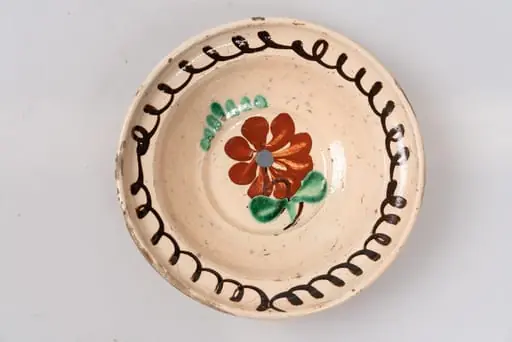 Farfurie adâncă, cu fund îngust, buza evazată cu muchia verticală; este angobată pe fața interioară cu un strat de humă albă și decorată prin pictare cu pensula și cu cornul cu motive florale, fitomorfe și geometrice: central pe fundul farfuriei este reprezentată o floare cu petale de culoare maro, cu mijlocul marcat printr-un punct gri și două frunze verzi. În partea superioară a florii, șapte linii verzi, scurte, completează decorul. Buza este ornamentată cu o linie buclată continuă, de culoare maro-închis. Cromatica: alb, verde, maro, maro-închis, gri. Suprafața ornamentată a farfuriei este acoperită cu un strat de smalț transparent.
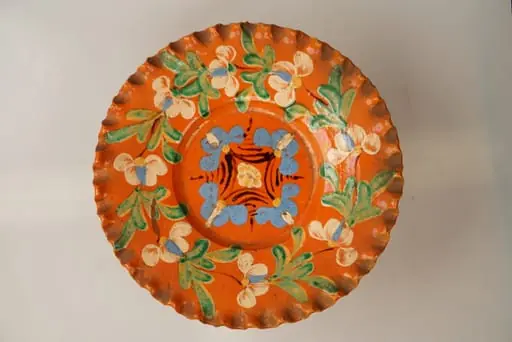 Farfurie de formă aplatizată, cu muchia buzei ondulată; suprafața interioară a farfuriei este acoperită cu un strat de angobă roșie peste care este pictat cu pensula decorul format din motive florale dispuse astfel: centrul farfuriei conține patru flori albastre cu mijlocul alb, dispuse în colțurile unui romb format din linii maro, având în centru o floare mică albă. Registrul decorativ de pe buza farfuriei este decorat cu o ghirlandă continuă dispusă circular, formată din flori cu petale albe și centru albastru, cu tulpină subțire maro și frunze verzi. Duprafața ornamentată a farfuriei este acoperită cu un strat de smalț transparent. Cromatica: roșu, alb, albastru, verde.
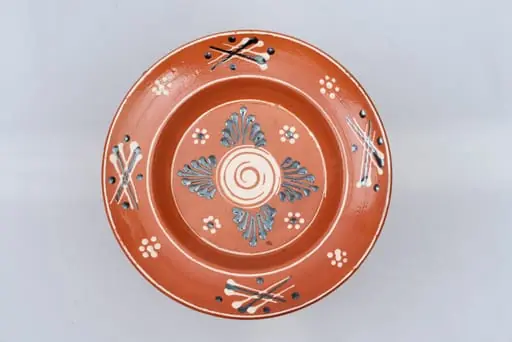 Farfurie adâncă, cu buză dreaptă evazată. Decorul este realizat prin pictare cu cornul și se compune din motive geometrice: central pe fundul farfuriei este pictată o linie spiralată circulară, de culoare albă, pe exteriorul căreia se găsesc patru grupuri de linii dispuse în formă de triunghi, de culoare maro. Decorul din registrul central este completat cu patru flori mici realizate din puncte de culoare albă și maro. Buza farfuriei este decorată cu patru motive formate din linii hașurate intersectat și puncte de culoare maro și alb, plasate diametral opus sub formă de cruce și separate de câte o floare mică formată din puncte albe. Câte o linie circulară de culoare albă marchează fundul farfuriei, bordura interioară a acesteia și muchia buzei. Suprafața ornamentată a farfuriei este acoperită cu un strat de smalț transparent. Cromatica: maro-închis, alb, pe fondul neangobat al lutului ars.
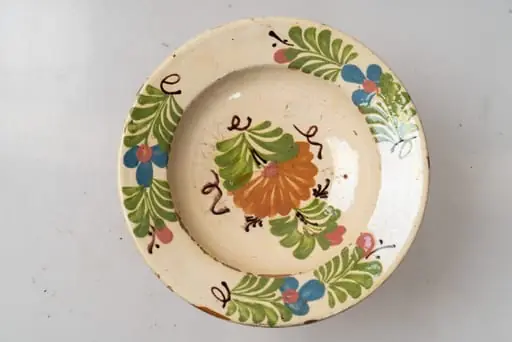 Farfurie adâncă, cu buza lată, răsfrântă; piesa este modelată din lut la roata olarului și este angobată cu humă albă pe fața interioară. Decorul este realizat prin pictare cu pensula și cu cornul și constă în motive florale și fitomorfe (o floare cu frunze și un boboc, pe centrul farfuriei și trei grupuri de flori cu frunze, pe buza farfuriei). Cromatica: alb, albastru, verde, siena naturală, roz-bej, maro. Fața ornamentată a farfuriei este acoperită cu un strat de smalț transparent.