Artwork
Farfurie adâncă, cu corp ușor rotunjit și buza dreaptă evazată; decorul este realizat prin pictare cu pensula pe fondul neangobat al lutului și se compune din motive florale și vegetale dispuse astfel: centrul farfuriei conține o tulpină cu o floare de culoare albă, cu petale alungite și mijloc albastru, cu doi boboci albi și frunze verzi. Buza farfuriei este decorată cu cinci flori cu petale albe și mijlocul marcat printr-un punct albastru, între care se găsesc cinci grupuri de frunze verzi. Suprafața ornamentată a farfuriei este acoperită cu un strat de smalț transparent. Cromatica: alb, verde, albastru, pe fondul roșu al lutului ars.
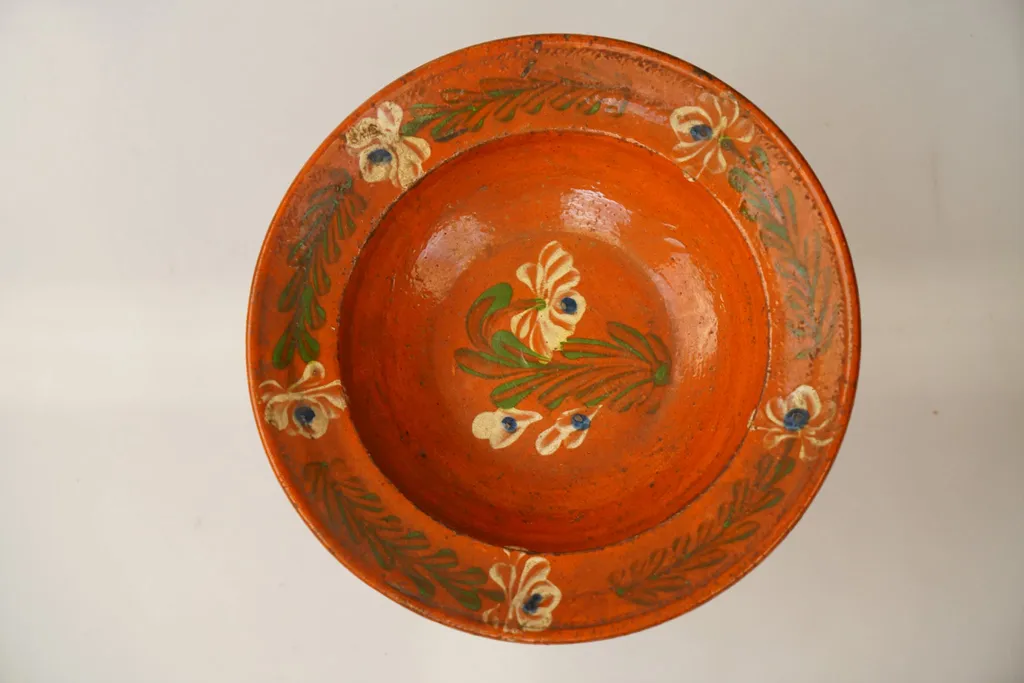
Farfurie adâncă, cu corp ușor rotunjit și buza dreaptă evazată; decorul este realizat prin pictare cu pensula pe fondul neangobat al lutului și se compune din motive florale și vegetale dispuse astfel: centrul farfuriei conține o tulpină cu o floare de culoare albă, cu petale alungite și mijloc albastru, cu doi boboci albi și frunze verzi. Buza farfuriei este decorată cu cinci flori cu petale albe și mijlocul marcat printr-un punct albastru, între care se găsesc cinci grupuri de frunze verzi. Suprafața ornamentată a farfuriei este acoperită cu un strat de smalț transparent. Cromatica: alb, verde, albastru, pe fondul roșu al lutului ars. is a print by Unknown. It dates from 1850 and is held in the collection of the Ethnographical Museum of Transylvania. This ceramic plate features a deep, rounded form with a flared rim, crafted from fired clay and coated in transparent glaze.
About this work
Overview
This ceramic plate features a deep, rounded form with a flared rim, crafted from fired clay and coated in transparent glaze.
This ceramic plate features a deep, rounded form with a flared rim, crafted from fired clay and coated in transparent glaze. Its surface is decorated with hand-painted floral and vegetal motifs in white, green, and blue pigments, set against the natural reddish hue of the unglazed clay body. The design is symmetrical and carefully arranged, emphasizing botanical elements without figurative representation.
Subject & Meaning
The decoration centers on a single white flower with elongated petals and a blue center, flanked by green leaves. Around the rim, five similar flowers alternate with five clusters of leaves. These motifs reflect a stylized naturalism common in regional ceramic traditions, suggesting an appreciation for seasonal growth and organic form rather than symbolic or narrative intent.
Technique & Style
The ornamentation was applied with a brush directly onto the unglazed clay surface before a clear glaze was added. Pigments in white, green, and blue were used sparingly and precisely, creating contrast against the warm red clay. The style is linear and restrained, with no shading or modeling—each element defined by clean outlines and flat color fields, typical of folk ceramic practices in the region.
History & Provenance
This piece originates from a tradition of utilitarian ceramics produced in rural communities, likely for domestic use. Its form and decoration align with regional pottery styles from the late 19th to early 20th century. It was collected and preserved by the Museum of Ethnography, where it contributes to documentation of everyday material culture rather than fine art production.
Context
Produced in an area with strong ceramic traditions, this plate reflects local techniques passed through generations. The use of native clay, limited color palette, and repetitive floral patterns indicate a functional aesthetic rooted in household needs and regional visual customs. Similar wares were common in domestic settings, often made by potters for local markets or family use.
Legacy
As a preserved example of vernacular pottery, this plate informs studies of folk craftsmanship and regional identity. It represents a non-elite, non-urban artistic practice that persisted alongside industrialization. Its presence in ethnographic collections underscores its value as a cultural artifact, offering insight into domestic life and aesthetic preferences of its time.
Artist & collection
Museum
Ethnographical Museum of Transylvania
Continue through works from the same source collection.
 Domestic Scene
 Giacomo and Cardinal Marco, investing Andrea, Abbot of San Zeno, with his Benefice
 The Nymph of Fontainebleau
 Portrait of a Woman
 Madonna and Child with Saints in the Enclosed Garden
 Venus and Minerva
 Family Group of Four on Sofa
 Wall painting from Room H of the Villa of P. Fannius Synistor at Boscoreale
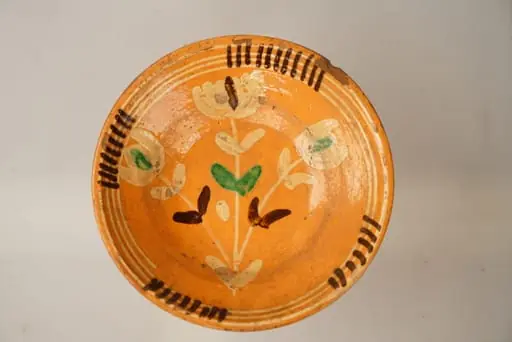 Farfurie adâncă, acoperită pe suprafața interioară cu un strat de angobă de culoare galben-ocru, peste care este pictat cu cornul și cu pensula decorul format din motive florale stilizate și geometrice: centrul farfuriei conține trei tulpini înalte cu flori de lalea de culoare albă, cu mijlocul verde și maro și frunze de culoare maro, alb și verde. Buza farfuriei este decorată cu o linie circulară spiralată de culoare albă, perpendicular pe care sunt pictate patru grupuri de linii drepte de culoare maro, așezate diametral opus în formă de cruce. Suprafața ornamentată a farfuriei este acoperită cu un strat de smalț transparent. Cromatica: alb, galben ocru, maro, verde.
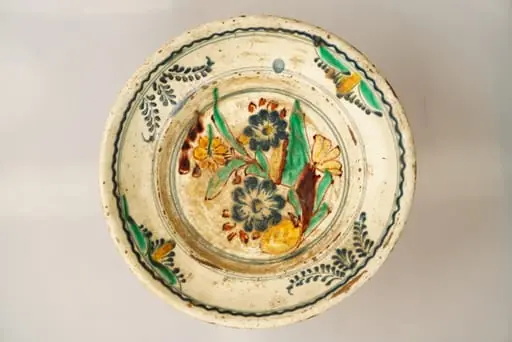 Farfurie adâncă, cu buza dreaptă evazată; suprafața exterioară este acoperită cu un strat de angobă albă peste care este pictat cu cornul și cu pensula decorul format din motive florale și geometrice, dispuse astfel: registrul decorativ de pe fundul farfuriei conține, încadrat într-un cerc dublu albastru, un buchet desenat cu contur subțire maro, format din două flori cu petale ușor alungite albastre, un boboc și două flori galbene și din frunze verzi. Registrul decorativ de pe buza farfuriei, marcat de două linii circulare duble albastre, conține două motive decorative formate din trei frunze realizate din linii mici albastre și două motive formate din două frunze verzi și o floare centrală galbenă, decorată cu linii mici albastre. Marginea buzei este decorată cu o linie circulară albastră. Suprafața ornamentată a farfuriei este acoperită cu un strat de smalț transparent. Cromatica: alb, galben, verde, maro, albastru.
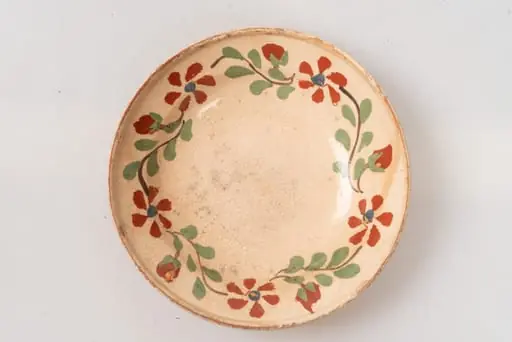 Farfurie semi-adâncă, acoperită pe suprafața interioară cu un strat de angobă albă, peste care este pictat cu pensula decorul format din motive vegetale dispuse pe buza farfuriei: o ghirlandă circulară formată din cinci flori cu petale de culoare roșu-cărămiziu și mijloc albastru, cu câte cinci boboci de aceași culoare și frunze verzi. Farfuria este acoperită pe întreaga sa suprafață cu un strat de smalț transparent. Cromatica: alb, verde, maro, roșu-cărămiziu, albastru.
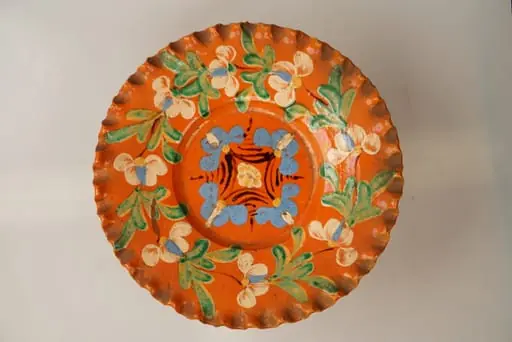 Farfurie de formă aplatizată, cu muchia buzei ondulată; suprafața interioară a farfuriei este acoperită cu un strat de angobă roșie peste care este pictat cu pensula decorul format din motive florale dispuse astfel: centrul farfuriei conține patru flori albastre cu mijlocul alb, dispuse în colțurile unui romb format din linii maro, având în centru o floare mică albă. Registrul decorativ de pe buza farfuriei este decorat cu o ghirlandă continuă dispusă circular, formată din flori cu petale albe și centru albastru, cu tulpină subțire maro și frunze verzi. Duprafața ornamentată a farfuriei este acoperită cu un strat de smalț transparent. Cromatica: roșu, alb, albastru, verde.
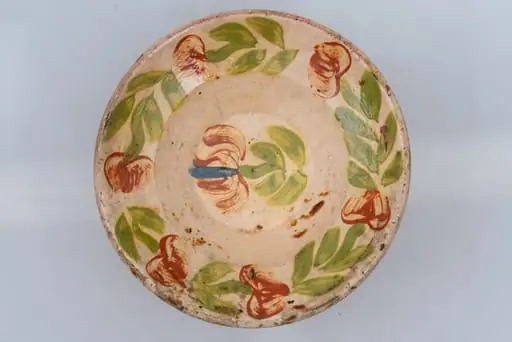 Farfurie adâncă, acoperită pe suprafața interioară cu un strat de angobă albă. Decorul este realizat prin pictare cu pensula și se compune din motive florale și fitomorfe: central pe fundul farfuriei este pictată o floare cu patru petale alungite de culoare maro deschis si o petală albastră și frunze verzi. Decorul de pe buza farfuriei se compune dintr-un șir de flori de culoare maro cu frunze verzi. Suprafața ornamentată a farfuriei este acoperită cu un strat de smalț transparent. Cromatica: alb, verde, albastru, maro-deschis.
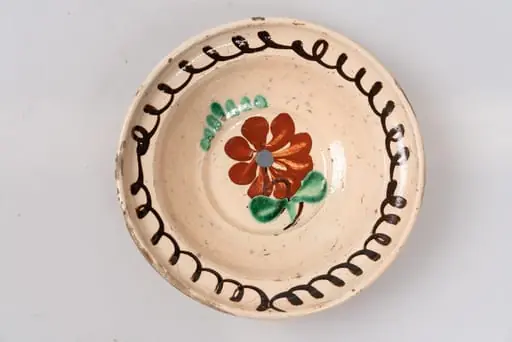 Farfurie adâncă, cu fund îngust, buza evazată cu muchia verticală; este angobată pe fața interioară cu un strat de humă albă și decorată prin pictare cu pensula și cu cornul cu motive florale, fitomorfe și geometrice: central pe fundul farfuriei este reprezentată o floare cu petale de culoare maro, cu mijlocul marcat printr-un punct gri și două frunze verzi. În partea superioară a florii, șapte linii verzi, scurte, completează decorul. Buza este ornamentată cu o linie buclată continuă, de culoare maro-închis. Cromatica: alb, verde, maro, maro-închis, gri. Suprafața ornamentată a farfuriei este acoperită cu un strat de smalț transparent.
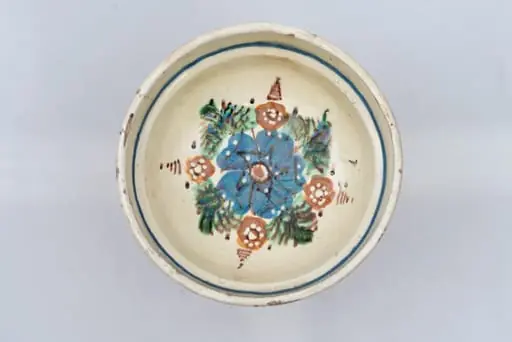 Farfurie adâncă de tip castron, cu corp tronconic, ușor concav, și buza dreaptă și verticală. Este acoperită pe suprafața interioară și pe exteriorul buzei cu un strat de angobă albă. Decorul este pictat cu pensula și cu cornul și se compune din motive florale și vegetale stilizate: central pe fundul farfuriei este pictată o floare cu cinci petale albastre, frunze verzi și patru flori mai mici, maro. O linie circulară albastră marchează pe interior partea inferioară a buzei, iar exteriorul acesteia este decorat cu o linie circulară simplă, ș una ondulată, albastre. Cromatica: alb, albastru, verde, maro. Ambele suprafețe ale farfuriei sunt acoperite cu un strat de smalț transparent.
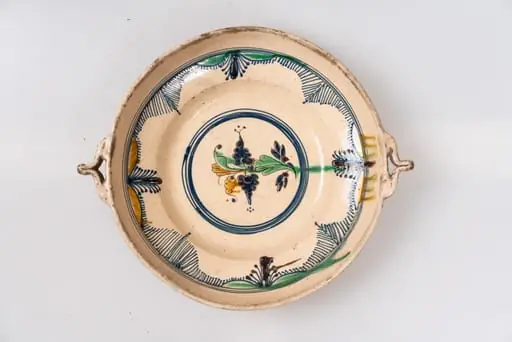 Farfurie adâncă de tip castron, cu corp tronconic, buză dreaptă verticală cu muchia rotunjită, prevăzută cu două torți laterale de prindere în acoladă, inserate pe orizontală pe exteriorul buzei. Piesa este acoperită pe suprafața interioară cu un strat de angobă albă, peste care este pictat cu cornul și cu pensula decorul format din motive geometrice și vegetale, realizate cu contur fin: central pe fundul farfuriei, încadrată într-o linie spiralată albastră, se găsește o tulpină cu două flori albastre, o floare galbenă, doi boboci albaștri la bază și frunze verzi. Buza farfuriei este decorată cu patru motive vegetale stilizate, dispuse în formă de cruce, formate din două frunze de culoare verde și galbenă, cu o floare în mijloc, de culoare maro cu linii albastre. Între aceste motive vegetale se găsesc motive formate din linii paralele subțiri de culoare albastră, crescătoare și descrescătoare ca marime. Suprafața ornamentată a farfuriei este acoperită cu un strat de smalț transparent. Cromatica: alb, galben, verde, maro, albastru.
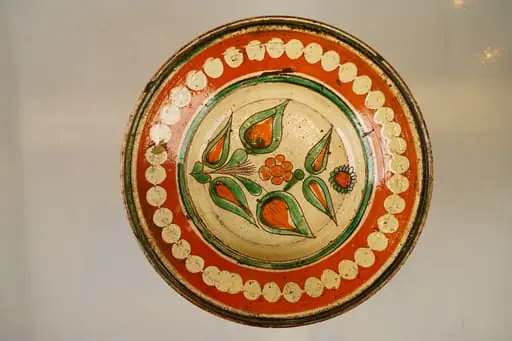 Farfurie semi-adâncă, cu buza dreaptă, evazată; este acoperită pe suprafața interioară cu un strat de angobă albă peste care este realizat, prin sgrafitare în pasta de angobă și prin pictare cu pensula, decorul format din motive florale și geometrice dispuse astfel: registrul decorativ de pe centrul farfuriei conține un buchet realizat cu contur sgrafitat, format din șase boboci de lalea, cu petale verzi și roșii, dintr-o floare roșie cu petale rotunde și o floare cu mijloc roșu și petale mici verzi, și din frunze verzi. Buza farfuriei este decorată cu un șir de puncte mari alipite, de culoare albă, pictate pe un fond de culoare roșie. Bordura interioară a farfuriei și muchia buzei sunt marcate cu o linie groasă de culoare verde, cu contur subțire maro. Suprafața ornamentată a farfuriei este acoperită cu un strat de smalț transparent. Cromatica: alb, verde, roșu-cărămiziu, maro.
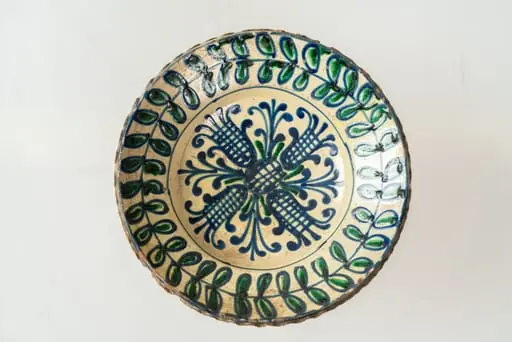 Farfurie semi-adâncă, cu buză răsfrântă și muchia buzei ondulată (mici alveole); piesa este modelată la roata olarului și angobată cu humă albă pe fața interioară. Decorul este realizat prin pictare cu cornul și cu pensula și constă în motive decorative florale și vegetale stilizate, dispuse astfel: un registru central, pe fundul farfuriei, ce conține patru flori de crin, de culoare albastră, cu frunze, iar buza farfuriei este decorată cu un șir continuu de frunze verzi cu contur albastru, înșirate pe o linie albastră sub formă de cerc. Bordura interioară a farfuriei și muchia buzei sunt marcate cu câte o linie de culoare albastră. Cromatica: alb, verde, albastru. Farfuria este acoperită pe fața decorată cu un strat de smalț transparent.