Artwork
Nataraja (Shiva as lord of the dance)
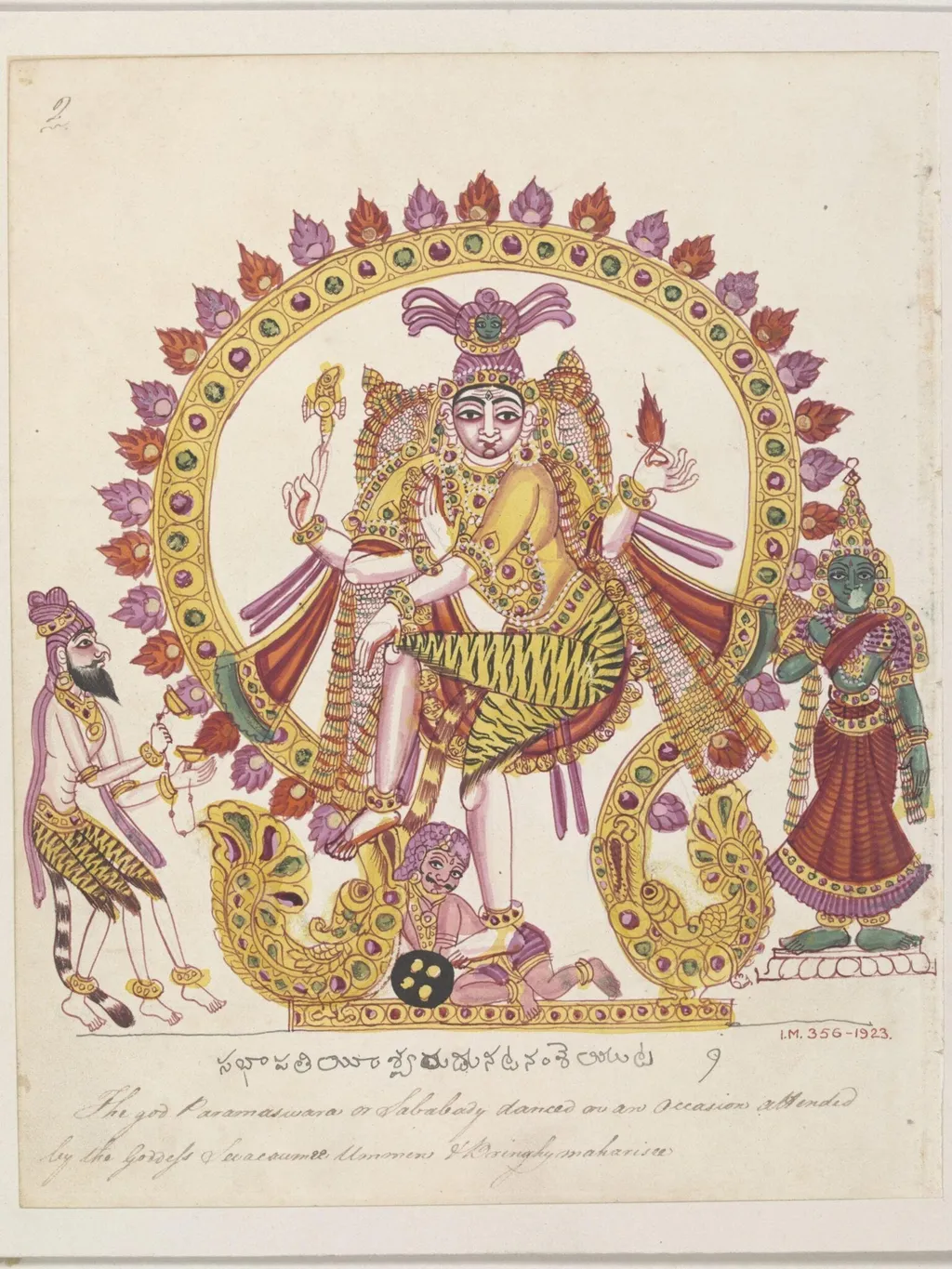
Nataraja (Shiva as lord of the dance) is a paint painting by the Patna School of Painting artist Unknown. It dates from 1820 and is held in the collection of the Victoria and Albert Museum.
About this work
Overview
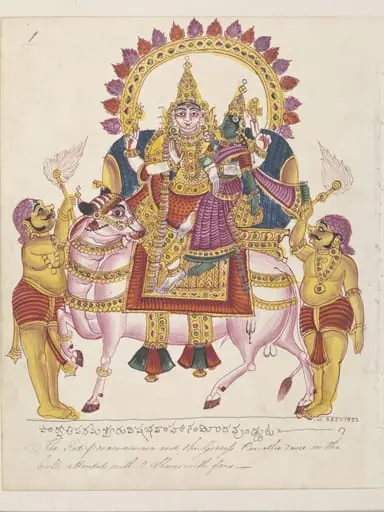
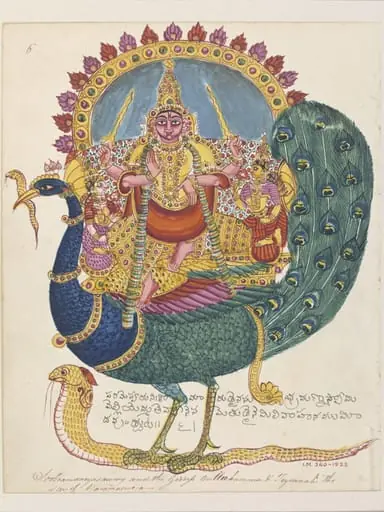
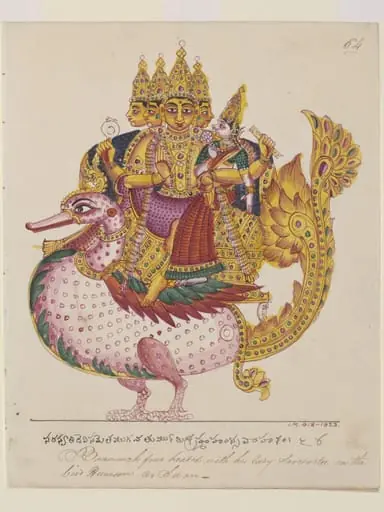
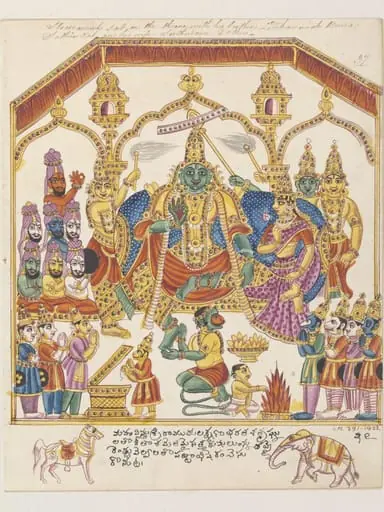
This painting belongs to a set of 100 works produced by Indian artists for British patrons during the colonial period, known as Company paintings.
This painting belongs to a set of 100 works produced by Indian artists for British patrons during the colonial period, known as Company paintings. Unlike most in the series, which depict daily life or regional dress, this piece illustrates a complex Hindu theological image: Shiva as Nataraja, the cosmic dancer. Its subject suggests a patron with deep interest in religious symbolism rather than ethnographic curiosity.
Subject & Meaning
The figure depicts Shiva in his form as Nataraja, dancing within a ring of fire that symbolizes the cyclical nature of creation and destruction. His raised foot signifies liberation, while the drum and flame in his hands represent the rhythms of time and transformation. This iconography, rooted in Shaivite tradition, was rarely rendered in Company paintings, making this work an exception driven by scholarly intent.
Technique & Style
The painting employs delicate brushwork and muted pigments typical of Company style, blending Indian miniature traditions with European naturalism. While it lacks the dramatic chiaroscuro of Western oil painting, it uses subtle tonal gradations to define form and space. The composition remains frontal and symmetrical, honoring traditional iconographic conventions despite its colonial context.
History & Provenance
Commissioned by a British collector with an interest in Hindu theology, this painting was likely created in the early 19th century in a major artistic center such as Delhi or Lucknow. It formed part of a larger set documenting Hindu cosmology, possibly intended for private study rather than public display. Its survival in institutional collections reflects its rarity and intellectual value.
Context
Company paintings typically catered to British tastes by illustrating local trades, festivals, or flora and fauna. Religious iconography, especially esoteric deities like Nataraja, was uncommon. This work stands apart as a deliberate engagement with Hindu philosophy, indicating a patron seeking deeper cultural understanding beyond surface-level exoticism.
Legacy
As one of the few Company paintings to depict a core Hindu theological concept, it offers insight into cross-cultural intellectual exchange during colonial rule. It preserves a visual interpretation of sacred imagery adapted for Western viewers, bridging devotional tradition and colonial documentation without altering its symbolic integrity.
Artist & collection

 Domestic Scene
 Giacomo and Cardinal Marco, investing Andrea, Abbot of San Zeno, with his Benefice
 The Nymph of Fontainebleau
 Portrait of a Woman
 Madonna and Child with Saints in the Enclosed Garden
 Venus and Minerva
 Family Group of Four on Sofa
 Wall painting from Room H of the Villa of P. Fannius Synistor at Boscoreale