Artwork
Shiva and Parvati on the bull Nandi
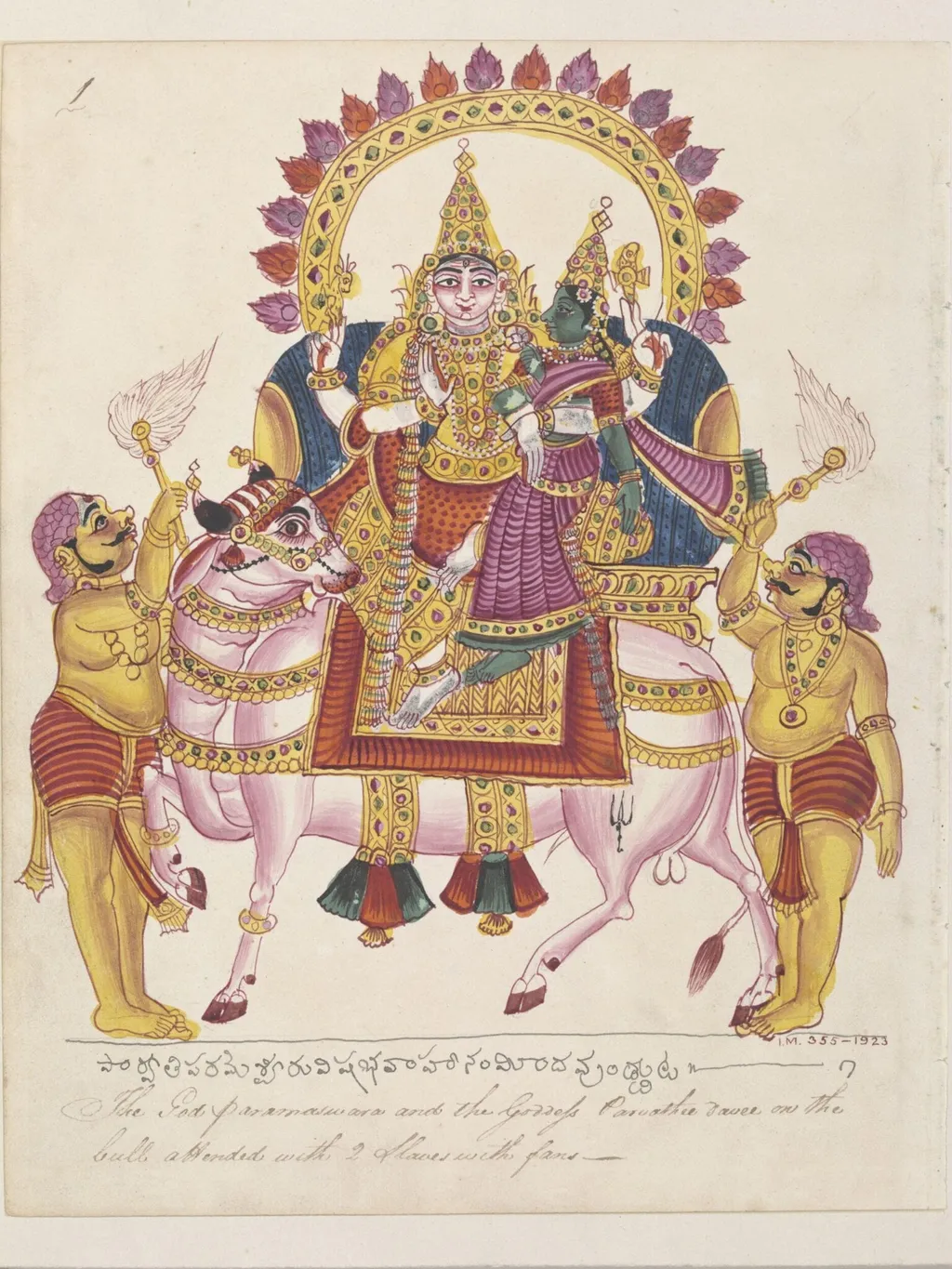
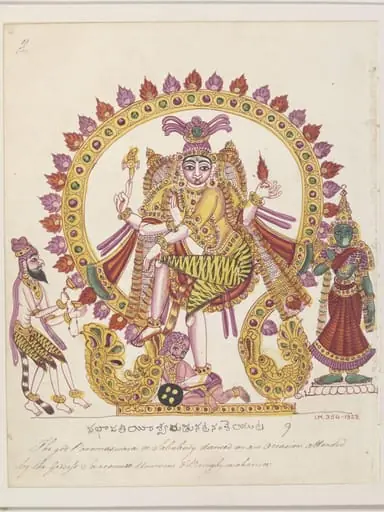
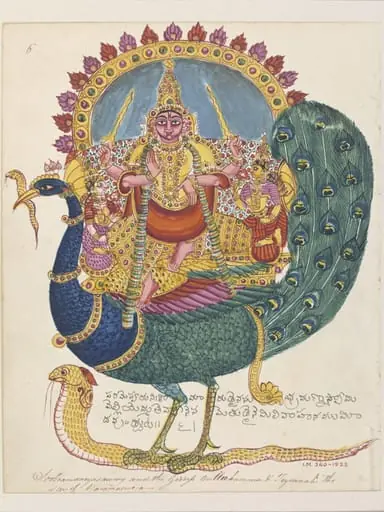
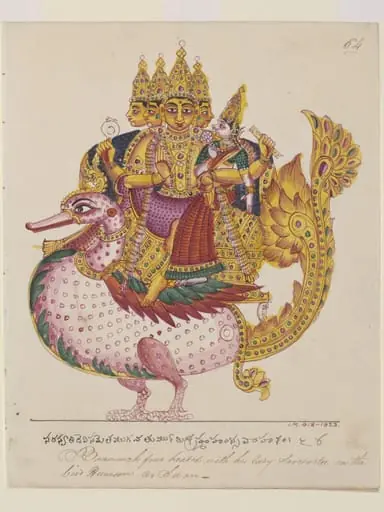
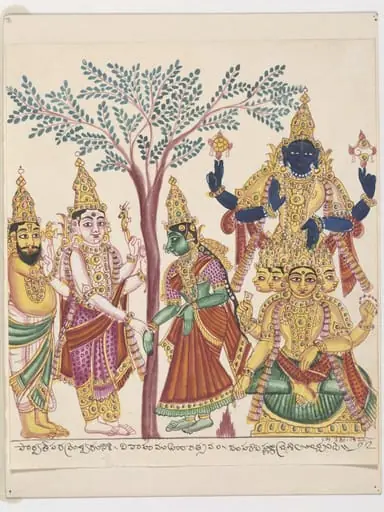
Shiva and Parvati on the bull Nandi is a paint painting by the Patna School of Painting artist Unknown. It dates from 1820 and is held in the collection of the Victoria and Albert Museum.
About this work
Overview
This work is a watercolor painting created for British patrons in colonial India, belonging to a series of one hundred so‑called Company paintings. While the series largely depicts everyday occupations and regional dress, this particular piece portrays the Hindu deities Shiva and Parvati seated upon the sacred bull Nandi, making it a rare theological subject within the collection.
Subject & Meaning
The composition presents Shiva and his consort Parvati each with four arms, a conventional iconographic device that conveys divine power. Shiva grips a trident and a drum, symbols of his role as creator and destroyer, while Parvati rests her hand on Nandi’s back, emphasizing her protective presence. The bull, Nandi, serves as the vehicle of Shiva and a guardian of the sacred space.
Technique & Style
Executed in the watercolor medium typical of Company art, the painting combines Indian devotional iconography with a European sensibility for linear perspective and naturalistic detail. The figures are rendered with delicate brushwork and a restrained palette, allowing the intricate attributes—trident, drum, multiple limbs—to be clearly distinguished against a modest background.
History & Provenance
Commissioned by an English collector with scholarly interests, the painting entered a private British collection during the early nineteenth century. It remains part of the original set of one hundred works produced for the British market, many of which are now held in institutions such as the Victoria and Albert Museum, where comparable examples can be examined.
Context
Company paintings emerged as a hybrid genre in the colonial period, catering to European curiosity about Indian life while employing Indian artists trained in traditional techniques. The rarity of divine subjects like Shiva and Parvati within this genre reflects the typical market demand for genre scenes of labor and costume, making this piece a notable exception that bridges devotional art and colonial documentation.
Artist & collection

 Domestic Scene
 Giacomo and Cardinal Marco, investing Andrea, Abbot of San Zeno, with his Benefice
 The Nymph of Fontainebleau
 Portrait of a Woman
 Madonna and Child with Saints in the Enclosed Garden
 Venus and Minerva
 Family Group of Four on Sofa
 Wall painting from Room H of the Villa of P. Fannius Synistor at Boscoreale