Artwork
Coronation of Rama and Sita.
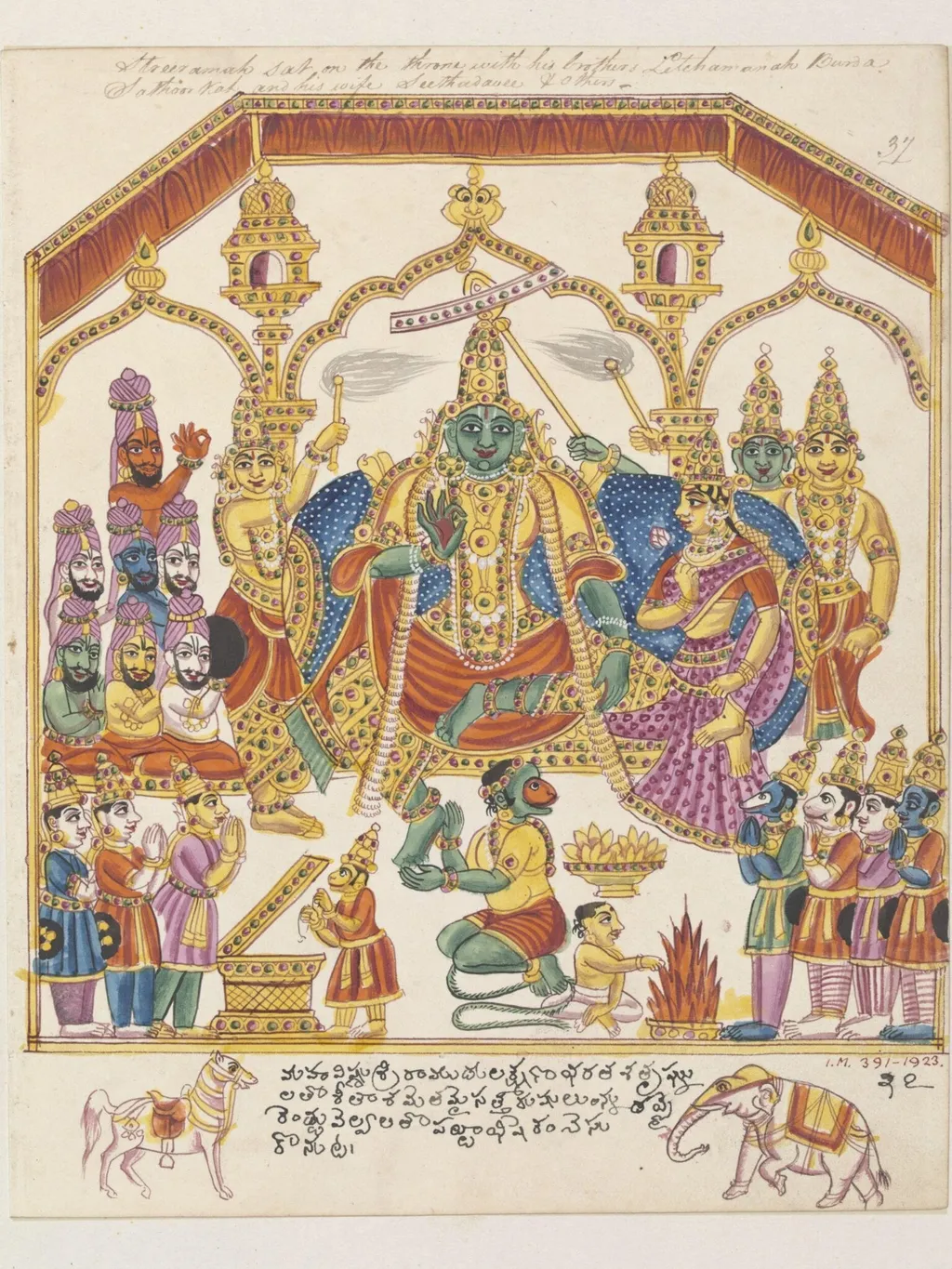
Coronation of Rama and Sita. is a paint painting by the Patna School of Painting artist Unknown. It dates from 1820 and is held in the collection of the Victoria and Albert Museum.
About this work
Overview
This early‑19th‑century work belongs to the genre known as Company painting, a body of art produced by Indian artists for British patrons in colonial India. Executed in oil on canvas, the piece forms part of a curated set of one hundred similar paintings that document Hindu mythological subjects for a European audience.
Subject & Meaning
The composition depicts the coronation of the divine couple Rama and Sita, seated upon an ornate golden throne while a multitude of figures kneel in reverent posture. Attendants fan the monarchs and present jewelry boxes, underscoring the ritual’s splendor. The scene derives from the Ramayana, illustrating a pivotal moment in the epic narrative.
Technique & Style
Rendered with a blend of Indian miniature conventions and European perspectival cues, the painting balances flat decorative patterns with a modest sense of depth. The palette emphasizes rich reds, golds, and deep blues, while the figures are outlined with fine brushwork that recalls traditional courtly portraiture.
History & Provenance
Commissioned likely by an English scholar with an interest in Indian religious literature, the work entered a private collection before being acquired by the Victoria and Albert Museum. Its inclusion in the museum’s Company painting series reflects the historical exchange between colonial patrons and native artists.
Context
Company paintings typically portrayed everyday occupations, local costumes, or architectural studies for British officials. This piece diverges from that norm by focusing on a sacred narrative, indicating a patron’s desire to explore the theological dimensions of Indian culture rather than merely its visual customs.
Artist & collection

 Domestic Scene
 Giacomo and Cardinal Marco, investing Andrea, Abbot of San Zeno, with his Benefice
 The Nymph of Fontainebleau
 Portrait of a Woman
 Madonna and Child with Saints in the Enclosed Garden
 Venus and Minerva
 Family Group of Four on Sofa
 Wall painting from Room H of the Villa of P. Fannius Synistor at Boscoreale
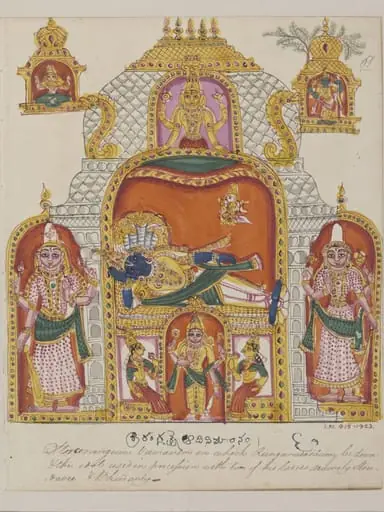 The temple of Shri Ranganatha
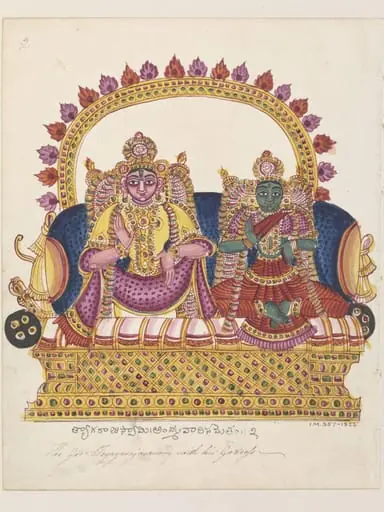 Shiva in his local form of Tyagarajaswamy (Somaskanda) worshipped at Tiruvarur
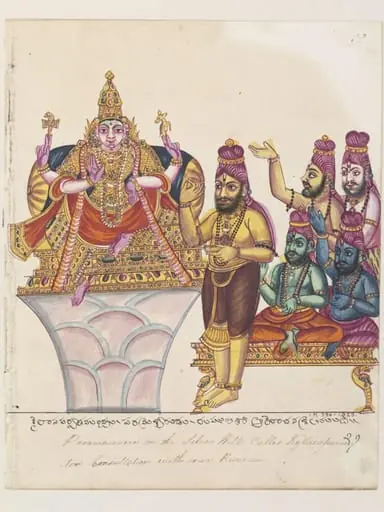 Shiva in the pose called 'dakshinamurti'.
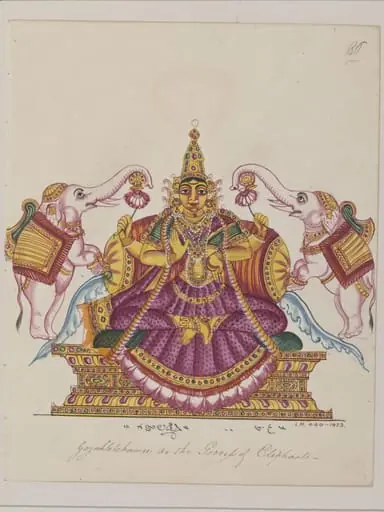 Lakshmi
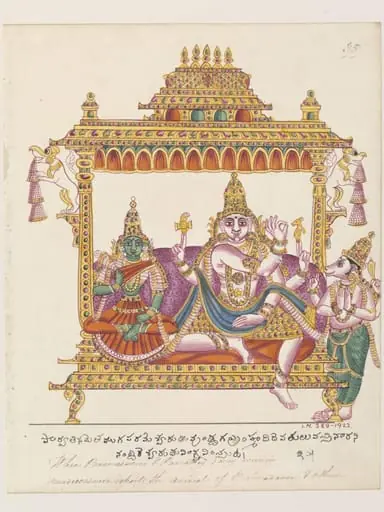 Shiva and Parvati seated on a canopied throne.
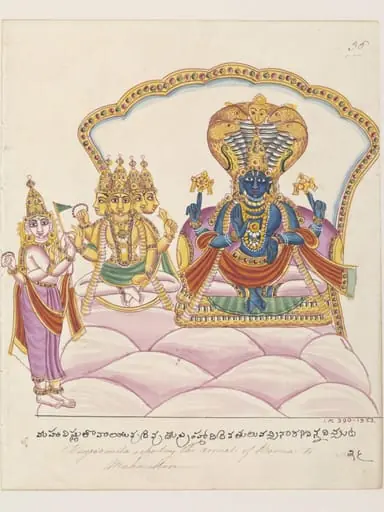 Vishnu seated in his heaven, Vaikuntha, upon the coils of the serpent of eternity, Ananta.
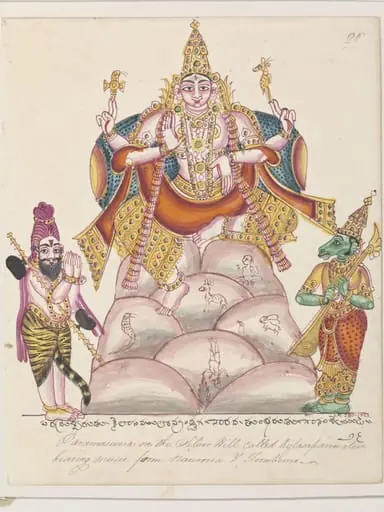 Shiva in his form of Dakshinamurti with the sages Narada and Tumburu on Mount Kailasa.