Artwork
Carpenter
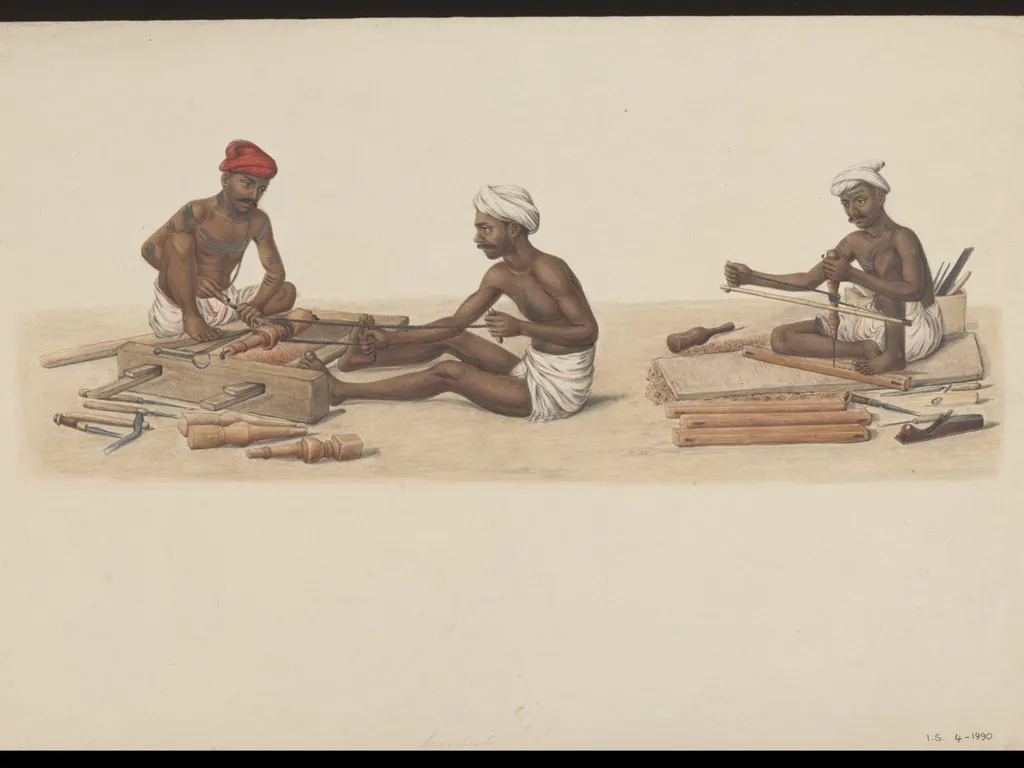
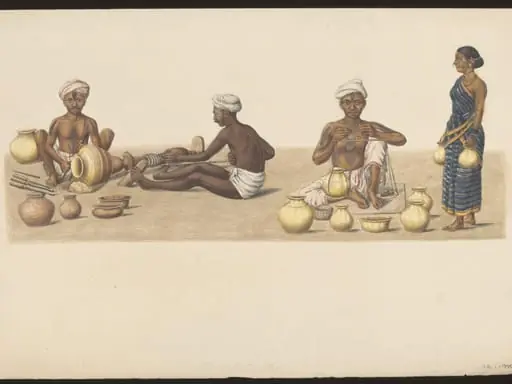
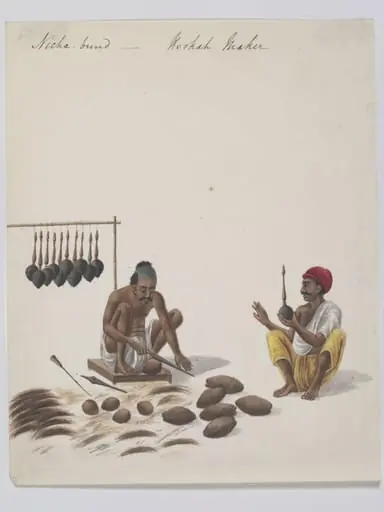
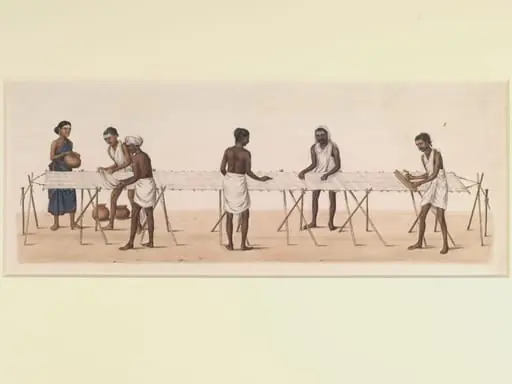
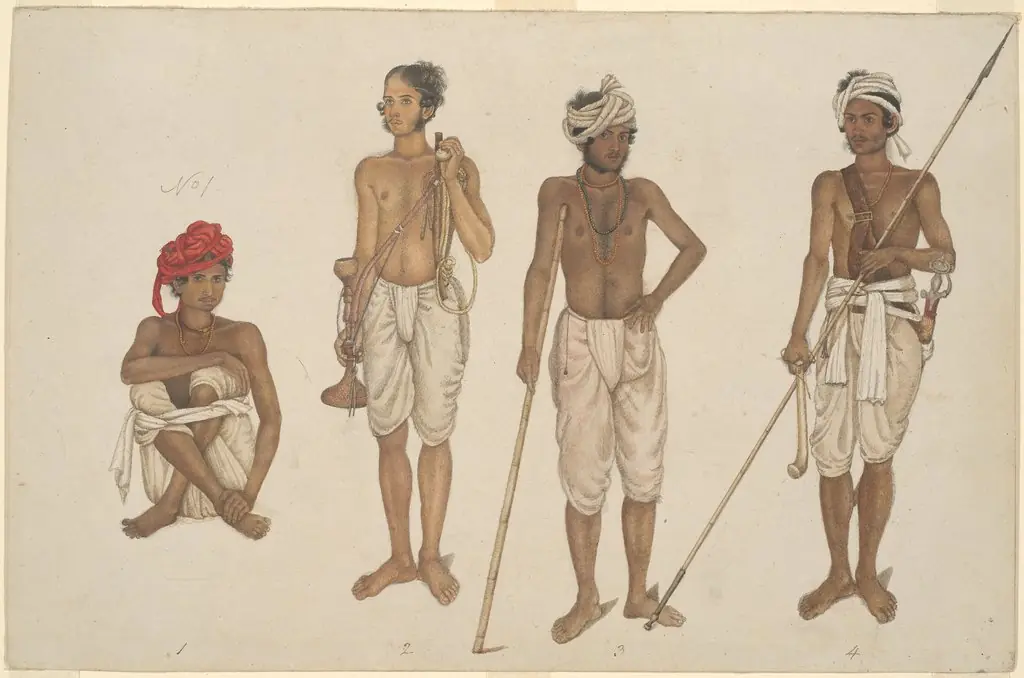
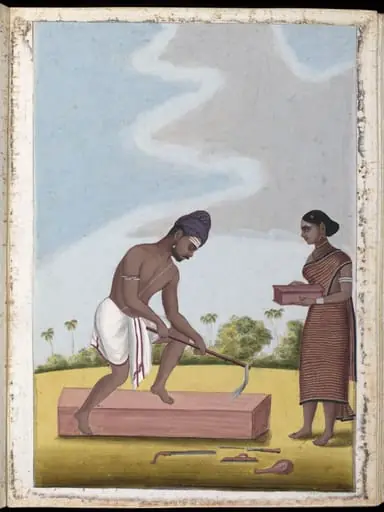
Carpenter is a paint painting by the Realist artist Unknown. It dates from 1840 and is held in the collection of the Victoria and Albert Museum.
About this work
Overview
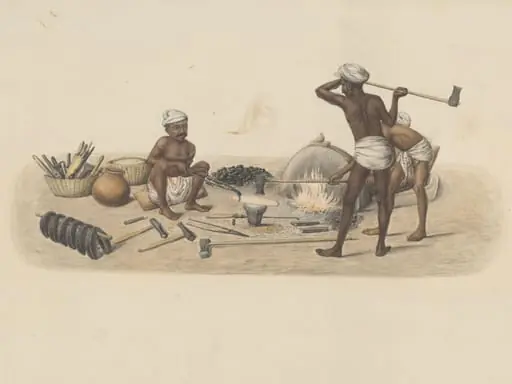
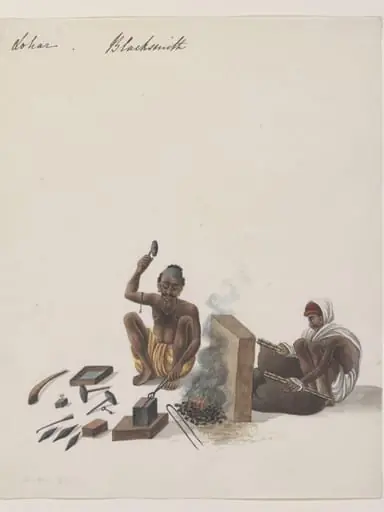
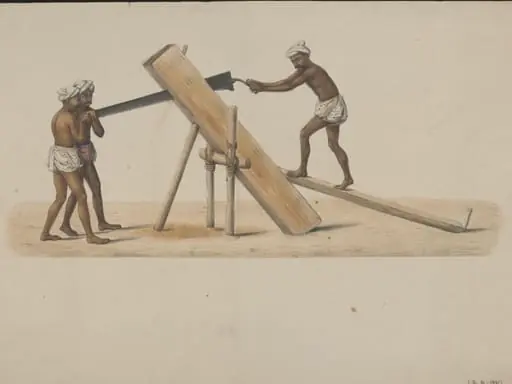
This painting is one of sixteen in a series depicting occupational trades, focusing on a carpenter’s workshop. It captures three laborers engaged in distinct tasks: shaping wood, holding material, and sharpening tools. The scene is grounded in quiet industry, with no grand narrative, instead emphasizing the rhythm of manual work and the physical environment of craftsmanship.
Subject & Meaning
The scene portrays the daily labor of woodworking without idealization. Each figure is absorbed in their task, suggesting a respect for skilled labor. The scattered tools and unfinished pieces imply ongoing work, not a completed project. The red turban adds a subtle human contrast, drawing attention to one worker without disrupting the overall somber tone of the trade.
Technique & Style
The artist renders tools and wood surfaces with precise observation, highlighting grain, wear, and the play of light on polished surfaces. Palette is restrained—earthy browns and grays dominate, punctuated by small accents like the red headwear. Brushwork is controlled, favoring clarity over flourish, reinforcing the documentary intent of the series.
History & Provenance
The painting belongs to a mid-17th-century Dutch series documenting trades, likely commissioned for private or civic display. It entered the Victoria and Albert Museum’s collection through documented acquisition, part of a broader European interest in representing artisanal life during the early modern period.
Context
In the Dutch Golden Age, depictions of laborers and trades gained popularity as civic pride and economic identity shifted toward the working class. This series reflects a cultural moment where craftsmanship was valued not just for utility but as a subject worthy of artistic attention, distinct from religious or aristocratic themes.
Legacy
The painting contributes to a tradition of occupational portraiture that influenced later realist movements. Its unembellished view of labor helped establish a visual language for everyday work, offering a counterpoint to idealized historical subjects. It remains a reference for studies of material culture and artisanal practice in early modern Europe.
Artist & collection

 Domestic Scene
 Giacomo and Cardinal Marco, investing Andrea, Abbot of San Zeno, with his Benefice
 The Nymph of Fontainebleau
 Portrait of a Woman
 Madonna and Child with Saints in the Enclosed Garden
 Venus and Minerva
 Family Group of Four on Sofa
 Wall painting from Room H of the Villa of P. Fannius Synistor at Boscoreale