Artwork
Buddha
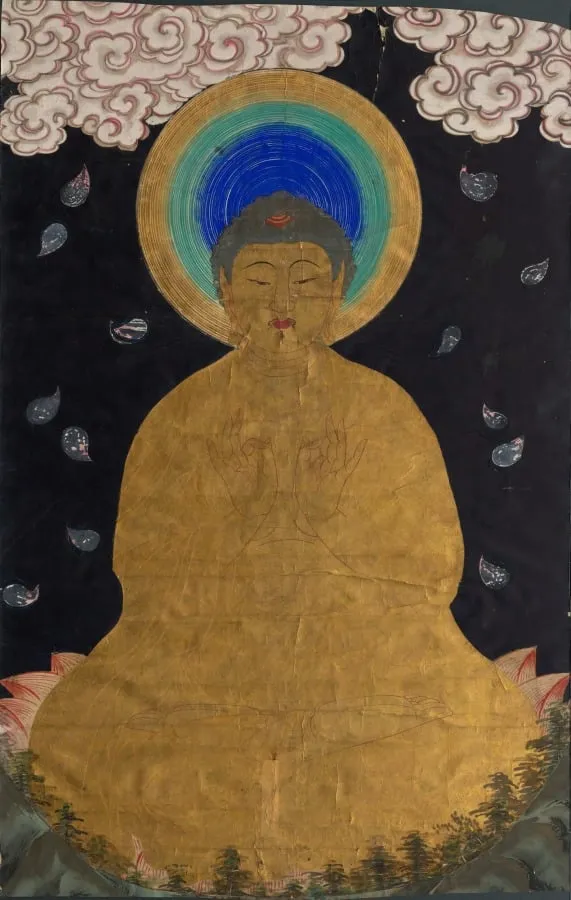
Buddha is an unspecified painting by the Ming Painting artist Unknown. It dates from 1904 and is held in the collection of the Cleveland Museum of Art.
About this work
Overview
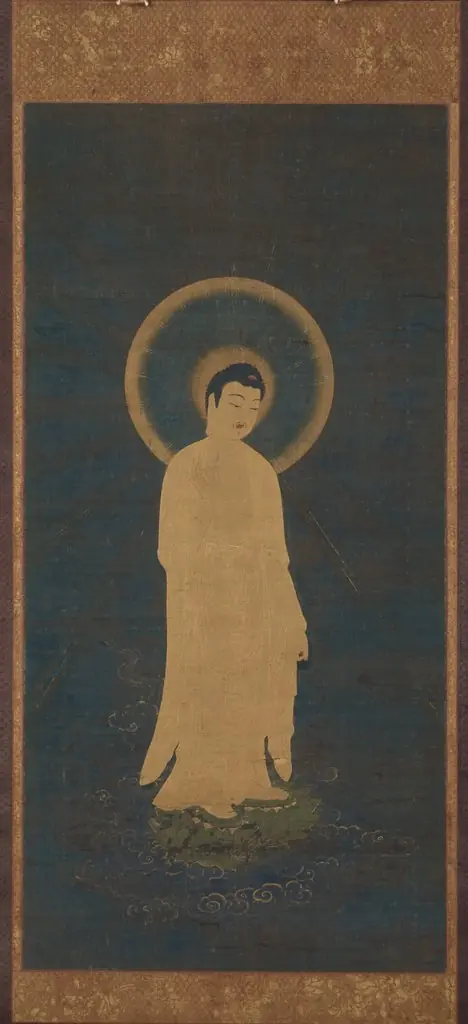
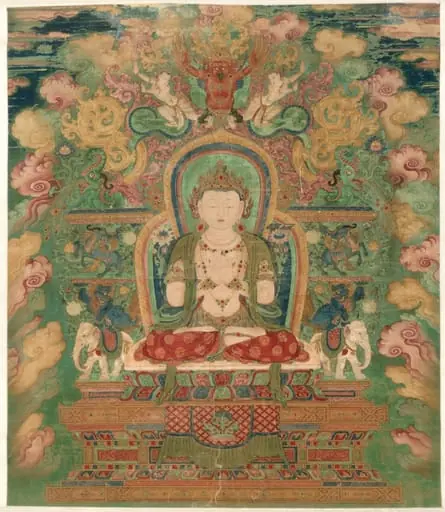
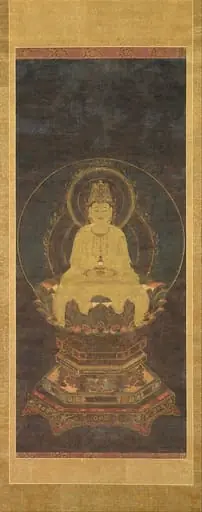
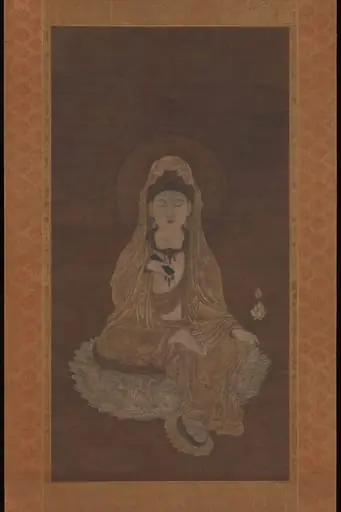
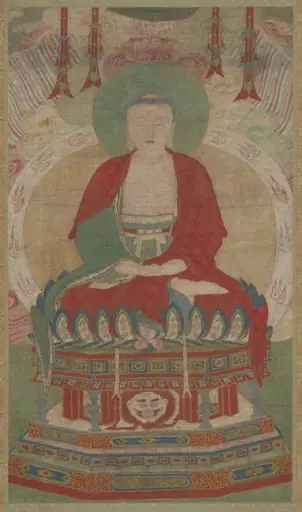
This painted depiction of the Buddha is rendered in traditional Asian Buddhist iconography, with a focus on stillness and spiritual presence.
This painted depiction of the Buddha is rendered in traditional Asian Buddhist iconography, with a focus on stillness and spiritual presence. The figure is seated in meditation, surrounded by symbolic elements that convey enlightenment. The use of gold leaf and a dark background emphasizes the figure’s sacredness, while the minimal landscape and celestial clouds frame the scene with quiet reverence.
Subject & Meaning
The Buddha is shown in a meditative posture, eyes closed and hands resting in his lap, signifying inner contemplation and detachment from worldly concerns. The red dot on the forehead represents the third eye, symbolizing insight beyond ordinary perception. The halo, layered with gold and colored rings, denotes divine radiance and spiritual attainment, common in East Asian Buddhist art to signify enlightenment.
Technique & Style
The painting employs fine brushwork and gold leaf application, typical of devotional works from medieval East Asia. The background contrasts a deep black field with delicate white cloud forms above and a subdued landscape below, creating a sense of spatial depth without realism. The halo’s concentric rings of blue and green suggest celestial energy, enhancing the figure’s otherworldly presence through symbolic color and material.
History & Provenance
Though exact origins are unrecorded, the style and materials align with Buddhist devotional paintings produced in China or Korea during the late medieval period. The use of gold and the composition suggest it was created for a temple or private altar. Its preservation indicates it was carefully maintained, likely within a religious context, before entering a modern collection.
Context
This work reflects the broader tradition of Buddhist visual culture in East Asia, where images of the Buddha served as aids to meditation and objects of veneration. The absence of narrative elements and the emphasis on serene stillness align with Chan and Pure Land practices, which prioritized inner realization over doctrinal storytelling. Such paintings were often displayed in quiet chambers for personal devotion.
Legacy
As a preserved example of devotional Buddhist painting, it contributes to the understanding of how spiritual ideals were visually encoded in pre-modern Asia. Its continued presence in a museum setting underscores its role as a cultural artifact, offering insight into historical practices of meditation, craftsmanship, and religious aesthetics without altering its original intent.
Artist & collection

 Domestic Scene
 Giacomo and Cardinal Marco, investing Andrea, Abbot of San Zeno, with his Benefice
 The Nymph of Fontainebleau
 Portrait of a Woman
 Madonna and Child with Saints in the Enclosed Garden
 Venus and Minerva
 Family Group of Four on Sofa
 Wall painting from Room H of the Villa of P. Fannius Synistor at Boscoreale