Artwork
Seated Manjusri
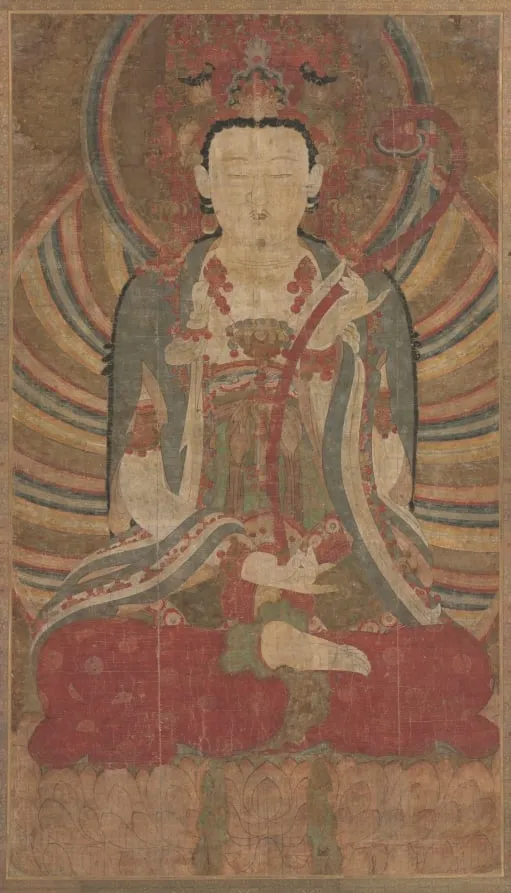
Seated Manjusri is an unspecified painting by the Baroque artist Unknown. It dates from 1704 and is held in the collection of the Cleveland Museum of Art.
About this work
Look up more works from korea, joseon dynasty (1392–1910) to see how they painted gods and temples.
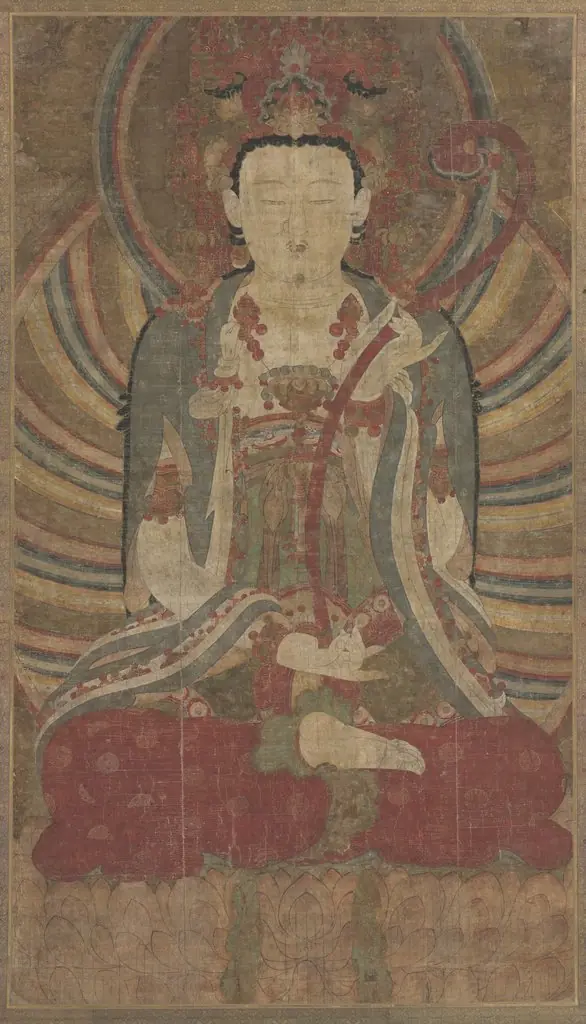
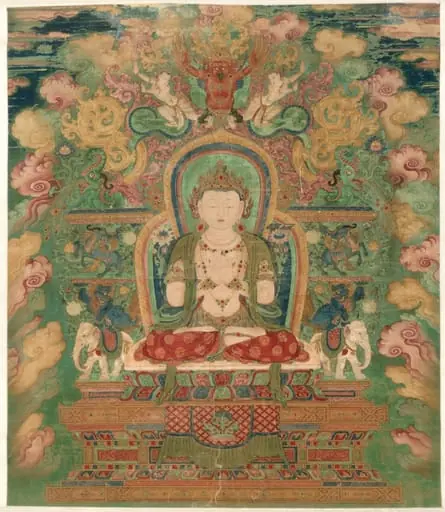
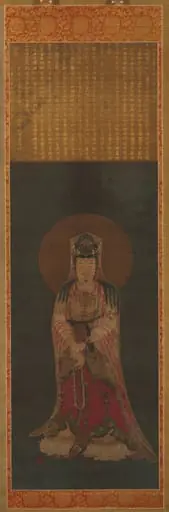
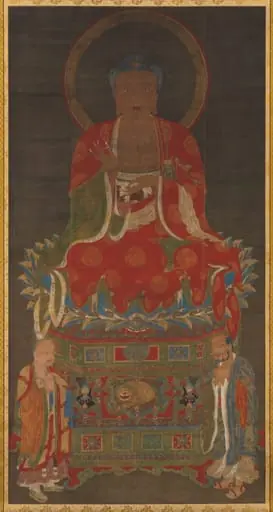
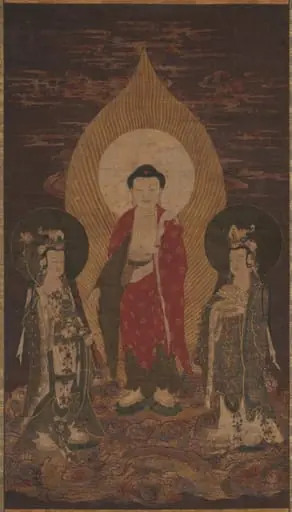
You see a bright, gold-robed figure sitting cross-legged on a cloud. His right hand holds a sword, his left a book. A small lion peeks out from behind him.
This painting once hung behind a Buddha statue in a Korean temple. It’s big—meant to fill a wall. The artist used thin, careful lines to show folds in the robe and the lion’s fur. No shadows, just flat color, so the gold stands out even more.
Look up more works from korea, joseon dynasty (1392–1910) to see how they painted gods and temples.
Overview
This large-scale painting from the Joseon dynasty (1392–1910) depicts Seated Manjusri, a significant figure in Korean Buddhist art. Originally hung behind a Buddha statue in a temple, its grand size was meant to fill a wall, enhancing the devotional atmosphere.
Subject & Meaning
Manjusri, a Bodhisattva attendant to Vairocana Buddha, is shown seated cross-legged on a cloud, symbolizing wisdom. His attributes—a sword in his right hand (cutting through ignorance) and a book in his left (knowledge)—emphasize his role. A lion, peeking from behind, further underscores his wisdom and power.
Technique & Style
The painting features thin, meticulous lines to detail the folds of Manjusri’s gold robe and the lion’s fur. Characteristic of Joseon Buddhist art, the work employs flat, unshaded colors, making the golden robe particularly vibrant against the simpler background.
History & Provenance
Originally part of a temple’s decorative scheme behind a Buddha statue, specific details about its creation, artist, or the temple it was from are not provided in the available information.
Context
Comparing with other Joseon dynasty works reveals consistent depictions of deities and temple scenes, characterized by similar stylistic choices such as the use of bold, flat colors and meticulous line work.
Artist & collection

 Domestic Scene
 Giacomo and Cardinal Marco, investing Andrea, Abbot of San Zeno, with his Benefice
 The Nymph of Fontainebleau
 Portrait of a Woman
 Madonna and Child with Saints in the Enclosed Garden
 Venus and Minerva
 Family Group of Four on Sofa
 Wall painting from Room H of the Villa of P. Fannius Synistor at Boscoreale