Artwork
Manjushri
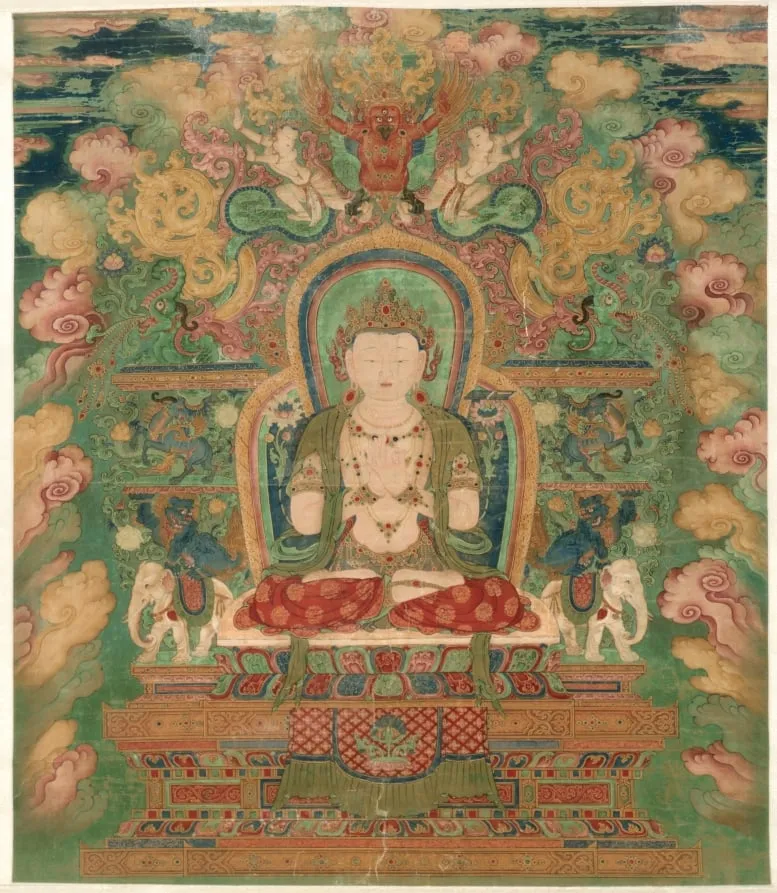
Manjushri is an unspecified painting by the Ming dynasty painting artist Unknown. It dates from 1525 and is held in the collection of the Cleveland Museum of Art.
About this work
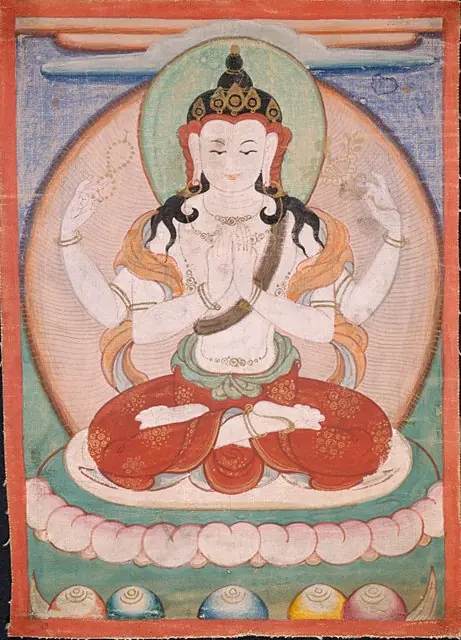
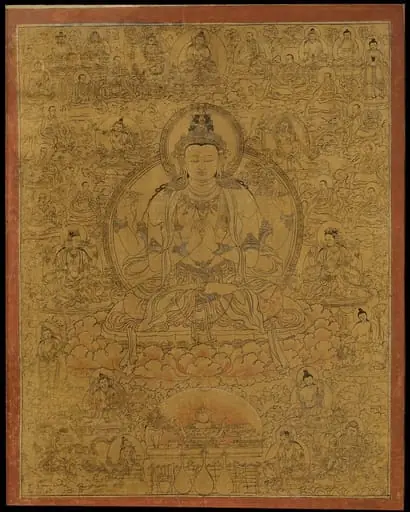
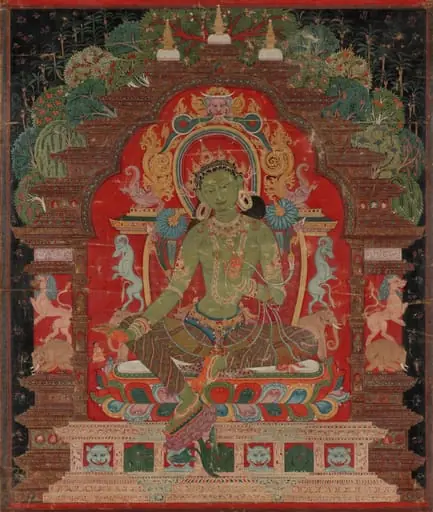
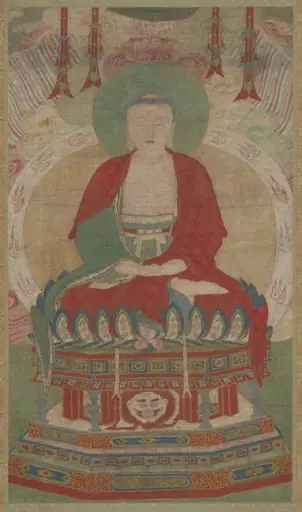
This is Manjushri, the Buddhist god of wisdom, but the artist gave him Chinese clothes and jewels instead of Indian ones.
You see a bright green figure sitting on a throne, holding a sword and a book. His robes flow like silk, and clouds swirl around him in soft pinks and blues.
This is Manjushri, the Buddhist god of wisdom, but the artist gave him Chinese clothes and jewels instead of Indian ones. The mix shows how Buddhism changed as it traveled. The deep green comes from ground malachite, a mineral that was expensive and hard to use.
To see more like this, look up *china, ming dynasty (1368–1644)*.
Overview
This painting depicts Manjushri, the Buddhist bodhisattva of wisdom, seated on a throne surrounded by swirling clouds.
Subject & Meaning
Manjushri is shown with his characteristic attributes, a sword and a book, and is dressed in Chinese attire, reflecting the cultural exchange that occurred as Buddhism spread.
Technique & Style
The artist achieved a rich, mystical effect through the use of malachite green pigment, derived from the expensive and difficult-to-work mineral ground malachite, and depicted flowing robes and soft clouds in variegated hues.
Context
The blending of Indo-Nepalese and Chinese elements in the painting illustrates the evolution of Buddhist art and culture as it traveled along trade routes.
Artist & collection

 Domestic Scene
 Giacomo and Cardinal Marco, investing Andrea, Abbot of San Zeno, with his Benefice
 The Nymph of Fontainebleau
 Portrait of a Woman
 Madonna and Child with Saints in the Enclosed Garden
 Venus and Minerva
 Family Group of Four on Sofa
 Wall painting from Room H of the Villa of P. Fannius Synistor at Boscoreale