Artwork
butoiaș
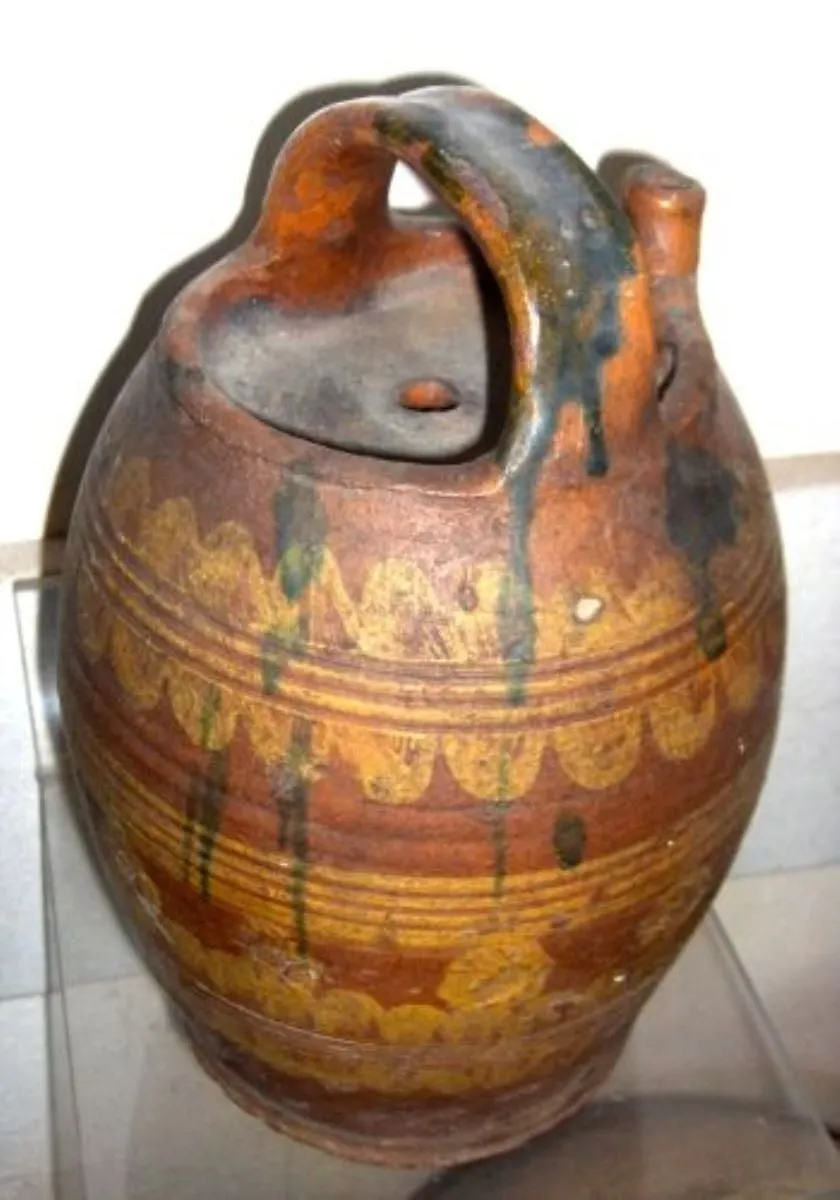
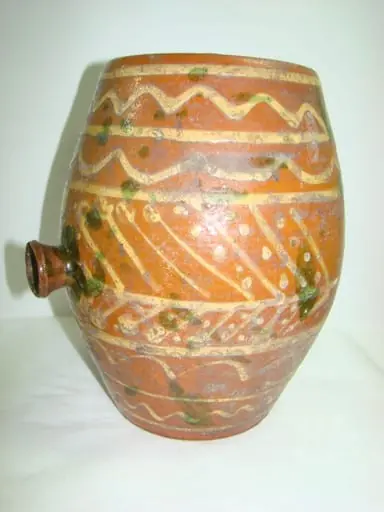
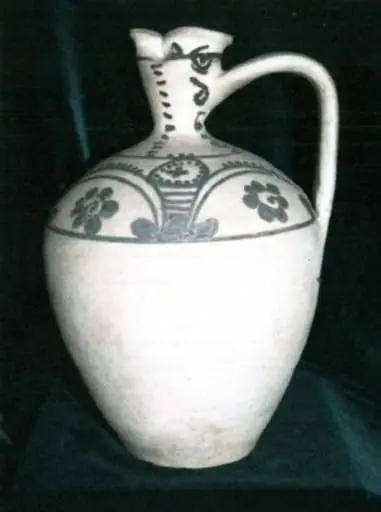
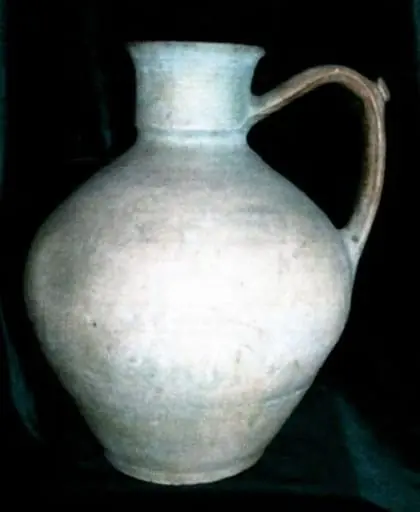
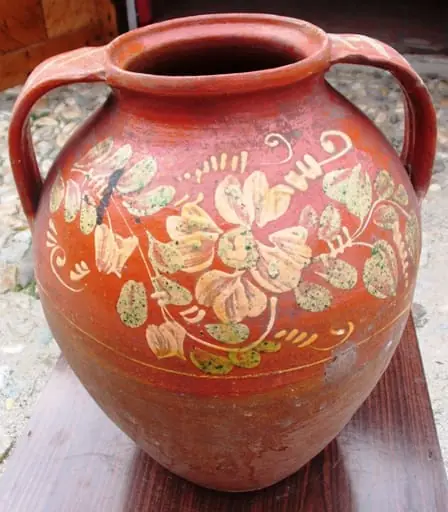
butoiaș is a photography by Unknown. It dates from 1850 and is held in the collection of the Golești Viticulture and Pomiculture Museum. This artifact is a large ceramic vessel, likely used for storage or transport of liquids.
About this work
Overview
The muted palette of browns, yellows, and faint green hints at natural clay and mineral-based pigments, applied without precision.
This artifact is a large ceramic vessel, likely used for storage or transport of liquids. Its form is utilitarian, with two curved handles and a robust, rounded body. The surface shows signs of prolonged use—chips, wear, and uneven glazing—suggesting functional rather than ceremonial purpose. The muted palette of browns, yellows, and faint green hints at natural clay and mineral-based pigments, applied without precision.
Subject & Meaning
No figurative imagery or symbolic motifs are present. The vessel’s significance lies in its materiality and use. Its design reflects practical needs: thick walls for durability, a narrow neck to limit evaporation, and handles for carrying. The abstract lines and streaks are byproducts of hand-building, firing, and aging, not intentional decoration.
Technique & Style
Constructed from coiled or molded clay, the vessel was fired in a low-temperature kiln, resulting in a porous, uneven surface. Glaze, if applied, was sparing and inconsistent, likely brushed on before firing. Dark streaks may result from ash deposition or uneven heat distribution during firing. The rough texture and faded coloration indicate minimal post-firing refinement.
History & Provenance
The vessel’s condition suggests it was in regular use over an extended period, possibly in a rural or pre-industrial setting. Its lack of fine detailing and wear patterns point to local production rather than workshop manufacture. No inscriptions or markings are visible, limiting precise dating or cultural attribution, though its form aligns with common storage vessels from early agrarian societies.
Context
Similar vessels appear across ancient and medieval Eurasian and North African cultures, where clay containers were essential for storing water, grain, or fermented liquids. This piece fits within a broad tradition of unglazed or minimally glazed pottery, valued for its thermal properties and availability of materials. Its simplicity reflects a world where utility outweighed ornamentation.
Legacy
Though not artistically refined, the vessel exemplifies the enduring role of functional ceramics in daily life. Its survival offers insight into pre-modern material culture, craftsmanship, and the rhythms of subsistence economies. Today, it stands as a quiet testament to the labor and adaptation embedded in ordinary objects.
Artist & collection
Museum
Golești Viticulture and Pomiculture Museum
Continue through works from the same source collection.
 Domestic Scene
 Giacomo and Cardinal Marco, investing Andrea, Abbot of San Zeno, with his Benefice
 The Nymph of Fontainebleau
 Portrait of a Woman
 Madonna and Child with Saints in the Enclosed Garden
 Venus and Minerva
 Family Group of Four on Sofa
 Wall painting from Room H of the Villa of P. Fannius Synistor at Boscoreale