Artwork
Cănceu piriform, gât înalt, buza evazată, prevăzut cu o toartă. Toarta este montată de la gât la diametrul maxim al vasului. Suprafața decorativă reprezintă două flori mari, margarete, dispuse pe laterale, cu petale rotunde și hașurate, iar mijlocul redat printr-un cerc de culoare verde. Central este așezată o frunză mare redată prin linii oblice și puncte albastre și galbene. Întreg decorul este încadrat în partea superioară și inferioară de o bandă maro, mărginită de linii subțiri albastre, trasate cu cornul și pensula. Talpa este pictată cu maro. Cromatică: alb; albastru; verde; maro.
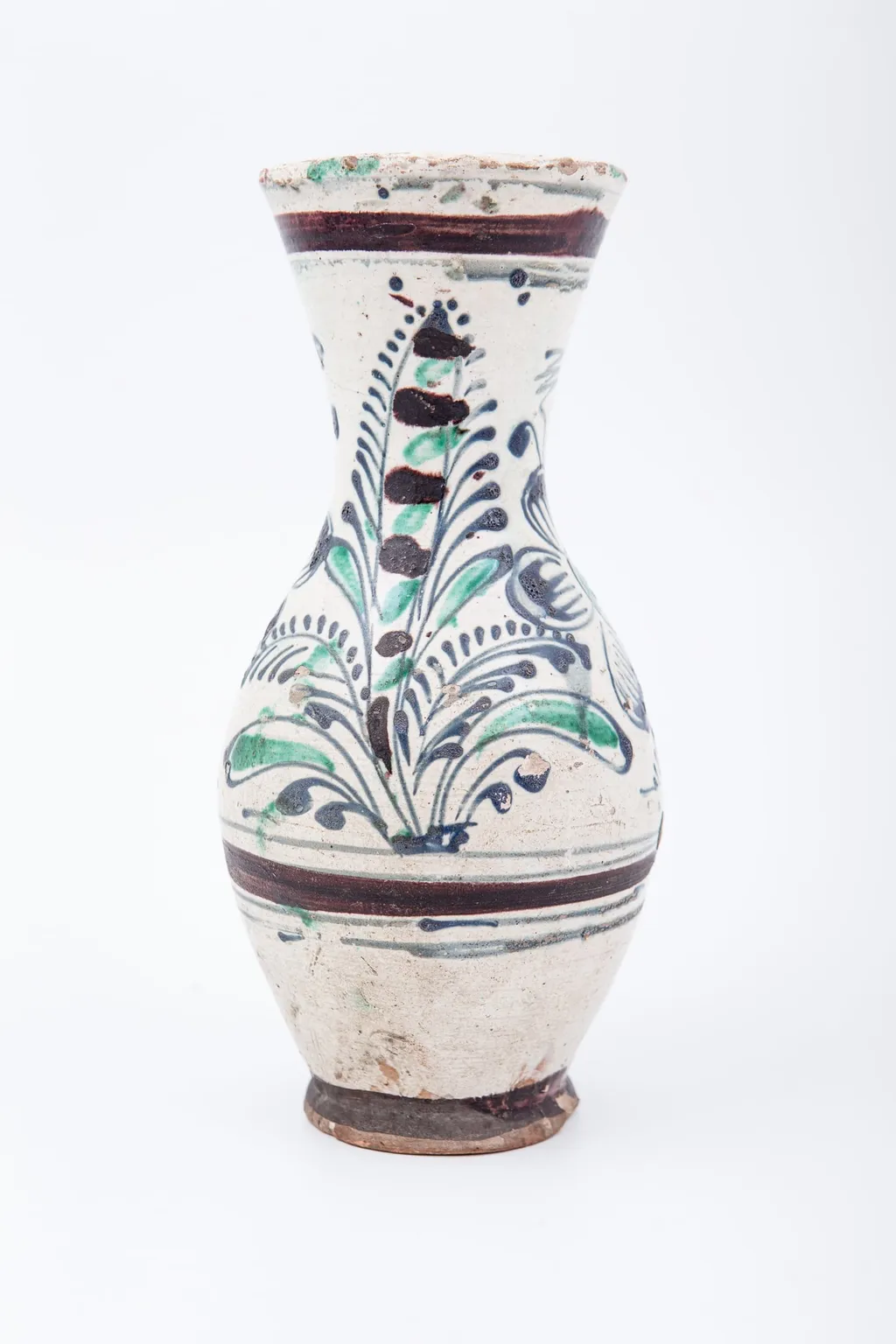
Cănceu piriform, gât înalt, buza evazată, prevăzut cu o toartă. Toarta este montată de la gât la diametrul maxim al vasului. Suprafața decorativă reprezintă două flori mari, margarete, dispuse pe laterale, cu petale rotunde și hașurate, iar mijlocul redat printr-un cerc de culoare verde. Central este așezată o frunză mare redată prin linii oblice și puncte albastre și galbene. Întreg decorul este încadrat în partea superioară și inferioară de o bandă maro, mărginită de linii subțiri albastre, trasate cu cornul și pensula. Talpa este pictată cu maro. Cromatică: alb; albastru; verde; maro. is a print by Unknown. It dates from 1850 and is held in the collection of the ASTRA National Museum Complex. The object is a tall, narrow vase with a broad base that tapers to a small foot.
About this work
Overview
The object is a tall, narrow vase with a broad base that tapers to a small foot. Its surface is predominantly white, accented by a decorative scheme of two large daisy‑like flowers positioned on opposite sides. The overall palette includes white, blue, green, and brown, with the foot painted brown as well.
Subject & Meaning
Each floral motif consists of round, banded petals surrounding a green circular centre, while a single, sizable leaf occupies the central space between the flowers. The leaf is rendered with oblique lines and stippled blue and yellow marks, suggesting a stylised botanical representation common in decorative pottery.
Technique & Style
The decorative elements are outlined with a horn‑filled brush, producing fine blue lines that border broader brown bands at the vase’s upper and lower rims. The petal stripes and leaf detailing are executed with incised or painted hatching, creating a rhythmic pattern across the white ground.
Context
Such floral ornamentation was typical for everyday ceramic vessels in the region, reflecting a preference for simplified natural motifs rendered in a limited colour range. The use of a toartă—a decorative handle extending from the neck to the vessel’s maximum diameter—integrates functional and aesthetic concerns.
Legacy
The vase exemplifies the integration of modest decorative schemes into utilitarian objects, illustrating how everyday pottery served both practical and visual purposes within its cultural setting.
Artist & collection

 Domestic Scene
 Giacomo and Cardinal Marco, investing Andrea, Abbot of San Zeno, with his Benefice
 The Nymph of Fontainebleau
 Portrait of a Woman
 Madonna and Child with Saints in the Enclosed Garden
 Venus and Minerva
 Family Group of Four on Sofa
 Wall painting from Room H of the Villa of P. Fannius Synistor at Boscoreale
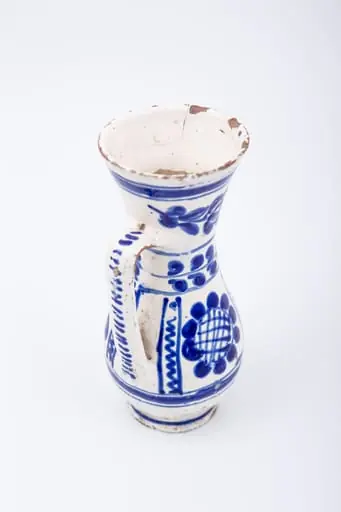
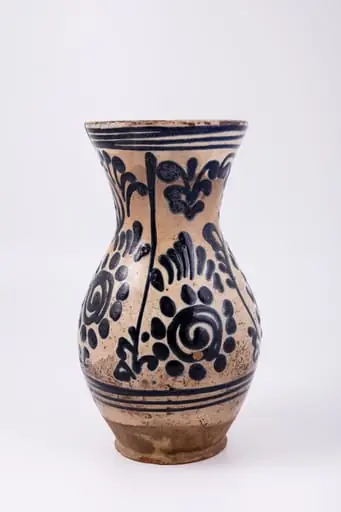 Cană cu corpul bombat, gât scurt, puternic evazat, toarta dispusă de la gât la diametrul maxim al vasului. Suprafața decorativă a vasului este încadrată între linii subțiri dispuse în partea superioară și inferioare. Decorul central reprezintă calea cu sori stilizată alcătuită din lujeri și floarea-soarelui. Cromatica: alb și albastru cobalt.
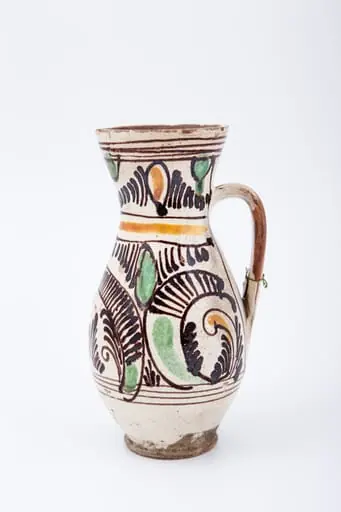 Cănceu piriform prevăzut cu o toartă, gât scurt și evazat, toarta dispusă de la gât la diametrul maxim al vasului. Suprafața decorativă a vasului este împărțită în două registre dispuse vertical, separate printr-o bandă lată verde așezată pe gâtul vasului. Primul registru prezintă motive geometrice stilizate: linii subțiri verticale și frunze stilizate, conturul fiind trasat cu cornul, pictate în interior cu galben și verde. Al doilea registru prezintă motive geometrice stilizate, linii, benzi interesectate decorate jumătate cu linii subțiri orizontale maro, jumătate pictate cu verde sau galben, cercuri hașurate care simbolizează motive florale și linii verticale subțiri maro. Decorul central este încadrat în partea inferioară și superioară de linii subțiri, paralele maro. Cromatică: alb; verde; maro; galben.
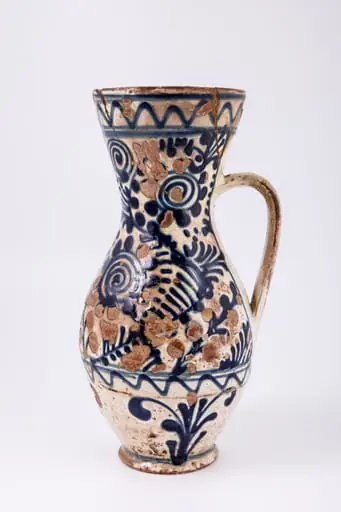 Cană cu corpul bombat, gât scurt, toarta dispusă de la gât la diametrul maxim al vasului. Suprafața decorativă a vasului este încadrată între linii subțiri și vălurite dispuse în partea superioară și inferioare. Decorul central reprezintă calea cu sori alcătuită din lujeri, linii paralel dispuse sub formă de raze, cercuri pline și floarea-soarelui stilizată. Cromatica: alb și albastru cobalt.
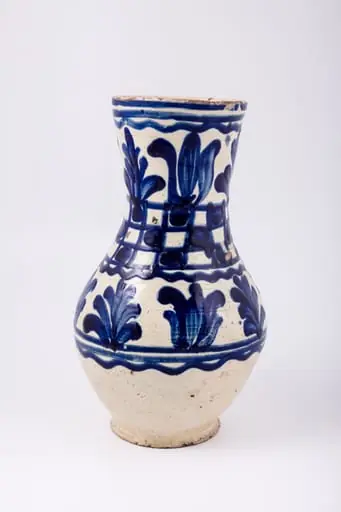 Cănceu piriform prevăzut cu o toartă, gât zvelt și ușor evazat, corpul pântecos, toarta de la gât la diametrul maxim al vasului. Decorul este împărțit în trei registre verticale încadrate în partea superioară și inferioară de linii subțiri și vălurite. Primul și al treilea registru sunt decorate cu motive florale și fitomorfe, câte o lalea înflorită intercalată de brăduți stilizați. Al doilea registru este decorat cu tabla de șah. Cromatica: alb și albastru cobalt.
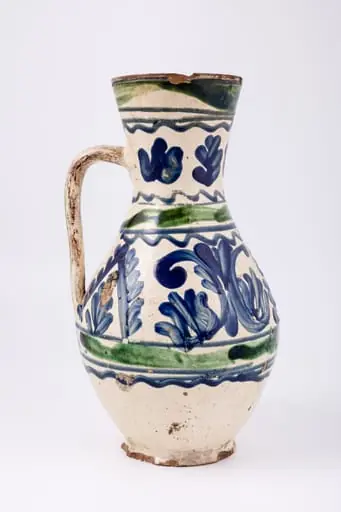 Cănceu piriform prevăzut cu o toartă, gât scurt și ușor evazat, corpul pântecos, toarta de la gât la diametrul maxim al vasului. Decorul este împărțit în două registre verticale separate printr-o bandă lată verde, mărginită de linii subțiri vălurite. Registrul superior este decorat cu motive florale și fitomorfe, câte o lalea înflorită intercalată de brăduți stilizați. Registrul inferior este decorat cu motive florale reprezentând stilizări ale pomului vieții alcătuit din lalele și triunghiuri decorate cu motivul bradului stilizat.
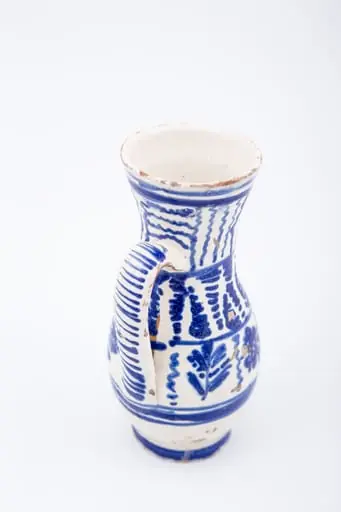 Cănceu piriform prevăzut cu o toartă, gât alungit și ușor evazat, toarta dispusă de la gât la diametrul maxim al vasului. Suprafața vasului este împărțită în 3 registre verticale, separate prin linii subțiri. Primul registru prezintă linii vălurite dispuse vertical, al doilea registru conuri dispuse piramidal cu vârful alternând în sus și jos, iar al treilea registru redă motive florale și fitomorfe stilizate.Suprafața decorativă este încadrată în partea superioară și inferioară de o bandă lată albastră mărginită de linii subțiri, albastre. Cromatică: alb; albastru.
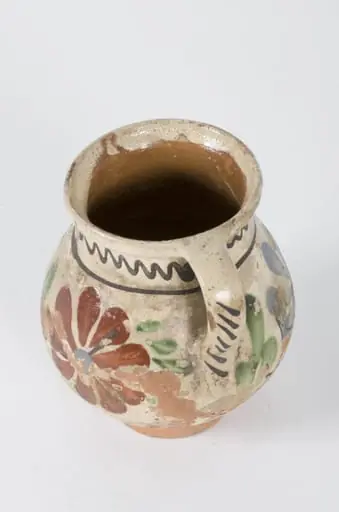 Vas de lut cu baza înaltă, bombat în partea mediană, cu gâtul scurt și buza evazată. Smălțuit pe întreaga suprafață, Prezintă o toartă care pleacă din buza vasului și se unește cu corpul deasupra diametrului maxim, decorată cu linii oblice. Sub buza vasului este decorat cu o linie vălurită dispusă circular și una dreaptă. Pe suprafața exterioară a vasului sunt pictate două flori, una cu petale albastre și cealaltă cu petale maro. Între cele două flori există frunze de culoare verde și o linie în diagonală încadrată de două șiruri de ondulații. Cromatică: fond: alb; cărămiziu; motive: negru; albastru; verde; maro.
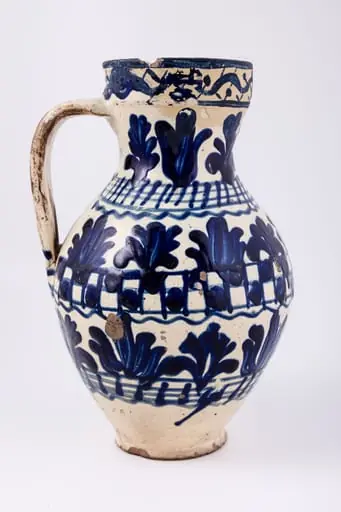
 Cănceu piriform prevăzut cu o toartă, gât alungit și puternic evazat, toarta montată de la gât la diametrul maxim al vasului. Suprafața vasului este împărțită în trei registre. Primul registru dispus sub buza vasului prezintă o ghirlandă de rodii cu frunze stilizate dispusă orizontal, al doilea registru redă o bandă decorată cu spice de grâu dispuse orizontal, iar al treilea registru, dispus pe pântecul vasului, prezintă patru floarea-soarelui stilizate, intercalate de benzi verticale realizate din trei linii: două subțiri și una vălurită. Compoziția decorativă este mărginită în partea superioară și inferioară de câte o bandă lată și linii subțiri, albastre. Cromatică:alb; albastru.
 Cană piriformă prevăzută cu o toartă dreaptă și lată, gura rotundă. Suprafața decorativă a vasului este împărțită în șapte registre decorative: cel din partea superioară, pe buza vasului este dispus orizontal, iar celelalte șase, dispuse vertical. Primul registru, așezat pe marginea dreaptă a cănii redă o linie vălurită intercalată de puncte. Registrul al doilea, al patrulea și al șaselea prezintă motive fitomorfe și florale, brăduți intercalați de lalele înflorite stilizate. Registrul al treilea, dispus pe gâtul cănii și al șaptelea, dispus la bază, prezintă linii circulare orizontale intersectate de linii verticale. Registrul al patrulea prezintă tabla de șah. Toarta este pictată cu pensula. Cromatica: alb, albastru-cobalt.
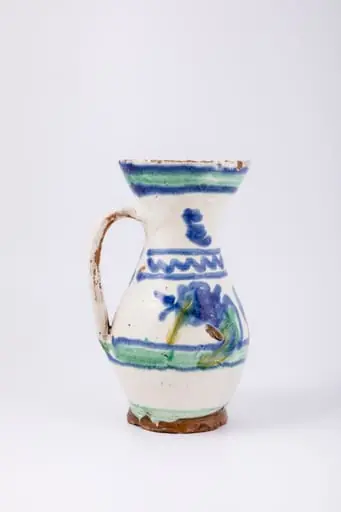 Cănceu piriform prevăzut cu o toartă, gât alungit și puternic evazat, toarta dispusă de la gât la diametrul maxim al piesei. Partea superioară și inferioară este decorată cu câte o bandă lată verde, mărginită de linii subțiri albastre. Decorul central este dispus în trei registre. Primul registru așezat pe gâtul vasului, redă un motiv fitomorf stilizat. Al doilea registru prezintă o bandă circulară realizată dintr-o linie vălurită, mărginită de două linii subțiri. Diametrul maxim al piesei este decorat cu un motiv floral, realizat din două rodii stilizate, în cromatică galben, verde și albastru.
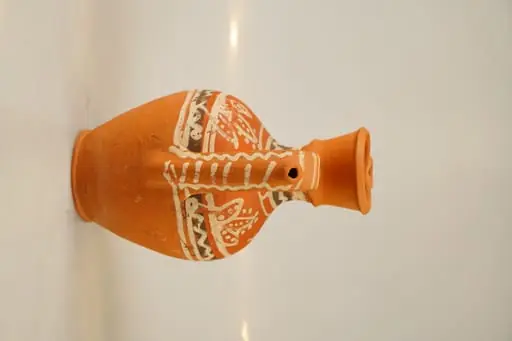 Vas mic cu corp tronconic bombat în jumătatea superioară, cu gât îngust subțire, gură cu ciur și cu buză bilobată; este prevăzut cu o toartă laterală de prindere, cu țâță, cu puncte de inserție la gât și în zona diametrului maxim al corpului. Decorul este realizat prin pictare cu pensula cu angobă albă și maro și se compune din motive geometrice și fitomorfe stilizate: două dungi de culoare maro, cu câte o linie albă ondulată pictată peste ele, dispuse circular, decorează gâtul vasului și corpul acestuia în zona diametrului maxim; linii circulare albe, neglijent realizate; trei grupuri de câte trei frunze cu contur alb, decorate cu puncte albe, dispuse în jumătatea superioară a corpului vasului, separate de câte un motiv format din două linii albe intersectate în formă de X, cu câte un punct alb între brațe. Toarta vasului este decorată cu două linii ondulate verticale și linii orizontale de culoare albă. Vasul nu este smălțuit.
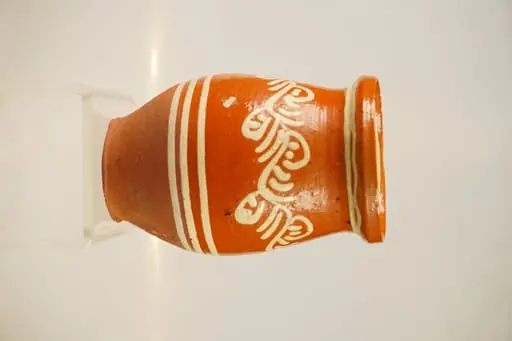 Vas cu corpul de formă bitronconică, ușor rotunjit în zona mediană, cu gât îngust, buză evazată și muchia buzei verticală; este prevăzut cu o toartă laterală de prindere, de formă aplatizată, cu puncte de inserție la buză și în zona mediană a piesei. Decorul monocromatic este realizat prin pictare cu cornul cu humă albă și se compune din motive geometrice (linii circulare paralele, de culoare albă: trei linii dispuse imediat sub toartă și două linii, neglijent realizate, plasate sub buză); motive vegetale geometrizate (un brâu dispus circular la baza gâtului, format din frunze și mici vrejuri pictate sub formă de ghirlandă continuă). Suprafața ornamentată a vasului este acoperită cu un strat de smalț transparent (baza vasului este nesmălțuită). Toarta vasului este decorată cu puncte alungite, realizate prin picurarea culorii. Cromatica: alb, pe fondul roșu al lutului ars.