Artwork
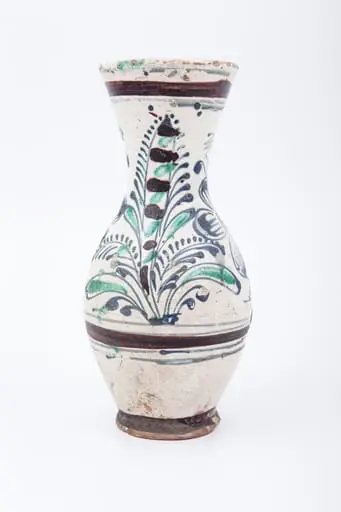
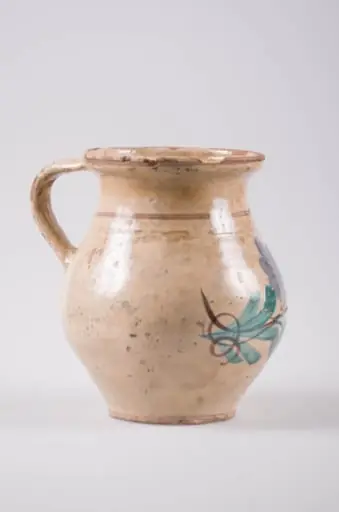
Cănceu piriform prevăzut cu o toartă, gât scurt și evazat, toarta dispusă de la gât la diametrul maxim al vasului. Suprafața decorativă a vasului este împărțită în două registre dispuse vertical, separate printr-o bandă lată verde așezată pe gâtul vasului. Primul registru prezintă motive geometrice stilizate: linii subțiri verticale și frunze stilizate, conturul fiind trasat cu cornul, pictate în interior cu galben și verde. Al doilea registru prezintă motive geometrice stilizate, linii, benzi interesectate decorate jumătate cu linii subțiri orizontale maro, jumătate pictate cu verde sau galben, cercuri hașurate care simbolizează motive florale și linii verticale subțiri maro. Decorul central este încadrat în partea inferioară și superioară de linii subțiri, paralele maro. Cromatică: alb; verde; maro; galben.
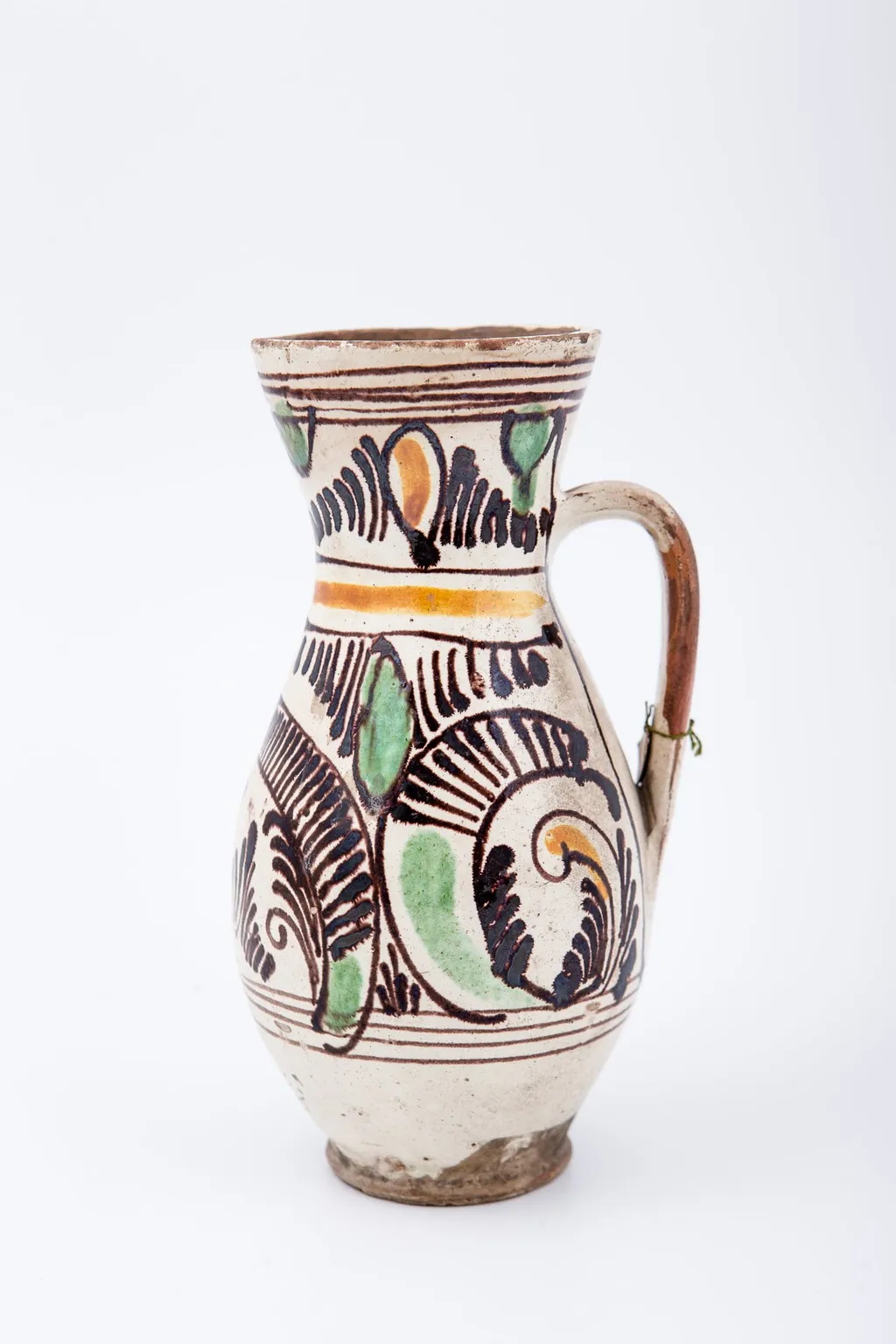
Cănceu piriform prevăzut cu o toartă, gât scurt și evazat, toarta dispusă de la gât la diametrul maxim al vasului. Suprafața decorativă a vasului este împărțită în două registre dispuse vertical, separate printr-o bandă lată verde așezată pe gâtul vasului. Primul registru prezintă motive geometrice stilizate: linii subțiri verticale și frunze stilizate, conturul fiind trasat cu cornul, pictate în interior cu galben și verde. Al doilea registru prezintă motive geometrice stilizate, linii, benzi interesectate decorate jumătate cu linii subțiri orizontale maro, jumătate pictate cu verde sau galben, cercuri hașurate care simbolizează motive florale și linii verticale subțiri maro. Decorul central este încadrat în partea inferioară și superioară de linii subțiri, paralele maro. Cromatică: alb; verde; maro; galben. is an unspecified painting by Unknown. It dates from 1850 and is held in the collection of the ASTRA National Museum Complex. This pear-shaped pitcher features a short neck flaring toward its widest point, with a handle extending from the neck to the shoulder.
About this work
Overview
This pear-shaped pitcher features a short neck flaring toward its widest point, with a handle extending from the neck to the shoulder. Its surface is divided into two horizontal bands by a broad green stripe encircling the neck. The design is entirely painted, with no incised or modeled elements, and the overall form suggests utilitarian function paired with deliberate decorative intent.
Subject & Meaning
The decoration combines abstract geometric motifs with stylized vegetal forms.
The decoration combines abstract geometric motifs with stylized vegetal forms. Vertical lines and simplified leaves in the upper register may reference natural elements, while intersecting bands, hatched circles, and horizontal stripes in the lower register suggest symbolic or rhythmic patterns. These motifs likely held cultural significance, possibly denoting identity, seasonality, or cosmological concepts, though their precise meaning remains unrecorded.
Technique & Style
The vessel was hand-painted using pigments of yellow, green, brown, and white on a buff clay body. Brushwork is uneven, indicating manual application without stencils or molds. Outlines are defined by thin, deliberate strokes, while fills use flat areas of color. The palette is restrained, relying on contrast between light ground and dark or saturated pigments to structure the composition.
History & Provenance
No maker’s mark or inscription is present, and the object’s origin is not documented in its current record. Its style aligns with regional ceramic traditions from Eastern Europe, likely produced in a rural or small-scale workshop during the late 19th or early 20th century. It entered institutional collections without detailed provenance, suggesting it was collected as an example of folk craftsmanship.
Context
This pitcher belongs to a broader tradition of utilitarian ceramics decorated with symbolic motifs in Eastern European peasant households. Similar vessels were used for storing or serving liquids, with decoration serving both aesthetic and possibly protective or ritual purposes. The geometric language reflects local visual codes, distinct from urban or industrial pottery, preserving regional identity through material culture.
Legacy
The object contributes to ethnographic archives documenting pre-industrial craft practices. Its preservation allows comparison with contemporaneous pottery from neighboring regions, aiding studies of stylistic diffusion and local variation. Though anonymous, it represents a widespread mode of artistic expression in rural communities, valued today for its directness and cultural specificity.
Artist & collection

 Domestic Scene
 Giacomo and Cardinal Marco, investing Andrea, Abbot of San Zeno, with his Benefice
 The Nymph of Fontainebleau
 Portrait of a Woman
 Madonna and Child with Saints in the Enclosed Garden
 Venus and Minerva
 Family Group of Four on Sofa
 Wall painting from Room H of the Villa of P. Fannius Synistor at Boscoreale
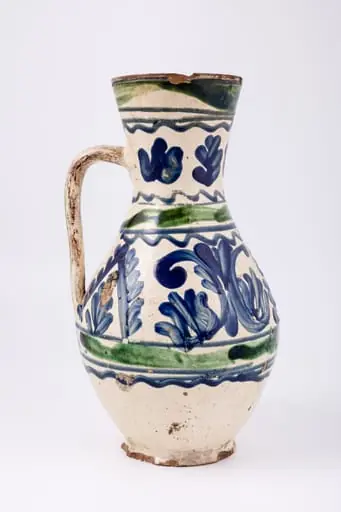 Cănceu piriform prevăzut cu o toartă, gât scurt și ușor evazat, corpul pântecos, toarta de la gât la diametrul maxim al vasului. Decorul este împărțit în două registre verticale separate printr-o bandă lată verde, mărginită de linii subțiri vălurite. Registrul superior este decorat cu motive florale și fitomorfe, câte o lalea înflorită intercalată de brăduți stilizați. Registrul inferior este decorat cu motive florale reprezentând stilizări ale pomului vieții alcătuit din lalele și triunghiuri decorate cu motivul bradului stilizat.
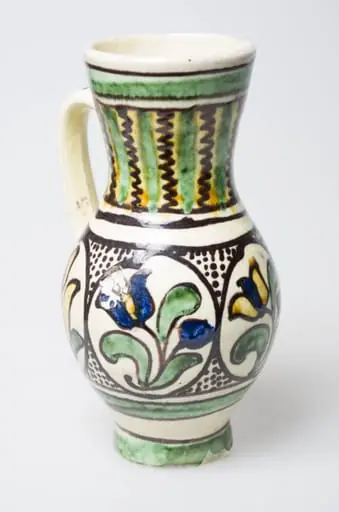 Recipient ceramic de formă ovoidală, smălțuit, cu gâtul lung, fund inelar și buza dreaptă. Prevăzut cu o toartă arcuită, care pleacă din mijlocul gâtului spre partea inferioară a vasului. Intens stilizat cu motive florale, vegetale și geometrice, pictate cu pensula, în două registre diferite. În primul registru, situat în zona gâtului, sunt pictate dungi late și linii meandrice dispuse pe verticală, alternativ. Aproape de gura vasului, sunt prezente dungi late și linii circulare. În al doilea registru întâlnim patru flori încadrate în cercuri și între acestea, puncte mici, umplând astfel cu decorații toată zona bombată a recipientului. Registrele sunt delimitate între ele de trei linii circulare. În partea inferioară, întâlnim ca și la gură, o dungă lată încadrată de două linii circulare. Prezent motiv geometric pe toartă sub formă de linie vălurită. Cromatică: fundal: alb; motive: galben; albastru; verde; maro închis.
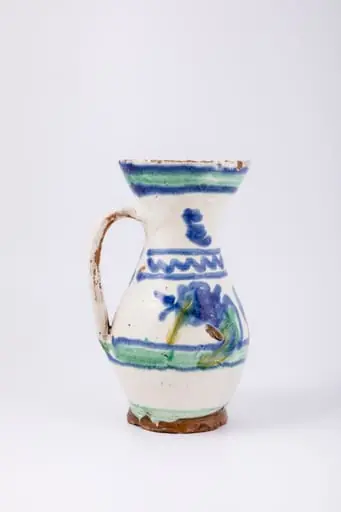 Cănceu piriform prevăzut cu o toartă, gât alungit și puternic evazat, toarta dispusă de la gât la diametrul maxim al piesei. Partea superioară și inferioară este decorată cu câte o bandă lată verde, mărginită de linii subțiri albastre. Decorul central este dispus în trei registre. Primul registru așezat pe gâtul vasului, redă un motiv fitomorf stilizat. Al doilea registru prezintă o bandă circulară realizată dintr-o linie vălurită, mărginită de două linii subțiri. Diametrul maxim al piesei este decorat cu un motiv floral, realizat din două rodii stilizate, în cromatică galben, verde și albastru.
 Cănceu piriform, gât înalt, buza evazată, prevăzut cu o toartă. Toarta este montată de la gât la diametrul maxim al vasului. Suprafața decorativă reprezintă două flori mari, margarete, dispuse pe laterale, cu petale rotunde și hașurate, iar mijlocul redat printr-un cerc de culoare verde. Central este așezată o frunză mare redată prin linii oblice și puncte albastre și galbene. Întreg decorul este încadrat în partea superioară și inferioară de o bandă maro, mărginită de linii subțiri albastre, trasate cu cornul și pensula. Talpa este pictată cu maro. Cromatică: alb; albastru; verde; maro.
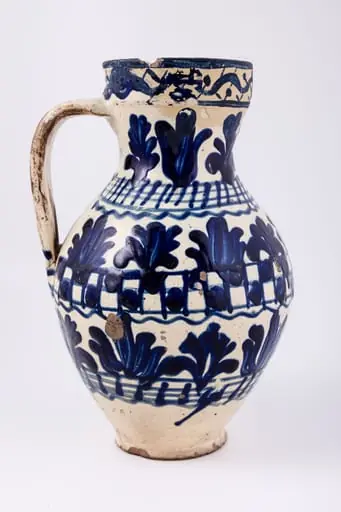 Cană piriformă prevăzută cu o toartă dreaptă și lată, gura rotundă. Suprafața decorativă a vasului este împărțită în șapte registre decorative: cel din partea superioară, pe buza vasului este dispus orizontal, iar celelalte șase, dispuse vertical. Primul registru, așezat pe marginea dreaptă a cănii redă o linie vălurită intercalată de puncte. Registrul al doilea, al patrulea și al șaselea prezintă motive fitomorfe și florale, brăduți intercalați de lalele înflorite stilizate. Registrul al treilea, dispus pe gâtul cănii și al șaptelea, dispus la bază, prezintă linii circulare orizontale intersectate de linii verticale. Registrul al patrulea prezintă tabla de șah. Toarta este pictată cu pensula. Cromatica: alb, albastru-cobalt.
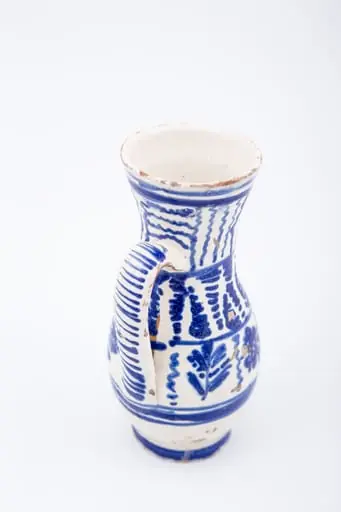 Cănceu piriform prevăzut cu o toartă, gât alungit și ușor evazat, toarta dispusă de la gât la diametrul maxim al vasului. Suprafața vasului este împărțită în 3 registre verticale, separate prin linii subțiri. Primul registru prezintă linii vălurite dispuse vertical, al doilea registru conuri dispuse piramidal cu vârful alternând în sus și jos, iar al treilea registru redă motive florale și fitomorfe stilizate.Suprafața decorativă este încadrată în partea superioară și inferioară de o bandă lată albastră mărginită de linii subțiri, albastre. Cromatică: alb; albastru.
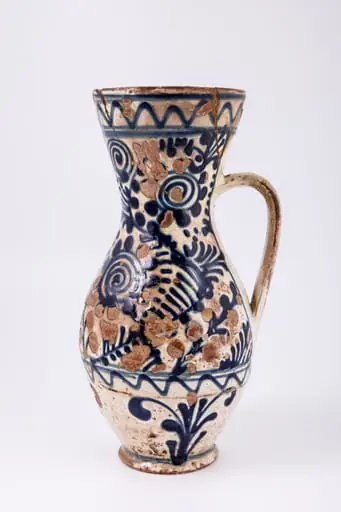 Cană cu corpul bombat, gât scurt, toarta dispusă de la gât la diametrul maxim al vasului. Suprafața decorativă a vasului este încadrată între linii subțiri și vălurite dispuse în partea superioară și inferioare. Decorul central reprezintă calea cu sori alcătuită din lujeri, linii paralel dispuse sub formă de raze, cercuri pline și floarea-soarelui stilizată. Cromatica: alb și albastru cobalt.
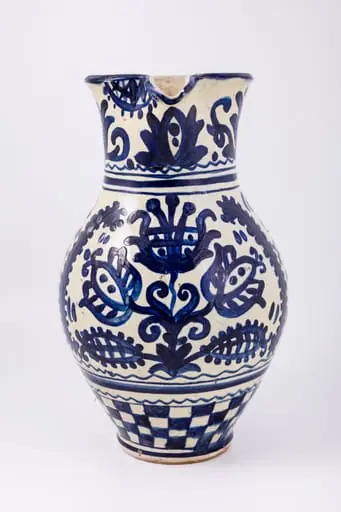 Cană piriformă prevăzută cu o toartă dreaptă și lată, gura rotundă, prevăzută cu cioc de scurgere. Suprafața decorativă a vasului este împărțită în patru registre decorative. Primul registru dispus pe gâtul piesei prezintă un decor floral și fitomorf reprezentând lalele și lujeri. Al doilea registru prezintă o linie vălurită și trei linii subțiri circulare. Decorul central, reprezintă trei „arbori ai vieții” stilizați realizați din trei lalele mari, înflorite, lujeri și frunze, separați de câte o semilună. Registrul al patrulea prezintă motivul tablei de șah. Deasupra toarte pictate cu motive florale și fitomorfe este redat anul confecționării piesei: 1980, iar pe fundul vasului numele persoanei care a pictat piesa: Herta Wilk. Cromatica: alb, albastru-cobalt.
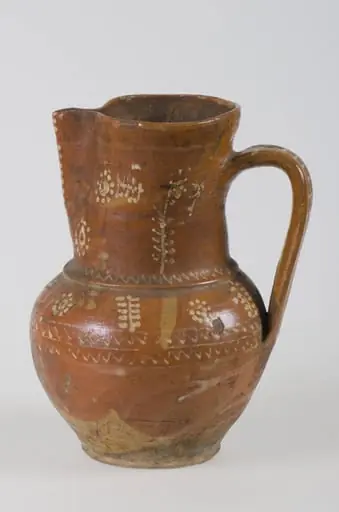 Cană înaltă cu o toartă și gura ovoidală terminată cu un cioc pe partea opusă torții. Toarta pornește de sub gură și se termină sub diametrul maxim al vasului. Smălțuită exterior. Decorată pe toată suprafața cu motive florale stilizate, motive fitomorfe (frunze stilizate) și motive geometrice: linie, linie ondulată, punct. Cromatică: fond: maroniu; motive: alb.
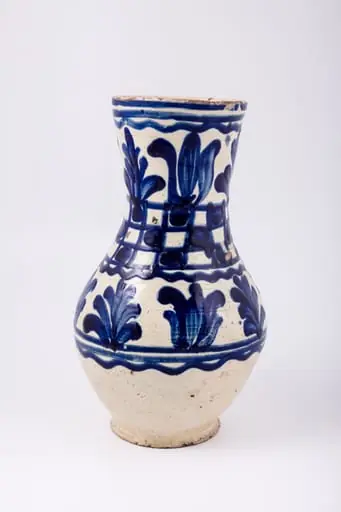 Cănceu piriform prevăzut cu o toartă, gât zvelt și ușor evazat, corpul pântecos, toarta de la gât la diametrul maxim al vasului. Decorul este împărțit în trei registre verticale încadrate în partea superioară și inferioară de linii subțiri și vălurite. Primul și al treilea registru sunt decorate cu motive florale și fitomorfe, câte o lalea înflorită intercalată de brăduți stilizați. Al doilea registru este decorat cu tabla de șah. Cromatica: alb și albastru cobalt.
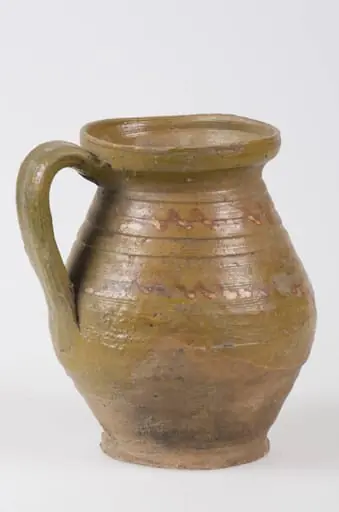 Vas bitronconic cu gât scurt și foarte profilat, cu gura înaltă și dreaptă. Prezintă o toartă care pleacă de sub buză și se unește cu corpul sub zona diametrului maxim. Este smălțuit în interior și la exterior (parțial nesmălțuit în partea de jos). În partea superioară prezintă un decor geometric realizat din cinci linii incizate și două linii în val pictate. Toarta este decorată cu puncte. Cromatică: fond: cărămiziu și pe alocuri verziu; motive: alb; maroniu. Prezintă uzură funcțională.
 Oală de formă bitronconică de culoare bej. Decorul este reprezentat de motive florale: floarea este încadrată de linii albe realizate cu degetul; motive vegetale, motive geometrice: în partea superioară decorație circulară, linii. Prezintă toartă curbată. Smălțuită. Cromatică: fond: bej; motive: verde; albastru; maroniu.