Artwork
Statue of Venus at Crystal Palace
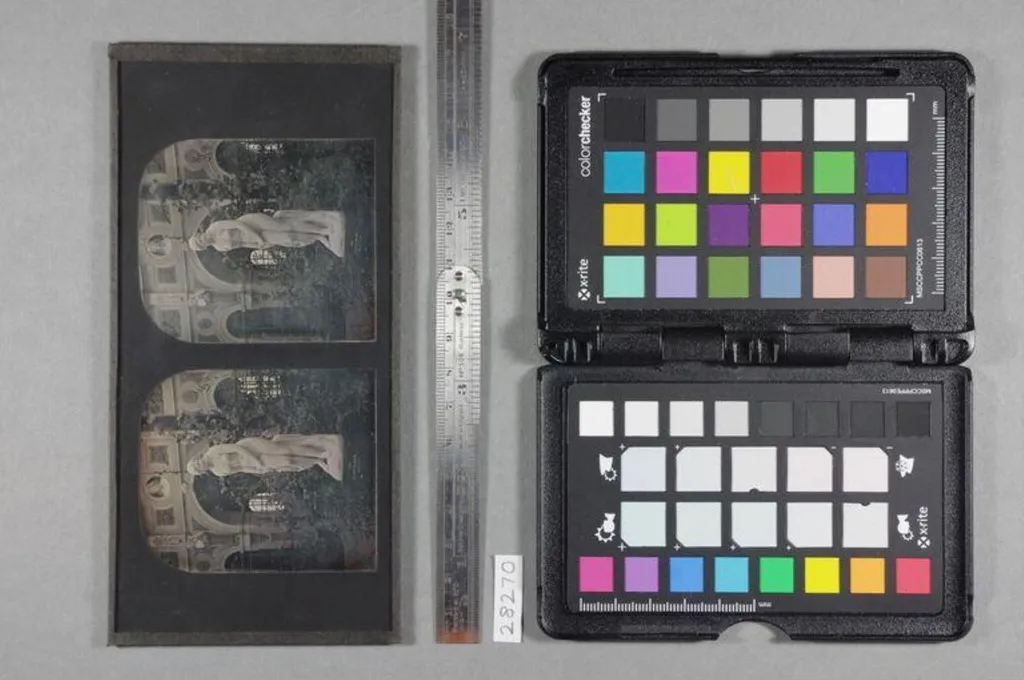
Statue of Venus at Crystal Palace is a photographic photography by the Impressionist artist Negretti and Zambra. It dates from 1855 and is held in the collection of the Victoria and Albert Museum. A stereoscopic daguerreotype from 1855 captures a marble sculpture of a draped female figure, identified as 'Musidora' by John Thomas.
About this work
Overview
A stereoscopic daguerreotype from 1855 captures a marble sculpture of a draped female figure, identified as 'Musidora' by John Thomas. The image was taken inside the Crystal Palace at Sydenham, shortly after its relocation from Hyde Park. The photograph is mounted in a black frame with dual apertures, designed for viewing in a stereoscope, offering a three-dimensional impression of the scene.
Subject & Meaning
The subject reflects mid-century Victorian tastes for classical themes filtered through contemporary poetry, blending moral restraint with aesthetic refinement.
The sculpture depicts 'Musidora,' a literary figure from James Thomson’s poem 'The Seasons,' portrayed as a woman bathing in a stream, caught mid-motion. Though idealized, the pose suggests modesty and quiet movement rather than overt sensuality. The subject reflects mid-century Victorian tastes for classical themes filtered through contemporary poetry, blending moral restraint with aesthetic refinement.
Technique & Style
The daguerreotype employs precise exposure to render fine details of the statue’s drapery and the palace’s architectural elements. The even, diffused lighting avoids harsh shadows, emphasizing texture over drama. The stereoscopic format, with two slightly offset images, was an early attempt to simulate depth, aligning with Victorian fascination for technological enhancements of visual experience.
History & Provenance
The sculpture was first exhibited at the Royal Academy in 1852 and later moved to the Crystal Palace after its 1854 relocation to Sydenham. The photograph likely dates to this later display, capturing the statue among the palace’s grand interior spaces. Its preservation in a framed stereoscopic mount suggests it was intended for private collection or educational use, common among middle-class audiences of the time.
Context
The Crystal Palace housed reproductions of classical and contemporary sculptures as part of a broader effort to democratize art access. Placing 'Musidora' within a glass-and-iron structure, surrounded by landscaped gardens, reflected a cultural shift toward integrating art with public leisure. The photograph itself was part of a growing market for visual documentation of exhibitions and architectural wonders.
Legacy
This image survives as a record of how Victorian audiences encountered sculpture through new photographic technologies. It illustrates the intersection of art display, industrial architecture, and emerging media. While the original statue’s current location is uncertain, the photograph remains a tangible artifact of 19th-century efforts to preserve and disseminate cultural objects beyond the exhibition hall.
Artist & collection
Artist

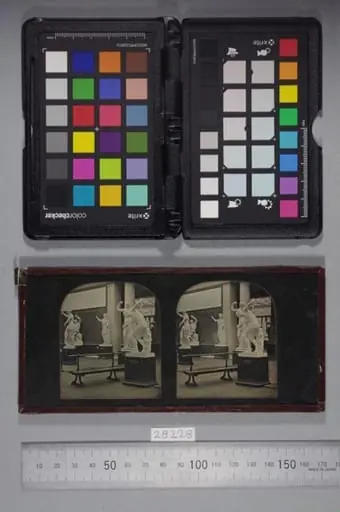 Sculpture Court at Crystal Palace, including the Discobolus
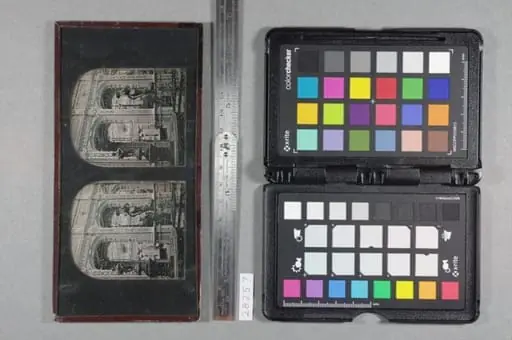 Sculpture Court at Crystal Palace, including Donatello's 'David'
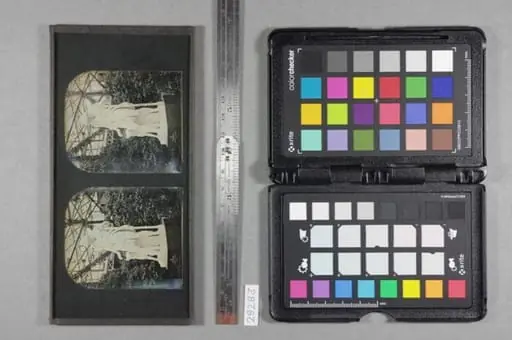 Sculpture of Ulysses at Crystal Palace
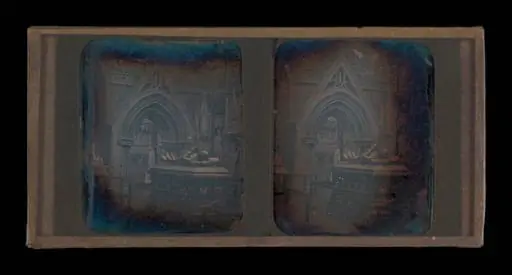 Gothic or Medieval Funerary Statuary
 Guy Little Theatrical Photograph
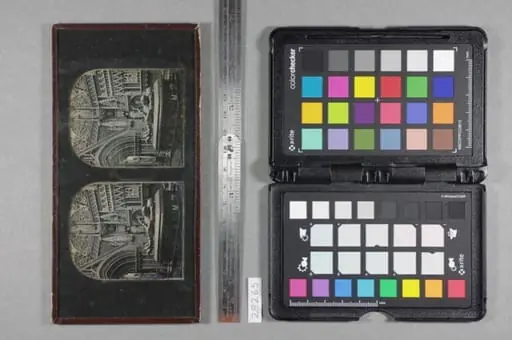 View of Gothic Architecture, Sculpture and Tomb Displayed at Crystal Palace
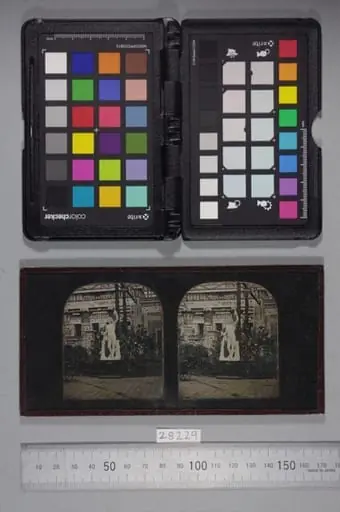 Sculpture of Bacchus at Crystal Palace
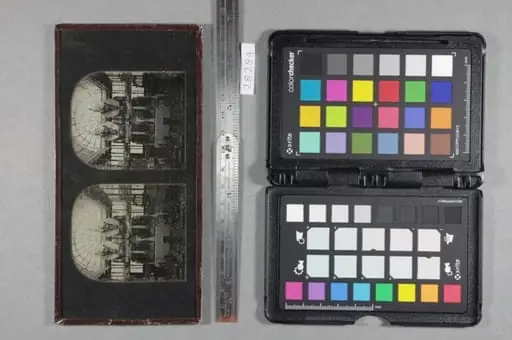 Monumental Egyptian Sculpture at Crystal Palace
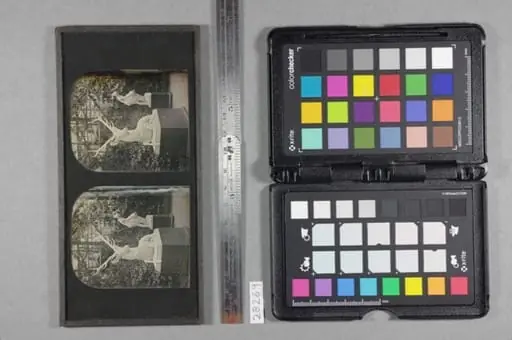 Statue of a Stag at Crystal Palace
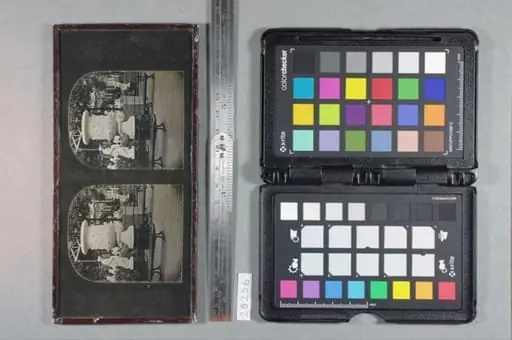 Sculptures at Crystal Palace
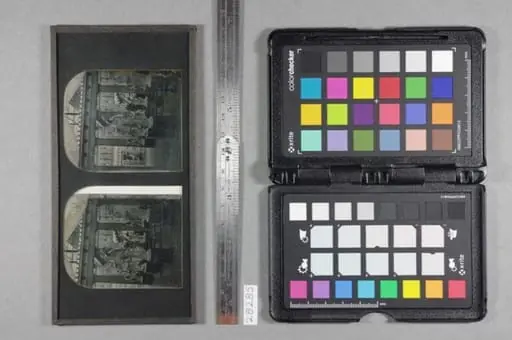 Greek and Egyptian Sculpture at Crystal Palace
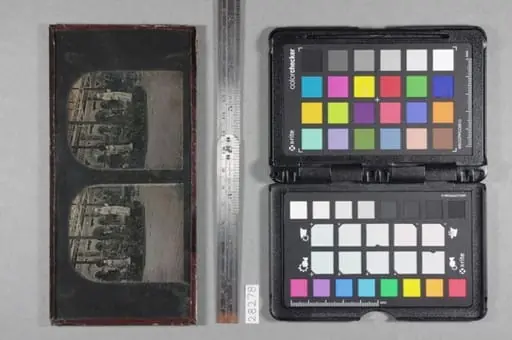 Interior View of the Crystal Palace with Sculptures
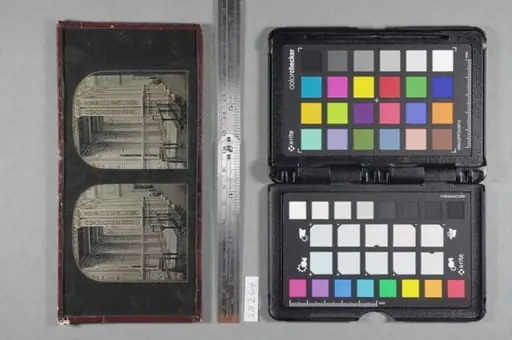 View of Architectural Sculpture Displayed at Crystal Palace
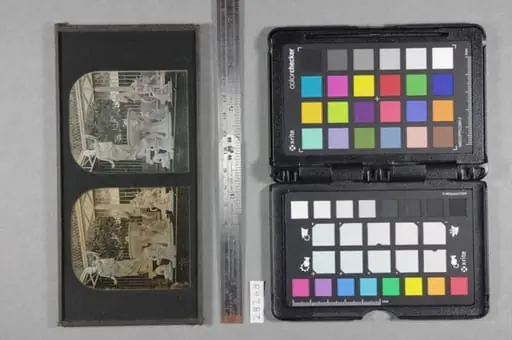 Greco-Roman Sculptures at Crystal Palace
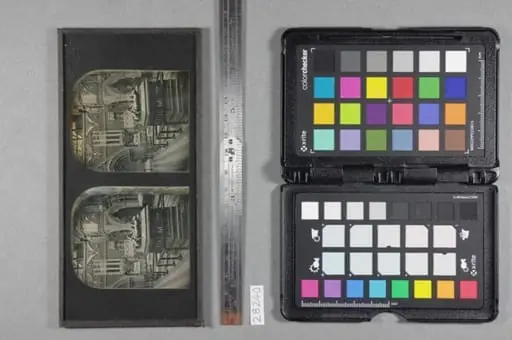 Medieval Architecture and Sculpture at Crystal Palace
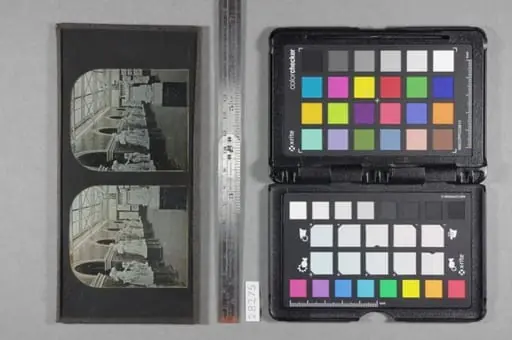 Sculptures on display at Crystal Palace
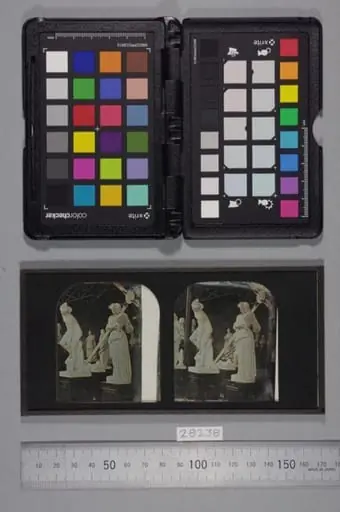 Sculptures at the Crystal Palace
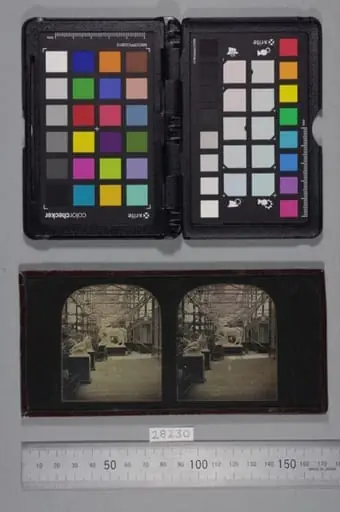 Sculptures Displayed at Crystal Palace
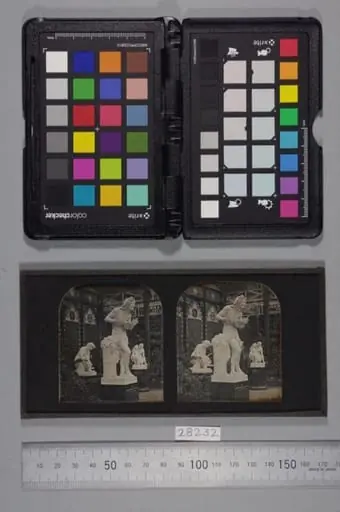 Sculpture Court at Crystal Palace