Artwork
Vas ceramic de mici dimensiuni, pe bază inelară, pântecos, cu fundul și gura late. Deasupra gurii vasului a fost pusă o toartă de prindere. Buza vasului a fost pictată printr-un brâu de crenguțe. Pe pântecul vasului brâuri de puncte și două benzi subțiri jirăvite. Smălțuit în interior și exterior. Cromatică: fond: crem; motive: verde; maro; bej.
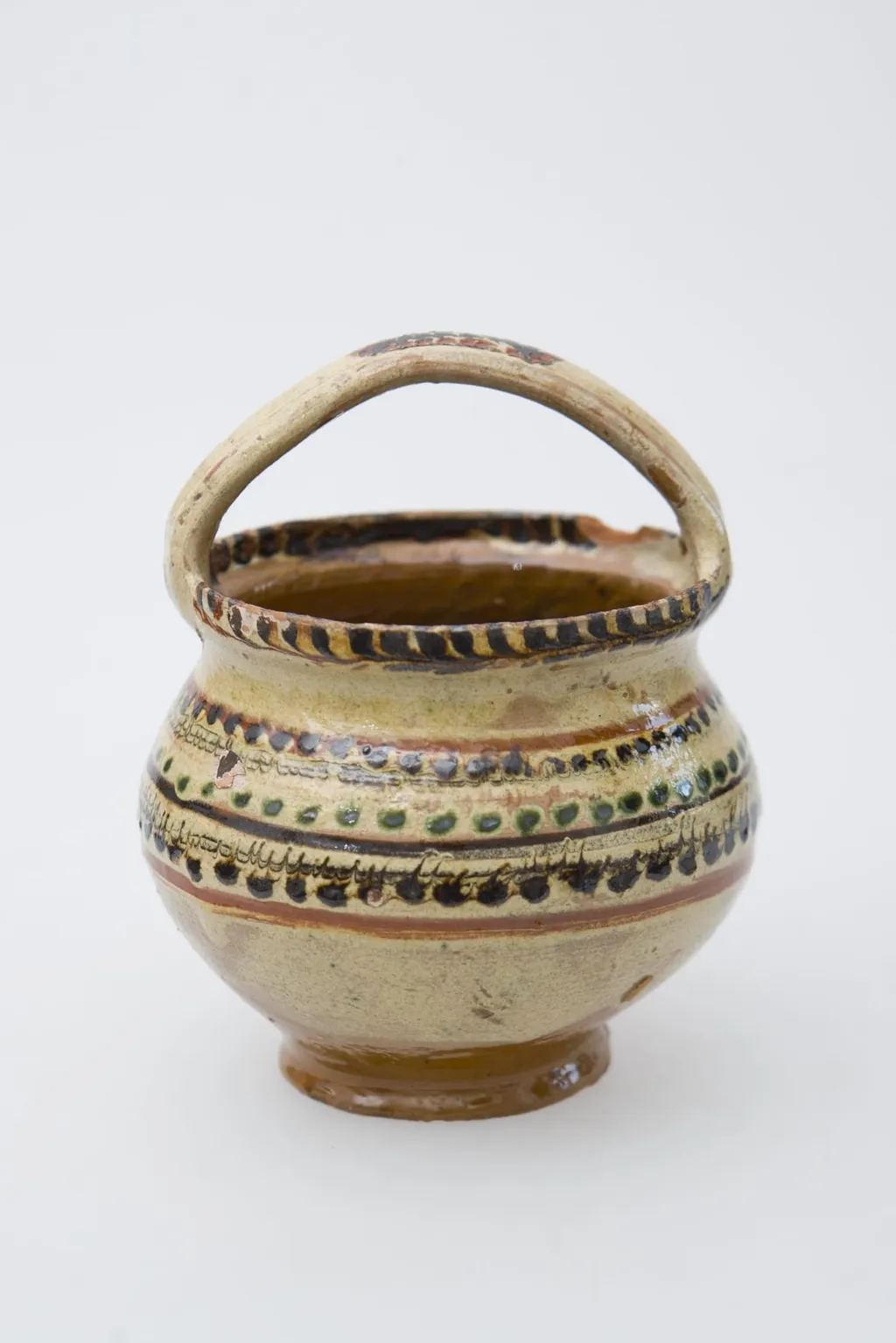
Vas ceramic de mici dimensiuni, pe bază inelară, pântecos, cu fundul și gura late. Deasupra gurii vasului a fost pusă o toartă de prindere. Buza vasului a fost pictată printr-un brâu de crenguțe. Pe pântecul vasului brâuri de puncte și două benzi subțiri jirăvite. Smălțuit în interior și exterior. Cromatică: fond: crem; motive: verde; maro; bej. is a print by Unknown. It dates from 1850 and is held in the collection of the ASTRA National Museum Complex. A small ceramic vessel with a ring-shaped base and rounded belly, featuring a wide mouth and base.
About this work
Overview
Exterior decoration is minimal, limited to painted bands in muted tones against a cream ground, suggesting functional use with restrained aesthetic emphasis.
A small ceramic vessel with a ring-shaped base and rounded belly, featuring a wide mouth and base. A handle is attached above the rim, likely for lifting or hanging. The surface is glazed both inside and out, creating a smooth, slightly shiny interior. Exterior decoration is minimal, limited to painted bands in muted tones against a cream ground, suggesting functional use with restrained aesthetic emphasis.
Subject & Meaning
No figurative imagery or symbolic motifs are present. The decoration consists of abstract patterns—thin stripes, dotted lines, and twig-like bands—common in utilitarian pottery of the region. These may have served as markers of origin, maker, or group identity rather than narrative content. The absence of complex iconography points to everyday use, possibly for storage or transport of liquids or dry goods.
Technique & Style
The vessel was hand-formed and fired with a cream-colored slip, then glazed internally and externally for durability and water resistance. Decoration was applied with a fine brush or stylus, using pigments in green, brown, and beige. Patterns are evenly spaced but irregular in execution, indicating hand-painted work rather than mold or stamping. Wear on the surface suggests prolonged use and handling.
History & Provenance
The form and decoration align with regional ceramic traditions from the late Neolithic or early Bronze Age in Eastern Europe. Similar vessels have been found in archaeological contexts associated with settled farming communities. While exact provenance is unrecorded, its style and glazing technique suggest production within a local workshop, likely intended for domestic or communal use.
Context
This vessel reflects a broader tradition of small, glazed pottery used in agrarian societies for storage or serving. Its simple form and restrained decoration contrast with ceremonial vessels of the period, indicating a focus on practicality. Comparable examples appear in museum collections from the Carpathian Basin, where such ceramics were common in household assemblages during the third millennium BCE.
Legacy
The vessel exemplifies the enduring value of functional ceramics in prehistoric daily life. Its preservation highlights the durability of early glazing techniques and the continuity of decorative motifs across generations. Today, it contributes to understanding the material culture of early farming communities, offering insight into craftsmanship and domestic routines of the time.
Artist & collection

 Domestic Scene
 Giacomo and Cardinal Marco, investing Andrea, Abbot of San Zeno, with his Benefice
 The Nymph of Fontainebleau
 Portrait of a Woman
 Madonna and Child with Saints in the Enclosed Garden
 Venus and Minerva
 Family Group of Four on Sofa
 Wall painting from Room H of the Villa of P. Fannius Synistor at Boscoreale
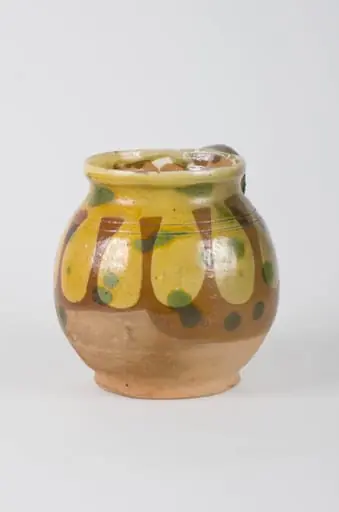 Vas din lut cu corp foarte bombat, cu gât scurt, buză evazată și ridicată. O toartă pornește din buză și este fixată pe corp la nivelul diametrului maxim. Pe umăr este decorată cu motive geometrice: două linii incizate. Din buză pornesc vertical loburi de angobă. Partea de jos nesmălțuită. Partea de sus smălțuită galben și stropită cu verde. Interior neangobat dar smălțuit. Cromatică: fond: cărămiziu; motive: galben; verde.
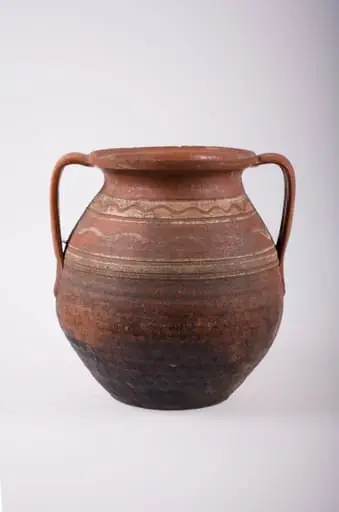 Oala bombată cu două toarte late, aplatizate, dispuse de o parte și de alta a gurii vasului; buză evazată; decorată în exterior cu motive geometrice: linii, linii vălurite pe un registru de cromatică albă. Cromatică: fond: maro; motive: alb-gălbui. Smălțuită pe gura vasului, interior și pe mânerul vasului.
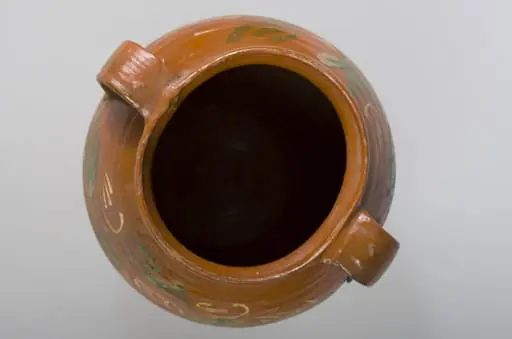 Vas de formă bitronconică, cu gât scurt cu buză rotunjită și evazată. Oala este smălțuită interior și pe 2/3 din exterior. Prezintă două toarte late ce unesc buza vasului de zona diametrului maxim. Decorații în registru floral-vegetal, dispuse concentric, în partea superioară a vasului, compuse din linii ondulate și palmate. Cromatică: fond: cărămiziu; motive: alb, verde.
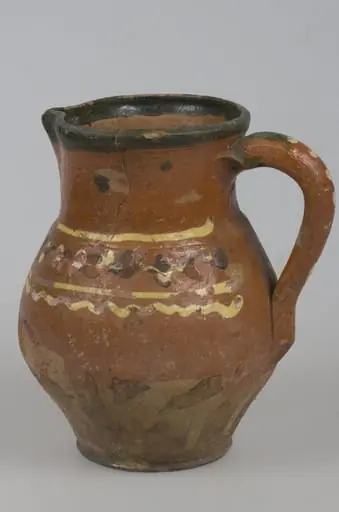 Vas de lut de mici dimensiuni, bombat, cu gât lung și puțin evazat, cu gură largă și cioc de scurgere. Toarta pornește de sub gură și coboară până în zona diametrului maxim al vasului. Este smălțuit în interior și exterior. Decorul dispus pe umărul vasului este format din: motive florale: o cunună din frunze încadrată de motive geometrice: o linie circulară în partea superioară și o linie circulară și una în val în partea inferioară. Buza vasului este vopsită în interior și exterior. Toarta este decorată cu puncte de culoare albă. Cromatică: fond: cărămiziu; motive: alb; verde; negru.
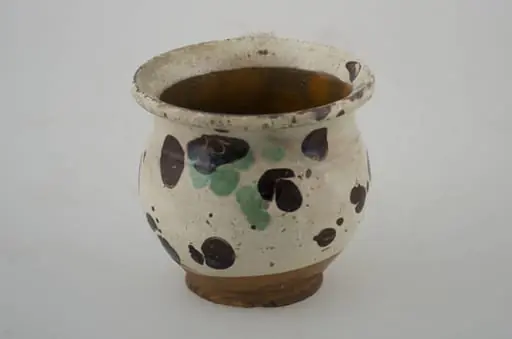 Vas de formă globulară, cu baza plată, cu gât foarte profilat și buza evazată. Prevăzut cu o toartă care pleacă de la gura vasului și se unește cu corpul sub diametrul maxim. Este smălțuit în interior și exterior mai puțin baza. Decorul este realizat prin pete aleatorii pe toată suprafața vasului. Cromatică: fond: alb; motive: maro; verde.
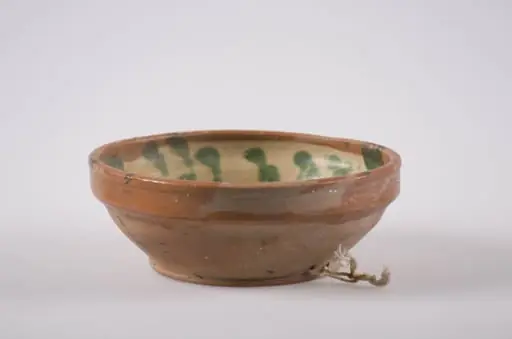 Vasul de formă tronconică cu pereții evazați ce se termină cu buza greaptă. Pe un fond crem s-au stropit pete de culoare verde. Buza vasului este smălțuită. Partea posterioară prezintă două găuri prin care trece ața de agățat.
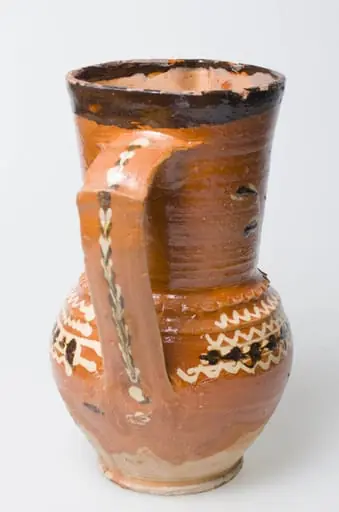 Vasul este confecționat din lut, având forma bitronconică, cu gura largă. Acesta este prevăzut cu o toartă pentru prindere fixată, în partea superioară de margine, iar în partea inferioară de zona bombată a vasului. Obiectul este decorat cu linii vălurite și motive florale. Cromatică: fond: maro; decor: alb; negru.
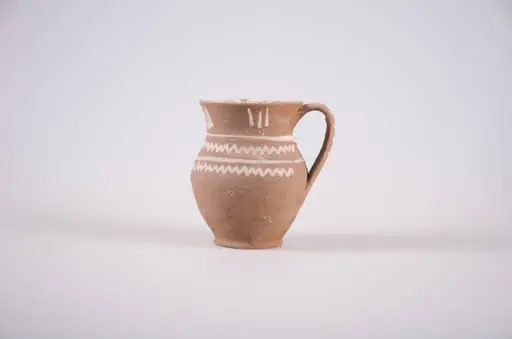 Recipient bitronconic cu gura largă. Are o toartă laterală care pleacă din buză până la diametrul maxim al vasului. Decor cu motive geometrice pe partea superioară a vasului și pe toartă: linii paralele, doua cercuri, linii ondulate. Cromatică: fond: cărămiziu; motive din angobă albă. Vasul este nesmălțuit.
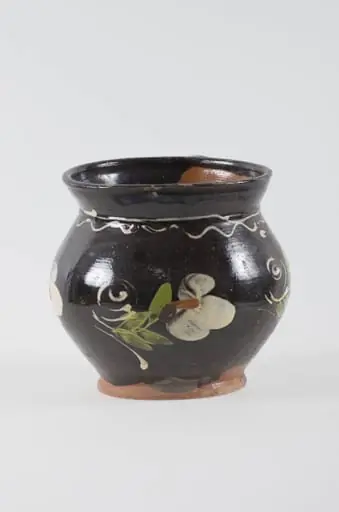 Vasul este de lut smălțuit și are formă bitronconică. Este prevăzut cu o toartă semicirculară și cu buza profilată înspre exterior. Decorat cu motive geometrice (linii drepte, curbe) și motive florale. Cromatică: fond: maro; motive: alb; verde; maro deschis.
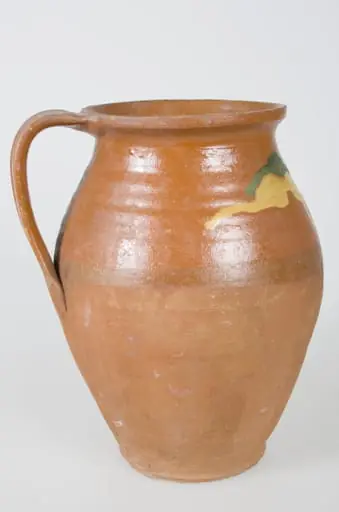 Vas bombat în partea mediană și cu buza evazată, smălțuit în jumătatea superioară. Prezintă o toartă ce leagă buza vasului de partea mediană. Decorații frontale realizate prin stropire, sub forma a două linii suprapuse și neregulate dispuse orizontal. Cromatică: fond cărămiziu; motive: verde; galben.