Artwork
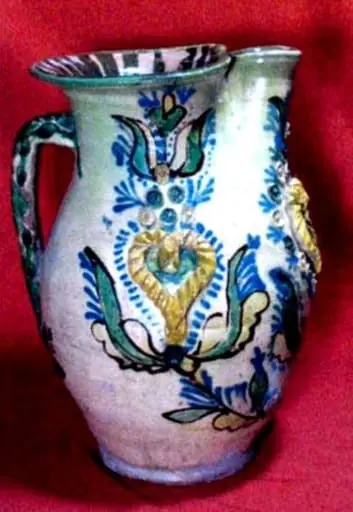
Cană kuty
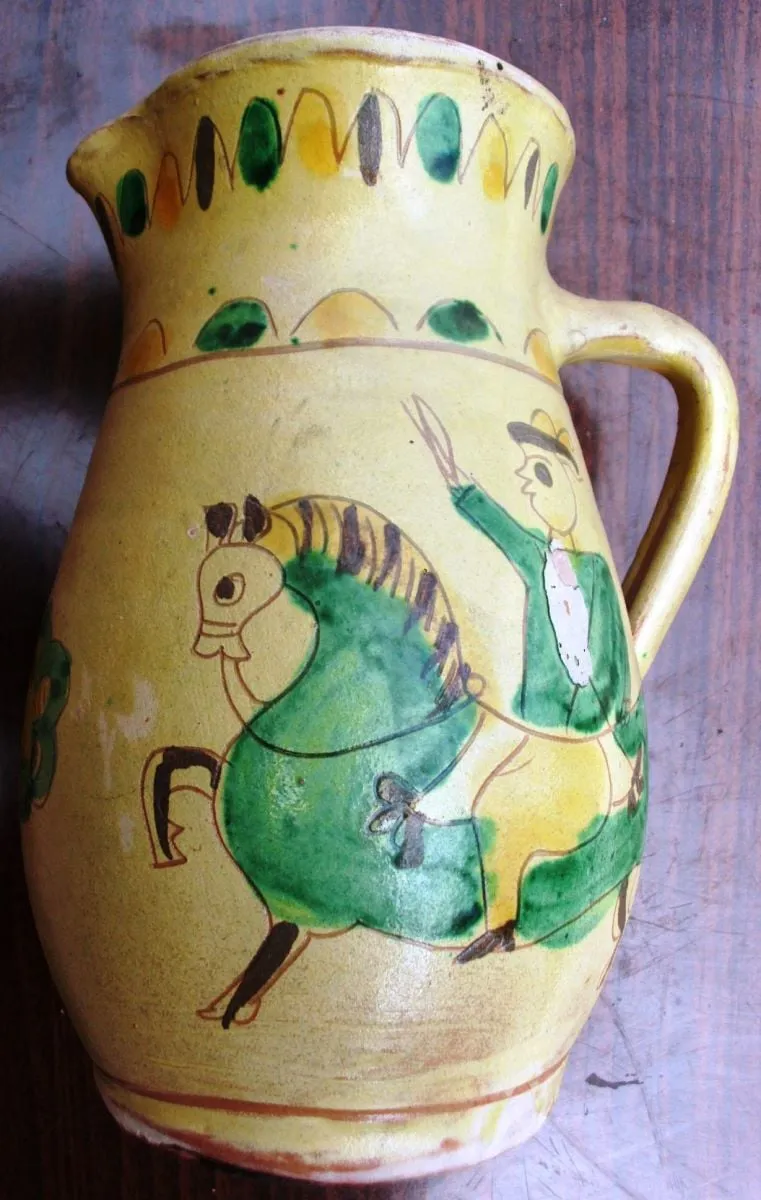
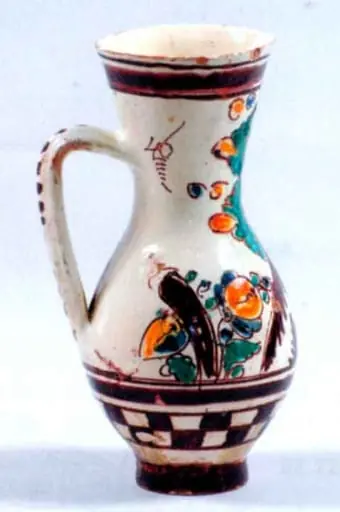
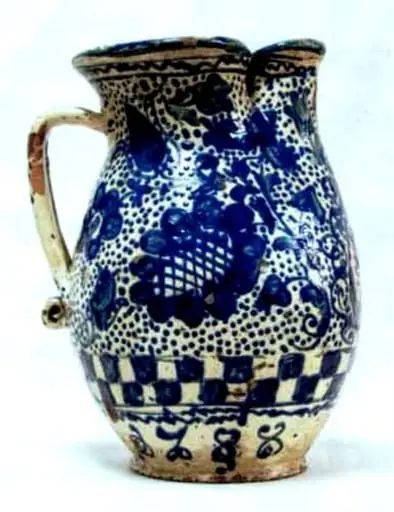
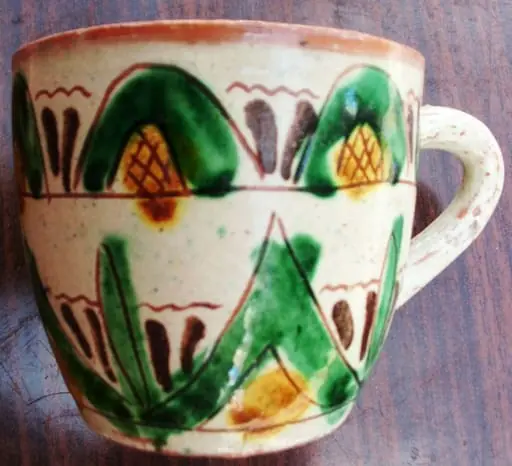
Cană kuty is a photography by Unknown. It dates from 1850 and is held in the collection of the Golești Viticulture and Pomiculture Museum.
About this work
Overview
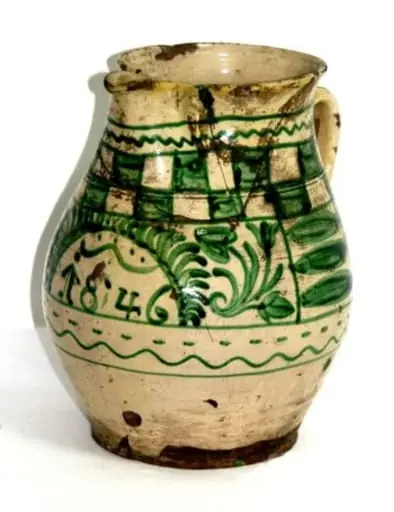
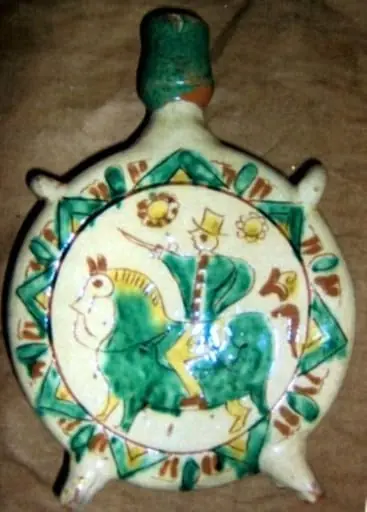
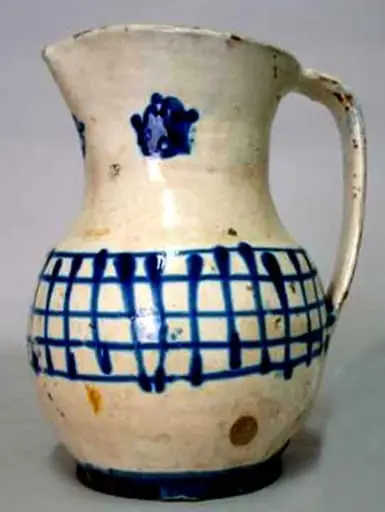
This image documents a simple clay jug, or cană kuty, from a museum’s ethnographic collection. Rendered in a straightforward photographic style, the object is presented without decorative context or artificial lighting. The focus is purely on form and material, emphasizing its function as a utilitarian vessel rather than an artistic object.
Subject & Meaning
The jug represents everyday domestic life in a pre-industrial setting. Its handmade construction and unadorned surface suggest it was crafted for practical use—storing or transporting liquids within a household. Such objects were essential to daily routines, reflecting the resourcefulness and material culture of their makers.
Technique & Style
The vessel was formed by hand, likely using coiling or pinching techniques common in traditional pottery. The metal handle, rudimentary and functional, was probably forged locally. The photograph’s neutral composition avoids embellishment, aligning with ethnographic documentation practices that prioritize accuracy over aesthetic presentation.
History & Provenance
The jug resides in the Museum of Ethnography’s collection, where it was likely acquired as part of a broader effort to preserve vernacular material culture. Its origins are tied to a specific regional tradition, though exact provenance details are not provided. Its preservation signals an institutional interest in ordinary objects from the past.
Context
In its original setting, this jug would have been part of a household’s toolkit, used alongside other handmade items like baskets, wooden bowls, or woven containers. Its presence in a museum today contrasts its former role as a disposable, worn-out object, now valued for the insight it offers into historical labor and domestic life.
Legacy
As a preserved artifact, the jug contributes to understanding pre-modern craftsmanship and subsistence practices. It stands as a quiet testament to the skills and needs of people whose lives left few written records. Its inclusion in museum archives ensures that such everyday objects are not forgotten in narratives of cultural history.
Artist & collection
Museum
Golești Viticulture and Pomiculture Museum
Continue through works from the same source collection.
 Domestic Scene
 Giacomo and Cardinal Marco, investing Andrea, Abbot of San Zeno, with his Benefice
 The Nymph of Fontainebleau
 Portrait of a Woman
 Madonna and Child with Saints in the Enclosed Garden
 Venus and Minerva
 Family Group of Four on Sofa
 Wall painting from Room H of the Villa of P. Fannius Synistor at Boscoreale