Artwork
ploscă Kuty
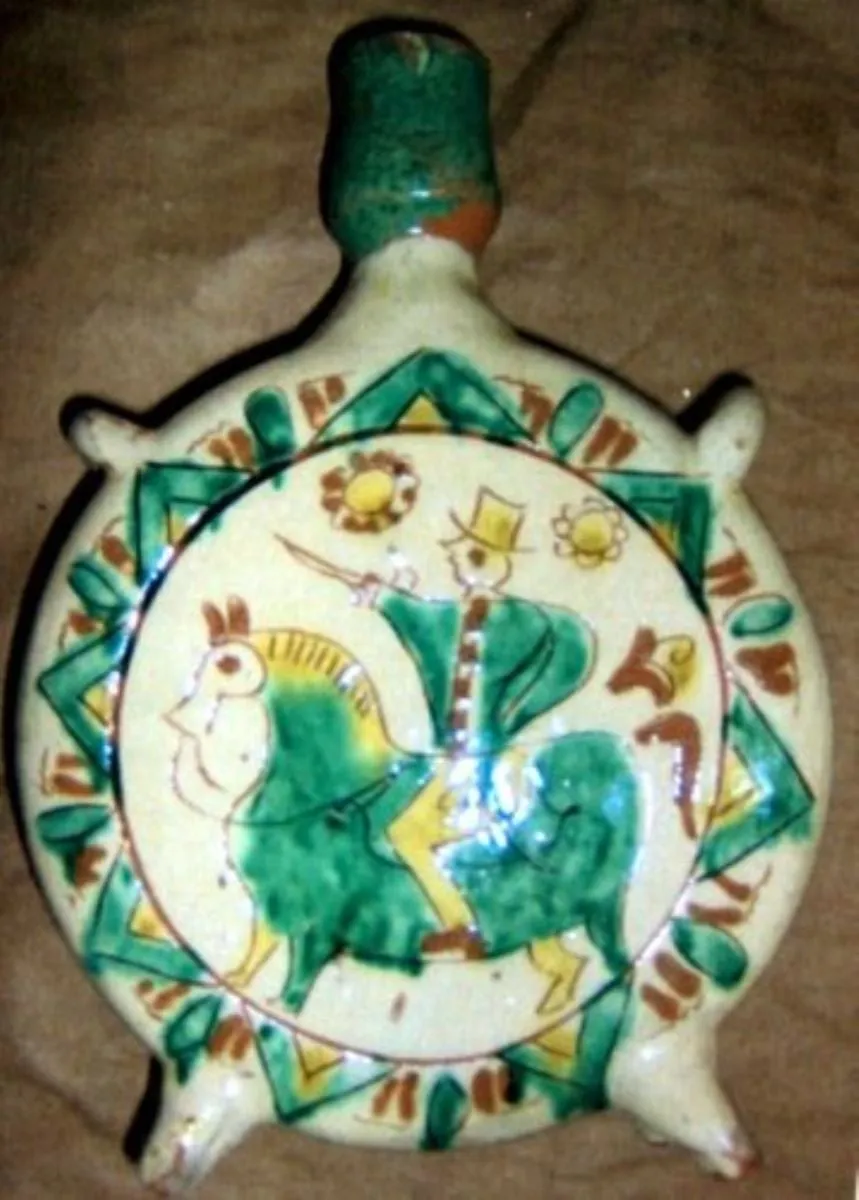
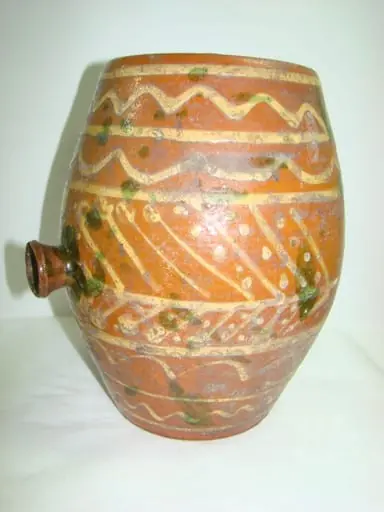
ploscă Kuty is a photography by Unknown. It dates from 1967 and is held in the collection of the National Museum of Bukovina.
About this work
The shell is painted with bright colors—greens, yellows, and reds—and shows a mix of animals: a fish, a rabbit, and a bird.
This looks like a round ceramic plate shaped like a turtle. The shell is painted with bright colors—greens, yellows, and reds—and shows a mix of animals: a fish, a rabbit, and a bird. The turtle’s head and legs stick out from the edges, and the whole thing has a hand-painted border with leafy patterns.
The photo was taken in 1967, and the plate’s style feels old-fashioned but cheerful. The bright colors and simple shapes make it look like something you’d find in a folk art collection.
If you like this, check out the Museum of Ethnography to see more pieces like it.
Overview
Ploscă Kuty is a circular ceramic plate, shaped in the form of a turtle. Its shell features a vibrant, hand-painted design incorporating various animals and foliage, set against a bright color palette.
Subject & Meaning
The plate's subject combines a turtle form with a menagerie of creatures (fish, rabbit, bird) amidst leafy motifs, suggesting a thematic emphasis on nature and possibly folkloric or symbolic narratives, though specific meanings are not explicitly documented.
Technique & Style
Characterized by simple, bold shapes and a cheerful, bright color scheme (greens, yellows, reds), the piece exhibits traits of folk art. The hand-painted border with leafy patterns and the overall aesthetic align with traditional, possibly outdated (by 1967) craftsmanship.
History & Provenance
Photographed in 1967, the plate's exact date of creation is not specified, but its style suggests an earlier origin. Provenance details are not provided, indicating limited documented history prior to the photograph.
Context
The piece would contextualually fit within a folk art collection, sharing similarities with items found in ethnographic museums, such as the referenced Museum of Ethnography.
Legacy
While the plate's individual legacy or influence is not detailed, it represents a type of folk ceramic art that continues to be appreciated for its simplicity, vibrancy, and cultural expression.
Artist & collection
 Domestic Scene
 Giacomo and Cardinal Marco, investing Andrea, Abbot of San Zeno, with his Benefice
 The Nymph of Fontainebleau
 Portrait of a Woman
 Madonna and Child with Saints in the Enclosed Garden
 Venus and Minerva
 Family Group of Four on Sofa
 Wall painting from Room H of the Villa of P. Fannius Synistor at Boscoreale
 Ploscuță kuty
 Cană kuty
 canceu
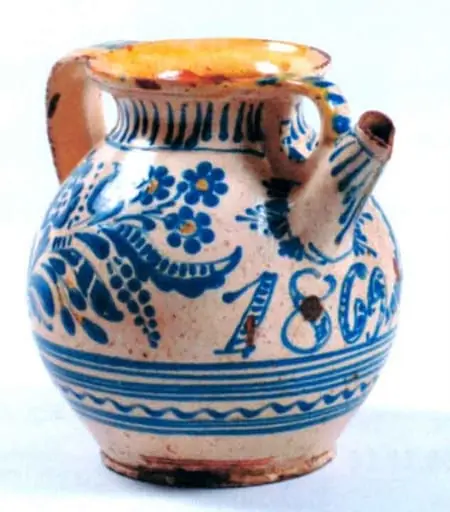 oală de țuică fiartă
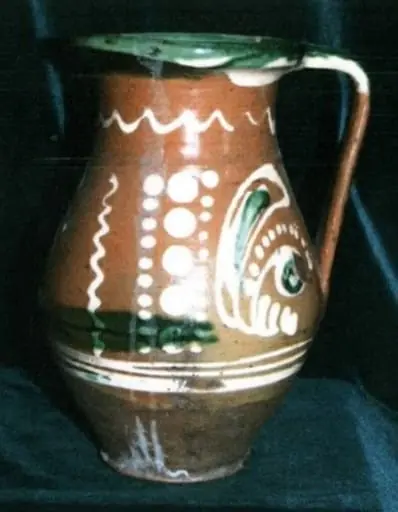 ulcea de lapte
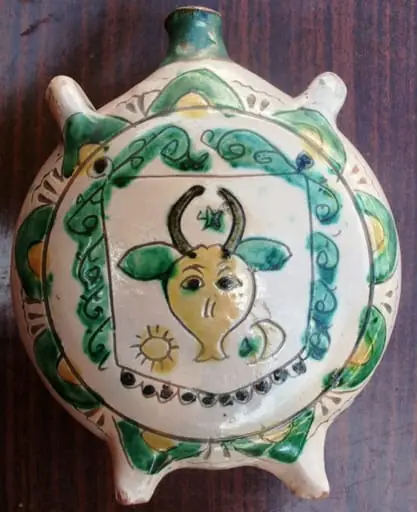
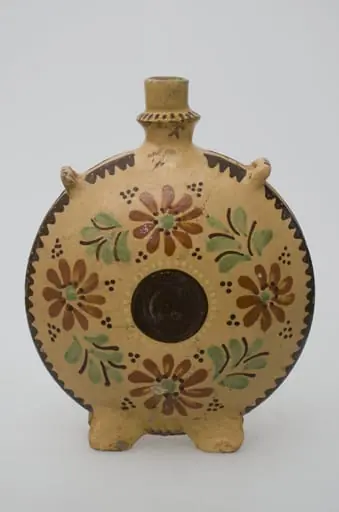 Recipient sferoidal cu gât îngust și patru picioare. Prezintă tortițe lânga gât. Decorat cu motive florale și un disc plasat central, pe ambele fețe. Cromatică: fond: crem; motive: maro închis; verde; mov; galben.
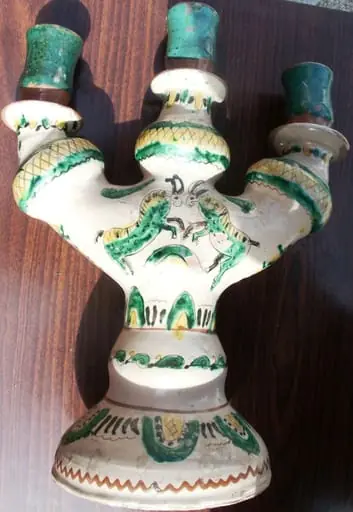 Sfeșnic kuty cu trei brațe
 Fucie
Fucie