Artwork
cană săsească
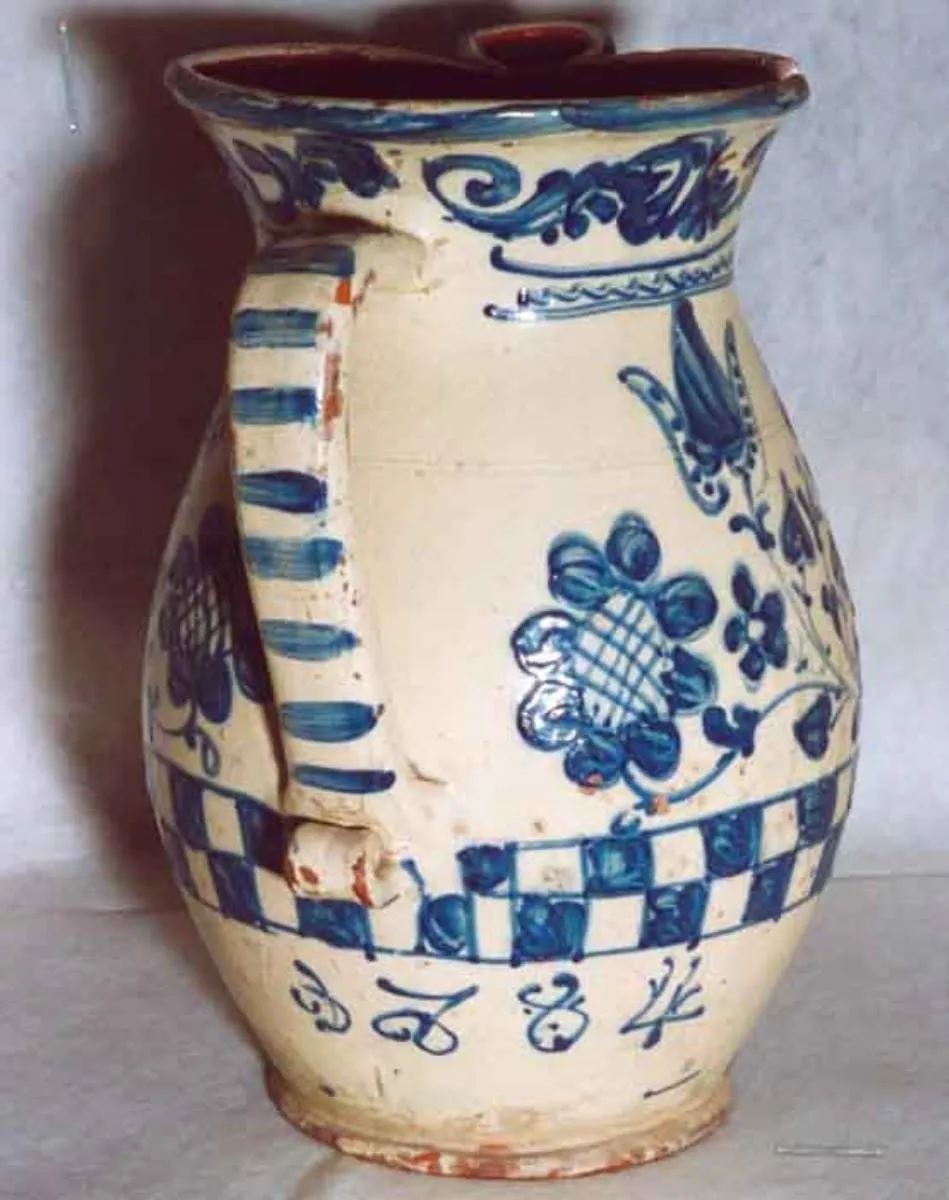
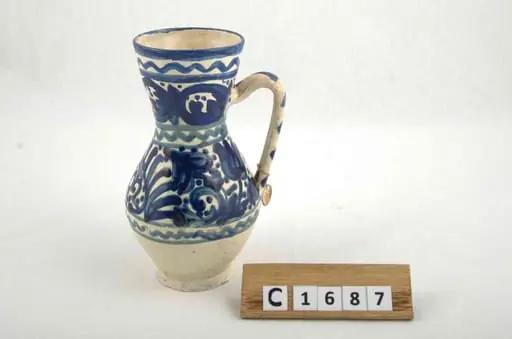
cană săsească is a photography by the Romanticist artist Unknown. It dates from 1784 and is held in the collection of the Romanian Peasant Museum. The object is a ceramic jug of modest size, characterized by a plain beige surface that has acquired a patina of use.
About this work
Overview
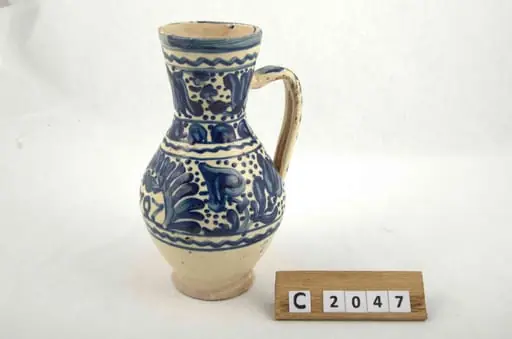
The object is a ceramic jug of modest size, characterized by a plain beige surface that has acquired a patina of use. Its decoration consists of striking blue motifs, including linear bands, swirling forms, a checkerboard pattern near the base, and a stylized grouping of flowers and a bird rendered in crisp outline.
Subject & Meaning
The painted elements combine geometric and natural themes typical of folk visual language. The alternating stripes and checkerboard may reference traditional motifs of order and protection, while the floral cluster and avian figure introduce a pastoral narrative, suggesting a connection to everyday rural life.
Technique & Style
The jug appears to be hand‑thrown and hand‑painted, with the blue pigment applied in a single layer that has faded in places, revealing the underlying glaze. The contrast between the light earthenware body and the bold cobalt‑like lines reflects a folk aesthetic that favors clear, graphic outlines over subtle shading.
History & Provenance
Wear marks and softened paint indicate prolonged functional use, implying the piece served as a household vessel rather than a purely decorative object. Its style aligns with traditional Silesian pottery, suggesting a regional origin in Central Europe during a period when such utilitarian ware was commonly produced in village workshops.
Context
The jug belongs to a broader tradition of folk ceramics that employed simple forms adorned with repetitive geometric patterns and stylized flora and fauna. Similar checkerboard and stripe motifs appear on contemporary pottery from the same area, reflecting shared visual vocabularies among rural artisans.
Artist & collection

 Domestic Scene
 Giacomo and Cardinal Marco, investing Andrea, Abbot of San Zeno, with his Benefice
 The Nymph of Fontainebleau
 Portrait of a Woman
 Madonna and Child with Saints in the Enclosed Garden
 Venus and Minerva
 Family Group of Four on Sofa
 Wall painting from Room H of the Villa of P. Fannius Synistor at Boscoreale