Artwork
ulcior de nuntă
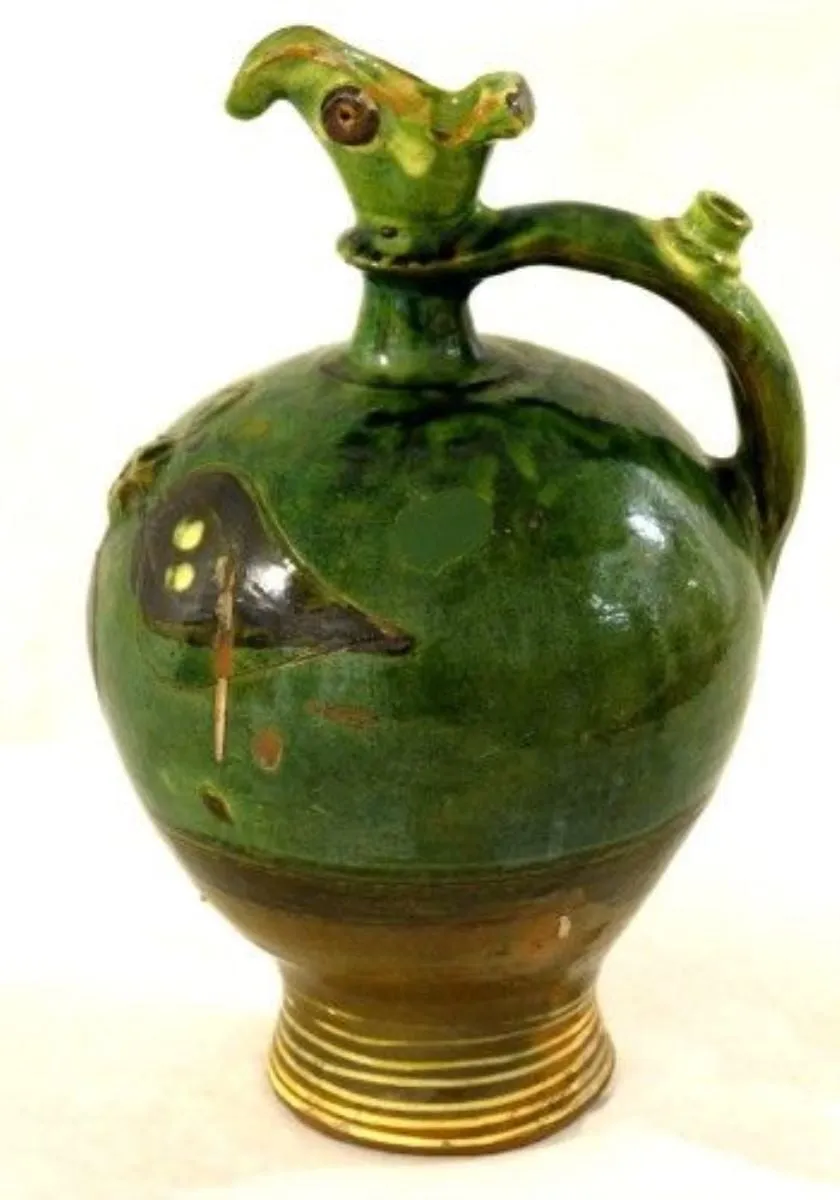
ulcior de nuntă is a photography by Unknown. It dates from 1949 and is held in the collection of the Romanian Peasant Museum.
About this work
Overview
Its form combines functional design with symbolic decoration: a rounded body, dual handles, and a metal-striped base suggest utility and ceremonial importance.
This ceramic jug, known as ulcior de nuntă, is a traditional Romanian vessel associated with wedding rituals. Its form combines functional design with symbolic decoration: a rounded body, dual handles, and a metal-striped base suggest utility and ceremonial importance. The crude, uneven glaze and hand-painted features reflect artisanal methods rather than mass production, emphasizing its cultural roots over polished aesthetics.
Subject & Meaning
The small, rudimentary face on the jug’s surface—two dots for eyes and a curved line for a mouth—may represent a protective spirit or ancestral presence. Such facial motifs in folk pottery often serve apotropaic functions, warding off ill fortune during rites of passage. The ram’s horn handle, a common symbol of fertility and strength in rural traditions, reinforces the object’s connection to marriage and renewal.
Technique & Style
The jug was formed using hand-building techniques, with a greenish glaze applied unevenly, leaving patches of unglazed clay visible. The facial features appear crudely added post-firing, suggesting a later, possibly ritualistic, embellishment. The handles are shaped from separate clay pieces, one functional, the other ornamental, highlighting the blend of utility and symbolism in its construction.
History & Provenance
Ulcior de nuntă objects originate from rural Romanian communities, particularly in Transylvania and Moldavia, where they were used in wedding ceremonies to hold ritual liquids. This example likely dates to the late 19th or early 20th century, a period when such vessels were still made by local potters for domestic use. Its survival suggests it was preserved as a family heirloom rather than discarded after use.
Context
These jugs were part of a broader tradition of folk ceramics tied to seasonal and lifecycle events. Their forms and decorations varied by region but commonly included animal motifs and anthropomorphic elements. Unlike fine porcelain, they were never intended for display alone; their value lay in their participation in communal rituals, linking material culture to social continuity.
Legacy
Though largely replaced by mass-produced items in the 20th century, ulcior de nuntă remain symbols of Romanian folk identity. They are now collected in ethnographic museums and occasionally reproduced for cultural festivals. Their enduring presence reflects a quiet resistance to homogenization, preserving the tactile, imperfect aesthetics of rural craftsmanship.
Artist & collection

 Domestic Scene
 Giacomo and Cardinal Marco, investing Andrea, Abbot of San Zeno, with his Benefice
 The Nymph of Fontainebleau
 Portrait of a Woman
 Madonna and Child with Saints in the Enclosed Garden
 Venus and Minerva
 Family Group of Four on Sofa
 Wall painting from Room H of the Villa of P. Fannius Synistor at Boscoreale
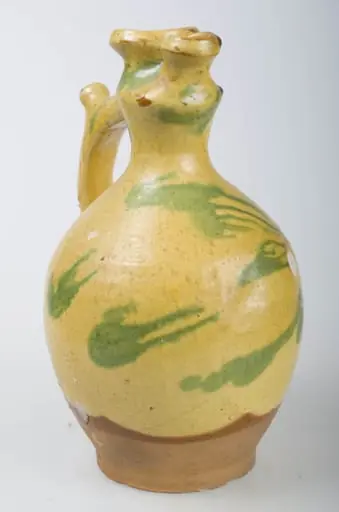 Recipient sferic cu gât îngust, gura bilobată, toartă cu țâță, piatră sunătoare și ciur. Ornamentat prin stropire cu smalț. Cromatică: fond: galben; decor: dungi verzi stropite.
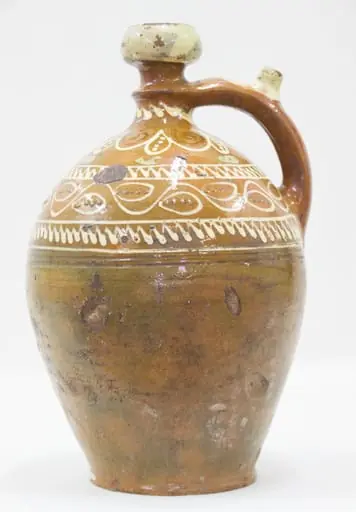 Ulcior de formă bitronconică cu gura îngustă și rotundă, cu o toartă și un orificiu pentru scurgerea lichidului, smălțuit și decorat pe jumătatea superioară cu motive vegetale (ghirlande) și geometrice (spirale; patru cercuri concentrice cu o linie șerpuită între ele).Cromatică: maro (fond), decor - galben, bej, alb, verde. Jumătatea inferioară a obiectului este nesmălțuită.
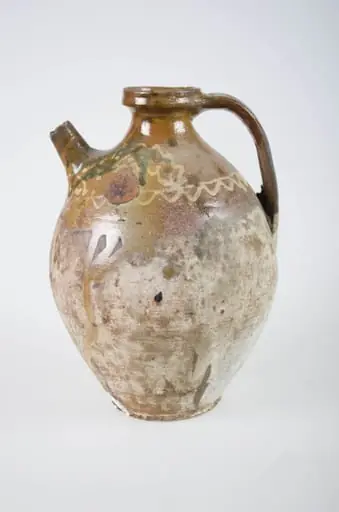 Vas de formă ovoidală cu gât lung, cu gura largă și buza înălțată. Prezintă o toartă care pleacă din gura vasului și se unește cu corpul în zona diametrului maxim. Din umăr, în partea opusă torții pleacă o țâță scurtă (burciuc). Vasul este smălțuit pe exterior în partea superioară unde prezintă și un decor format din motive geometrice: linie și linie în val deasupra cărora se regăsesc motive florale. Cromatica: fond: cărămiziu; motiver: alb-gălbui, verde. Prezintă uzură funcțională.
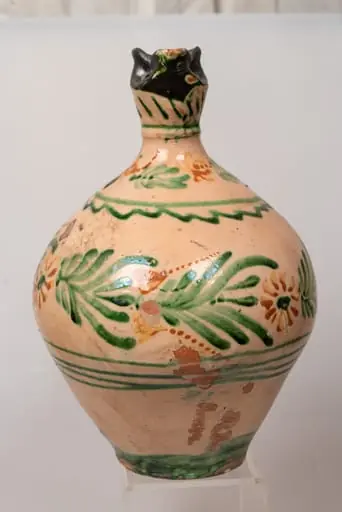 Piesă cu corp sfericl bombat, cu gât profilat, cu gât și gură îngustă, bilobată, cu cior. Din pântecul vasului pornește o toartă tubulară cu orificiu pronunțat pentru băut (cu țâță), care se unește cu vasul sub buza acestuia. Fața exterioară a ulciorului este angobată cu un strat de humă albă, peste care este pictat decorul, cu pensula și cu cornul, astfel: pe partea superioară a vasului, între două grupări de linii concentrice apare o bandă decorată cu motiv floral (o floare rotundă cu multe petale) alternând cu motivul fitomorf caracteristic centrului: frunze alungite, de culoare verde. Pe cant, delimitată de banda decorativă de pe burta vasului de către două linii concentrice, realizate drept și în valuri, este dispusă o bandă decorativă mai îngustă, cu motiv floral și motiv fitomorf delimitat de gât de un brâu colorat. Sub buza bilobată sunt realizate o serie de linii oblice paralele pictate, care continuă pe toată suprafața torții. Fundul vasului este marcat cu o bandă lată orizontală, pictată. Cromatica: alb, maro, verde. Vasul este acoperit cu un strat de smalț transparent.
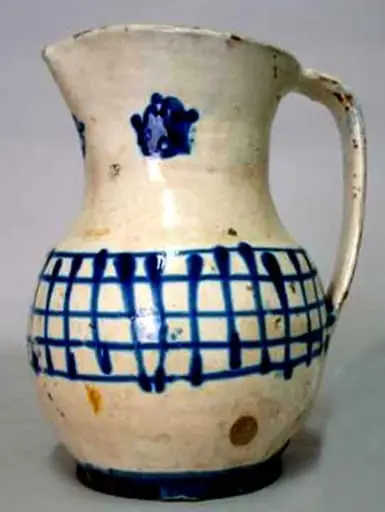 cană de lapte
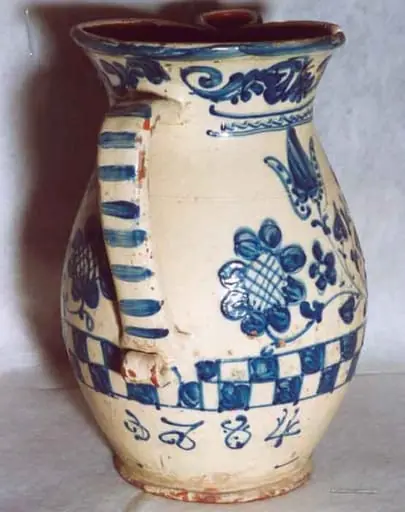 cană săsească
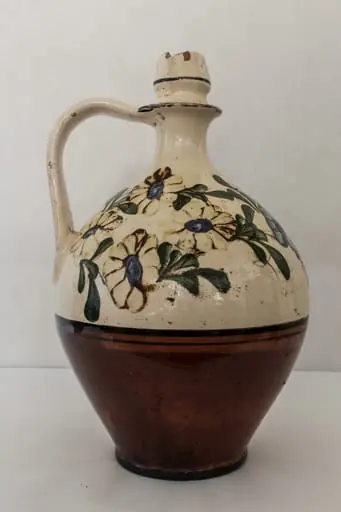 Vas de formă bombată, cu gât îngustat, cu toartă laterală, smălțuit, decorat astfel: pe jumătatea superioară, motive florale și fitomorfe dispuse neuniform, iar pe cea inferioară, un câmp colorat în maro, delimitat de un brâu de culoare neagră. Cromatică: verde, albastru, maro, crem, negru, galben.