Artwork
ulcior
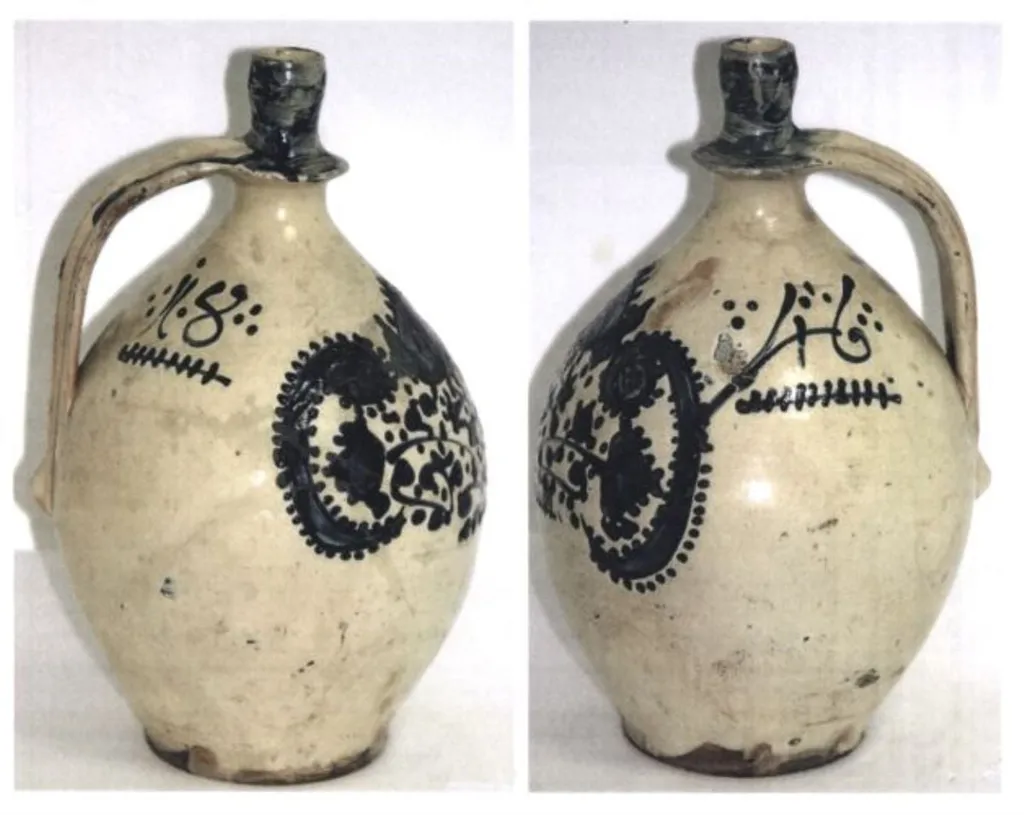
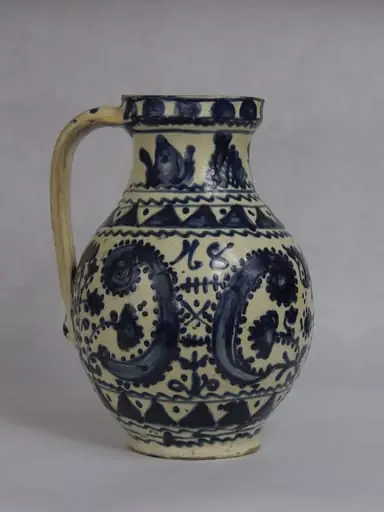
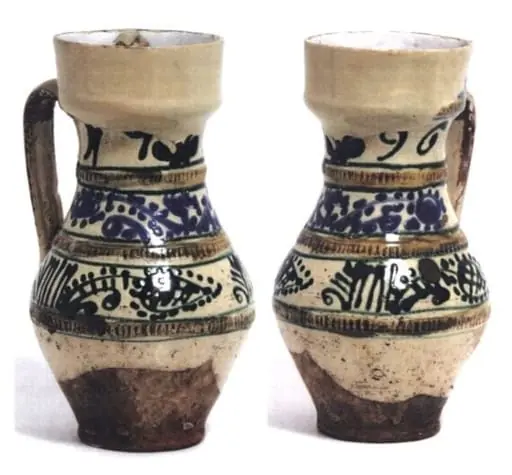
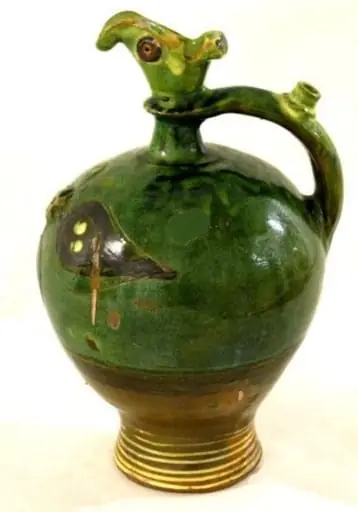
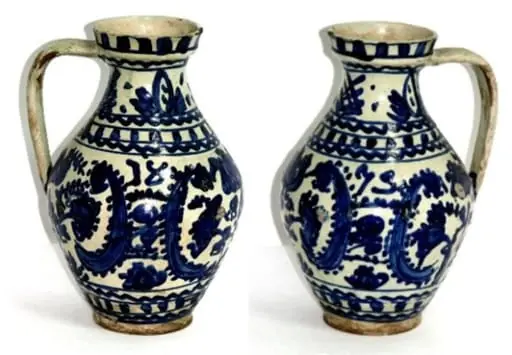
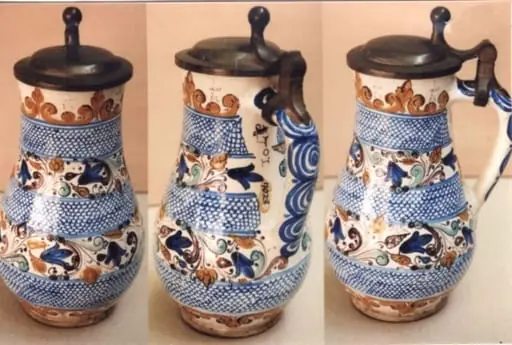
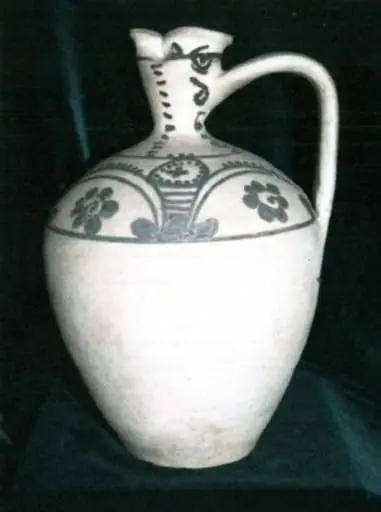
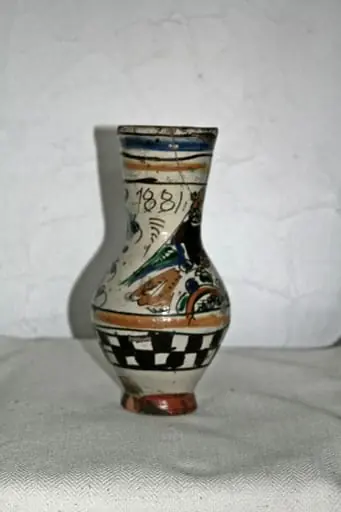
ulcior is a photography by the Romanticist artist Unknown. It dates from 1846 and is held in the collection of the Romanian Peasant Museum. This artifact is a ceramic vessel, likely from an ancient culture that used painted decoration on functional pottery.
About this work
Overview
This artifact is a ceramic vessel, likely from an ancient culture that used painted decoration on functional pottery.
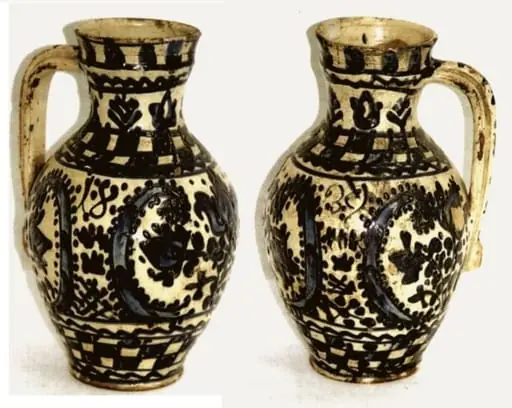
This artifact is a ceramic vessel, likely from an ancient culture that used painted decoration on functional pottery. Its form includes a rounded body and two side handles, typical of storage or transport containers. Surface wear and faint pigment suggest prolonged use and age. The decoration consists of two distinct panels: one with a circular wavy motif, the other with linear symbols and dot patterns, both executed in dark pigment on a light clay ground.
Subject & Meaning
The imagery on the vessel combines abstract geometric patterns with what may be symbolic or proto-writing marks. The circular wavy design could represent water, motion, or cosmological concepts, while the linear elements with dots may denote ownership, ritual use, or a form of early notation. These signs likely held cultural significance beyond aesthetics, possibly tied to communal identity or ceremonial practice.
Technique & Style
The vessel was hand-formed from coarse clay and fired to achieve durability. Pigments, likely iron oxide or charcoal-based, were applied before firing to create durable black designs. The brushwork is deliberate but not refined, indicating a functional rather than elite artistic tradition. The fading of paint and surface abrasions reflect both aging and regular handling over time.
History & Provenance
Though exact origin is unconfirmed, the vessel’s form and decoration align with prehistoric or early historic pottery traditions from regions where such painted ceramics were common. It was likely produced in a local workshop and used in domestic or communal settings. Its current location suggests it entered a museum collection through archaeological recovery or donation, though its specific excavation history is not documented here.
Context
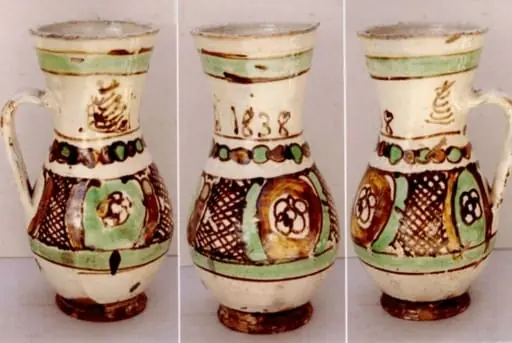
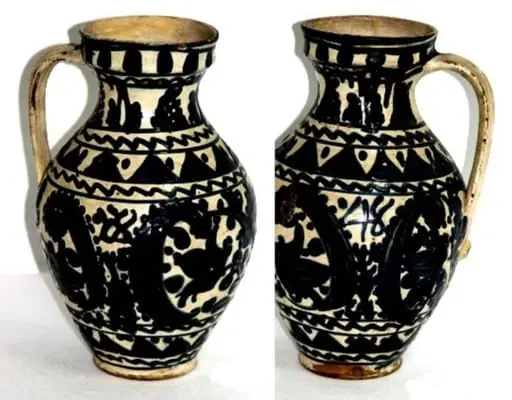
This jug belongs to a broader category of utilitarian ceramics found across ancient societies, where decoration served both aesthetic and communicative roles. Similar vessels appear in archaeological records from the Near East, Mediterranean, and parts of Europe, often associated with storage, trade, or ritual. Its design reflects a period before widespread literacy, where visual symbols conveyed meaning within a shared cultural framework.
Legacy
As a preserved example of early material culture, this vessel contributes to understanding how ancient communities expressed identity and function through everyday objects. Its survival allows modern viewers to engage with non-textual communication systems and the craftsmanship of pre-industrial societies. It remains a quiet witness to practices now lost, preserved only through physical remnants.
Artist & collection

 Domestic Scene
 Giacomo and Cardinal Marco, investing Andrea, Abbot of San Zeno, with his Benefice
 The Nymph of Fontainebleau
 Portrait of a Woman
 Madonna and Child with Saints in the Enclosed Garden
 Venus and Minerva
 Family Group of Four on Sofa
 Wall painting from Room H of the Villa of P. Fannius Synistor at Boscoreale