Artwork
花見・紅葉狩図屏風|Cherry-Blossom and Maple-Leaf Viewing
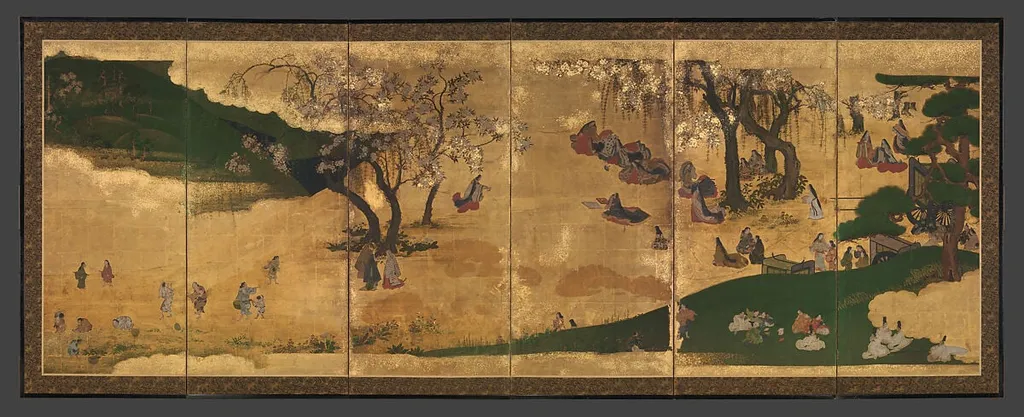
花見・紅葉狩図屏風|Cherry-Blossom and Maple-Leaf Viewing is an ink painting by the Renaissance artist Unknown. It dates from 1634 and is held in the collection of the Metropolitan Museum of Art. The work consists of two six‑panel folding screens depicting seasonal gatherings.
About this work
Overview
The work consists of two six‑panel folding screens depicting seasonal gatherings. The left screen presents a riverside scene under blooming cherry trees, while the right screen shows a group of figures beneath turning maple leaves. Both screens are rendered on gilded paper, creating a luminous backdrop that unifies the two complementary seasonal motifs.
Subject & Meaning
The panels illustrate traditional Japanese pastimes of hanami (cherry‑blossom viewing) and momijigari (maple‑leaf viewing). Figures are shown in relaxed poses—sitting, strolling, playing music—emphasizing communal appreciation of nature’s transient beauty and the cultural importance of seasonal change.
Technique & Style
Executed with ink, mineral pigments, and gold leaf on gilt paper, the screens combine vivid costume colors with subdued greens and gold tones. The artist employs delicate line work for the figures and a flat, decorative treatment of foliage, allowing the gilded background to convey a sense of richness without sacrificing the scene’s calm atmosphere.
Context
Folding screens of this type were popular in the Edo period for both decorative and functional purposes, often displayed in aristocratic or temple settings during seasonal festivals. The juxtaposition of cherry and maple motifs reflects the Japanese aesthetic principle of juxtaposing opposing yet complementary elements to evoke a harmonious seasonal narrative.
Artist & collection

 Domestic Scene
 Giacomo and Cardinal Marco, investing Andrea, Abbot of San Zeno, with his Benefice
 The Nymph of Fontainebleau
 Portrait of a Woman
 Madonna and Child with Saints in the Enclosed Garden
 Venus and Minerva
 Family Group of Four on Sofa
 Wall painting from Room H of the Villa of P. Fannius Synistor at Boscoreale
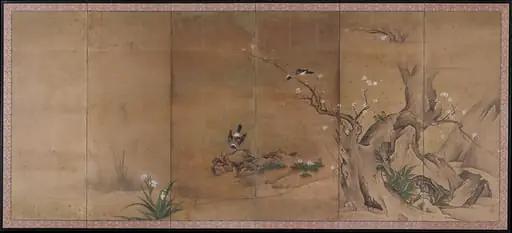 狩野山卜筆四季花鳥図屏風|Birds and Flowers of the Four Seasons
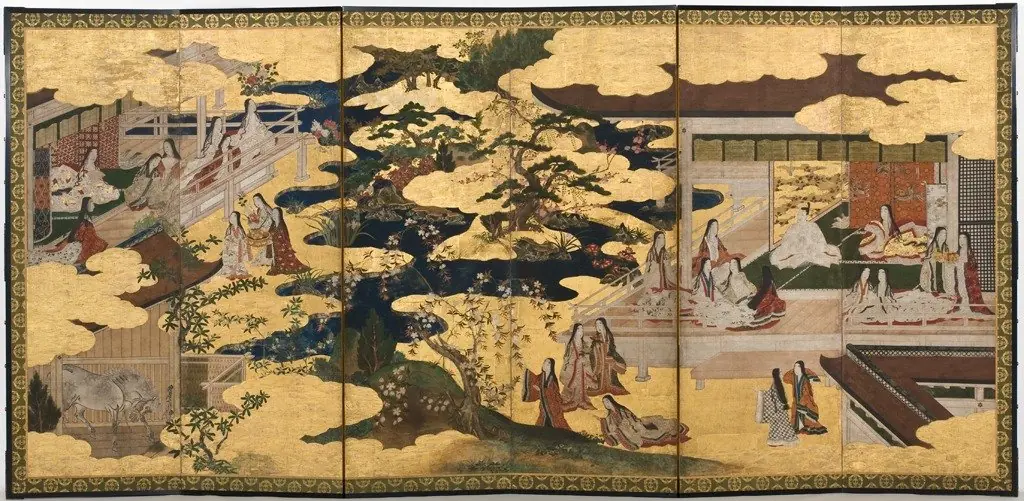 Scene from "The Tale of Genji": from the chapter "The Maiden"
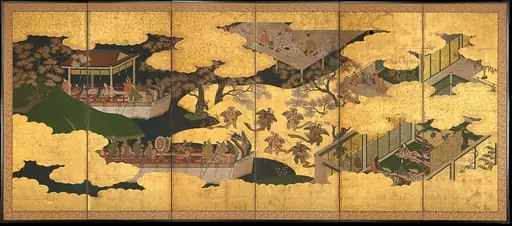 源氏物語図屏風 (胡蝶)|“Butterflies”
 平家物語図屏風 「小督」 「大原御幸」|"Kogō" and "The Imperial Procession to Ōhara", from The Tale of the Heike (Heike monogatari)
 Scenes from the Tale of Genji
 Ivy Lane
 狩野周信筆 七福神唐子図屏風|Seven Gods of Good Fortune and Chinese Children