Artwork
厳島吉野花見図屏風|Cherry Blossom Viewing at Itsukushima and Yoshino
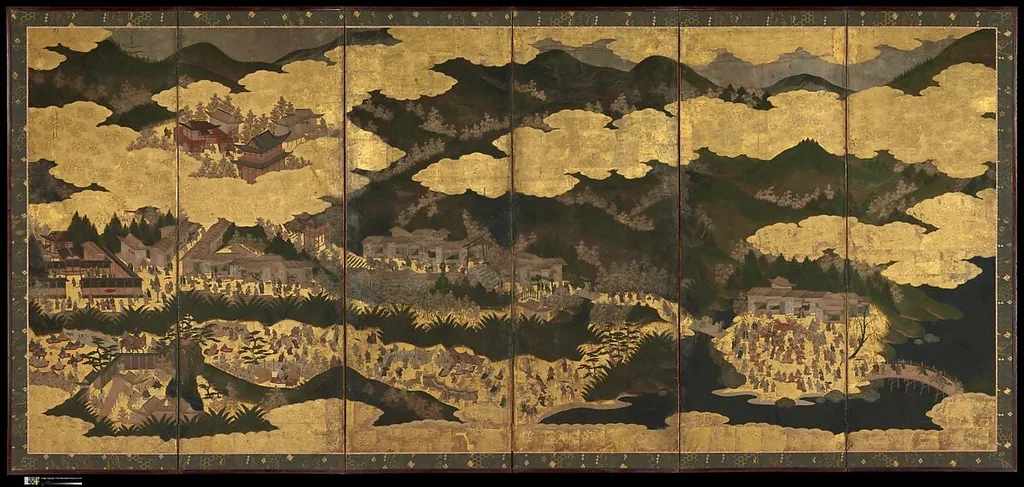
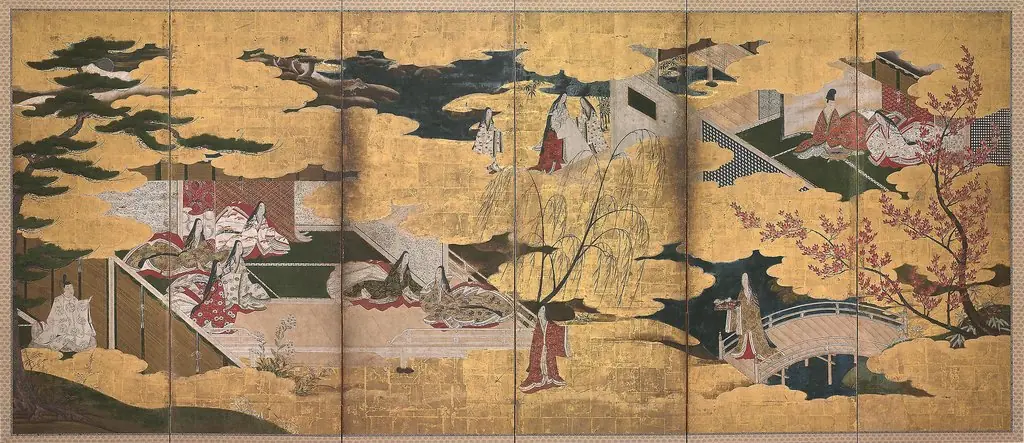
厳島吉野花見図屏風|Cherry Blossom Viewing at Itsukushima and Yoshino is an ink painting by the Ming dynasty painting artist Unknown. It dates from 1635 and is held in the collection of the Metropolitan Museum of Art.
About this work
Overview
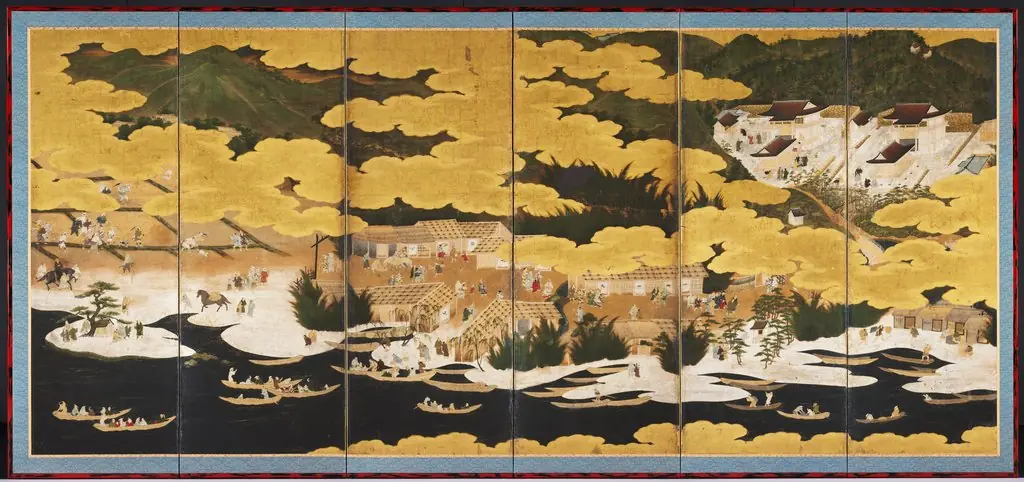
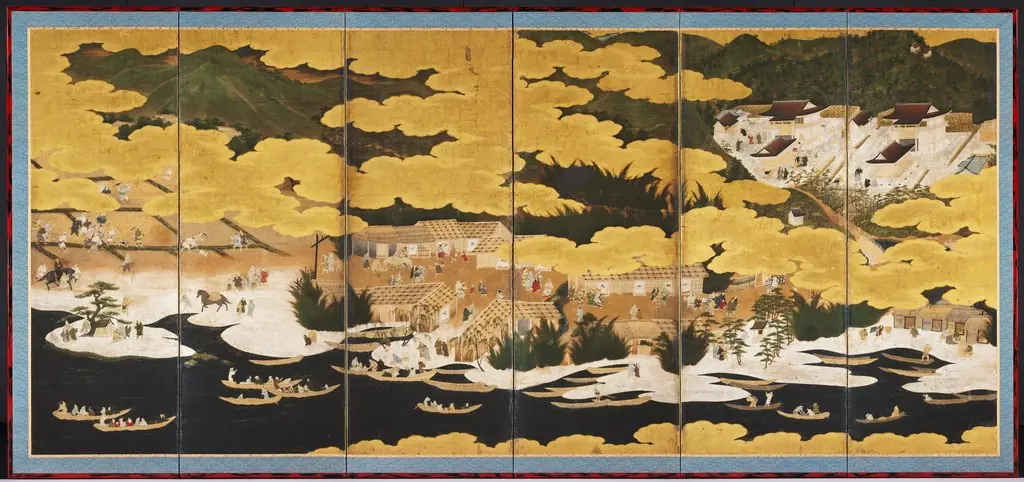
The work consists of a pair of six‑panel byōbu, traditional Japanese folding screens, depicting a springtime scene of cherry‑blossom viewing at Itsukushima and Yoshino. Executed in ink, pigments and gold leaf on paper, the panels present a panoramic landscape populated by modest dwellings, trees in full bloom and figures engaged in festive observation.
Subject & Meaning
The composition illustrates the seasonal practice of hanami, the communal appreciation of cherry blossoms, linking two renowned sites—Itsukushima, famed for its torii gate, and Yoshimo, celebrated for its mountain vistas. The inclusion of ordinary houses and lively participants underscores the cultural importance of nature’s transience and collective celebration in Japanese society.
Technique & Style
Ink outlines are combined with delicate color washes, while gold leaf highlights accentuate the blossoms and architectural elements, catching ambient light. The division into six panels creates a rhythmic progression across the screen, allowing for layered perspective and atmospheric depth typical of Edo‑period screen painting.
Context
Screen paintings of this type were often used as decorative partitions in aristocratic or temple settings, providing both aesthetic pleasure and a narrative of seasonal rites. By portraying two distinct locales, the work reflects a broader interest in travel literature and the visual cataloguing of Japan’s celebrated landscapes during the period.
Artist & collection

 Domestic Scene
 Giacomo and Cardinal Marco, investing Andrea, Abbot of San Zeno, with his Benefice
 The Nymph of Fontainebleau
 Portrait of a Woman
 Madonna and Child with Saints in the Enclosed Garden
 Venus and Minerva
 Family Group of Four on Sofa
 Wall painting from Room H of the Villa of P. Fannius Synistor at Boscoreale
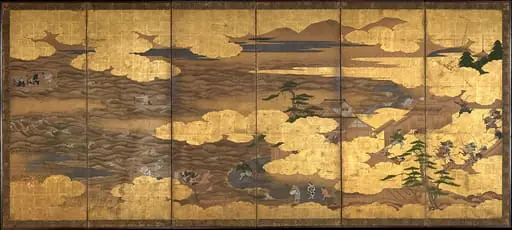 新曲図屏風|“Takebun,” from the Musical Drama “The New Piece” (“Shinkyoku”)
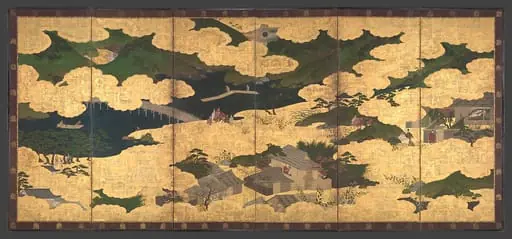 平家物語図屏風 「小督」 「大原御幸」|"Kogō" and "The Imperial Procession to Ōhara", from The Tale of the Heike (Heike monogatari)
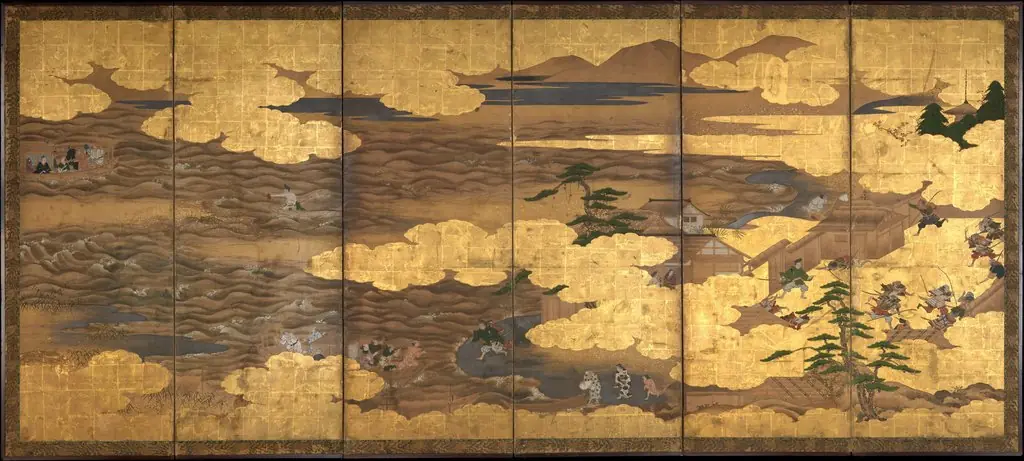 “Takebun,” from the Musical Drama “The New Piece” (Shinkyoku)
 Famous Views of Ōmi
 Famous Views of Ōmi
 Scenes from the Tale of Genji
 源氏物語図屏風 (胡蝶)|“Butterflies”
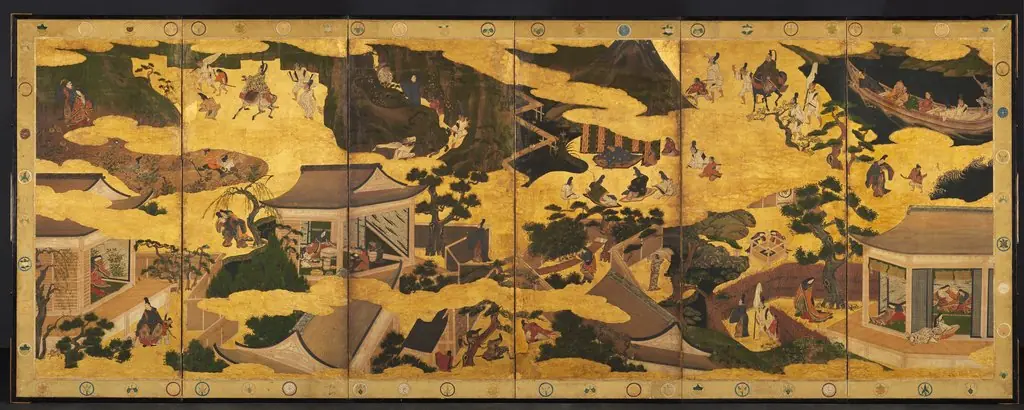 Scenes from the Tales of Ise
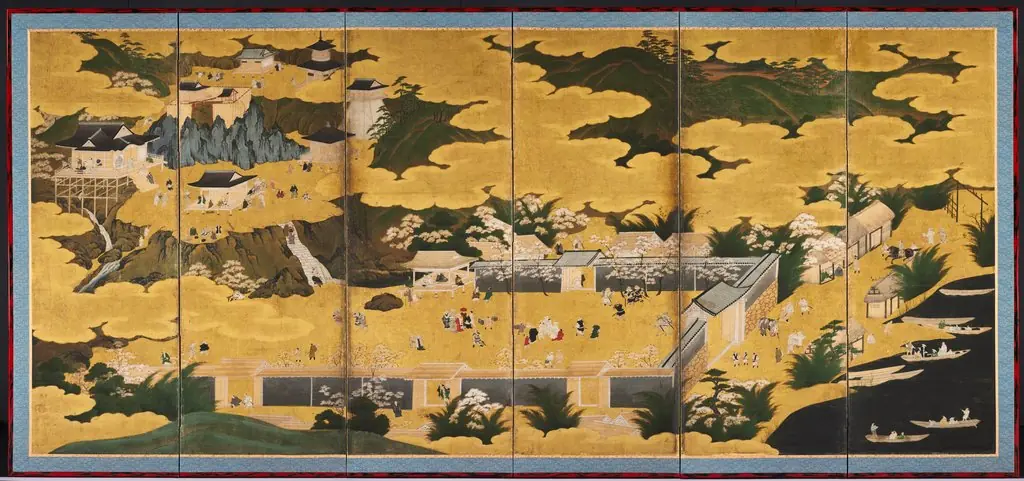 Famous Views of Ōmi
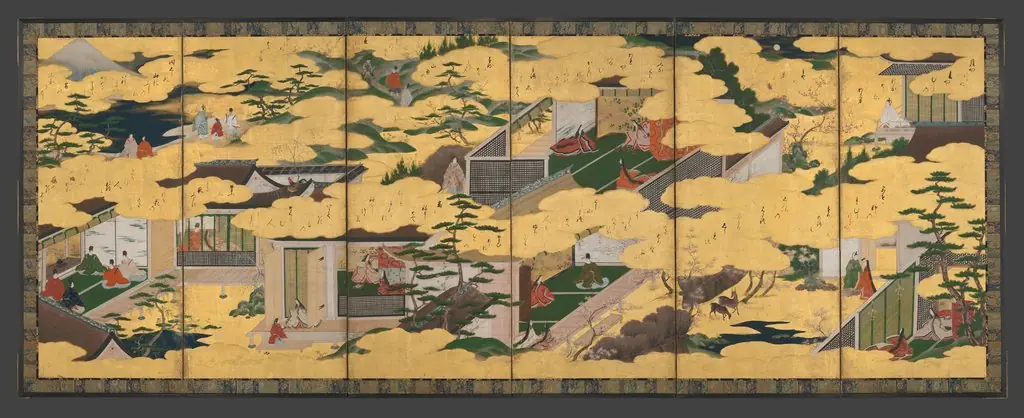 Scenes from the Tales of Ise
 Views of Kyoto
 The Tale of Genji