Artwork
Winter Day
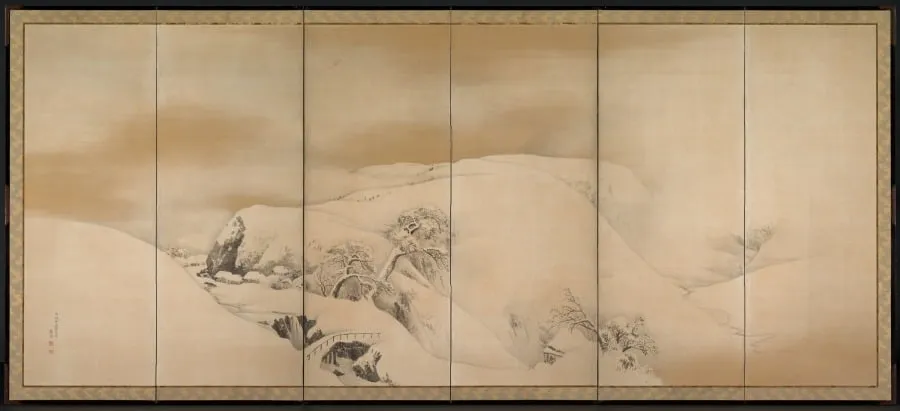
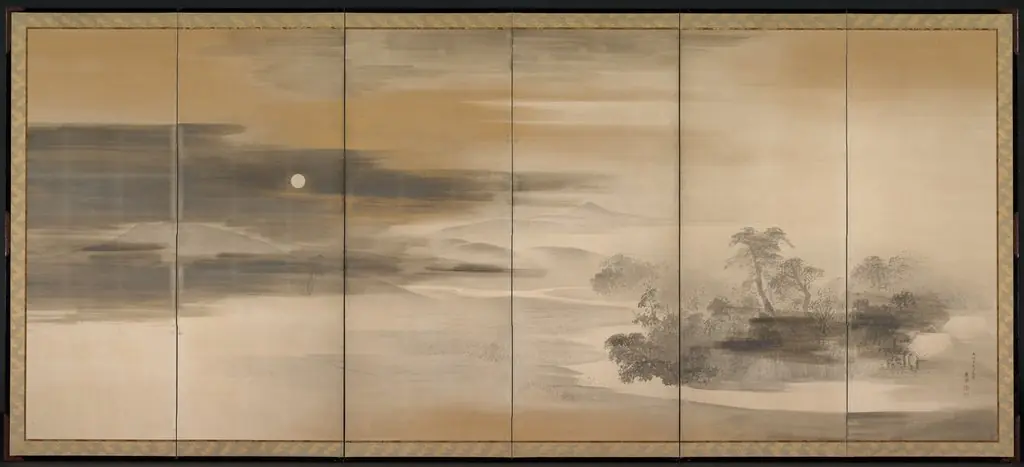
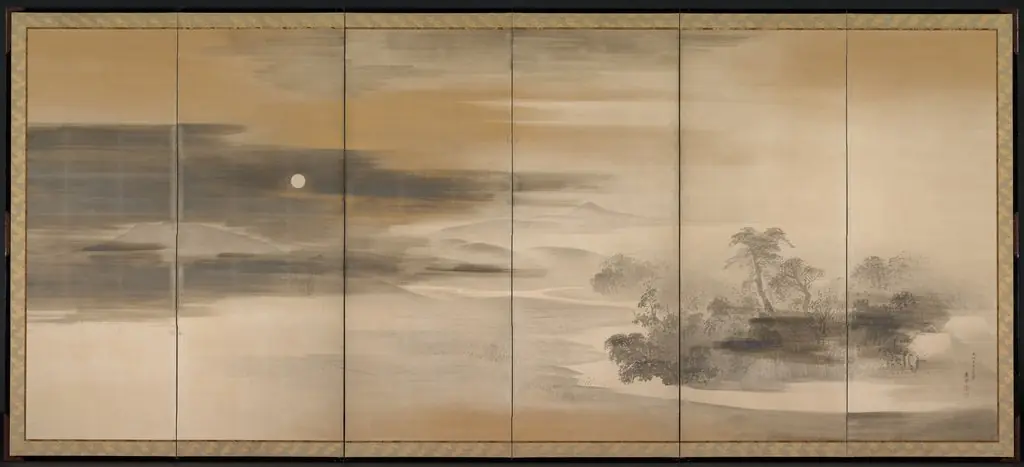
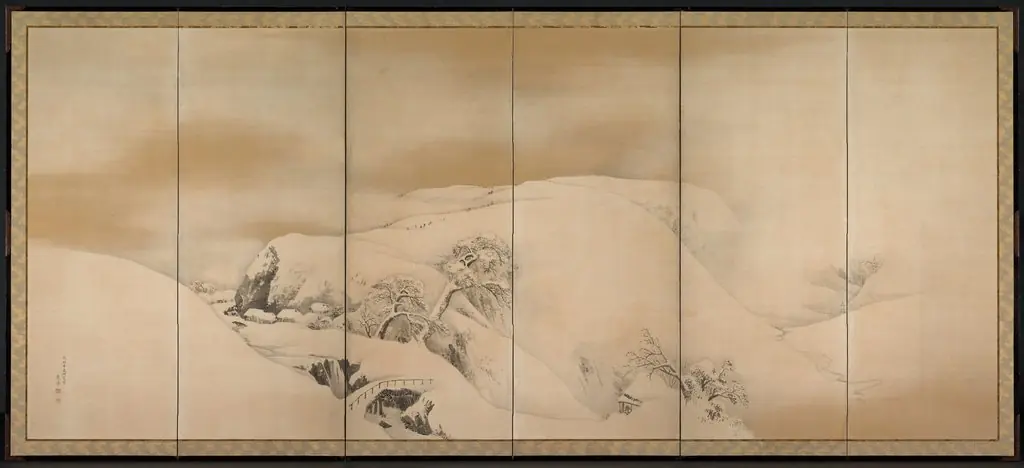
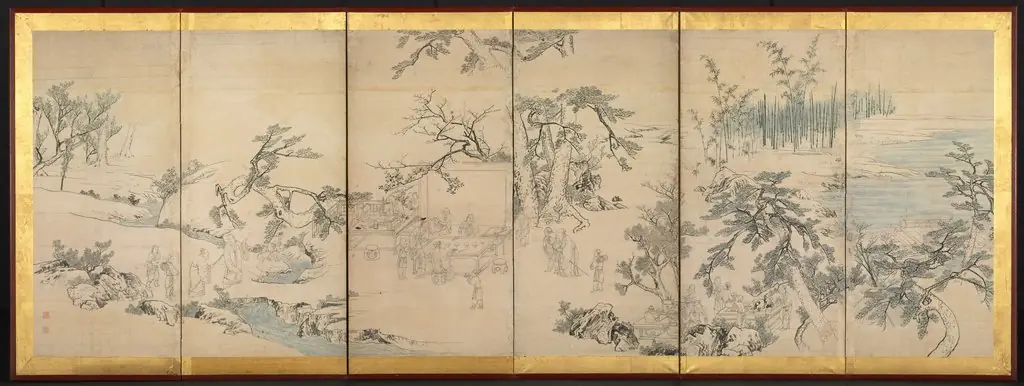
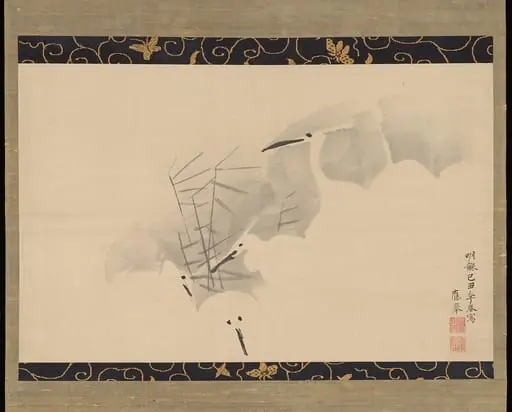
Winter Day is an unspecified painting by the Nihonga artist Maruyama Ōkyo 円山応挙. It dates from 1784 and is held in the collection of the Cleveland Museum of Art. Maruyama Ōkyo created this ink-and-color scroll in the summer of 1784, capturing a winter landscape near Kyoto.
About this work
The trees look real, but the scene feels calm and distant, like nature isn’t just background—it’s the whole story.
This 1784 scroll shows a quiet snowy path between bare trees under a pale sky. A lone figure walks, small against the wide, white world.
Ōkyo blended Western realism with Japanese tradition. He studied nature closely, then painted it with almost scientific detail. The trees look real, but the scene feels calm and distant, like nature isn’t just background—it’s the whole story.
This feels like Japanese art from the Edo period. Look up Maruyama Ōkyo (Japanese, 1733–1795) for more.
Overview
Maruyama Ōkyo created this ink-and-color scroll in the summer of 1784, capturing a winter landscape near Kyoto. Though painted during warmer months, the scene conveys the stillness of snowfall through precise observation. Ōkyo, a leading figure in Kyoto’s art world, synthesized Western naturalism with Japanese aesthetic traditions, producing works that felt both scientifically grounded and emotionally restrained.
Subject & Meaning
A solitary figure moves along a snow-covered path between bare trees, dwarfed by the vast, pale expanse of sky and earth. The composition minimizes human presence, emphasizing nature’s quiet dominance. Rather than depicting activity or narrative, the scene invites contemplation of solitude and the impermanence of seasons, aligning with Edo-period sensibilities that valued subtlety over drama.
Technique & Style
Ōkyo employed meticulous brushwork to render individual branches, snow-laden foliage, and atmospheric haze with near-scientific accuracy. He integrated Western-inspired perspective and tonal gradation with the ink-wash traditions of Yamato-e, avoiding bold outlines in favor of soft transitions. The result is a landscape that feels observed rather than imagined, yet retains the spatial ambiguity characteristic of Japanese scroll painting.
History & Provenance
Painted during Ōkyo’s mature period, this scroll emerged from his Kyoto studio, where he trained a generation of artists through his Maruyama school. It was likely commissioned by a patron familiar with his reputation for blending realism with poetic restraint. The work remained within Japanese collections, preserving its original format as a hanging scroll, consistent with Edo-period display practices.
Context
In late 18th-century Kyoto, artistic innovation flourished amid growing interest in empirical observation. Ōkyo’s engagement with Western prints and scientific illustration coincided with broader cultural shifts, yet he resisted overt Westernization. His landscapes reflect a uniquely Japanese synthesis: nature studied closely, but not dominated—presented as an enduring, indifferent force.
Legacy
Ōkyo’s approach influenced subsequent generations of Japanese painters who sought to reconcile realism with traditional composition. His winter scenes became touchstones for later artists exploring mood through minimalism and natural detail. Though not widely exhibited outside Japan, his methods helped redefine the possibilities of ink painting in the Edo period’s final decades.
Artist & collection