Artwork
Church of Nestorian Christians Cochanez Kurdistan the seat of their Patriarchabout 1850
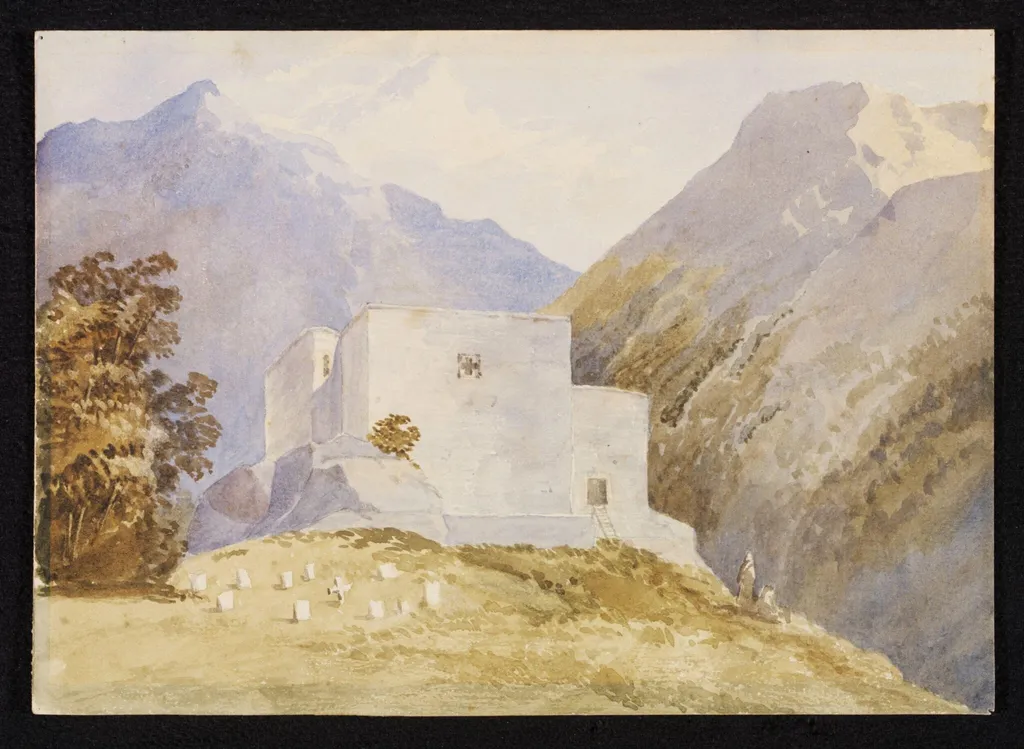
Church of Nestorian Christians Cochanez Kurdistan the seat of their Patriarchabout 1850 is a watercolor work on paper by the Impressionist artist Unknown. It dates from 1850 and is held in the collection of the Victoria and Albert Museum.
About this work
Overview
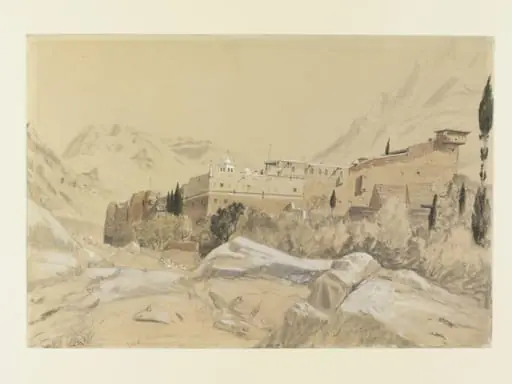
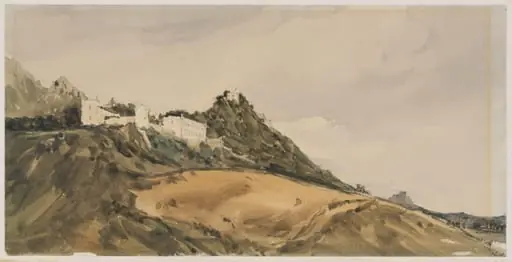
The watercolour portrays the Nestorian church that functioned as the patriarchal seat in the mid‑nineteenth century at Qudshanis, a remote mountain settlement in what is now Hakkari Province, Turkey. The work dates to around 1850 and records the building’s position on a hillside amid trees and distant peaks.
Subject & Meaning
At the centre of the composition stands a white, square‑based structure topped by a smaller cube, accessed by a modest doorway and a ladder. The edifice represents the ecclesiastical headquarters of the Assyrian (Nestorian) community, reflecting the religious and administrative role of Qudshanis for the patriarchate.
Technique & Style
Executed in muted browns and greys, the watercolour employs loose, expressive brushwork that conveys a sense of atmospheric movement. Light and shadow are rendered to model the building and its surroundings, creating depth without detailed realism, a quality reminiscent of early impressionistic approaches.
History & Provenance
The depicted church was historically the seat of the Assyrian Patriarch before the area was incorporated into modern Turkey. The artwork, created circa 1850, likely originated from a European or missionary observer documenting the remote community’s architecture and landscape.
Context
Qudshanis, known by several variant spellings, lay roughly twenty kilometres northeast of the town of Hakkari. In the nineteenth century it served as the spiritual centre for Nestorian Christians, a group maintaining distinct liturgical traditions within the broader Ottoman realm.
Artist & collection

 Domestic Scene
 Giacomo and Cardinal Marco, investing Andrea, Abbot of San Zeno, with his Benefice
 The Nymph of Fontainebleau
 Portrait of a Woman
 Madonna and Child with Saints in the Enclosed Garden
 Venus and Minerva
 Family Group of Four on Sofa
 Wall painting from Room H of the Villa of P. Fannius Synistor at Boscoreale