Artwork
Scene din viața lui Iisus și a Maicii Domnului
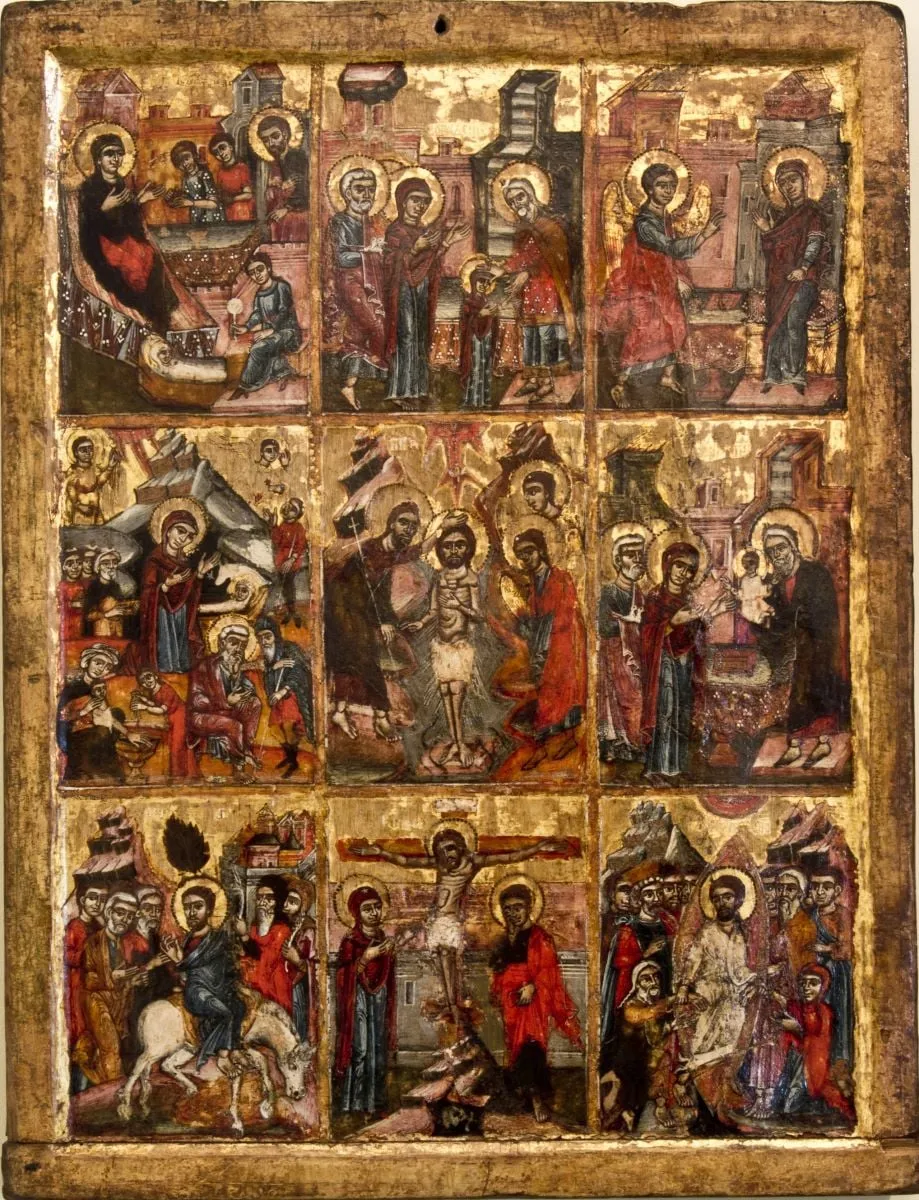
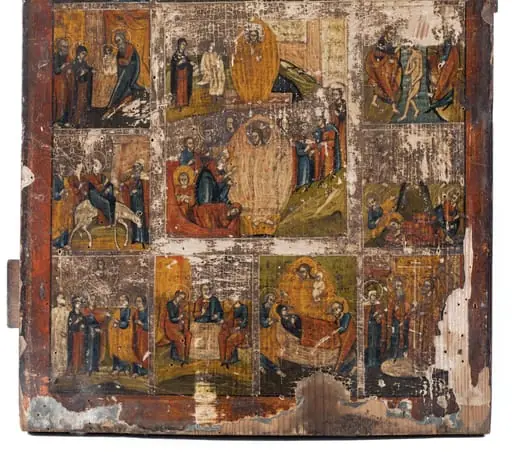
Scene din viața lui Iisus și a Maicii Domnului is a drawing by Unknown. It dates from 1850 and is held in the collection of the National Museum of Art of Romania. This painted panel presents nine narrative scenes from the life of Jesus and the Virgin Mary, arranged in a grid of three rows.
About this work
Overview
This painted panel presents nine narrative scenes from the life of Jesus and the Virgin Mary, arranged in a grid of three rows.
This painted panel presents nine narrative scenes from the life of Jesus and the Virgin Mary, arranged in a grid of three rows. The imagery is compact and orderly, with each episode framed within a uniform space. Figures are rendered in a stylized, two-dimensional manner, lacking naturalistic perspective or depth. The palette relies on deep reds, rich blues, and gold accents, though pigment degradation has softened many tones over time.
Subject & Meaning
The scenes depict key moments from Christian tradition, including the Nativity, the Adoration of the Magi, and the Crucifixion, arranged to guide devotional contemplation. Each episode is identified by its composition rather than text, relying on familiar iconography. Halos denote sanctity, and the sequential layout invites viewers to trace sacred history from birth to resurrection, reinforcing theological narratives for a largely illiterate audience.
Technique & Style
The figures are painted with minimal modeling, their forms defined by flat planes and outlined contours rather than chiaroscuro. Facial features are simplified, with eyes and mouths rendered as small, uniform shapes. Gold leaf highlights halos and garments, while the background is often left unmodeled. The lack of spatial depth and consistent scale across scenes reflects a medieval aesthetic prioritizing symbolic clarity over realism.
History & Provenance
The panel likely originated in a religious setting, possibly an altar piece or devotional object in a monastery or parish church. Its condition suggests prolonged exposure to light, smoke, and handling, typical of liturgical art used over centuries. No documented ownership history survives, but its style aligns with late medieval Eastern European or Balkan icon traditions, dating roughly to the 14th or 15th century.
Context
Created during a period when religious imagery served as both instruction and devotion, the panel reflects a tradition where biblical stories were visually codified for communal worship. Unlike Renaissance innovations in perspective, this work adheres to Byzantine-derived conventions, emphasizing spiritual presence over physical realism. Its format echoes portable altarpieces used in private prayer or processional rituals.
Legacy
Though not widely known outside regional collections, the panel exemplifies the enduring influence of medieval iconography in Eastern Christian communities. Its preservation offers insight into how sacred narratives were visually transmitted before widespread literacy. The stylistic consistency across scenes underscores a deliberate adherence to established models, resisting naturalistic trends that emerged elsewhere in Europe.
Artist & collection

 Domestic Scene
 Giacomo and Cardinal Marco, investing Andrea, Abbot of San Zeno, with his Benefice
 The Nymph of Fontainebleau
 Portrait of a Woman
 Madonna and Child with Saints in the Enclosed Garden
 Venus and Minerva
 Family Group of Four on Sofa
 Wall painting from Room H of the Villa of P. Fannius Synistor at Boscoreale
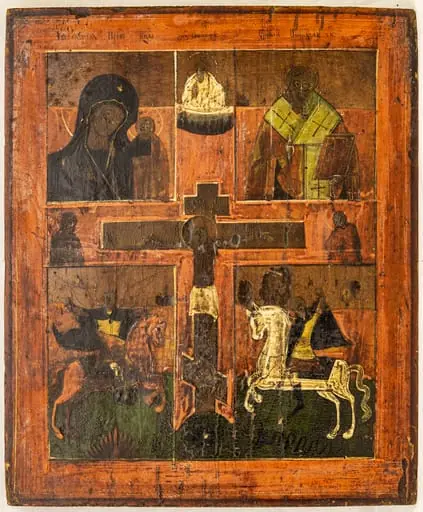 Icoană în patru registre, în centru Iisus Crucificat
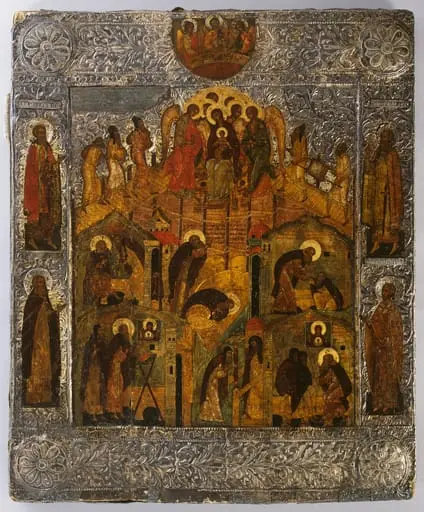 Neitsyt Marian ilmestyminen pyhittäjä Aleksanteri Syväriläiselle kirkon perustuksella
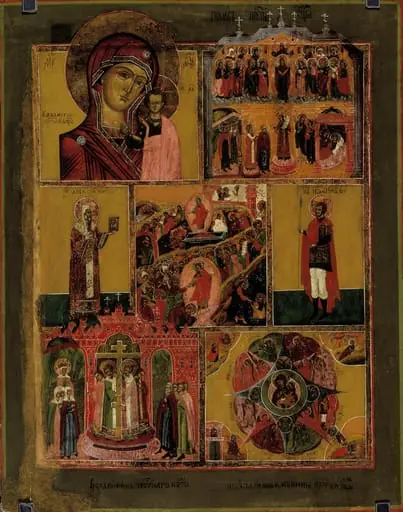 Pääsiäinen ja kirkkovuoden juhlia, venäläinen ikoni
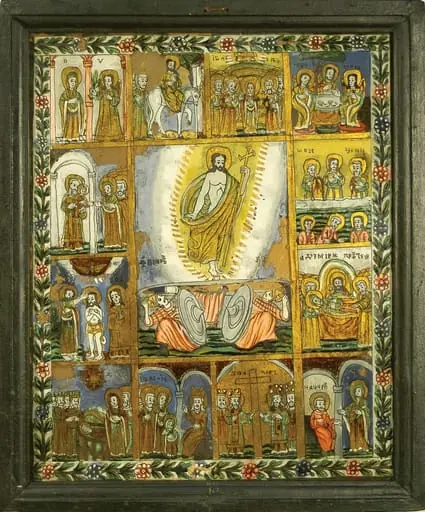 Învierea lui Iisus, cu 12 scene de praznic
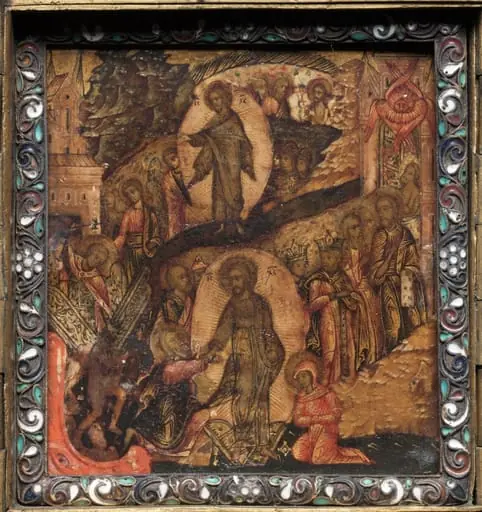 Portable Triptych Icon: The Resurrection and Anastasis
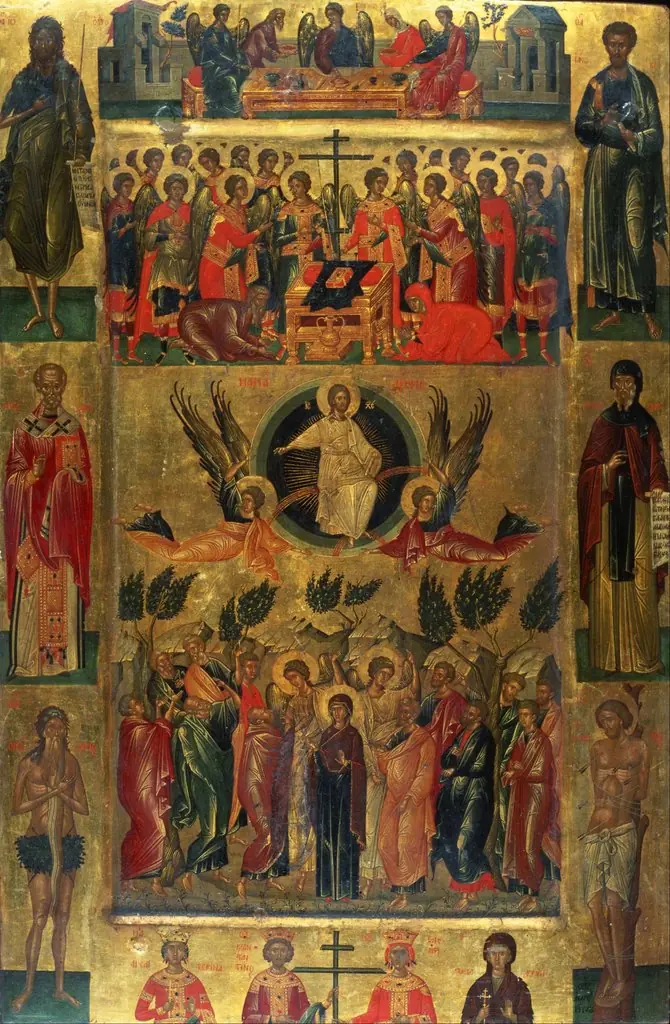 Ascension of Christ with the Hetoimasia
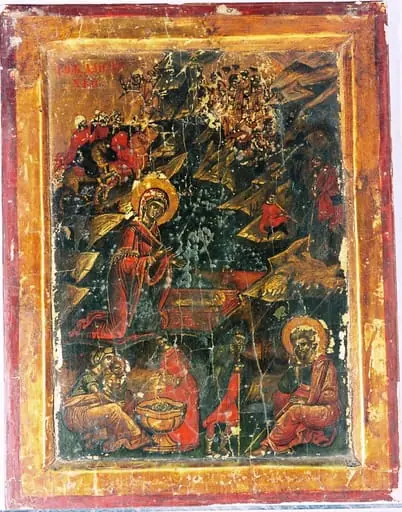 NASTEREA LUI IISUS
 Scene biblice
 Acoperământul Maicii Domnului; Pocrovul