Artwork
Cina de la Mamvri
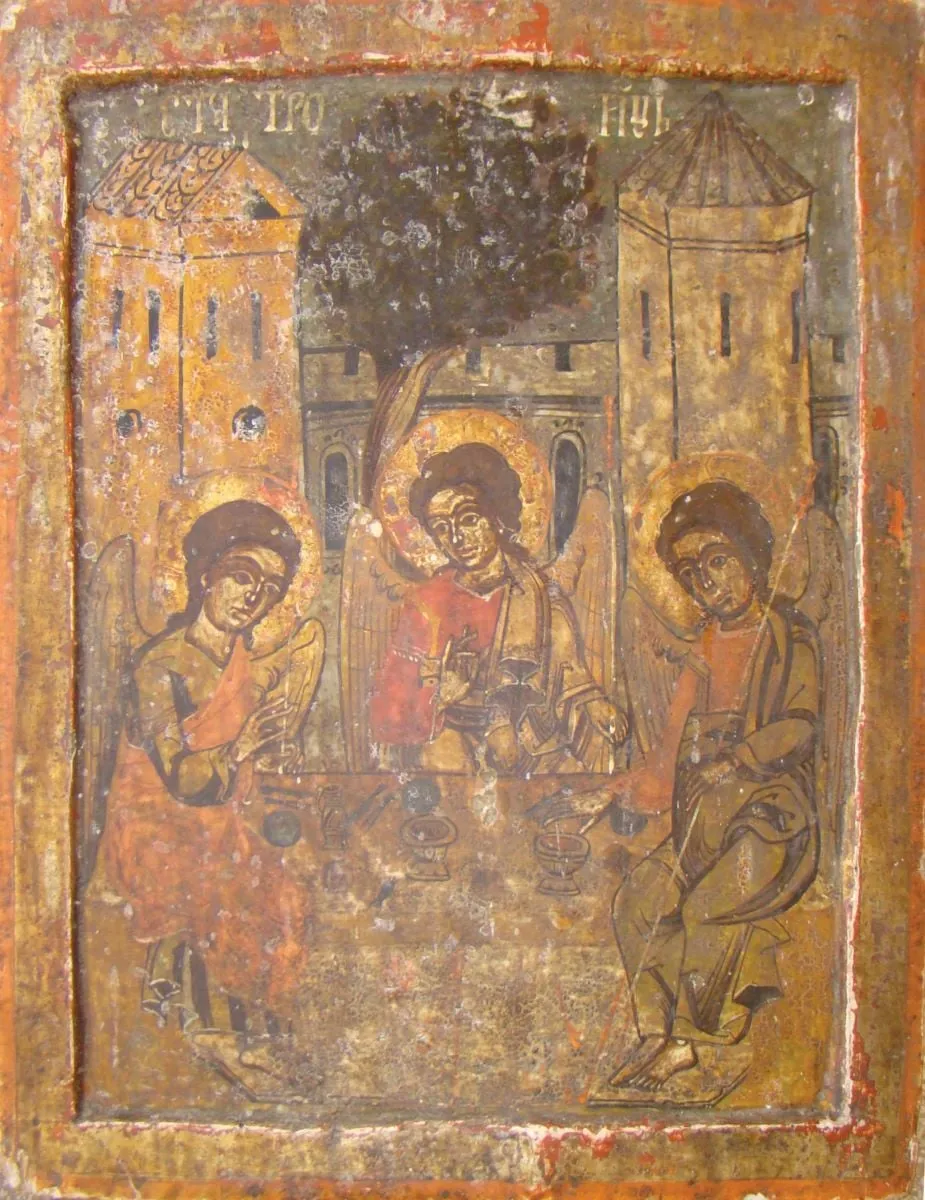
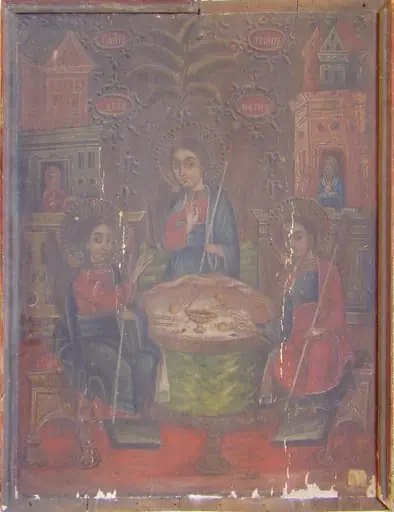
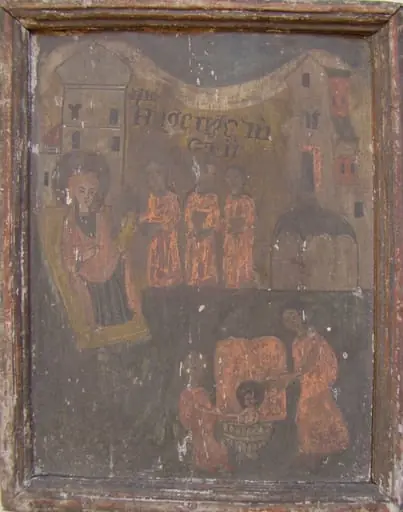
Cina de la Mamvri is an unspecified painting by Unknown. It dates from 1850 and is held in the collection of the Alba Iulia Orthodox Archdiocese.
About this work
Overview
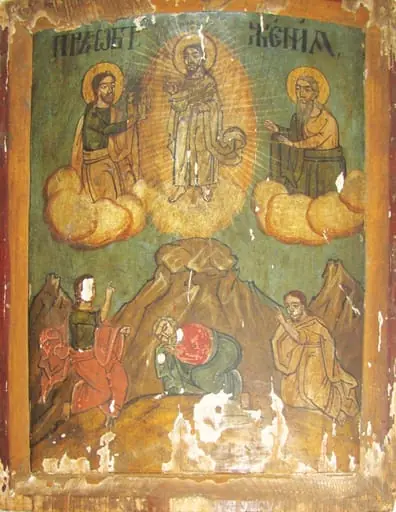
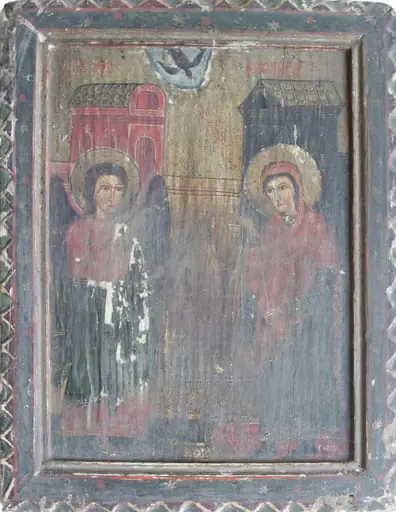
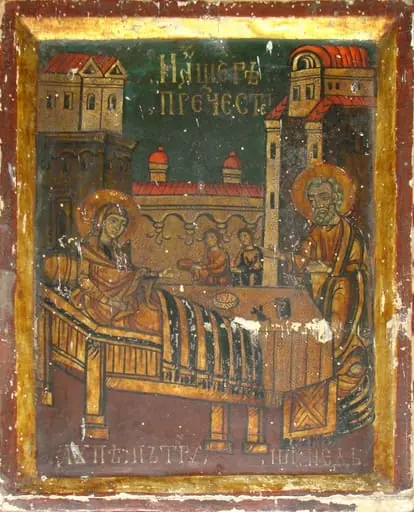
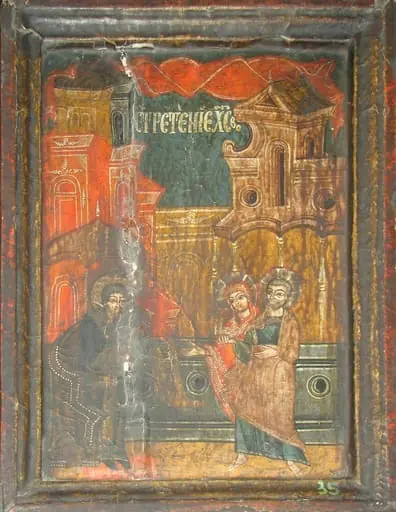
This medieval panel painting, titled Cina de la Mamvri, presents three robed figures arranged symmetrically against a stone architectural backdrop. Rendered with vivid pigments and gold detailing, the work reflects devotional art traditions of its era. Held by the Museum of Ethnography, it exemplifies the formal composition and symbolic color use common in religious imagery from the period.
Subject & Meaning
The three figures, likely angels, are distinguished by their robes in red, orange, and green—colors that may signify divine hierarchy or spiritual attributes.
The three figures, likely angels, are distinguished by their robes in red, orange, and green—colors that may signify divine hierarchy or spiritual attributes. Their static, frontal posture and lack of individualized features align with conventional representations of celestial beings in medieval iconography. The setting, with its towered walls and distant tree, suggests a sacred space beyond the earthly realm.
Technique & Style
The painting employs bold, flat outlines and saturated hues typical of late medieval panel painting. Gold leaf accents highlight halos and garment edges, enhancing luminosity without naturalistic shading. The figures are stylized rather than anatomically precise, emphasizing symbolic presence over realism. The background’s simplified architecture reinforces a timeless, otherworldly atmosphere.
History & Provenance
The painting’s origins are undocumented, but its style and materials suggest production in a European monastic or court workshop between the 13th and 15th centuries. It entered the collection of the Museum of Ethnography through unknown means, possibly as part of a broader acquisition of religious artifacts. Its preservation indicates careful handling over centuries.
Context
Created during a period when religious imagery dominated visual culture, the work reflects liturgical needs and devotional practices of its time. Similar compositions appear in altarpieces and manuscript illuminations, where color and symmetry served to convey theological order. The presence of gold and rich textiles signals patronage by wealthy or ecclesiastical benefactors.
Legacy
Though not attributed to a known artist, Cina de la Mamvri contributes to the understanding of regional medieval aesthetics and the transmission of iconographic motifs. Its survival offers insight into how spiritual themes were visually codified outside major artistic centers. The painting remains a quiet testament to the enduring role of color and form in sacred representation.
Artist & collection
 Domestic Scene
 Giacomo and Cardinal Marco, investing Andrea, Abbot of San Zeno, with his Benefice
 The Nymph of Fontainebleau
 Portrait of a Woman
 Madonna and Child with Saints in the Enclosed Garden
 Venus and Minerva
 Family Group of Four on Sofa
 Wall painting from Room H of the Villa of P. Fannius Synistor at Boscoreale