Artwork
NASTEREA LUI IISUS
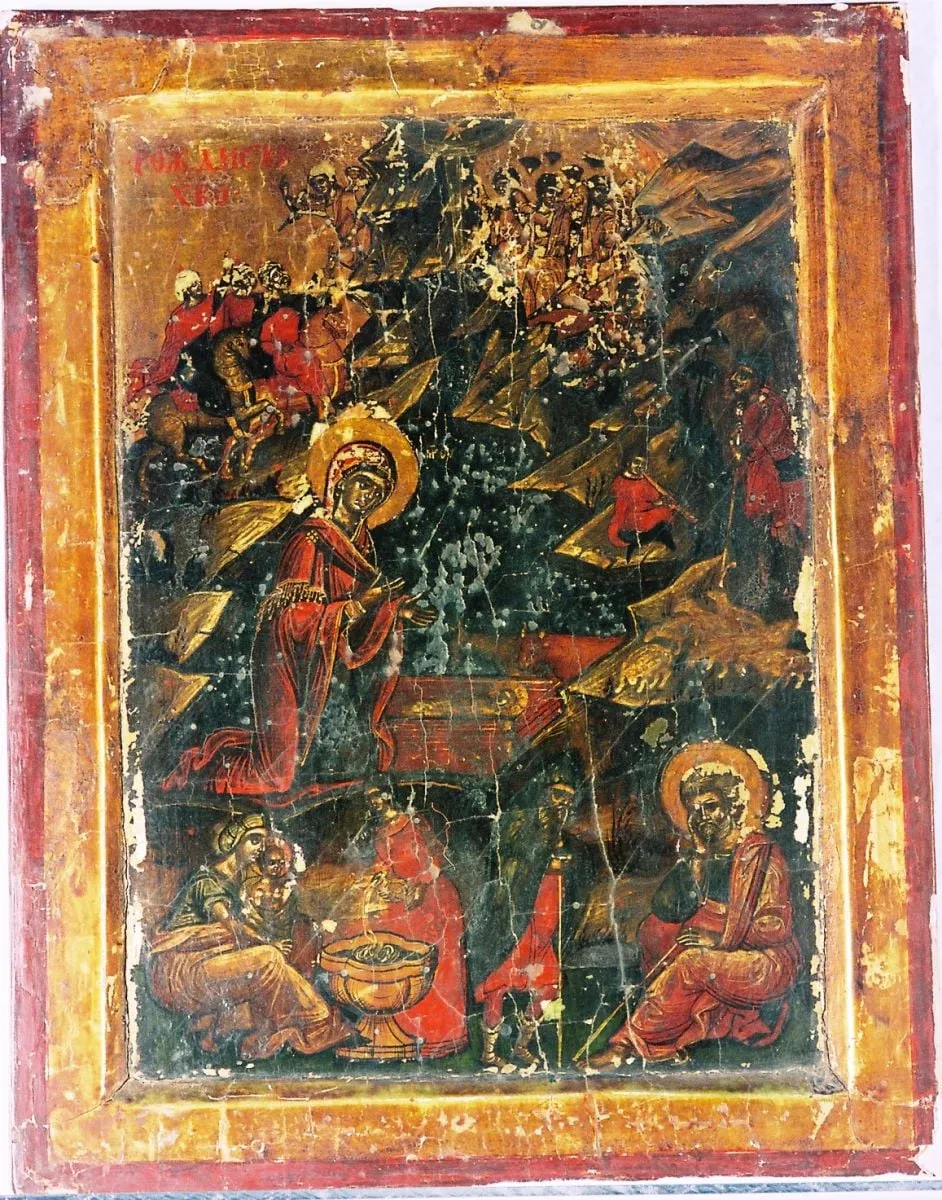
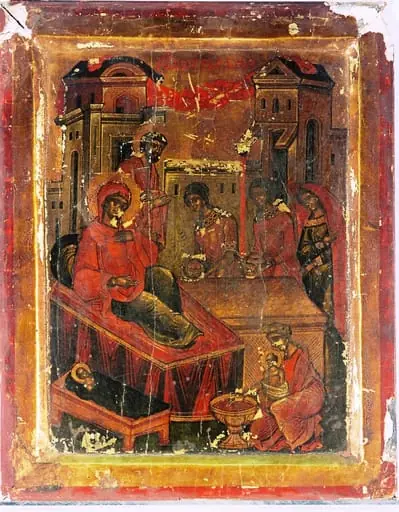
NASTEREA LUI IISUS is a drawing by Unknown. It dates from 1850 and is held in the collection of the National Museum of Art of Romania.
About this work
The painting is done in a style that suggests it may be from the early 19th century.
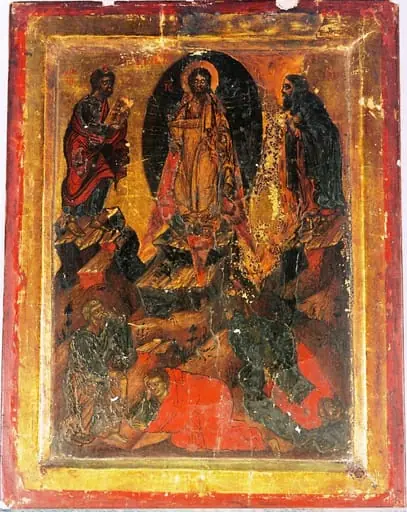
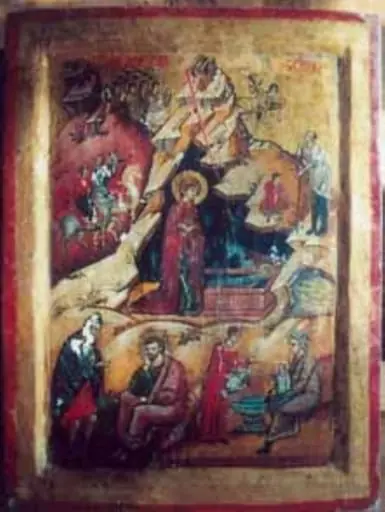
This painting shows a religious scene with several figures. In the center, a woman is kneeling with her hands together in prayer. She wears a red robe and a golden halo around her head. Above her, a group of people are gathered on a mountain. At the bottom, there are more figures, some of whom appear to be holding objects.
The painting is done in a style that suggests it may be from the early 19th century. The colors are muted, with shades of red, yellow, and brown dominating the palette. The overall effect is one of reverence and contemplation.
The painting is held at the Museum of Ethnography.
Overview
The work, titled *Nasterea lui Iisus*, presents a devotional tableau in which a kneeling woman, robed in red and encircled by a golden halo, offers prayer. Above her, a gathering of figures occupies a mountaintop setting, while additional characters populate the lower portion, some bearing objects that suggest ritual activity. The composition conveys a solemn atmosphere of reverence.
Subject & Meaning
At the heart of the image is a female devotee, whose posture and clasped hands indicate a moment of supplication. The surrounding assemblage, positioned on a lofty terrain, evokes a sacred landscape, perhaps alluding to a biblical event or a saint’s vision. The inclusion of everyday items among the lower figures hints at a blending of the holy with the communal.
Technique & Style
Rendered with a muted palette dominated by earthy reds, yellows and browns, the painting reflects the aesthetic sensibilities of the early nineteenth century. The handling of light and shadow is subtle, and the halo’s golden hue provides a restrained contrast. Brushwork appears smooth, emphasizing form over texture, and the overall visual language prioritizes contemplative stillness.
History & Provenance
The piece is part of the collection of the Museum of Ethnography, where it is displayed as an example of religious art from the period. Documentation indicates that the work entered the museum’s holdings through acquisition in the mid‑20th century, though earlier ownership details remain scarce.
Context
Within the broader cultural setting, the painting aligns with a tradition of devotional imagery that merged liturgical themes with local artistic conventions. Its muted coloration and simplified figures reflect a regional interpretation of European religious motifs, suggesting a cross‑cultural exchange that shaped visual expressions of faith during the era.
Artist & collection

 Domestic Scene
 Giacomo and Cardinal Marco, investing Andrea, Abbot of San Zeno, with his Benefice
 The Nymph of Fontainebleau
 Portrait of a Woman
 Madonna and Child with Saints in the Enclosed Garden
 Venus and Minerva
 Family Group of Four on Sofa
 Wall painting from Room H of the Villa of P. Fannius Synistor at Boscoreale