Artwork
Lakshmi
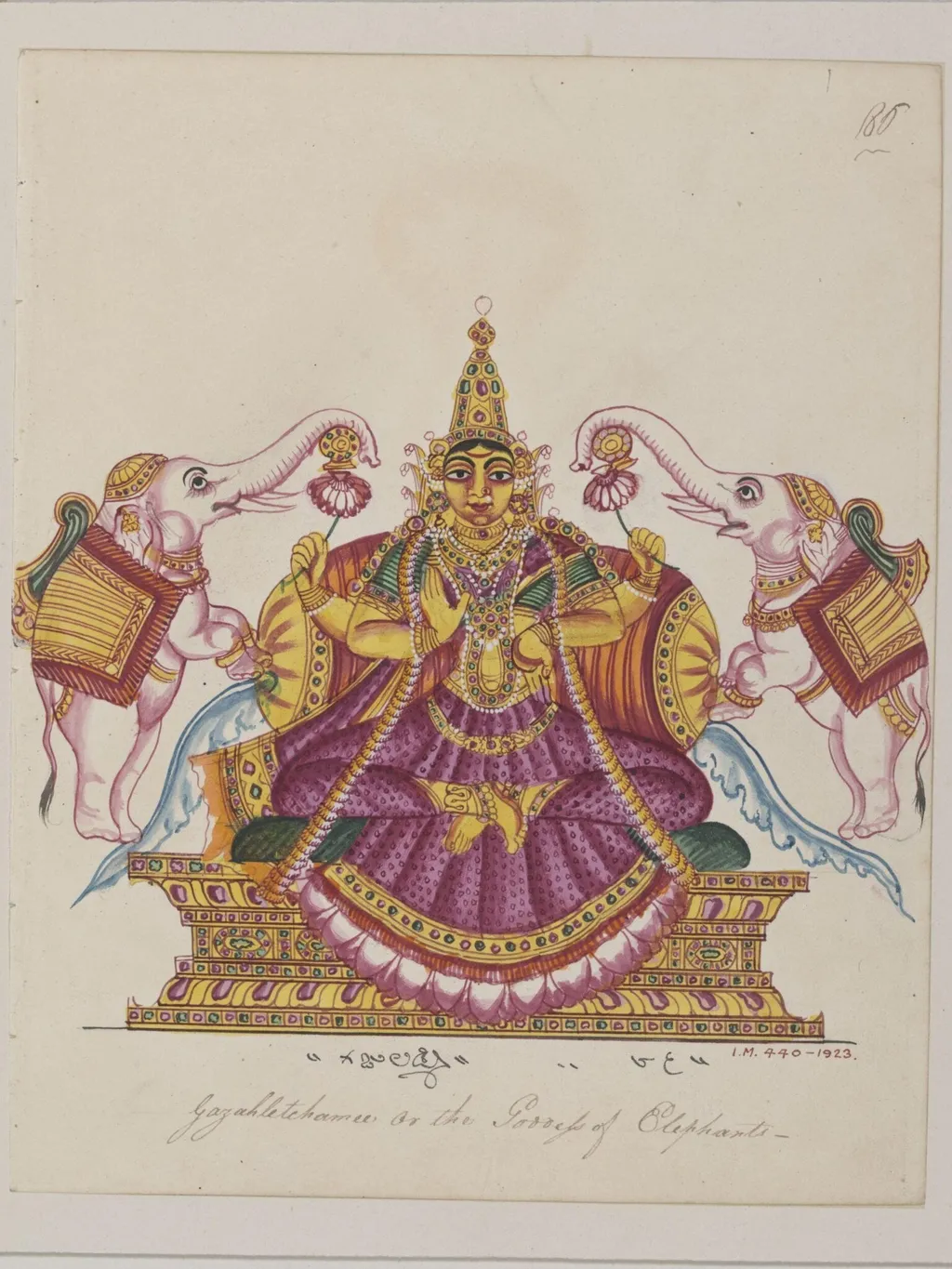
Lakshmi is a paint painting by the Patna School of Painting artist Unknown. It dates from 1820 and is held in the collection of the Victoria and Albert Museum.
About this work
Overview
This 1820 South Indian painting portrays Lakshmi in her Gaja Lakshmi incarnation, emphasizing her association with prosperity. The composition centers on the goddess, flanked by two elephants, set against a plain background to accentuate the main figures.
Subject & Meaning
Lakshmi, the Hindu deity of wealth and good fortune, is depicted in a ceremonial bathing scene, symbolizing purity and blessings. Her attire and the elephants’ ornate regalia convey grandeur and divine abundance.
Technique & Style
Executed in vibrant colors, the painting features intricate details such as gold trim on Lakshmi’s purple dress and golden armor on the elephants. The elephants’ howdahs (seats) add a layer of ceremonial opulence.
History & Provenance
Part of a series of 100 drawings of Hindu deities created in South India in 1820, this work reflects the regional artistic traditions of its time. Its current location is not specified in the provided information.
Context
Similar works can be found at institutions like the Victoria and Albert Museum, which houses a collection of South Indian artworks from the same period, offering context for this painting’s style and themes.
Legacy
As part of a larger series documenting Hindu deities, this painting contributes to the visual and cultural record of South Indian religious art in the early 19th century.
Artist & collection

 Domestic Scene
 Giacomo and Cardinal Marco, investing Andrea, Abbot of San Zeno, with his Benefice
 The Nymph of Fontainebleau
 Portrait of a Woman
 Madonna and Child with Saints in the Enclosed Garden
 Venus and Minerva
 Family Group of Four on Sofa
 Wall painting from Room H of the Villa of P. Fannius Synistor at Boscoreale
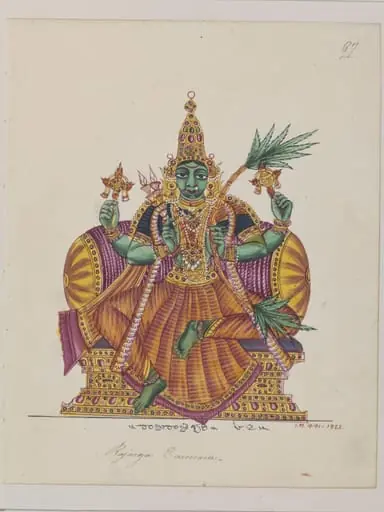 The goddess Rajarajeshvari
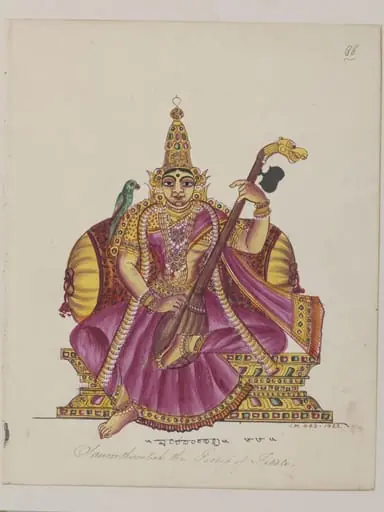 The goddess Rajamatangi
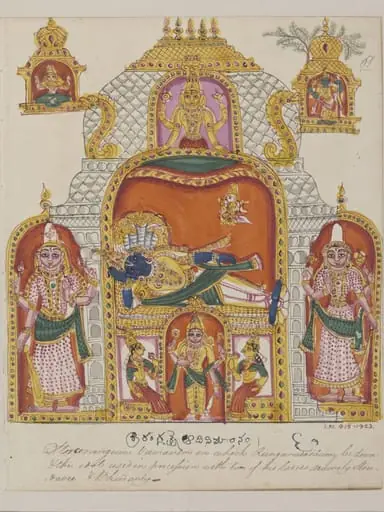 The temple of Shri Ranganatha
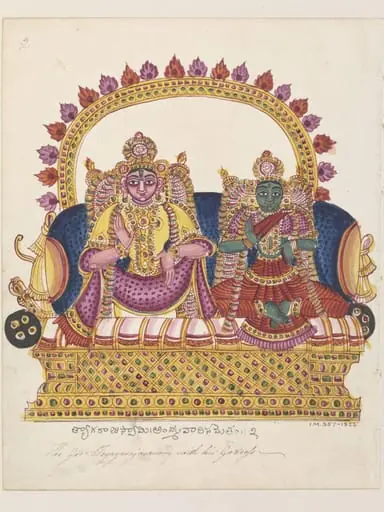 Shiva in his local form of Tyagarajaswamy (Somaskanda) worshipped at Tiruvarur
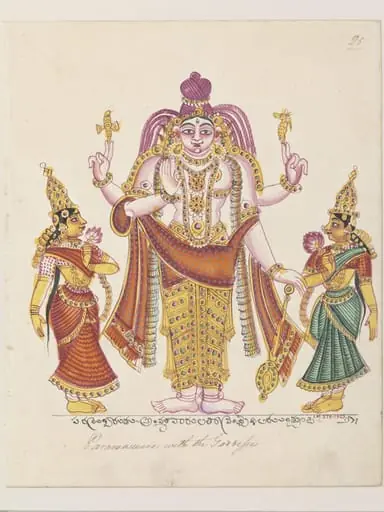 Harihara attended by Parvati and Lakshmi
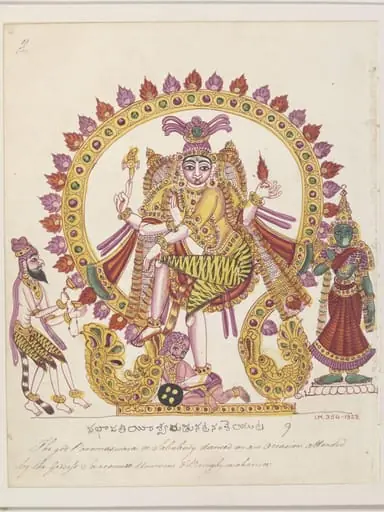 Nataraja (Shiva as lord of the dance)
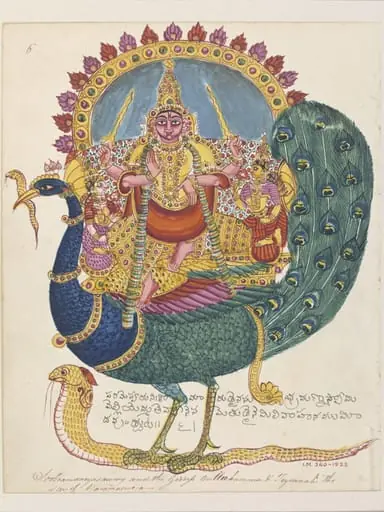 The god Subrahmanya, the god of war.
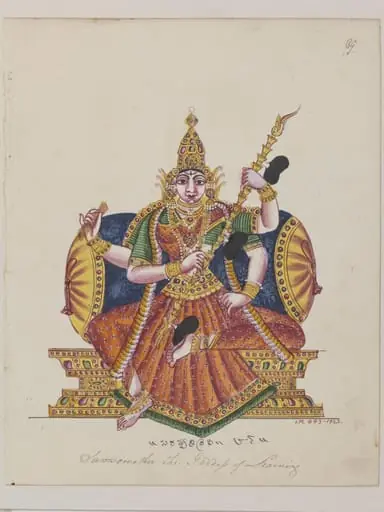 Sarasvati, the goddess of learning, speech and music
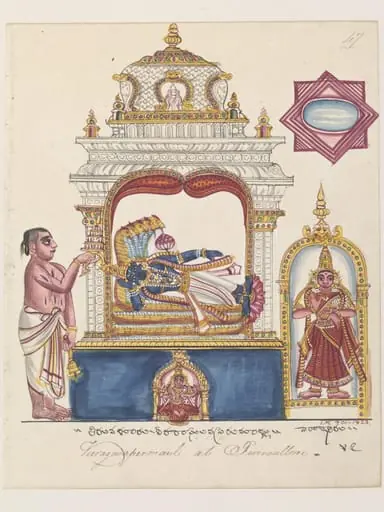 The shrine of Vishnu in the form of Viraraghavaswami, reclining on the serpent of eternity.
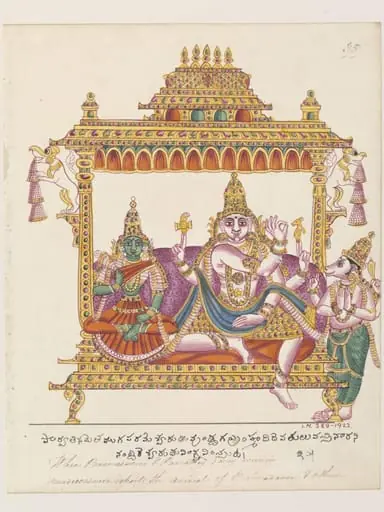 Shiva and Parvati seated on a canopied throne.
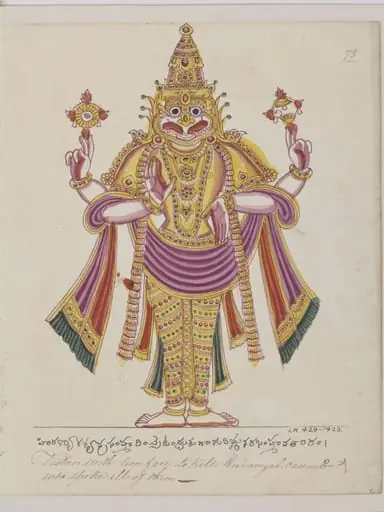 Narasimha, the man-lion, the fourth avatar (incarnation) of Vishnu
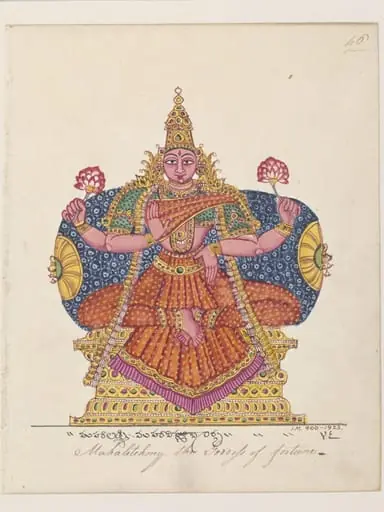 The goddess Lakshmi, consort of Vishnu.