Artwork
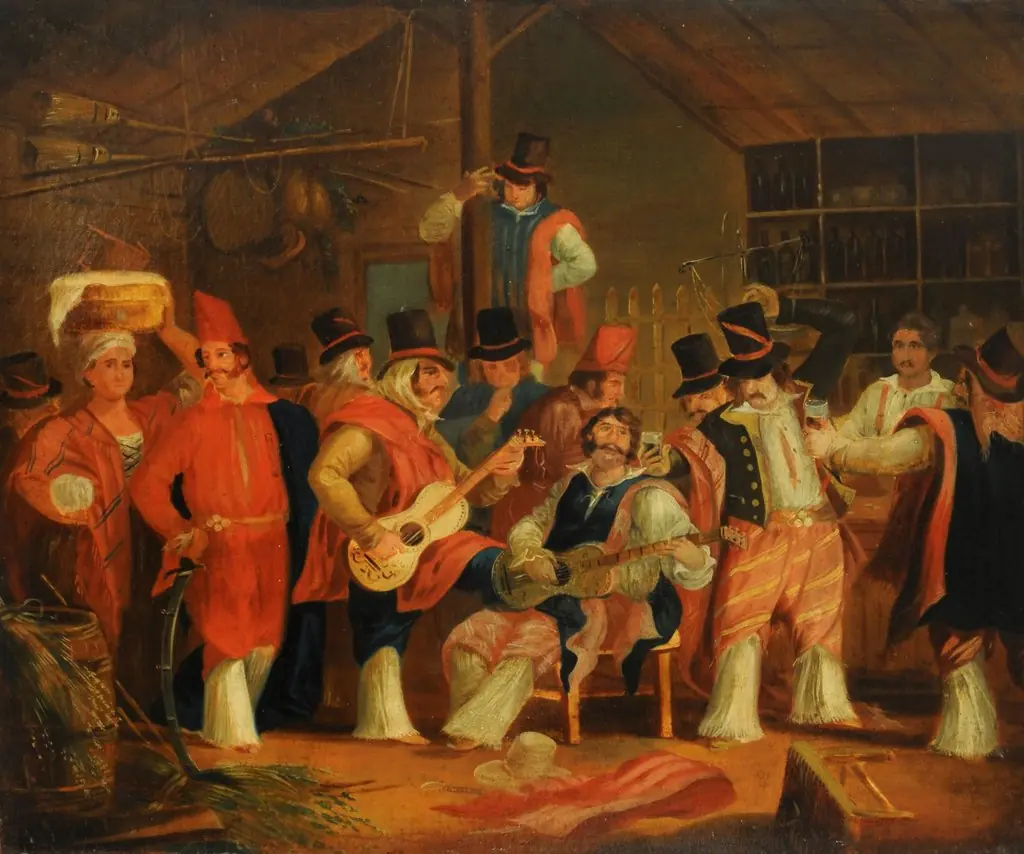
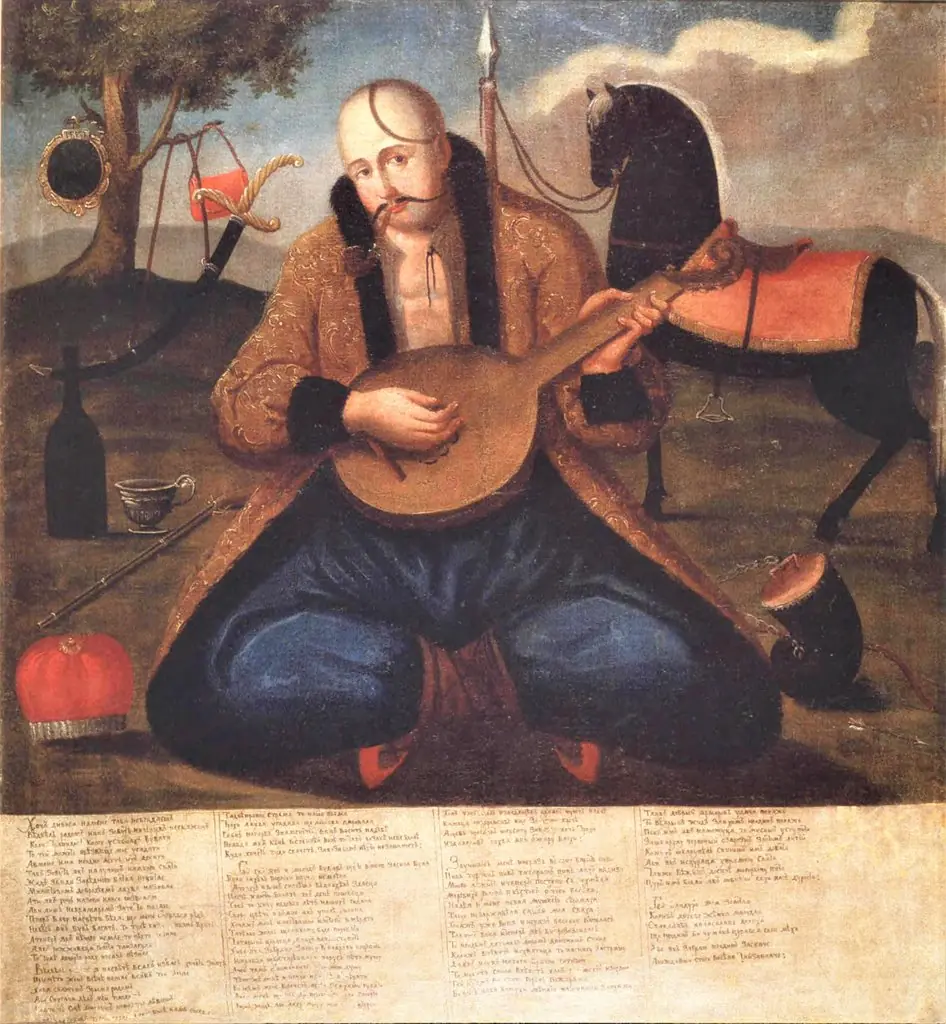
Cossack's conversation with a lach
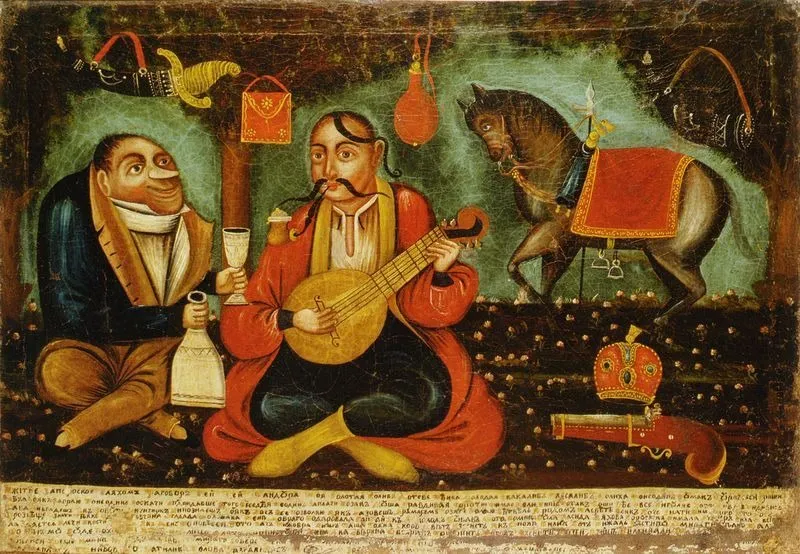
Cossack's conversation with a lach is an unspecified painting by the Realist artist Unknown. It dates from 1850 and is held in the collection of the National Art Museum of Ukraine. The work portrays a quiet encounter between two figures in a rustic setting.
About this work
Overview
The work portrays a quiet encounter between two figures in a rustic setting.
The work portrays a quiet encounter between two figures in a rustic setting. One individual sits cross‑legged, dressed in a vivid red robe and cradling a stringed instrument, while his companion stands nearby, clad in a dark jacket and tan trousers, holding a white cup. A horse with a red‑gold saddle blanket stands behind them, and assorted items—a red bag, a horn, and a crown—are scattered on the ground against a muted green backdrop.
Subject & Meaning
The composition suggests a moment of informal dialogue, perhaps a musical performance or a shared respite. The seated figure’s concentration on his instrument and the standing figure’s attentive gaze imply a collaborative or instructional exchange, underscored by the presence of everyday objects that hint at travel or a temporary camp.
Technique & Style
Rendered with a restrained palette, the painting balances bold reds against subdued greens, creating visual focus on the central figures. The handling of light emphasizes the textures of fabric and the sheen of the horse’s saddle blanket, while the scattered objects are depicted with a modest level of detail that reinforces the scene’s domestic atmosphere.
Context
The inclusion of a Cossack‑type costume and a horse with ornate trappings situates the scene within a Slavic or Eastern European milieu, reflecting cultural motifs associated with nomadic or military groups. The presence of a musical instrument and communal objects aligns with traditional depictions of leisure among such communities.
Legacy
While specific provenance details are scarce, the painting contributes to the visual record of folk life, offering insight into the social interactions and material culture of the period it represents. Its focus on everyday exchange rather than grand narrative aligns it with genre works that document ordinary moments.
Artist & collection

 Domestic Scene
 Giacomo and Cardinal Marco, investing Andrea, Abbot of San Zeno, with his Benefice
 The Nymph of Fontainebleau
 Portrait of a Woman
 Madonna and Child with Saints in the Enclosed Garden
 Venus and Minerva
 Family Group of Four on Sofa
 Wall painting from Room H of the Villa of P. Fannius Synistor at Boscoreale