Artwork
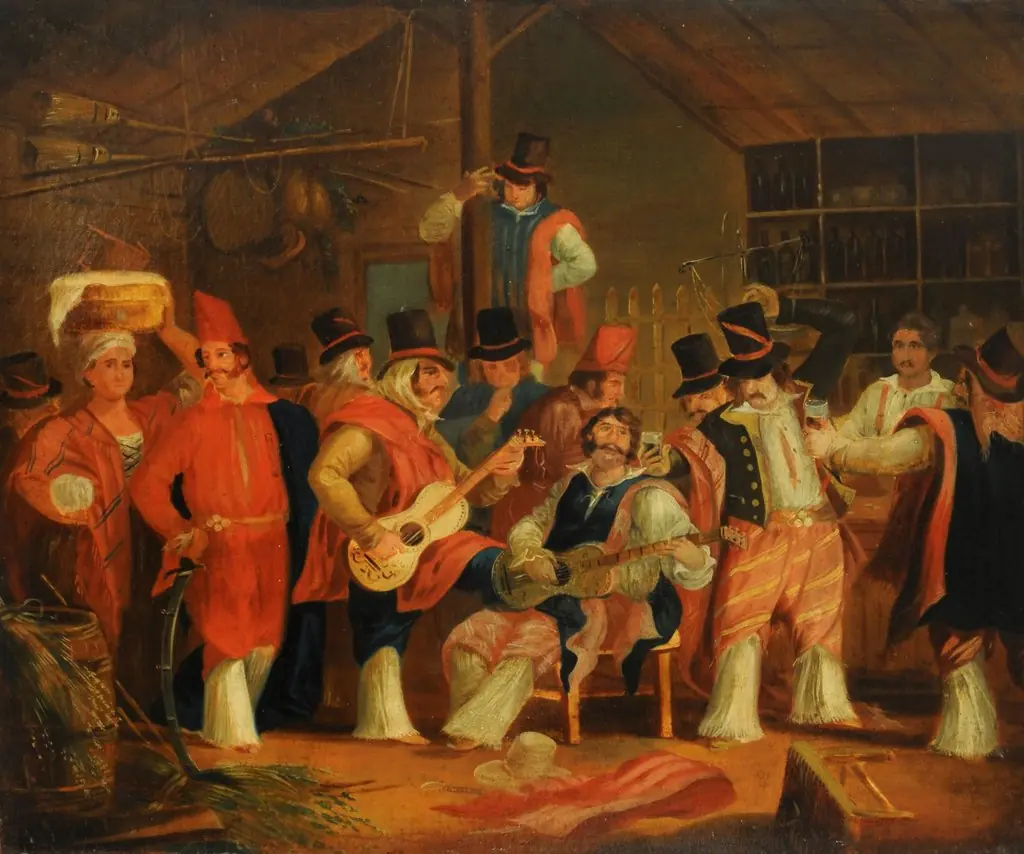
Payada en una pulpería
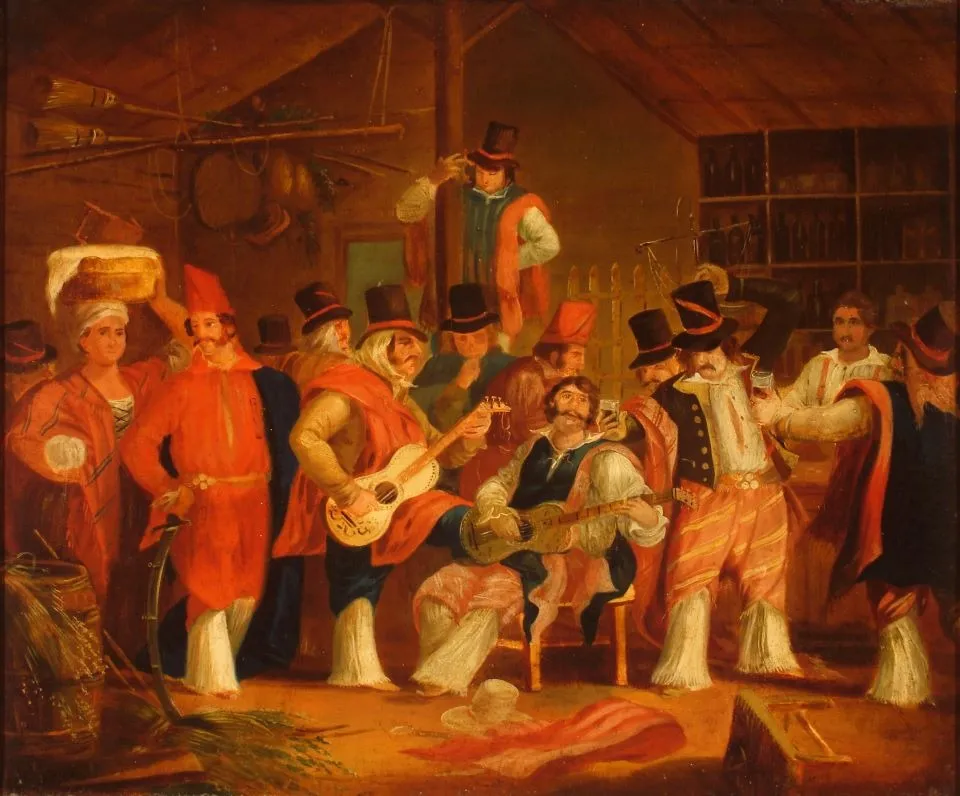
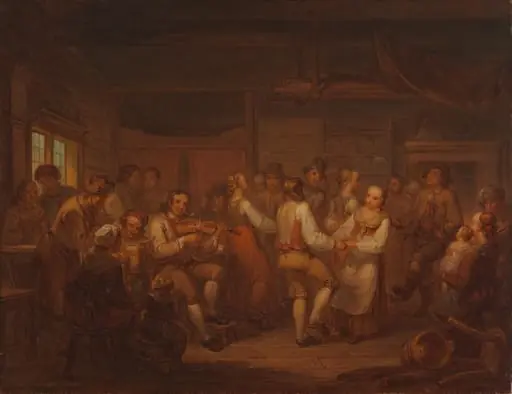
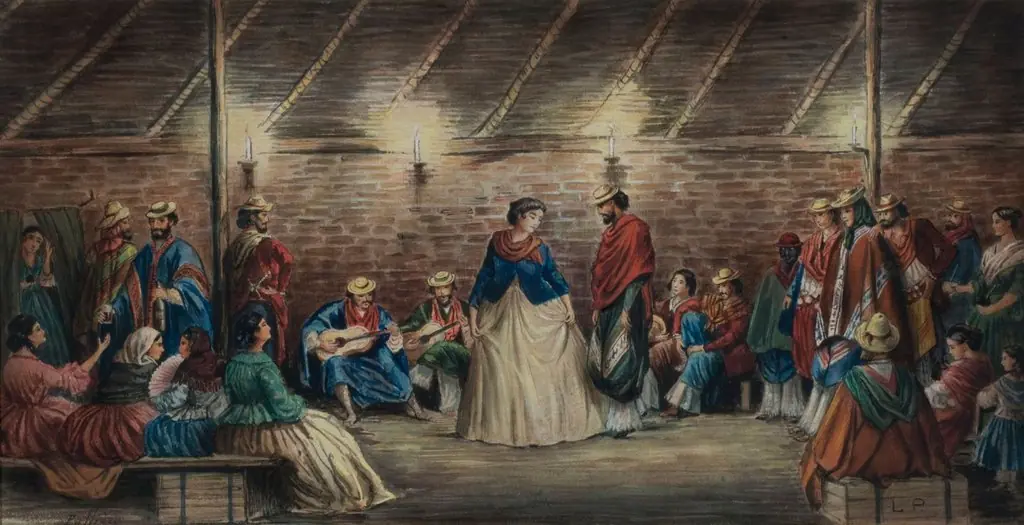
Payada en una pulpería is an oil painting by Carlos Morel. It dates from 1863 and is held in the collection of the National Museum of Fine Arts, Argentina.
About this work
Overview
The painting captures a moment of informal gathering, reflecting a growing interest in indigenous cultural expressions during the nation’s formative years.
Painted around 1863 by Carlos Morel, *Payada en una pulpería* is an oil on canvas depicting a moment of communal music-making in a rural Argentine tavern. Morel, among the first native-born artists to gain recognition in Argentina, turned his attention to local social rituals rather than European models. The painting captures a moment of informal gathering, reflecting a growing interest in indigenous cultural expressions during the nation’s formative years.
Subject & Meaning
The scene centers on a payador—a folk singer improvising verses—accompanied by a guitarist, surrounded by men engaged in conversation, drinking, and listening. The setting, a pulpería, functioned as both store and social hub in the countryside. The painting does not idealize its subjects but presents them with quiet dignity, affirming the cultural value of rural traditions amid Argentina’s rapid modernization in the mid-19th century.
Technique & Style
Morel employs a loose, observational brushwork that conveys movement and spontaneity. Warm tones dominate the palette, with reds and whites in clothing contrasting against the dim interior. The composition is asymmetrical, with figures clustered around the musician, while background details—hanging tools, bottles, and textiles—add texture without distraction. Light falls unevenly, enhancing the intimate, crowded atmosphere of the space.
History & Provenance
The painting entered the collection of the National Museum of Fine Arts in Buenos Aires in the late 19th century, likely acquired as part of early efforts to build a national art collection. Its preservation reflects institutional recognition of Morel’s role in shaping Argentine visual identity. No significant changes in ownership are documented, and it has remained in public hands since its acquisition.
Context
In the decades following independence, Argentine artists began to move away from imported European styles toward subjects drawn from local life. Morel’s work emerged alongside literary efforts to define a national character, such as gauchesque poetry. *Payada en una pulpería* aligns with this trend, portraying a cultural practice—payada singing—that was orally transmitted and deeply rooted in rural communities.
Legacy
Though not widely known outside Argentina, Morel’s painting contributed to a visual vocabulary of national identity centered on the gaucho and rural life. It influenced later artists who sought to depict Argentine customs with authenticity rather than romanticism. Today, the work stands as a quiet testament to the everyday rituals that shaped cultural consciousness in 19th-century Argentina.
Artist & collection
Artist
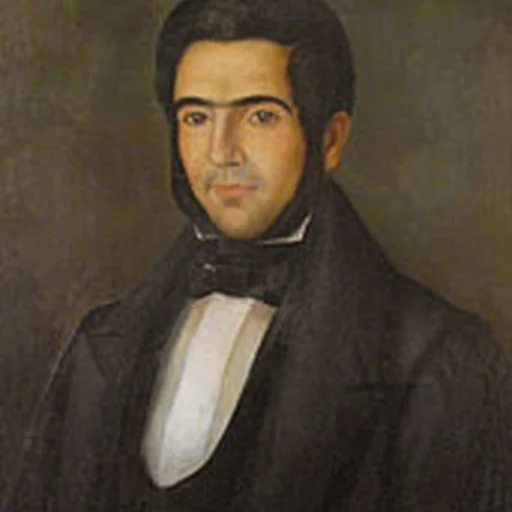
Carlos Morel (12 February 1813 – 10 September 1894) was a prominent Argentine painter in the nineteenth century, known as the first truly Argentine painter.

Museum
National Museum of Fine Arts, Argentina
Continue through works from the same source collection.