Artwork
Crucifixion and the Virgin Annunciate
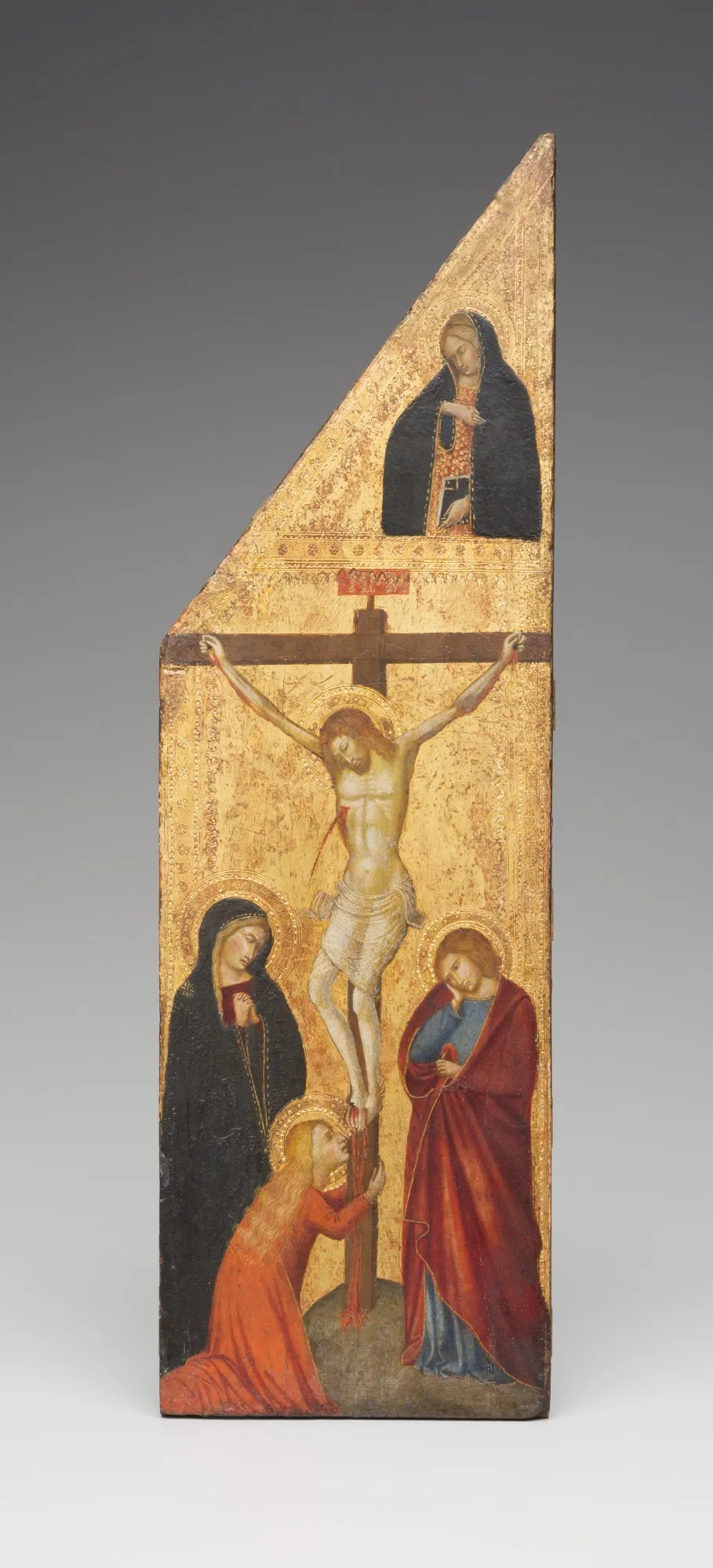
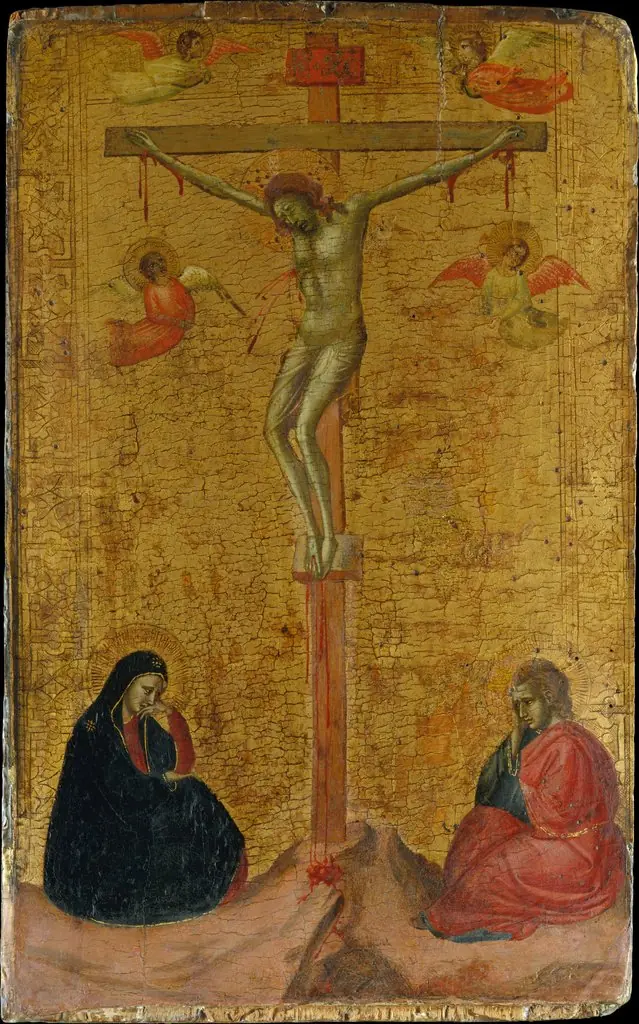
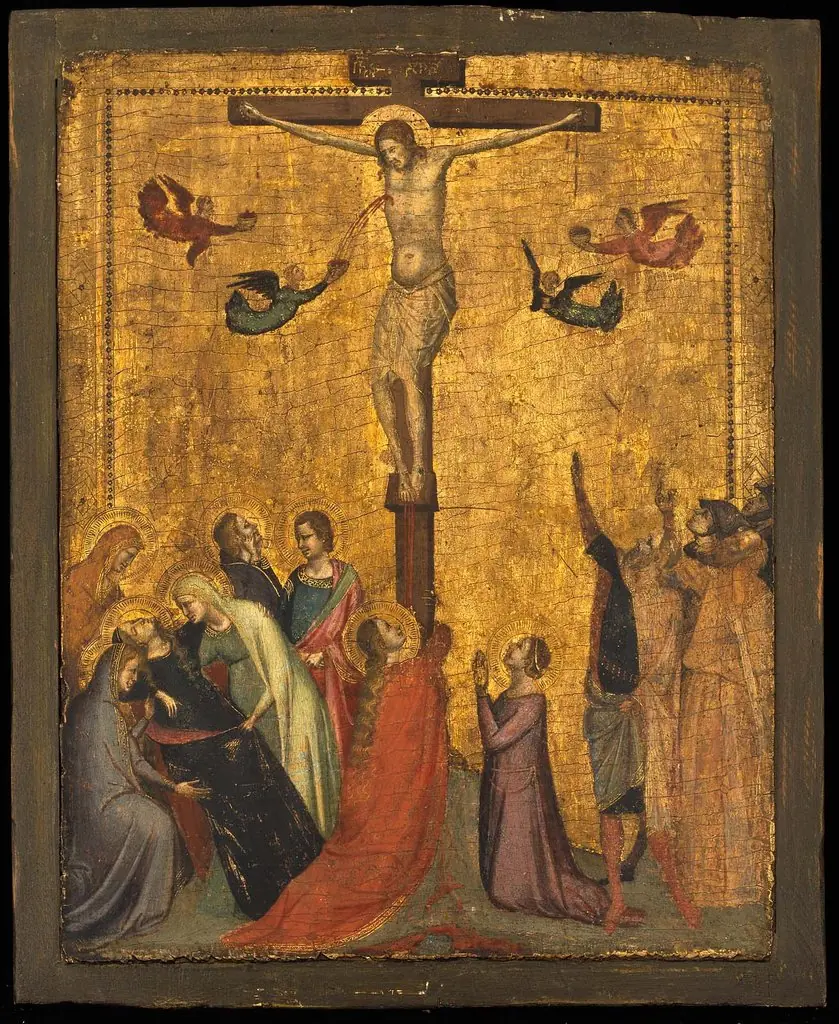
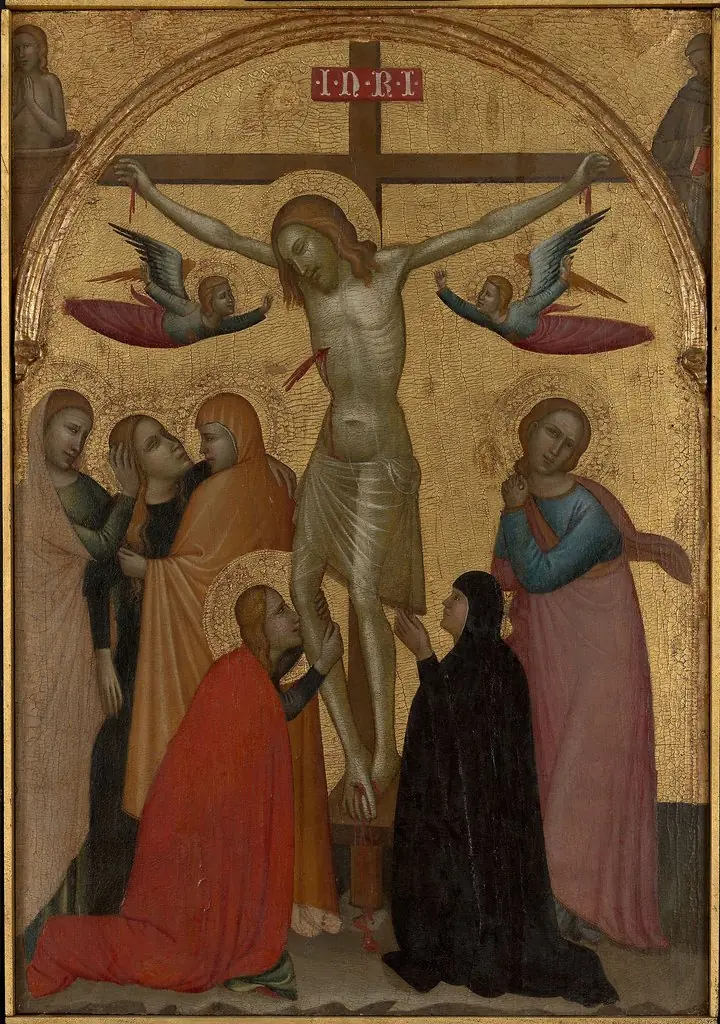
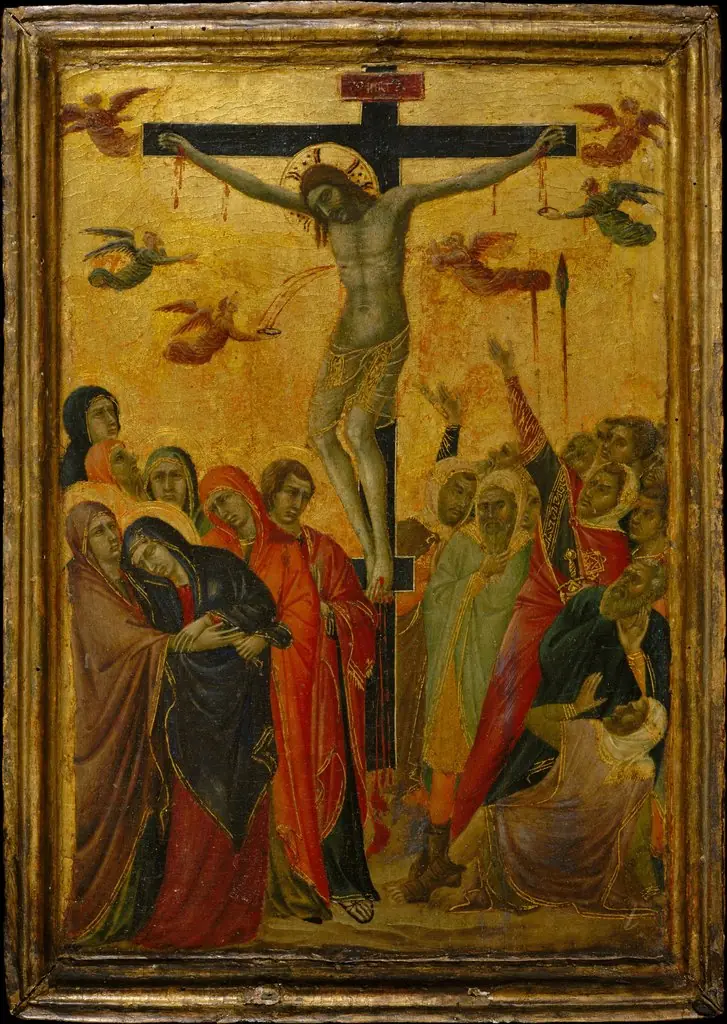
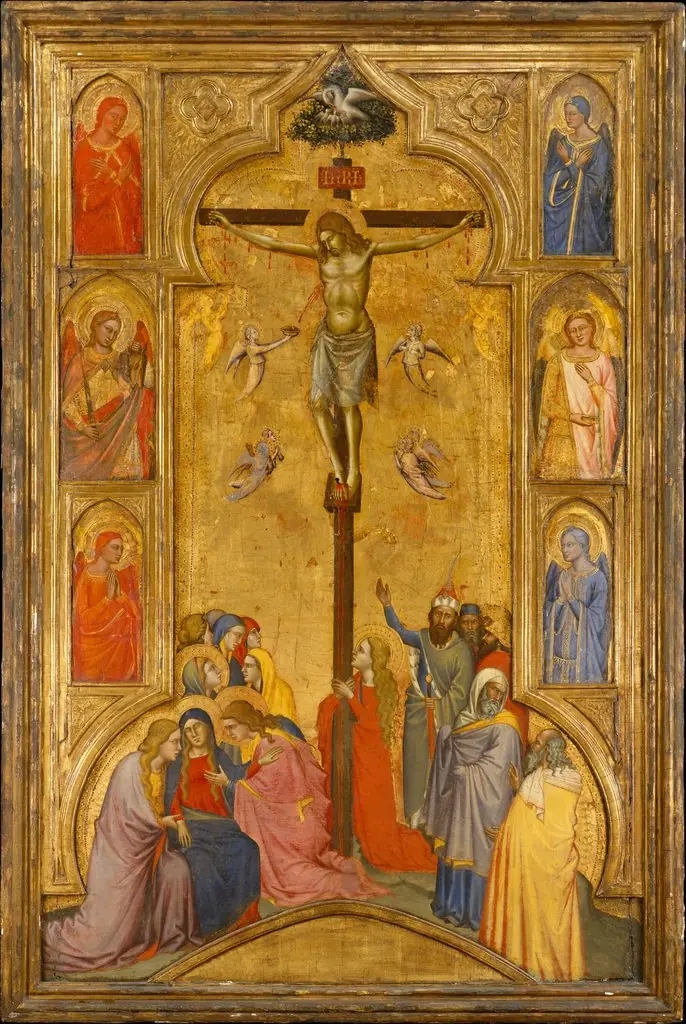
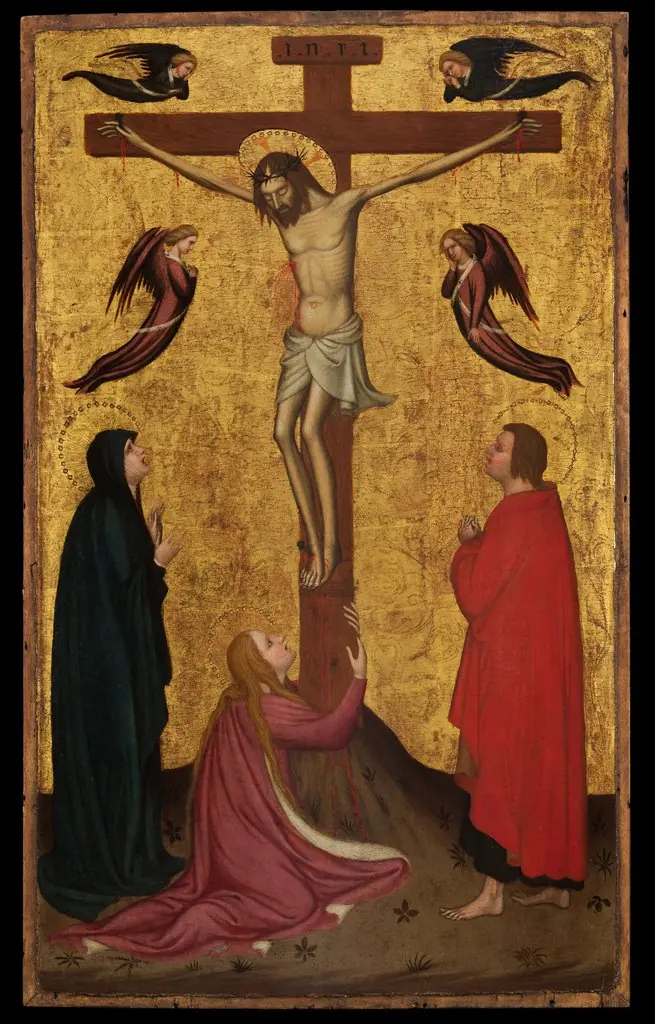
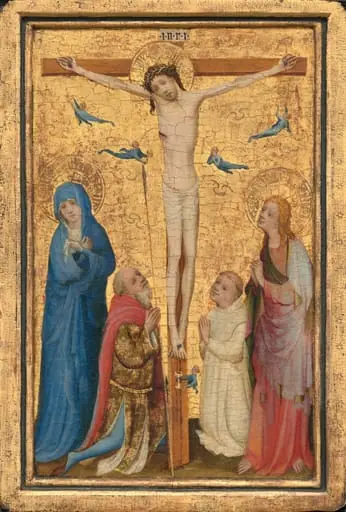
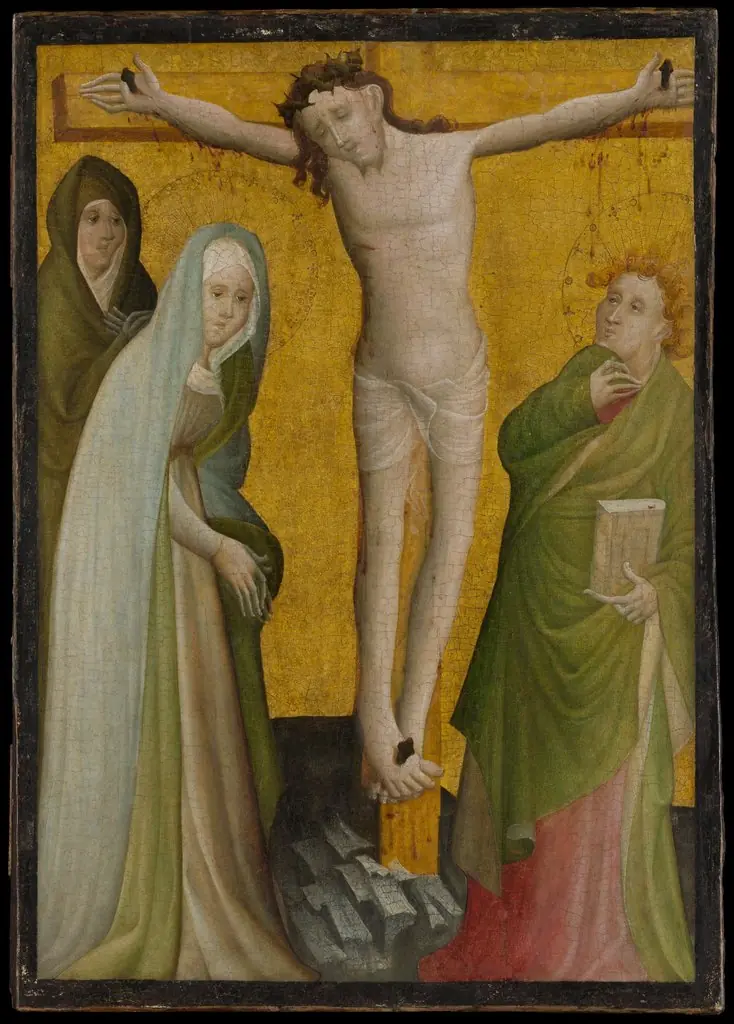
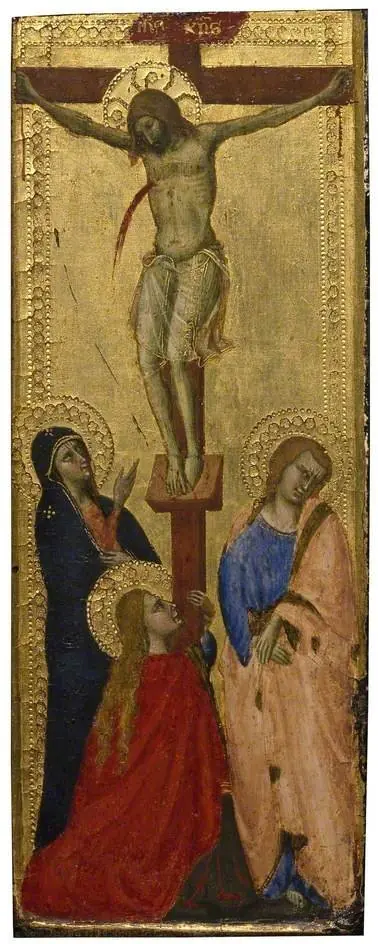
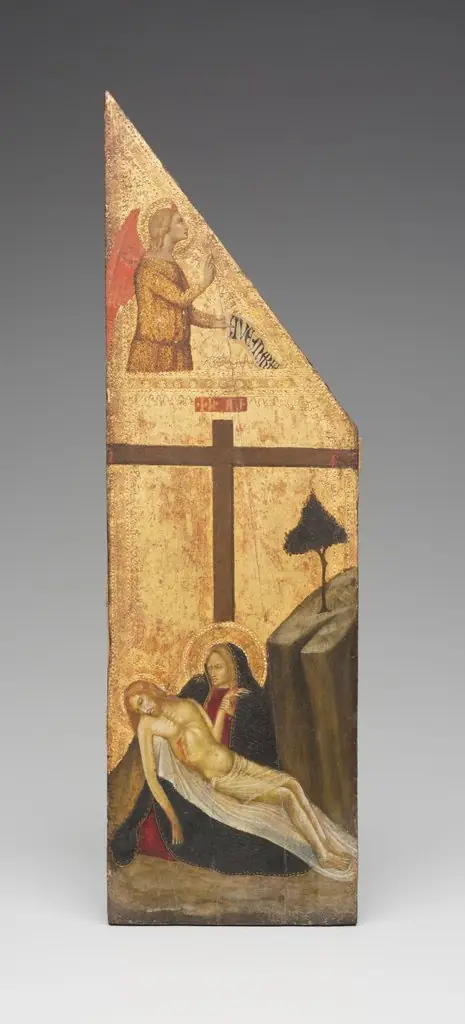
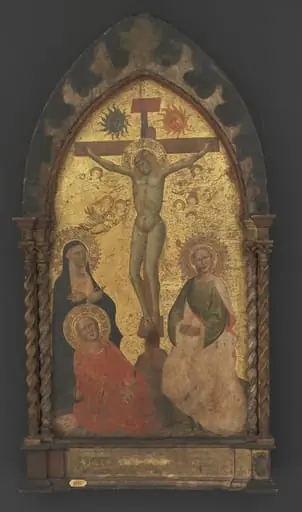
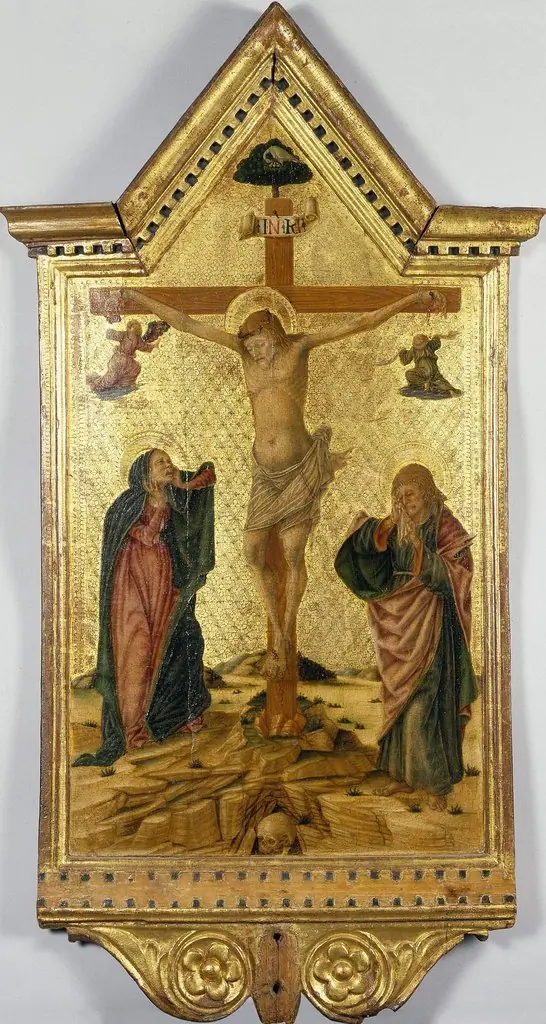
Crucifixion and the Virgin Annunciate is an unspecified painting by Unknown. It dates from 1850 and is held in the collection of the Detroit Institute of Arts. This painting depicts the Crucifixion alongside the Annunciation, merging two distinct biblical moments into a single composition.
About this work
Overview
The warm golden background creates a quiet luminosity that contrasts with the gravity of the scene, reinforcing its devotional purpose.
This painting depicts the Crucifixion alongside the Annunciation, merging two distinct biblical moments into a single composition. Christ is shown on the cross, flanked by four figures: two standing women in dark garments, one kneeling in red at the base, and another above, observing from above. The warm golden background creates a quiet luminosity that contrasts with the gravity of the scene, reinforcing its devotional purpose.
Subject & Meaning
The painting unites the moment of Christ’s death with the announcement of his incarnation, suggesting theological continuity between the Incarnation and the Atonement. The kneeling figure at the cross may represent Mary Magdalene or the Virgin Mary in mourning, while the figure above, possibly the Virgin Annunciate, links the divine origin of Christ to his sacrificial end. This dual focus invites contemplation on redemption as both promise and fulfillment.
Technique & Style
Figures are rendered with rigid, frontal postures and minimal naturalism, characteristic of late medieval devotional art. Drapery is stylized, and spatial depth is flattened, emphasizing symbolic presence over physical realism. The golden background, typical of Byzantine and early Italian traditions, elevates the scene beyond earthly time. Subtle modeling suggests awareness of light, though full chiaroscuro is not yet developed.
History & Provenance
The painting likely originated in a religious context, possibly as an altarpiece or private devotional panel in late medieval Europe. Its fusion of Crucifixion and Annunciation themes aligns with devotional practices of the 13th to 15th centuries, particularly in regions influenced by Franciscan spirituality. Exact origins remain undocumented, but its style suggests Italian or Central European workshop production.
Context
During the period this work was made, religious imagery often combined multiple scriptural events to reinforce doctrinal themes. The pairing of Annunciation and Crucifixion was not uncommon in liturgical art, serving as a visual meditation on divine plan and human response. Such compositions were intended for contemplation, not narrative storytelling, reflecting the spiritual priorities of their time.
Legacy
This painting exemplifies the transition from medieval symbolic representation toward early Renaissance humanism. While it retains formal stiffness, its emotional gravity and thematic synthesis influenced later devotional works. Its preservation offers insight into how medieval viewers engaged with sacred history—not as isolated episodes, but as interconnected moments of divine revelation.
Artist & collection

 Domestic Scene
 Giacomo and Cardinal Marco, investing Andrea, Abbot of San Zeno, with his Benefice
 The Nymph of Fontainebleau
 Portrait of a Woman
 Madonna and Child with Saints in the Enclosed Garden
 Venus and Minerva
 Family Group of Four on Sofa
 Wall painting from Room H of the Villa of P. Fannius Synistor at Boscoreale